
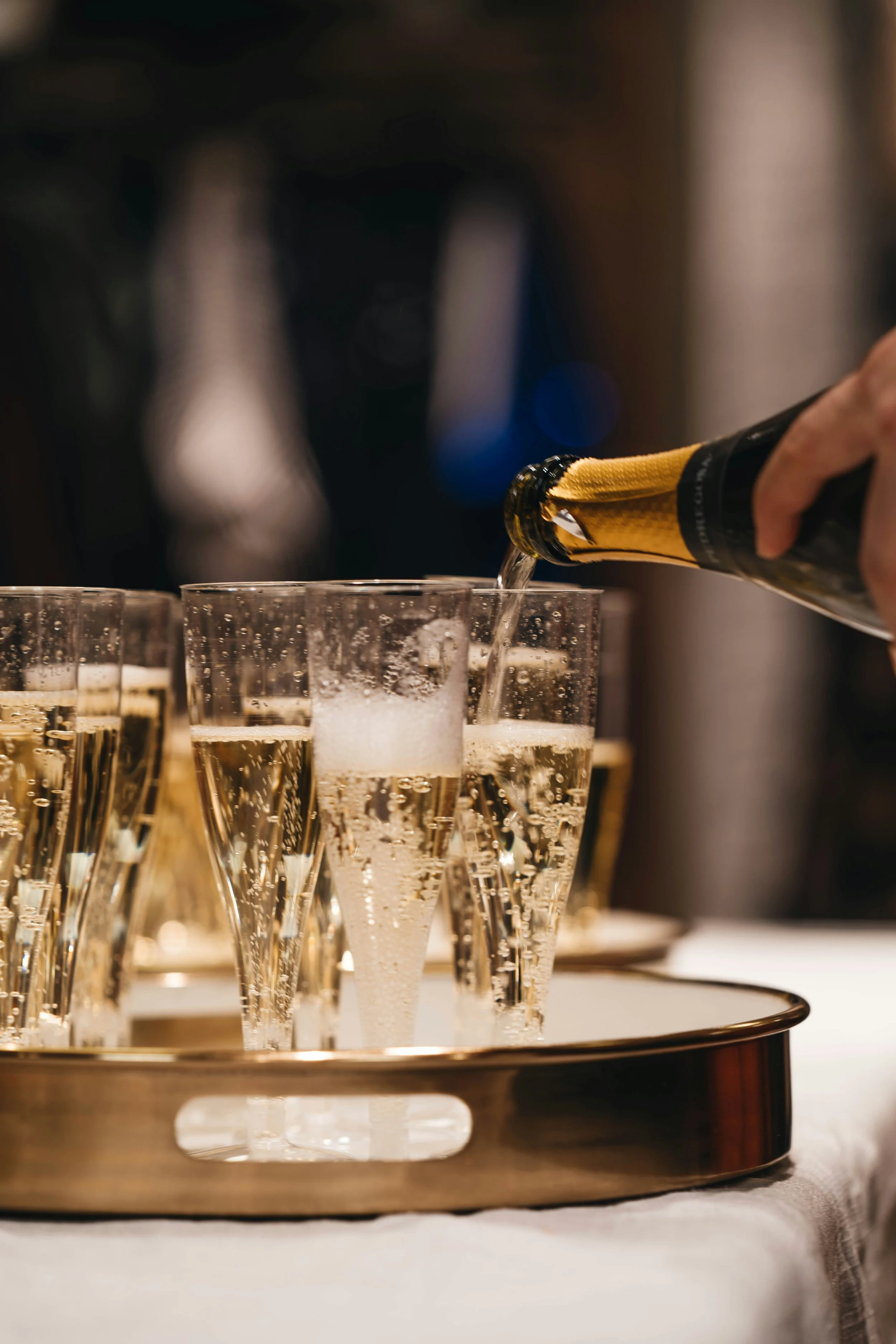
Sparkling Wines to Consider for the Holidays

Sparkling wines really do shine during the holidays—both literally and figuratively. Here’s a few tips on the various types of sparkling wines to enjoying them to the fullest.

Champagne

Champagne is a sparkling wine that is produced in the relatively small region of Champagne in France. An entry level bottle of Champagne is going to start in the $50 range.

Some Champagne facts:

  • Champagne is typically produced from three grapes — Pinot Noir, Chardonnay and Pinot Meunier

  • To be called Champagne, it must be produced in the Champagne region of France. Otherwise, it must be called Sparkling Wine

  • Champagne is produced using a process called the méthode champenoise where the bubbles are formed in the bottle during a second fermentation.

U.S. Sparkling Wine

In the U.S., there are a tremendous number of makers of sparkling wine. Most will produce a wine that can taste very much like the French Champagne. And, you can also find rosé sparkling wines.  An entry level bottle of sparkling wine in the U.S. can be as little as $10. Read more

Prosecco and Asti

In Italy, Prosecco is their signature sparkling wine. Produced in the Veneto region just north of Venice, this sparkling wine usually produces bigger bubbles. Bottles of Prosecco can be purchased in the $10- $15 range. Read more

Cava

The sparkling wine of Spain is Cava that is produced in the Catalonia region of Spain where Barcelona is located.  Nice bottles of Cava can be purchased for around $15. Read more

Styles of Champagne and Sparkling Wine

Brut Nature - This style is bone dry meaning it has little or no sugar content (0–3 g/L sugar).

Extra Brut - This style is also very dry but, it can have up to twice the sugar level of Brut Nature (0–6 g/L sugar). This little bit of sweetness creates a wonderful balance with Champagne’s naturally high acidity.

Brut - This is the most common style. While considered “Dry” this style can have twice the sugar of Extra Brut (0–12 g/L sugar).

Extra Dry - This is the one that always confuses people. This style is sweeter which actually makes it also taste a bit fruity (12–17 g/L sugar).

Dry - The confusing continues. This style is getting up there in sweetness (17–32 g/L sugar).

Demi-Sec - Now you’re talking Sweet (32–50 g/L sugar). This style works well with desserts or cheeses.

Doux - This one, while very rare to find, is really sweet (50+ g/L sugar).

A few serving tips

  • Chill properly: About 40–45°F (4–7°C) is ideal

  • Use proper glassware: Tulip or white wine glasses preserve aroma better than narrow flutes

  • Open gently: Twist the bottle, not the cork, for a quiet, elegant release

No matter which type or style you choose, give sparkling wines a try this holiday season. Cheers!

How to Pick the Right Sweetness of a Champagne or Sparkling Wine

The wine world is confusing enough. Then, you find yourself standing on the wine aisle trying to figure out what the different styles of Champagne and sparkling wine mean. And, it’s not straight forward.

Champagne and most sparkling wines will have words on their labels to indicate their sweetness level.

So, here’s your quick guide for choosing the one that best fits your palate:

Brut Nature - This style is bone dry. It has little or no sugar content (0–3 g/L sugar).

Extra Brut This style is also bone dry but, it can have up to twice the sugar level of Brut Nature (0–6 g/L sugar). But, this little bit of sweetness creates a wonderful balance with Champagne’s naturally high acidity.

Brut This is the most common style. While considered “Dry” this style can have twice the sugar of Extra Brut (0–12 g/L sugar).

Extra Dry This is the one that always confuses people. This style is sweeter which actually makes it also taste a bit Fruity (12–17 g/L sugar).

Dry The confusing continues. This style is getting up there in sweetness (17–32 g/L sugar).

Demi-Sec Now you’re talking Sweet (32–50 g/L sugar). This style works well with desserts or cheeses.

Doux This one, while very rare to find, is SWEET (50+ g/L sugar).

Looking for a Sweet Champagne Can Be a Bit Confusing

Champagne is a great drink. It's most often consumed in times of celebration. Champagne and joy naturally go together. But "Champagne" is often misunderstood. And splurging on a $100 bottle may result in disappointment.

First, let's take a step back. Champagne is a sparkling wine that is produced in the relatively small region of Champagne in France. Only those sparkling wines produced in this region are allowed to be labeled as 'Champagne.' 

There are also multiple styles of Champagne produced. It is most common to find Brut, Dry and Extra Dry Champagnes on store shelves.  These styles have a direct correlation with the amount of residual sugar (RS) in them. For those seeking a sweet Champagne, you're going to want to look for 'Dry' Champagne. This is a bit confusing since a dry wine typically has little or no residual sugar and will have no sweetness to it. But, in Champagnes, 'Dry' means that there can be 17% to 35% RS and be quite sweet on your tongue.

Here are all the styles of Champagne that are produced:

  • Extra Brut: 0-6% RS

  • Brut: 0-15% RS

  • Extra Dry: 12-20% RS

  • Dry: 17-35% RS

  • Demi Sec: 35-50% RS

  • Doux: Greater than 50% RS

So if you are looking for a sweet Champagne, look for the 'Dry,' 'Demi Sec,' or 'Doux' designations on the label.

Here's to raising a glass of Champagne at your next joyous occasion. Cheers!