
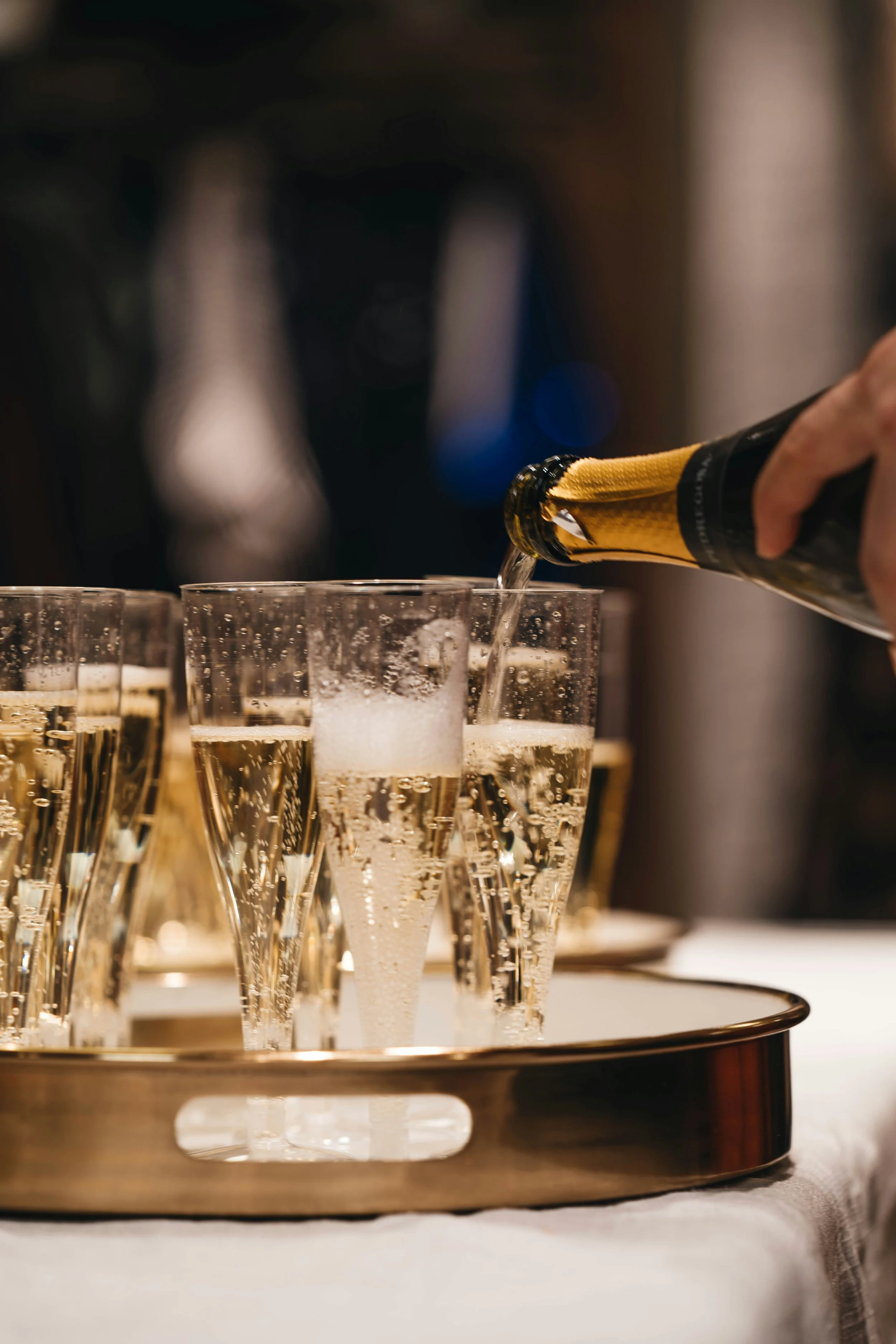
Sparkling Wines to Consider for the Holidays

Sparkling wines really do shine during the holidays—both literally and figuratively. Here’s a few tips on the various types of sparkling wines to enjoying them to the fullest.

Champagne

Champagne is a sparkling wine that is produced in the relatively small region of Champagne in France. An entry level bottle of Champagne is going to start in the $50 range.

Some Champagne facts:

  • Champagne is typically produced from three grapes — Pinot Noir, Chardonnay and Pinot Meunier

  • To be called Champagne, it must be produced in the Champagne region of France. Otherwise, it must be called Sparkling Wine

  • Champagne is produced using a process called the méthode champenoise where the bubbles are formed in the bottle during a second fermentation.

U.S. Sparkling Wine

In the U.S., there are a tremendous number of makers of sparkling wine. Most will produce a wine that can taste very much like the French Champagne. And, you can also find rosé sparkling wines.  An entry level bottle of sparkling wine in the U.S. can be as little as $10. Read more

Prosecco and Asti

In Italy, Prosecco is their signature sparkling wine. Produced in the Veneto region just north of Venice, this sparkling wine usually produces bigger bubbles. Bottles of Prosecco can be purchased in the $10- $15 range. Read more

Cava

The sparkling wine of Spain is Cava that is produced in the Catalonia region of Spain where Barcelona is located.  Nice bottles of Cava can be purchased for around $15. Read more

Styles of Champagne and Sparkling Wine

Brut Nature - This style is bone dry meaning it has little or no sugar content (0–3 g/L sugar).

Extra Brut - This style is also very dry but, it can have up to twice the sugar level of Brut Nature (0–6 g/L sugar). This little bit of sweetness creates a wonderful balance with Champagne’s naturally high acidity.

Brut - This is the most common style. While considered “Dry” this style can have twice the sugar of Extra Brut (0–12 g/L sugar).

Extra Dry - This is the one that always confuses people. This style is sweeter which actually makes it also taste a bit fruity (12–17 g/L sugar).

Dry - The confusing continues. This style is getting up there in sweetness (17–32 g/L sugar).

Demi-Sec - Now you’re talking Sweet (32–50 g/L sugar). This style works well with desserts or cheeses.

Doux - This one, while very rare to find, is really sweet (50+ g/L sugar).

A few serving tips

  • Chill properly: About 40–45°F (4–7°C) is ideal

  • Use proper glassware: Tulip or white wine glasses preserve aroma better than narrow flutes

  • Open gently: Twist the bottle, not the cork, for a quiet, elegant release

No matter which type or style you choose, give sparkling wines a try this holiday season. Cheers!
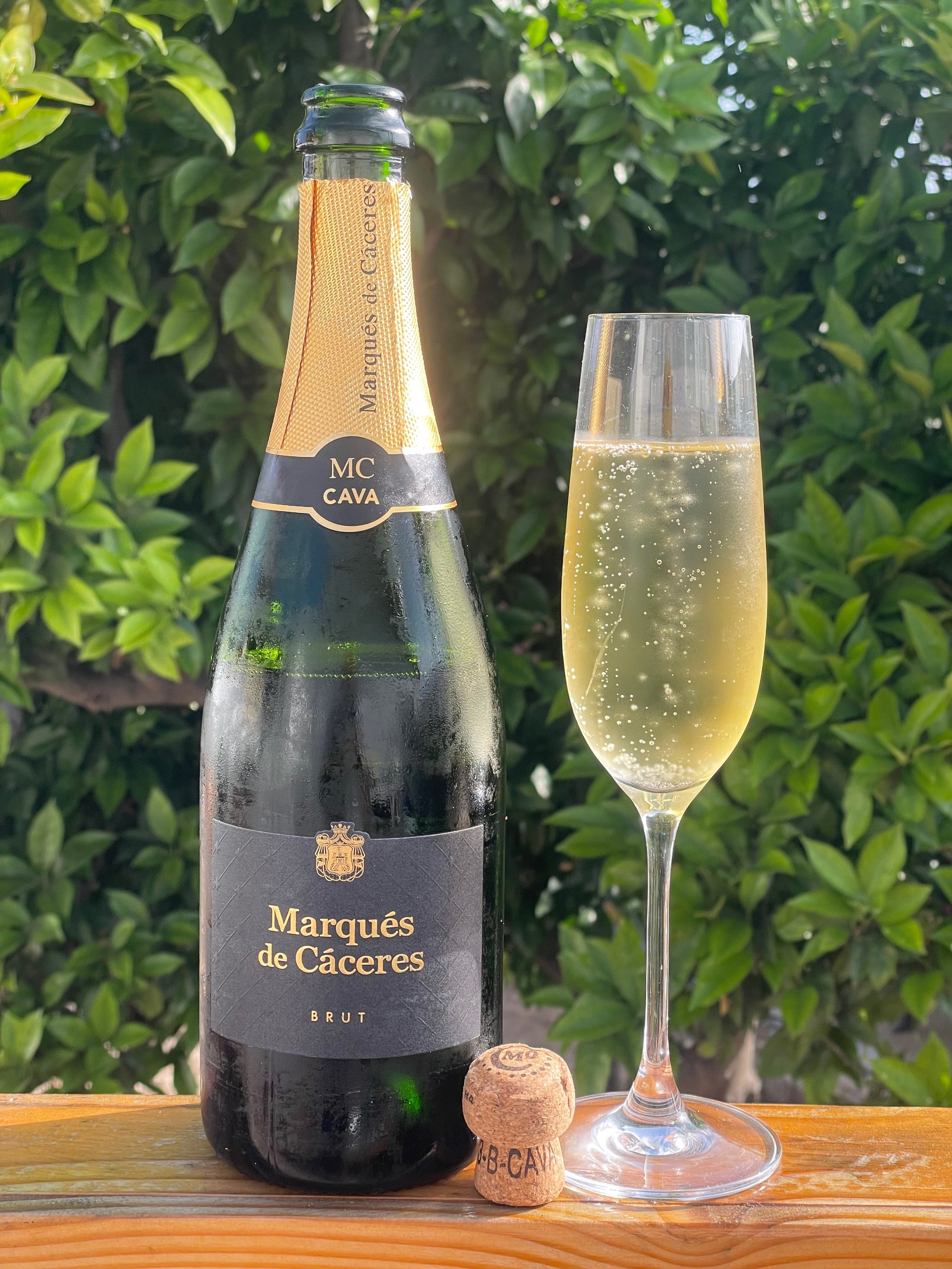
Behind the Cork™ - Marques de Caceres Cava

Marqués de Cáceres Cava ($12.99)

Marqués de Cáceres (Mar-kez Day Kass-er-rus) winery is located in Rioja Alta, Spain. It was founded in 1970 by the Forner family, an enterprising family that has been in the wine trade for five generations. The brand remains family-owned and women-run, led by CEO Cristina Forner. Marqués de Cáceres is one of the most widely distributed Spanish wines in the US.

In the 1800s, Spain began producing sparkling wines to mimic their French neighbor's Champagne and they called it Champaña.  But in the 1970s, French regulations were put into place such that only sparkling wine produce in the Champagne region of France could rightfully be called Champagne.  So, the Spanish re-named their sparkling wine for the caves or cellars where the sparkling wine was kept for aging. Hence the name Cava.

This Marqués de Cáceres Cava is produced from 50% Xarel-lo, 30% Macabeo, 20% Parellada grapes. It is pale gold in color with a delicate white flower aroma. On the palate, it has flavor of crisp apple flavor with fine and persistent bubbles. This one is best served cold!

This Cava from Marqués de Cáceres is very tasty and refreshing while being affordable and attainable. A great fit as this week’s Behind the Cork™ Wine of the Week. Cheers!


Disclosure of Wine Sample Submission: I received this sample at no cost for review.

Media Sample Provided by Marqués de Cáceres and Vineyard Brands

Sparkling Wines are Perfect for the Holidays!

Sparkling wines are perfect for the holidays. Here’s a few types to consider enjoying:

Champagne

Champagne is a sparkling wine that is produced in the relatively small region of Champagne in France. Only those sparkling wines produced in this region are allowed to be labeled as 'Champagne.'  And an entry level bottle of Champagne is going to start in the $50 range. So, typically you are toasting with some other sparkling wine. Read more

Some Champagne facts:

  • Champagne is typically produced from three grapes — Pinot Noir (Yes! A red wine grape!), Chardonnay and Pinot Meunier

  • To be called Champagne, it must be produced in the Champagne region of France. Otherwise, it’s called Sparkling Wine

  • Champagne is produced using a process called the méthode champenoise where the bubbles are formed in the bottle during a second fermentation.

U.S. Sparkling Wine

In the U.S., there are a tremendous number of makers of sparkling wine. Most will produce a wine that can taste very much like the French Champagne. And, you can also find rosé sparkling wines.  An entry level bottle of sparkling wine in the U.S. can be as little as $5. Read more

Prosecco and Asti

In Italy, Prosecco is their signature sparkling wine. Produced in the Veneto region just north of Venice, this sparkling wine usually produces bigger bubbles. Bottles of Prosecco can be purchased in the $10- $15 range. Read more

Cava

The sparkling wine of Spain is Cava that is produced in the Catalonia region of Spain where Barcelona is located.  Nice bottles of Cava can be purchased for around $15. Read more

Styles of Champagne and Sparkling Wine

Brut Nature - This style is bone dry meaning it has little or no sugar content (0–3 g/L sugar).

Extra Brut - This style is also very dry but, it can have up to twice the sugar level of Brut Nature (0–6 g/L sugar). This little bit of sweetness creates a wonderful balance with Champagne’s naturally high acidity.

Brut - This is the most common style. While considered “Dry” this style can have up to twice the sugar of Extra Brut (0–12 g/L sugar).

Extra Dry - This is the one that always confuses people. This style is sweeter which actually makes it also taste a bit more fruity (12–17 g/L sugar).

Dry - The confusion continues. This style is getting up there in sweetness (17–32 g/L sugar).

Demi-Sec - Now you’re talking Sweet (32–50 g/L sugar). This style works well with desserts or bold cheeses.

Doux - This one, while very rare to find, is really sweet (50+ g/L sugar).

No matter which type or style you choose, give sparkling wines a try this holiday season. Cheers!

Consider a Cava for the Holidays

Looking for a good, affordable bottle of bubbly for the holidays? Consider Cava.

Cava is a sparkling wine from Spain with a lot of similarity to French Champagne. In fact, the Spanish bubbly was called Champaña in Spain until the 1970s when French regulations were put into place to limit the use of the word Champagne to only those wines produced in the Champagne region of France.  So, the Spanish re-named their sparkling wine for the caves or cellars where the sparkling wine was kept for aging. Thus, came the name Cava.

Like Champagne, Cava is produced in the 'Traditional Method' where secondary fermentation is done in the bottle. This is how the bubbles are naturally formed since this second fermentation also converts sugar to alcohol using yeast, but the resulting CO2 is trapped in the bottle, producing the carbonation.

Unlike French Champagne, Cava is produced with the Macabeu, Xarello and Paralleda grapes.  But Cava surprisingly has a very similar taste to Champagne, much more so than the highly popular Prosecco.  But the best thing about Cava is its price. You can find a nice bottle for under $20.

Like Champagne, Cava is produced in various levels of sweetness:

  • Brut Nature -- Up to 3 grams of sugar/liter

  • Extra Brut -- Up to 6 grams/liter

  • Brut -- Up to 15 grams/liter

  • Extra Seco -- Between 12 - 20 grams/liter

  • Seco -- Between 17-35 grams/liter

  • Semi-Seco -- Between 33-50 grams/liter

  • Dulce -- More than 50 grams/liter

You can also find Cava Reserva which is aged an additional 6 months (for a total of 15 months) over the standard Cava (9 months of aging) and Cava Gran Reserva which is aged a total of 30 months.

Cava is a great alternative to Champagne and a wonderful sparkling wine to enjoy during the holidays (and year-round!).  Chill a bottle and enjoy. Cheers!