

Pinot Noir 🍷
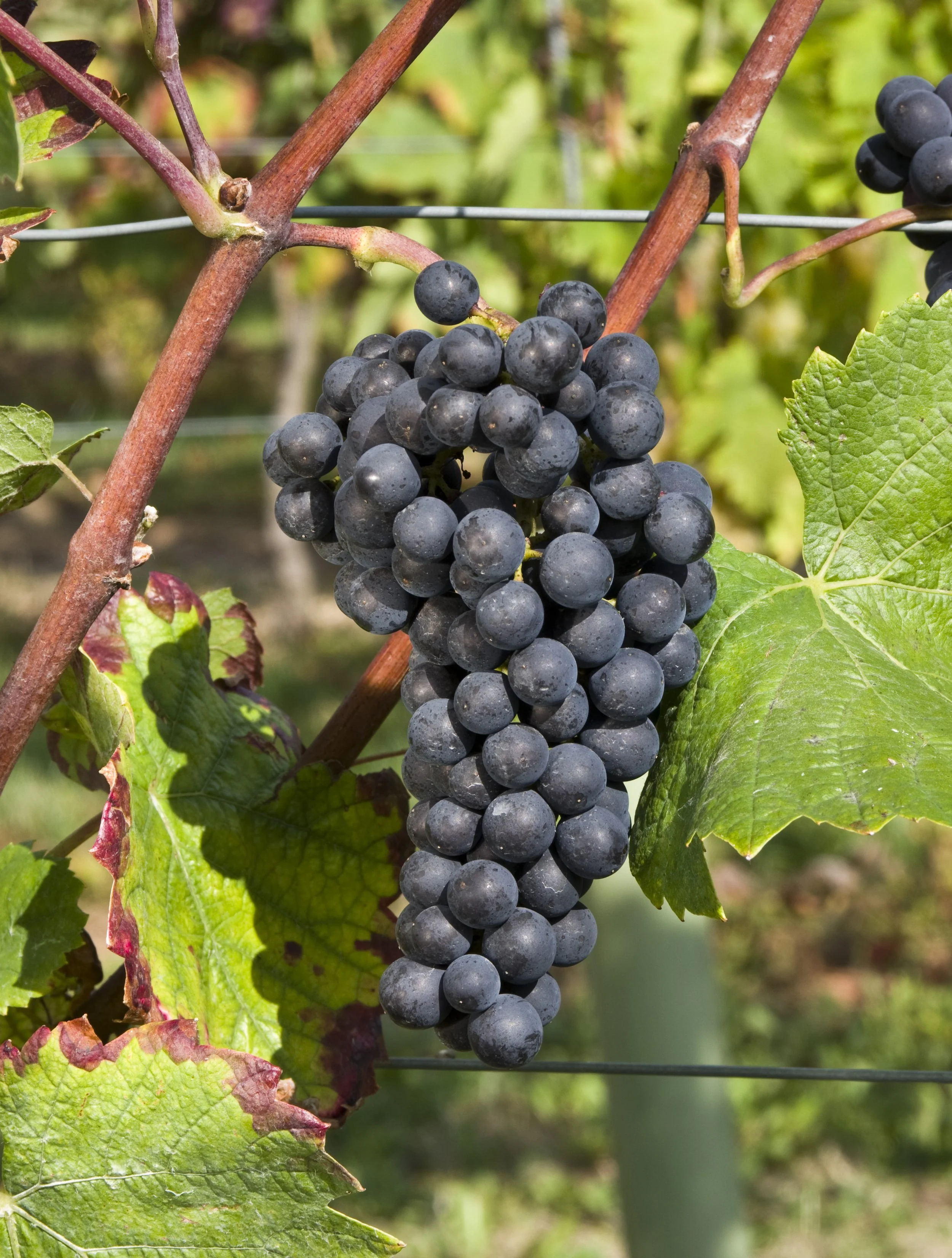
Photo by Ursula Brühl, Julius Kühn-Institut (JKI) on Wikimedia Commons
Pinot Noir is one of the world’s oldest cultivated grapes. Historically, it has its beginning with the Romans more than 2000 years ago and was then cultivated by Monks in medieval Burgundy, France.
Pinot Noir translates to black, or dark, pinecone because the small grape clusters resemble pinecones on the vine.
In France today, the wine makers of Burgundy are required to use Pinot Noir exclusively. And, in the Champagne region of France, Pinot Noir is one of the primary grapes used in making Champagne.
Pinot Noir is also grown in the U.S., New Zealand, Australia, Italy (where it is called Pinot Nero), Germany, Chile and South Africa.
Pinot Noir is famous for its delicate flavors rather than its power.
Young wines often display aromas of fresh cherry, raspberry, strawberry, and cranberry.
On the palate, Pinot Noir is typically light- to medium-bodied with light tannins, bright acidity, and moderate alcohol. Common flavor notes include red cherry, wild strawberry, raspberry, and cranberry.
Everyday Pinot Noir is generally best consumed within three to five years of release, while premium bottlings may age well for 10 to 20 years or even longer.
For the best tasting experience, serve Pinot Noir slightly cooler than room temperature, ideally between 55–60°F (13–16°C). A large Burgundy-style wine glass with a wide bowl is ideal because it allows the wine's delicate aromas to collect.