
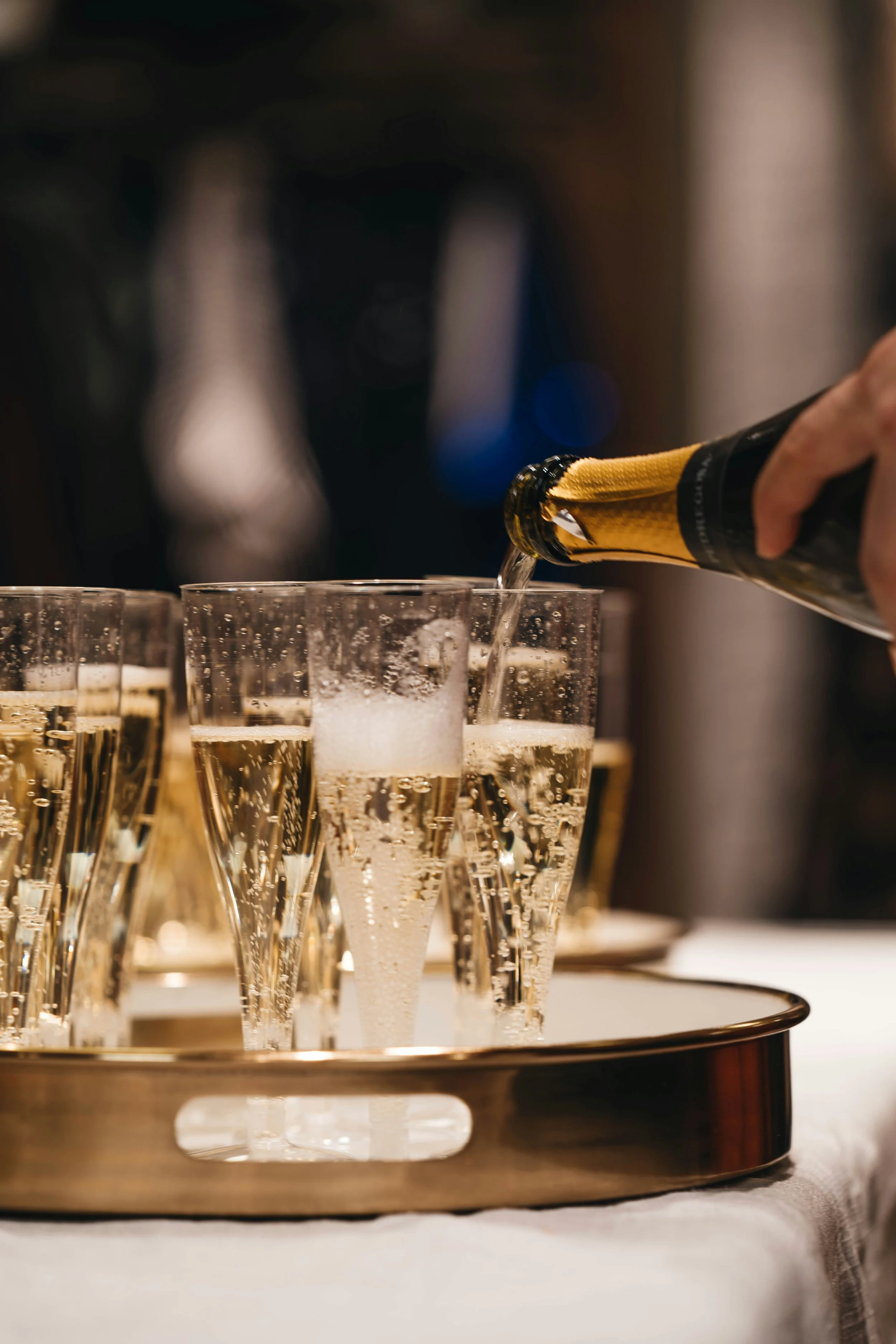
Sparkling Wines to Consider for the Holidays

Sparkling wines really do shine during the holidays—both literally and figuratively. Here’s a few tips on the various types of sparkling wines to enjoying them to the fullest.

Champagne

Champagne is a sparkling wine that is produced in the relatively small region of Champagne in France. An entry level bottle of Champagne is going to start in the $50 range.

Some Champagne facts:

  • Champagne is typically produced from three grapes — Pinot Noir, Chardonnay and Pinot Meunier

  • To be called Champagne, it must be produced in the Champagne region of France. Otherwise, it must be called Sparkling Wine

  • Champagne is produced using a process called the méthode champenoise where the bubbles are formed in the bottle during a second fermentation.

U.S. Sparkling Wine

In the U.S., there are a tremendous number of makers of sparkling wine. Most will produce a wine that can taste very much like the French Champagne. And, you can also find rosé sparkling wines.  An entry level bottle of sparkling wine in the U.S. can be as little as $10. Read more

Prosecco and Asti

In Italy, Prosecco is their signature sparkling wine. Produced in the Veneto region just north of Venice, this sparkling wine usually produces bigger bubbles. Bottles of Prosecco can be purchased in the $10- $15 range. Read more

Cava

The sparkling wine of Spain is Cava that is produced in the Catalonia region of Spain where Barcelona is located.  Nice bottles of Cava can be purchased for around $15. Read more

Styles of Champagne and Sparkling Wine

Brut Nature - This style is bone dry meaning it has little or no sugar content (0–3 g/L sugar).

Extra Brut - This style is also very dry but, it can have up to twice the sugar level of Brut Nature (0–6 g/L sugar). This little bit of sweetness creates a wonderful balance with Champagne’s naturally high acidity.

Brut - This is the most common style. While considered “Dry” this style can have twice the sugar of Extra Brut (0–12 g/L sugar).

Extra Dry - This is the one that always confuses people. This style is sweeter which actually makes it also taste a bit fruity (12–17 g/L sugar).

Dry - The confusing continues. This style is getting up there in sweetness (17–32 g/L sugar).

Demi-Sec - Now you’re talking Sweet (32–50 g/L sugar). This style works well with desserts or cheeses.

Doux - This one, while very rare to find, is really sweet (50+ g/L sugar).

A few serving tips

  • Chill properly: About 40–45°F (4–7°C) is ideal

  • Use proper glassware: Tulip or white wine glasses preserve aroma better than narrow flutes

  • Open gently: Twist the bottle, not the cork, for a quiet, elegant release

No matter which type or style you choose, give sparkling wines a try this holiday season. Cheers!

Sparkling Wines are Perfect for the Holidays!

Sparkling wines are perfect for the holidays. Here’s a few types to consider enjoying:

Champagne

Champagne is a sparkling wine that is produced in the relatively small region of Champagne in France. Only those sparkling wines produced in this region are allowed to be labeled as 'Champagne.'  And an entry level bottle of Champagne is going to start in the $50 range. So, typically you are toasting with some other sparkling wine. Read more

Some Champagne facts:

  • Champagne is typically produced from three grapes — Pinot Noir (Yes! A red wine grape!), Chardonnay and Pinot Meunier

  • To be called Champagne, it must be produced in the Champagne region of France. Otherwise, it’s called Sparkling Wine

  • Champagne is produced using a process called the méthode champenoise where the bubbles are formed in the bottle during a second fermentation.

U.S. Sparkling Wine

In the U.S., there are a tremendous number of makers of sparkling wine. Most will produce a wine that can taste very much like the French Champagne. And, you can also find rosé sparkling wines.  An entry level bottle of sparkling wine in the U.S. can be as little as $5. Read more

Prosecco and Asti

In Italy, Prosecco is their signature sparkling wine. Produced in the Veneto region just north of Venice, this sparkling wine usually produces bigger bubbles. Bottles of Prosecco can be purchased in the $10- $15 range. Read more

Cava

The sparkling wine of Spain is Cava that is produced in the Catalonia region of Spain where Barcelona is located.  Nice bottles of Cava can be purchased for around $15. Read more

Styles of Champagne and Sparkling Wine

Brut Nature - This style is bone dry meaning it has little or no sugar content (0–3 g/L sugar).

Extra Brut - This style is also very dry but, it can have up to twice the sugar level of Brut Nature (0–6 g/L sugar). This little bit of sweetness creates a wonderful balance with Champagne’s naturally high acidity.

Brut - This is the most common style. While considered “Dry” this style can have up to twice the sugar of Extra Brut (0–12 g/L sugar).

Extra Dry - This is the one that always confuses people. This style is sweeter which actually makes it also taste a bit more fruity (12–17 g/L sugar).

Dry - The confusion continues. This style is getting up there in sweetness (17–32 g/L sugar).

Demi-Sec - Now you’re talking Sweet (32–50 g/L sugar). This style works well with desserts or bold cheeses.

Doux - This one, while very rare to find, is really sweet (50+ g/L sugar).

No matter which type or style you choose, give sparkling wines a try this holiday season. Cheers!

How Prosecco Differs from Champagne

Sparking wine is versatile, aesthetic appealing, sophisticated, light and balanced in flavor, and suitable for various social settings and occasions. These factors combine to make sparkling wine a popular choice among wine drinkers. And, among sparkling wines, Prosecco is a very popular choice.

Prosecco has a long history dating back to Roman times. The name Prosecco is derived from the village of Prosecco (now part of Trieste) in northeastern Italy.

Prosecco is primarily from the Veneto region of Italy and made from the Glera grape.  Like Champagne, Prosecco must be produced in designated regions of Italy to be called Prosecco on the label. Unlike Champagne and Cava that undergo a secondary fermentation in the bottle (the 'traditional method'), Prosecco is produced using the Charmat ('tank') method.  Using this process, large quantities of wine are kept under pressure in stainless steel tanks during the second fermentation.  The resulting sparkling wine is then bottled.

While most people can't tell the difference in the secondary fermentation process used, it is generally believed that the traditional method results in smaller, more persistent bubbles, while the tank method results in lighter bubbles, being almost frothy, and having a creamier feel in the mouth.    

Prosecco vs. Champagne

While both are sparkling wines, Prosecco and Champagne differ in grape varieties, production methods, and regional origins. Champagne is made in the Champagne region of France primarily using Chardonnay, Pinot Noir and Pinot Meunier grapes. It is produced using the traditional method (Méthode Champenoise), which involves secondary fermentation in the bottle. Prosecco, on the other hand, is primarily made from Glera grapes and uses the Charmat method (Tank Method), resulting in a lighter, fruitier wine. Prosecco tends to be fruiter than Champagne and usually sweeter. Prosecco has been described as having flavors of melon, peer, apple, honey suckle and cream. To produce a rosé Prosecco, a small percentage (~15%) of red wine grapes are used, including Pinot Nero.

There are various types of Prosecco:

  • Prosecco DOC: Produced in various regions within nine provinces in Veneto and Friuli Venezia Giulia.

  • Prosecco Superiore DOCG: Higher quality Prosecco made in the hills of Conegliano-Valdobbiadene and Asolo.

  • Prosecco Spumante: Fully sparkling.

  • Prosecco Frizzante: Semi-sparkling.

  • Prosecco Tranquillo: Still wine with no bubbles, much less common.

And, there are three main styles of Prosecco:

  • Brut: Up to 12 gram per liter of residual sugar

  • Extra Dry: 12-17 gm/liter of residual sugar

  • Dry: Between 17-32 gm/liter of residual sugar  

Prosecco also tends to be lower in alcohol, around 11-12%  And, nice entry-level bottles of Prosecco are easily found in the $15 - $25 range. 

It's the Holidays and Time for Sparkling Wine!

Sparkling wines are perfect for the holidays. Here’s a few types to consider enjoying:

Champagne

Champagne is a sparkling wine that is produced in the relatively small region of Champagne in France. Only those sparkling wines produced in this region are allowed to be labeled as 'Champagne.'  And an entry level bottle of Champagne is going to start in the $50 range. So, typically you are toasting with some other sparkling wine. Read more

Some Champagne facts:

  • Champagne is typically produced from three grapes — Pinot Noir (Yes! A red wine grape!), Chardonnay and Pinot Meunier

  • To be called Champagne, it must be produced in the Champagne region of France. Otherwise, it’s called Sparkling Wine

  • Champagne is produced using a process called the méthode champenoise where the bubbles are formed in the bottle during a second fermentation.

U.S. Sparkling Wine

In the U.S., there are a tremendous number of makers of sparkling wine. Most will produce a wine that can taste very much like the French Champagne. And, you can also find rosé sparkling wines.  An entry level bottle of sparkling wine in the U.S. can be as little as $5. Read more

Prosecco and Asti

In Italy, Prosecco is their signature sparkling wine. Produced in the Veneto region just north of Venice, this sparkling wine usually produces bigger bubbles. Bottles of Prosecco can be purchased in the $10- $15 range. Read more

Cava

The sparkling wine of Spain is Cava that is produced in the Catalonia region of Spain where Barcelona is located.  Nice bottles of Cava can be purchased for around $15. Read more

Styles of Champagne and Sparkling Wine

Brut Nature - This style is bone dry meaning it has little or no sugar content (0–3 g/L sugar).

Extra Brut - This style is also very dry but, it can have up to twice the sugar level of Brut Nature (0–6 g/L sugar). This little bit of sweetness creates a wonderful balance with Champagne’s naturally high acidity.

Brut - This is the most common style. While considered “Dry” this style can have twice the sugar of Extra Brut (0–12 g/L sugar).

Extra Dry - This is the one that always confuses people. This style is sweeter which actually makes it also taste a bit fruity (12–17 g/L sugar).

Dry - The confusing continues. This style is getting up there in sweetness (17–32 g/L sugar).

Demi-Sec - Now you’re talking Sweet (32–50 g/L sugar). This style works well with desserts or cheeses.

Doux - This one, while very rare to find, is really sweet (50+ g/L sugar).

No matter which type or style you choose, give sparkling wines a try this holiday season. Cheers!

Sparkling Wines are Perfect for the Holidays

Everybody loves Champagne.  It's a treat that is generally poured in small fluted glasses and raised during toasts at special occasions. But what a lot of people don't realize is that they are not drinking Champagne. Read more

Champagne

Champagne is a sparkling wine that is produced in the relatively small region of Champagne in France. Only those sparkling wines produced in this region are allowed to be labeled as 'Champagne.'  And an entry level bottle of Champagne is going to start in the $50 range. So, typically you are toasting with some other sparkling wine. Read more

  • Champagne is typically produced from three grapes — Pinot Noir (Yes! A red wine grape!), Chardonnay and Pinot Meunier

  • To be called Champagne, it must be produced in the Champagne region of France. Otherwise, it’s called Sparkling Wine

  • The first step in making Champagne is to make the wine, like any other wine, in a barrel or tank and bottle it

  • The wine becomes carbonated by a second fermentation inside the bottle that is initiated by adding a solution of sugar and yeast. As the yeast consumes the sugar, it gives off carbon dioxide which stays trapped in the wine since the bottle is capped

  • Champagne bottles are stored with their neck down during the second fermentation so that the yeast will settle in the neck

  • The upside down bottles are regularly turned to ensure all the yeast ends up in the neck of the bottle in a process called riddling

  • The Champagne bottle is then opened and the spent yeast is removed or disgorged

  • Finally, some additional wine and sugar is added (the dosage) to balance the Champagne’s acidity

  • This process of making Champagne is called the méthode champenoise

And, just as a reminder, Champagne grapes are not used in the production of Champagne.

U.S. Sparkling Wine

In the U.S., there are a tremendous number of makers of sparkling wine. Most will produce a wine that can taste very much like the French Champagne. And, you can also find these sparkling wines infused with fruit flavors such as peach and nut flavors such as almond.  An entry level bottle of sparkling wine in the U.S. can be as little as $5. Read more

California can produce sparkling wines with “Champagne” on the label and it is perfectly legal to be called Champagne. The loophole that makes this legal stems from a ruling in 2005, after two decades of court battles, when the U.S. and the EU reached an agreement. In exchange for easing trade restrictions on wine, the American government agreed that Champagne would no longer appear on domestic wine labels – that is, unless a producer was already using the name

Prosecco and Asti

In Italy, Prosecco is their signature sparkling wine. Produced in the Veneto region just north of Venice, this sparkling wine usually produces bigger bubbles. Bottles of Prosecco can be purchased in the $10- $15 range. Read more

Cava

The sparkling wine of Spain is Cava that is produced in the Catalonia region of Spain where Barcelona is located.  Nice bottles of Cava can be purchased for around $15. Read more

Styles of Champagne and Sparkling Wine

Brut Nature - This style is bone dry. It has little or no sugar content (0–3 g/L sugar).

Extra Brut - This style is also bone dry but, it can have up to twice the sugar level of Brut Nature (0–6 g/L sugar). But, this little bit of sweetness creates a wonderful balance with Champagne’s naturally high acidity.

Brut - This is the most common style. While considered “Dry” this style can have twice the sugar of Extra Brut (0–12 g/L sugar).

Extra Dry - This is the one that always confuses people. This style is sweeter which actually makes it also taste a bit Fruity (12–17 g/L sugar).

Dry - The confusing continues. This style is getting up there in sweetness (17–32 g/L sugar).

Demi-Sec - Now you’re talking Sweet (32–50 g/L sugar). This style works well with desserts or cheeses.

Doux - This one, while very rare to find, is SWEET (50+ g/L sugar).