
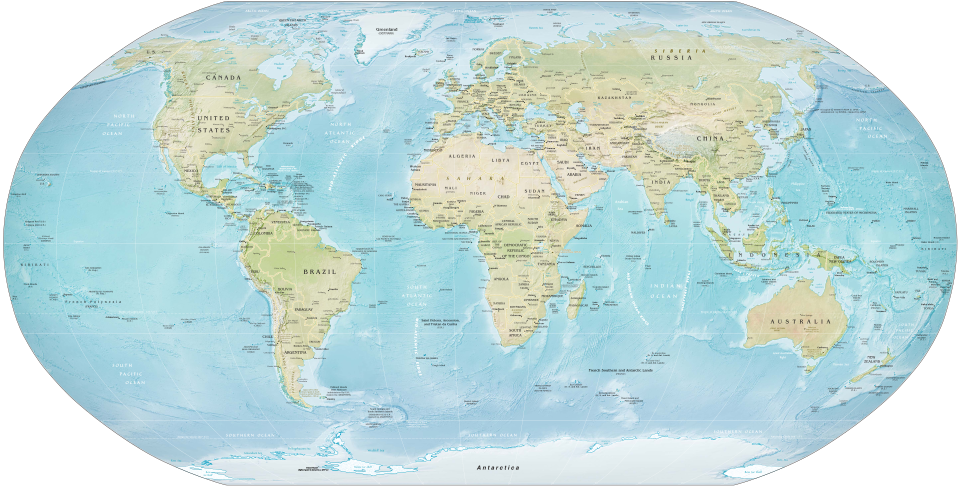
Europe
Europe is the heartland of the wine world — the source of most of the world's great grape varieties, the birthplace of appellations and classification systems, and home to wine cultures stretching back thousands of years. European wines are traditionally labeled by region rather than grape variety, reflecting the Old World philosophy that place shapes a wine more than the variety in the bottle.
England
England has emerged as one of the wine world's most exciting stories: the chalk downs of southern England — geologically continuous with the soils of Champagne — have proven remarkably well-suited to traditional-method sparkling wine production from Chardonnay, Pinot Noir and Pinot Meunier. Climate change has extended the growing season significantly, and producers in Kent, Sussex and Hampshire are now making sparkling wines that regularly hold their own against Champagne in blind tastings. Bacchus, an aromatic white variety, has become England's signature still wine grape; the country now has more than 900 vineyards and 170 wineries, with international recognition growing rapidly to match.
France
France is the country against which all other wine regions are measured — the source of the world's most studied and imitated wine styles, from Burgundian Pinot Noir to Bordeaux Cabernet blends to Champagne. Its major regions — Bordeaux, Burgundy, Champagne, the Rhône Valley, the Loire Valley, Alsace, Languedoc and more — each have distinct identities built around specific grape varieties and centuries of accumulated tradition. French wine labels typically carry the region's name rather than the grape, reflecting a philosophy that place matters more than variety.
Italy
With more than 350 indigenous grape varieties and wine produced in all 20 of its administrative regions, Italy offers more vinous diversity than any other country on earth. From the tannic mountain Nebbiolo of Piedmont to the volcanic Aglianico of Campania, Italian wines are inseparable from the local cuisines and cultures that shaped them over millennia. The classification system — DOCG, DOC and IGT — spans everything from humble table wines to some of the world's most age-worthy reds.
Spain
Spain has more vineyard area planted than any other country in the world, yet the range of what it produces is extraordinary: from the elegant, oak-aged Tempranillo of Rioja and Ribera del Duero to the bone-dry Fino Sherry of Jerez, the mineral Albariño of Galicia and the traditional-method Cava of Catalonia. Tempranillo is the dominant red variety; Garnacha, Monastrell and the rare indigenous varieties of Priorat and the Canary Islands round out a country of remarkable stylistic breadth. Spain's classification system ranges from Vino de Mesa (table wine) through Vino de la Tierra and DO to the top-tier DOCa, of which only Rioja and Priorat currently qualify.
Portugal
A small country with an outsized wine identity, Portugal is home to more indigenous grape varieties per square kilometer than almost anywhere else, making it one of the most rewarding destinations for wine exploration. Port — the fortified wine produced in the steep schist vineyards of the Douro Valley — remains Portugal's most internationally recognized wine, but the country's dry table wines (Alentejo reds, Vinho Verde, Bairrada, Dão) have earned growing critical attention. Portugal's commitment to indigenous varieties like Touriga Nacional, Baga, Loureiro and Arinto gives its wines a character that no other country can replicate.
Germany
Germany produces some of the world's most profound and age-worthy white wines, built on Riesling in a style that ranges from bone dry to intensely sweet, always marked by the country's signature combination of high natural acidity, low alcohol and extraordinary aromatic precision. The thirteen wine regions are concentrated in the west, along the Rhine, Mosel, Main and their tributaries, where steep slate and volcanic slopes capture enough warmth to ripen grapes at the northern limits of viticulture. The Prädikat quality classification — from Kabinett through Spätlese, Auslese, Beerenauslese and Trockenbeerenauslese — is one of the wine world's most detailed frameworks for categorizing grape ripeness and wine style.
Austria
Austria's wine identity rests on two exceptional indigenous varieties: Grüner Veltliner — the crisp, white-pepper-tinged white that accounts for roughly a third of all plantings — and Riesling, produced in the Wachau and Kamptal with a mineral precision that rivals the finest German examples. Four main wine regions span styles from the famous Viennese Heurigen (wine taverns serving young wine with food) to the powerful, age-worthy reds of Burgenland, particularly from Blaufränkisch and Zweigelt. Austria's wine law, rebuilt from scratch after a 1985 adulteration scandal, is now among the strictest and most reliable in the world.
Greece
One of the oldest wine cultures in the Western world, Greece produces wines from indigenous varieties — Assyrtiko, Agiorgitiko, Xinomavro, Moschofilero, Malagousia — that are found nowhere else on earth. The volcanic island of Santorini produces Assyrtiko of extraordinary mineral intensity from ancient ungrafted vines trained in basket shapes to protect against the Aegean winds; Nemea in the Peloponnese produces structured reds from Agiorgitiko; Macedonia's Xinomavro wines offer an age-worthiness sometimes compared to Barolo. Greek wine has undergone a significant quality revolution since the 1990s and now offers distinctive, food-friendly wines of real depth at relatively accessible prices.
Hungary
Hungary's 22 wine regions grow hundreds of varieties, many native to the country, with styles ranging from light, fresh whites to powerful reds from the volcanic hills of Eger and Villány. The country's most celebrated wine is Tokaji Aszú — one of the world's great sweet wines, produced from botrytis-affected Furmint grapes in the Tokaj region, with a history of royal patronage and centuries-long renown across European courts. Hungary is also producing excellent dry Furmint whites that are gaining international recognition for their distinctive mineral precision and textural complexity.
Romania
Romania is one of the top wine-producing countries in Europe, with a wine culture stretching back thousands of years into Dacian antiquity. Indigenous varieties like Fetească Neagră (for reds) and Fetească Albă and Fetească Regală (for whites) give Romanian wine a distinctive character that is becoming more visible internationally as producers modernize their approach. The wine regions of Dealu Mare, Cotnari, Murfatlar and Dobrogea offer a range of styles from rich, structured reds to elegant dessert wines.
Moldova
One of Europe's most densely planted wine countries per square kilometer, Moldova has a winemaking tradition rooted in its position on the border of Romania and Ukraine in the heart of the Black Sea wine belt. The country is home to some of the world's largest underground wine cellars — the Cricova and Mileștii Mici networks together hold millions of bottles in tunnels stretching for tens of kilometers beneath the capital. Moldova produces a wide range of styles from both international varieties and indigenous ones like Fetească Neagră, and is an emerging source of interesting, well-priced wines as its producers gain experience in international markets.
Ukraine
Ukraine has a long winemaking history, particularly in the Odessa region on the Black Sea coast and the Carpathian foothills in the west, where wine production dates back to Greek antiquity. The country produces wines from international varieties alongside some indigenous ones, with sparkling wine from the historic Crimea region historically the most internationally recognized style. Wine production has faced significant challenges since 2014 but continues in the regions under Ukrainian control.
Russia
Russia produces wine in its southern regions — particularly Krasnodar Krai near the Black Sea and the Don River valley — from both international varieties and indigenous ones long cultivated in the Caucasus borderlands. Still, sparkling and dessert wines are all produced, and the country's wine culture is ancient in its southernmost territories, where viticulture has been practiced for thousands of years. Russia is primarily a wine-consuming country, and its wines are rarely seen in international markets.
Georgia
Georgia, in the South Caucasus at the crossroads of Europe and Asia, is where wine was born: archaeological evidence of winemaking here dates back more than 8,000 years, making it the oldest known wine culture in the world. The country's traditional method — fermenting grapes with their skins in large clay vessels called qvevri, buried underground for temperature stability — is the ancient origin of what the modern natural wine movement calls "orange wine," a practice UNESCO recognized and inscribed on its Intangible Cultural Heritage list in 2013. The flagship red variety is Saperavi, producing deeply colored, tannic, age-worthy wines; Rkatsiteli is the most widely planted white; and Georgia's roughly 500 indigenous grape varieties represent one of the most extraordinary reservoirs of viticultural heritage anywhere on earth.
The Americas
The Americas span the full range of wine climates, from the cold lake-effect conditions of Canada's Niagara Peninsula to the hot, dry high-altitude plains of Argentina's Mendoza. New World in philosophy — wines are typically labeled by grape variety rather than region — the Americas have produced wine styles influential enough to reshape how the world thinks about Cabernet Sauvignon, Malbec and Sauvignon Blanc.
United States
All 50 states produce wine, but California accounts for roughly 80% of national production and is home to some of the world's most celebrated wine regions: Napa Valley for Cabernet Sauvignon, Sonoma for Pinot Noir, Chardonnay and Zinfandel, and the Central Coast for a broad range of varieties. Washington State has established a strong reputation for Cabernet-based blends and Riesling, Oregon's Willamette Valley is considered one of the finest Pinot Noir regions outside Burgundy, and New York's Finger Lakes produces benchmark American Riesling. The American Viticultural Area (AVA) system now encompasses hundreds of designated regions across the country.
Argentina
Argentina is the largest wine producer in South America and one of the top producers in the world, with the Mendoza province — lying in the rain shadow of the Andes at elevations between 600 and 1,500 meters — accounting for roughly three-quarters of national production. The country's signature wine is Malbec — a variety that struggled in its native Bordeaux but found its ideal home in these high-altitude vineyards, producing wines of deep color, plush dark fruit and smoky complexity that made Argentina famous internationally. Torrontés, Argentina's most distinctive white variety, is found at this scale nowhere else: aromatic, floral and fresh, it is as uniquely Argentine as Malbec.
Chile
Chile's long, narrow geography — stretching 4,300 kilometers from the Atacama Desert to Patagonia, flanked by the Andes to the east and the Pacific to the west — creates an extraordinary range of microclimates across its wine valleys. Cabernet Sauvignon is the flagship red variety; Carménère — rediscovered in Chile in the 1990s after being thought extinct since phylloxera wiped it out in France — has become Chile's most distinctive signature grape. The Maipo, Colchagua, Casablanca and Aconcagua valleys are among the most recognized regions, with the cool, Pacific-influenced Casablanca Valley particularly celebrated for white wines and Pinot Noir.
Canada
Canada's wine regions are concentrated in two provinces: British Columbia's Okanagan Valley, where dramatic desert landscapes and lake-moderated temperatures produce outstanding Cabernet Franc, Merlot and aromatic whites, and Ontario's Niagara Peninsula, best known for Cabernet Franc, Pinot Noir, Chardonnay and Riesling. The country's most internationally celebrated contribution to wine culture is icewine — produced by allowing grapes to freeze naturally on the vine in the depths of winter, then pressing the frozen berries to extract an intensely concentrated, honeyed nectar of remarkable complexity. Canada is now one of the world's leading icewine producers, and the style — white from Riesling and Vidal, red from Cabernet Franc — is considered a distinctly Canadian signature.
Brazil
Brazil is South America's third largest wine producer, with most quality production concentrated in the Serra Gaúcha region of Rio Grande do Sul in the far south, where Italian and German immigrant communities established viticulture in the late 19th century. The country's best-known wines are sparkling whites made in the traditional method from Chardonnay and Pinot Noir, a tradition that has flourished in the high-altitude, cool-climate hills of the Serra Gaúcha. Brazil is one of the few wine regions in the world that can harvest twice a year, taking advantage of a tropical semi-arid climate in the Vale do São Francisco in the northeast for a unique second growing cycle.
Uruguay
Uruguay is South America's most overlooked wine country, despite a winemaking tradition shaped by Basque and Italian immigrant communities dating to the 1870s and a climate more reminiscent of Bordeaux than of Mendoza — cool, humid and Atlantic-influenced. Tannat — a powerfully tannic, deeply colored variety that can be austere in its native southwest France — found its most expressive and balanced home in Uruguay, where the maritime climate and warm days produce wines of dark fruit richness and genuine complexity. Uruguay's wines are rarely exported in significant volumes, making them a rewarding discovery for curious wine explorers.
Oceania
Australia and New Zealand occupy opposite ends of the Oceanic wine spectrum — Australia producing some of the world's most powerful and sun-drenched red wines alongside elegant cool-climate expressions, New Zealand built on a reputation for razor-sharp aromatics and one of the Southern Hemisphere's finest Pinot Noir regions.
Australia
Australia has more than 60 designated wine regions spread across its states, producing wine in climates ranging from the cool maritime conditions of Tasmania and the Yarra Valley to the intense heat of the Barossa Valley and McLaren Vale. Shiraz (Syrah) is the country's signature red variety — particularly the dense, powerful, age-worthy expressions of the Barossa — while Chardonnay, Cabernet Sauvignon, Riesling (Clare and Eden valleys) and old-vine Semillon (Hunter Valley) are among its most accomplished styles. Australia's approach to winemaking is notably innovative and experimental by international standards, and its Geographical Indications (GI) system provides clear regional provenance on every label.
New Zealand
New Zealand's wine identity was transformed by Marlborough's Sauvignon Blanc from the 1980s onward — a style of startling aromatic intensity (passionfruit, citrus, cut grass, fresh herbs) that became one of the wine world's most globally influential templates. Beyond Marlborough, Central Otago produces Pinot Noir of genuine world-class quality from the world's southernmost commercial wine region; Hawke's Bay excels in Bordeaux varieties and Syrah; and Waipara and Canterbury produce outstanding cool-climate Riesling and Pinot Gris. New Zealand's small scale, clean environment and rigorous standards have made it one of the wine world's most reliable sources of consistent quality.
Africa
South Africa is the African continent's dominant wine producer and one of the wine world's most distinctive voices, shaped by a unique convergence of Old World tradition, New World ambition and indigenous grape heritage.
South Africa
South Africa's wine regions are concentrated in the Cape at the southwestern tip of the continent, where the cold Benguela Current from the Atlantic moderates temperatures and creates a Mediterranean-like climate ideally suited to viticulture. The country's most distinctive contribution to the wine world is Chenin Blanc (locally called Steen) — no country on earth plants more of it — producing wines that range from dry and mineral to lusciously sweet, with the finest old-vine expressions ranking among the most compelling Chenin Blancs anywhere. Pinotage, a uniquely South African crossing of Pinot Noir and Cinsault created in 1925, produces wines of smoky, dark fruit character found nowhere else; the Wine of Origin (WO) system classifies the country's regions, districts and wards with a traceability standard considered among the most rigorous in the New World.
Asia
Asia's wine landscape is still emerging in international consciousness, but the scale and ambition of production — particularly in China — make it impossible to overlook.
China
China has grown rapidly to become one of the world's largest wine-producing countries, with vineyards now established across more than a dozen provinces — from Xinjiang in the far northwest to Yunnan in the southwest and the Ningxia Hui Autonomous Region on the north-central plateau. The primary varieties planted are international — Cabernet Sauvignon, Merlot, Chardonnay — though interest in developing wines suited to China's distinctive terroirs is growing steadily. The domestic market is enormous and most production is consumed within China; quality at the premium end has risen significantly over the past two decades, and wines from the Ningxia region in particular have begun attracting serious international attention.
Japan
Japan's wine history dates to the 1870s, when the Meiji government encouraged viticulture in Yamanashi Prefecture in the foothills of Mount Fuji — still the country's most important wine region today, alongside Nagano, Hokkaido and Yamagata. The signature variety is Koshu, a delicate pink-skinned grape grown in Japan for over a thousand years — possibly arriving via the Silk Road from the Caucasus — producing refined, mineral, citrus-fresh dry whites unlike any other wine in the world. Japanese wine production is modest in global terms and the humid climate makes viticulture genuinely challenging, but the precision and craftsmanship deeply embedded in Japanese culture have produced wines of real international quality, particularly in traditional-method sparkling and Koshu whites.