

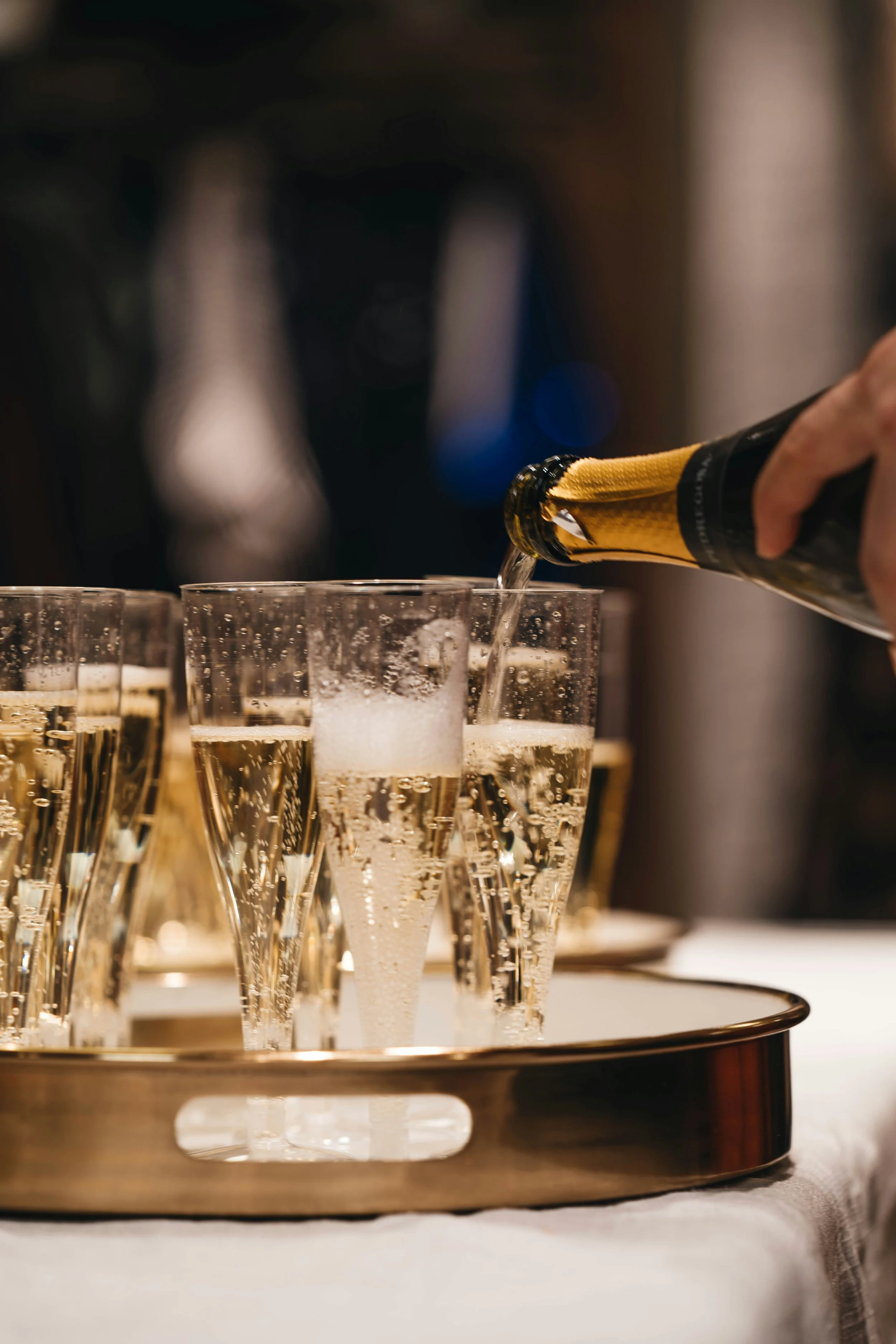
Photo by Alexander Naglestad on Unsplash
Sparkling wines really do shine during the holidays—both literally and figuratively. Here’s a few tips on the various types of sparkling wines to enjoying them to the fullest.
Champagne
Champagne is a sparkling wine that is produced in the relatively small region of Champagne in France. An entry level bottle of Champagne is going to start in the $50 range.
Some Champagne facts:
Champagne is typically produced from three grapes — Pinot Noir, Chardonnay and Pinot Meunier
To be called Champagne, it must be produced in the Champagne region of France. Otherwise, it must be called Sparkling Wine
Champagne is produced using a process called the méthode champenoise where the bubbles are formed in the bottle during a second fermentation.
U.S. Sparkling Wine
In the U.S., there are a tremendous number of makers of sparkling wine. Most will produce a wine that can taste very much like the French Champagne. And, you can also find rosé sparkling wines. An entry level bottle of sparkling wine in the U.S. can be as little as $10. Read more
Prosecco and Asti
In Italy, Prosecco is their signature sparkling wine. Produced in the Veneto region just north of Venice, this sparkling wine usually produces bigger bubbles. Bottles of Prosecco can be purchased in the $10- $15 range. Read more
Cava
The sparkling wine of Spain is Cava that is produced in the Catalonia region of Spain where Barcelona is located. Nice bottles of Cava can be purchased for around $15. Read more
Styles of Champagne and Sparkling Wine
Brut Nature - This style is bone dry meaning it has little or no sugar content (0–3 g/L sugar).
Extra Brut - This style is also very dry but, it can have up to twice the sugar level of Brut Nature (0–6 g/L sugar). This little bit of sweetness creates a wonderful balance with Champagne’s naturally high acidity.
Brut - This is the most common style. While considered “Dry” this style can have twice the sugar of Extra Brut (0–12 g/L sugar).
Extra Dry - This is the one that always confuses people. This style is sweeter which actually makes it also taste a bit fruity (12–17 g/L sugar).
Dry - The confusing continues. This style is getting up there in sweetness (17–32 g/L sugar).
Demi-Sec - Now you’re talking Sweet (32–50 g/L sugar). This style works well with desserts or cheeses.
Doux - This one, while very rare to find, is really sweet (50+ g/L sugar).
A few serving tips
Chill properly: About 40–45°F (4–7°C) is ideal
Use proper glassware: Tulip or white wine glasses preserve aroma better than narrow flutes
Open gently: Twist the bottle, not the cork, for a quiet, elegant release
No matter which type or style you choose, give sparkling wines a try this holiday season. Cheers!