Some Thoughts About Gewurztraminer

Gewürztraminer is the name of the grape used to make Gewürztraminer wine. It originated in Germany and has spread to other wine-growing areas, especially Alsace in France, as well as parts of Italy, Austria, and even the U.S.

The grape itself is a mutation of the older Traminer variety, which dates back centuries. It’s known for its distinctive pinkish skin and aromatic qualities.

The name comes from the German words Gewürz, meaning "spice," and Traminer, referring to a variety of grape. So, it's essentially a "spicy Traminer" grape.

Gewürztraminer is best known for its aromatic, spicy, and floral notes.

Aromatics: Gewürztraminer is very aromatic. It often has intense scents of rose petals, lychee fruit, and spicy notes of ginger, cinnamon, and even hints of honey or sweet baking spices.

Flavor: The taste is slightly sweet with flavors that can range from tropical fruits (like lychee, pineapple, and passionfruit) to more floral and spiced elements (such as ginger, clove, and orange zest). It is typically a medium-body wine with a smooth, almost oily mouthfeel.

Acidity: Gewürztraminer typically has lower acidity than other white wines, making it a bit softer on the palate. The lower acidity balances the wine’s richness and fruitiness.

Regions:

  • Alsace, France: Alsace is perhaps the most famous region for Gewürztraminer, where it’s known for being a rich, aromatic, and slightly off-dry style. The cool climate in this area helps preserve the wine’s fresh flavors while allowing the grapes to ripen fully.

  • Germany: The wine produced here can be similar in style to that of France but it may a bit dryer (less residual sugar) and exhibit more minerality.

  • U.S.: In the United States, parts of California, Oregon, and Washington produce Gewürztraminer with a more fruit-forward profile, often with more tropical notes and a less pronounced spice character than those from Europe.

Gewürztraminer's bold aromatics and slight sweetness make it a fantastic match for a wide range of foods, especially dishes with some spice. So, if you're a fan of aromatic wines and enjoy something with a bit of personality and boldness, Gewürztraminer is a great choice. Cheers!
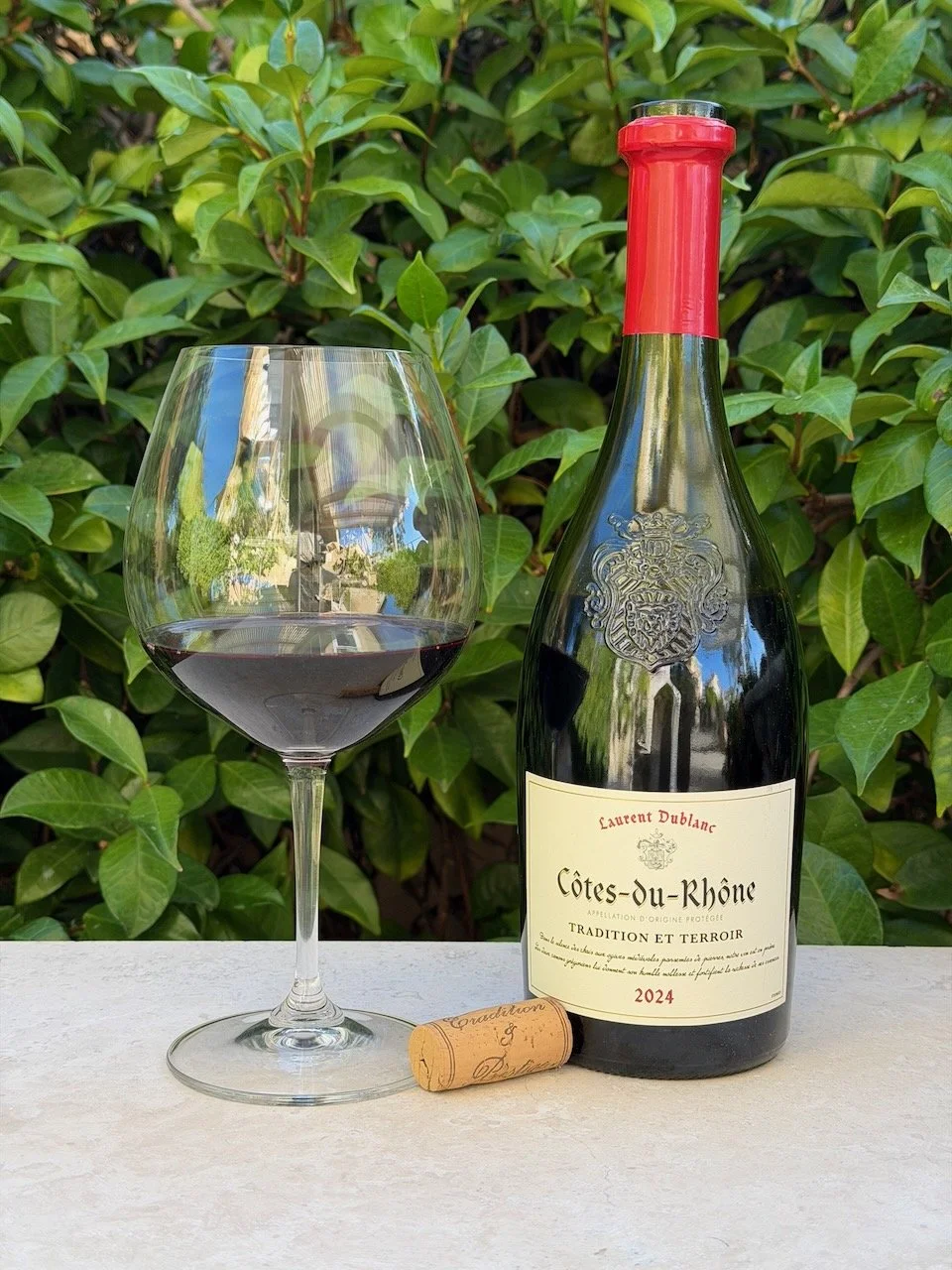

Behind the Cork™ - Laurent Dublanc Cotes du Rhone

2024 Laurent Dublanc Côtes du Rhône ($7.99)

The Côtes du Rhône region is the largest AOC, accounting for two-thirds of Rhône's production.

Côtes du Rhône is a region-wide appellation for red, rosé and white wines covering the entire Rhône Valley. It includes more than 170 villages.

A small proportion of the appellation's wines are white, but the best known Cotes du Rhône wines are red blends based on Grenache, Syrah and Mourvedre (GSM blends) which produce bold and spicy flavors. 

This Laurent Dublanc Côtes du Rhône is a GSM blend that is deep purple in color with aromas of red fruit, plum with hints of herbs and just a bit of earthiness. On the palate, this wine is medium-bodied with moderate tannin, medium acidity with nice flavors of cherry, raspberry and stewed strawberries. It finishes soft with a bit of spiciness.

Laurent Dublanc Côtes du Rhône is a nice and easy-drinking wine at a great price. That makes it a great fit as this week’s Behind the Cork™ Wine of the Week. Cheers!

Prosecco - The Sparkling Wine of Italy

Photo by Fran Taylor on Unsplash

Sparkling wines always seem to be special. And plenty of corks get popped each year. It’s estimated that in 2024, the global consumption of sparkling wine was about 5.4 billion liters or 7.2 billion bottles!

In 2024, the Prosecco DOC denomination of Italy produced about 660 million bottles. So, Prosecco DOC accounts for about 9‑10% of global sparkling wine consumption.

Prosecco is the sparkling wine from the Veneto region of northeastern Italy that is often compared to the best known sparkling wine, Champagne. But, unlike Champagne, it is produced using the Charrmat method where the secondary fermentation occurs in large stainless steel tanks versus in the bottle. And, the grapes used in Prosecco but be at least 85% Glera whereas Champagne is produced from Chardonnay, Pinot Noir and Pinot Meunier. Prosecco’s bubbles do tend to be larger and actually softer than Champagne.

Prosecco is produced in several quality levels:

  • Prosecco DOC - The most common Prosecco that is produced is the Veneto and Friuli Venezia Giula regions

  • Prosecco Conegliano Valdobbiadene Superior DOCG - a top-tier Prosecco made exclusively in a specific hilly area of Veneto

  • Prosecco Colli Asolani DOCG - Known as Asolo Prosecco Superiore DOCG, this is the second DOCG-level Prosecco zone though smaller and less famous

  • Prosecco Conegliano Valdobbiadene Superiore Rive DOCG - Some of the highest-quality, terroir-specific sparkling wines within the Prosecco world

  • Prosecco Valdobbiadene Superiore di Cartizze DOCG - The most prestigious, limited, and luxurious of the entire Prosecco classification system

These Prosecco sparkling wines are produced in the following styles:

  • Extra Brut - Contains 0-6 g/L of Residual Sugar that tend to somewhat rare

  • Brut - Contains 0-12 g/L of Residual Sugar with crisp, clean and zesty flavors

  • Extra Dry - Contains 12-17 g/L of Residual Sugar with sweet, fruit flavors

  • Dry - Contains 17-32 g/L of Residual Sugar that is sweet and rich, a dessert-like wine


So, be sure to look for and try Prosecco. It’s a lot more affordable than Champagne with similar light, fresh and fruity flavors. Perfect for any celebration for just sipping with most any food. Cheers!

Ever Wonder? What is a GSM Wine?

You may have come across a wine either on a wine list or on the store shelf that’s called a “GSM” and wondered what kind of wine it is. So, let’s take a look at this funny acronym wine.

A “GSM” wine refers to a blend of three specific grape varieties: Grenache, Syrah, and Mourvèdre. This blend was first developed in the Rhône Valley of France where it has been made for centuries. But today, it has also become popular in regions like Australia (especially in the Barossa Valley), California (especially Paso Robles), and other New World wine regions.

Here’s a quick breakdown of the three grape varieties that make up a GSM blend:

  • Grenache (Greh-NAHSH): Known for its red fruit flavors, such as strawberry and raspberry, and often has a spiciness or subtle peppery note. It provides body and fruitiness to the blend.

  • Syrah (Sir-AH): Known for adding dark fruit flavors (blackberry, plum), along with spicy, savory, and smoky characteristics. It can contribute structure and depth.

  • Mourvèdre (Moor-VEH-druh): Often adds tannins and acidity, along with earthy, gamey, and sometimes leathery flavors. It helps balance the fruitiness of Grenache and the intensity of Syrah.

The GSM blend is best known for being well-rounded, with good fruit flavors, structure, and spice. Grenache is the primary flavor contributor with red-fruit flavor of cherry, raspberry and strawberry. The Syrah provides dark fruit flavors such as plum, blackberry and blueberry. The Mourvèdre adds blackberry and fig notes while also adding herbal notes.

Depending on where it’s grown and how it’s made, a GSM can range from light and approachable to bold and complex, but typically falling in the medium-bodied class of wines.

So, next time you see a GSM blend give it a try. It’s a very versatile and affordable wine. Cheers!

Ever Wonder? What is a Claret Wine?

“Claret” (rhymes with Carrot) is a traditional British term for red wine from Bordeaux.

The term is derived from the word clairet in French which originally referred to a light-colored, pale red wine that was popular in medieval England after Bordeaux became part of the English crown in the 12th–15th centuries. They were short fermentation wines (1-2 days). The short fermentation and skin-contact time of these wines probably resulted in wines that we’d call a rosé today.

But, over time, the meaning has shifted away from those early pale red wines. Today, in Britain, claret simply means a dry red wine from the Bordeaux region of France. These blends are usually made from Cabernet Sauvignon, Merlot, and Cabernet Franc (sometimes with Petit Verdot and Malbec).

So, the term “Claret” isn’t an official French wine classification. And, you’re not going to find “Claret” on labels from France. But the term is still widely used in the UK and US for red wine blends.

Next time you see “Claret” on a wine label or on a wine list, give it a try! Cheers!