A Tour of Wine Grapes: Colombard

Colombard (or Colombar)
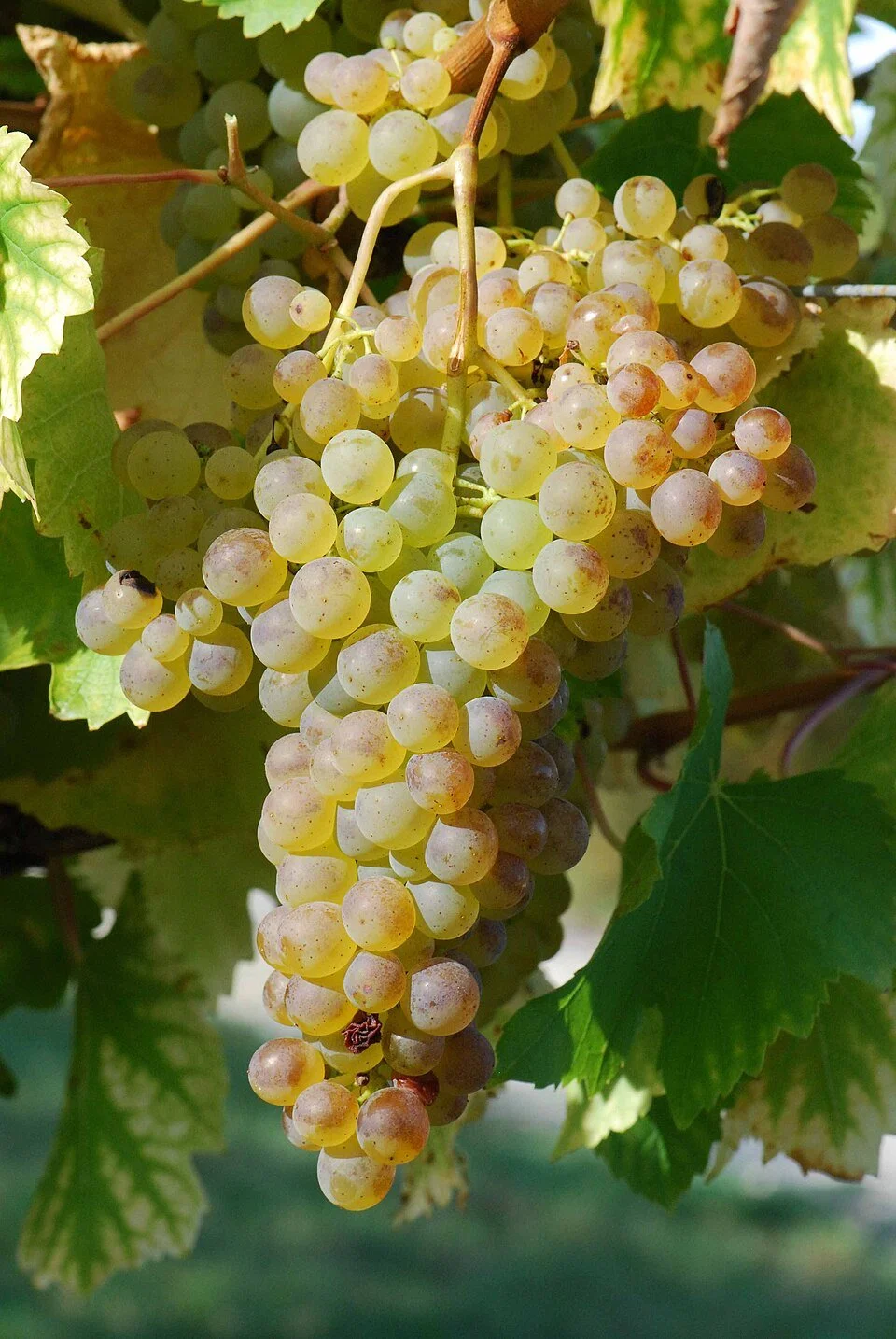
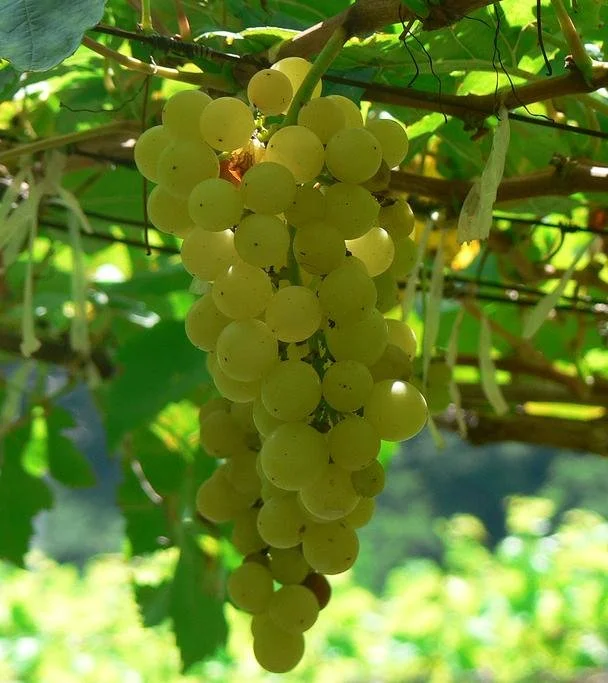
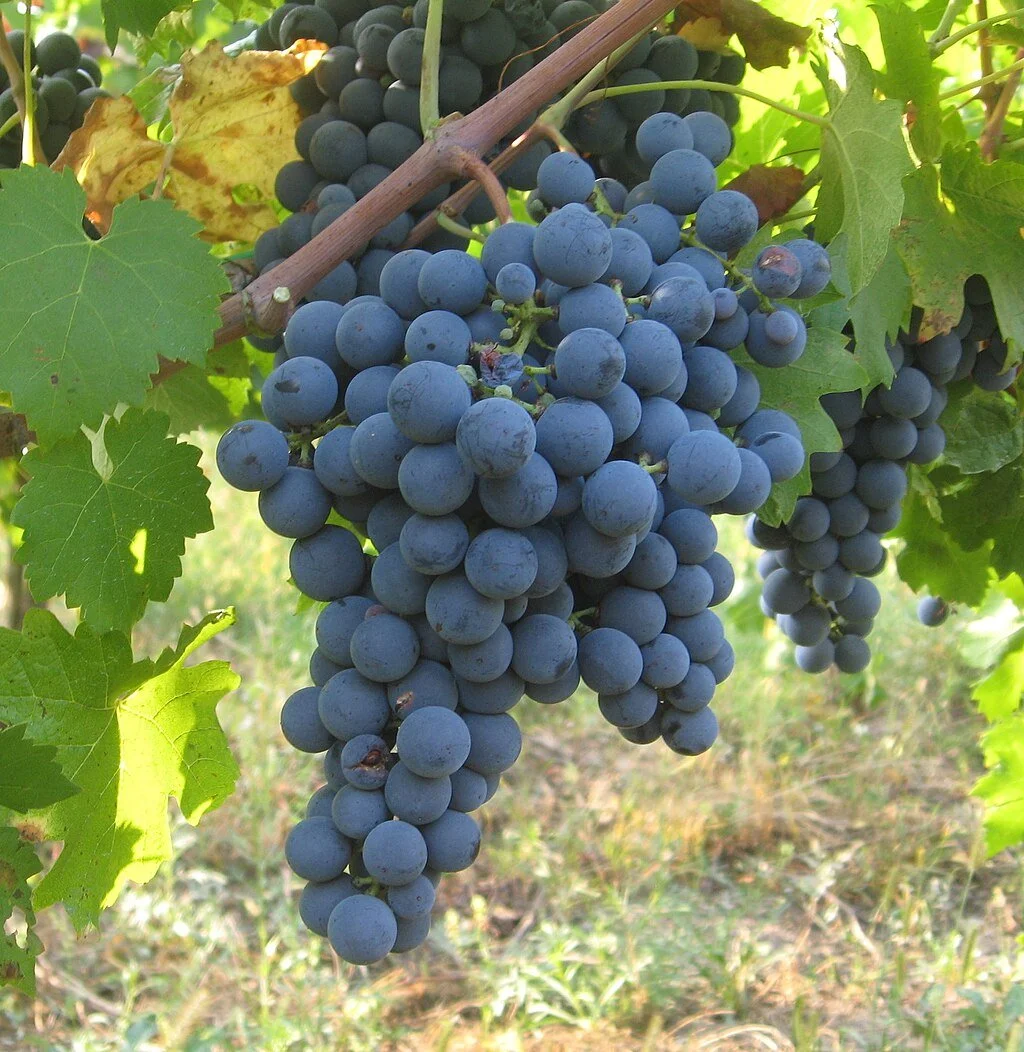
Photo from Pancrat on Wikimedia Commons

The name Colombard likely comes from the French word for dove, "colombe". Legend has it that the grape was so named because its white, dusty berries match the color of a dove's plumage.

It is a natural cross between Chenin Blanc and Gouais Blanc. This makes it a sibling to Chardonnay and Riesling.

Colombard was among the most-planted white grape varieties in France but is also found in California’s Central Valley, Texas as well as South Africa, Australia, Thailand and Israel.

Before Chardonnay took over in the 1990s, Colombard (often called "French Colombard" in the U.S.) was the most planted white grape in California.

Historically a "workhorse" grape in blending, it has played a major role in both distilled spirits (Brandy) and mass-market "jug wines.” For decades, it was the grape used in nearly every generic "Chablis" or "Hearty White" jug wine sold in the U.S.

But, in the recent past, French wine producers have began using Colombard to make white wine.

Typically light-bodied and crisp (acidic), it often features notes of green apple, lime, grapefruit, and white peach

Because of its neutral flavor and high acidity, it is frequently blended with more aromatic grapes like Sauvignon Blanc, Chardonnay, or Chenin Blanc.

Colombard should be enjoyed young and fresh but because of its high acidity, it can be aged 3 to 5 years with some premium versions being easily aged for 10 or more years.

Serve Colombard wines well chilled (45°F and 50°F) in a white wine glass with a U-shaped bowl.

No decanting necessary.
A Tour of Wine Grapes: Cinsault

Cinsault 🍷

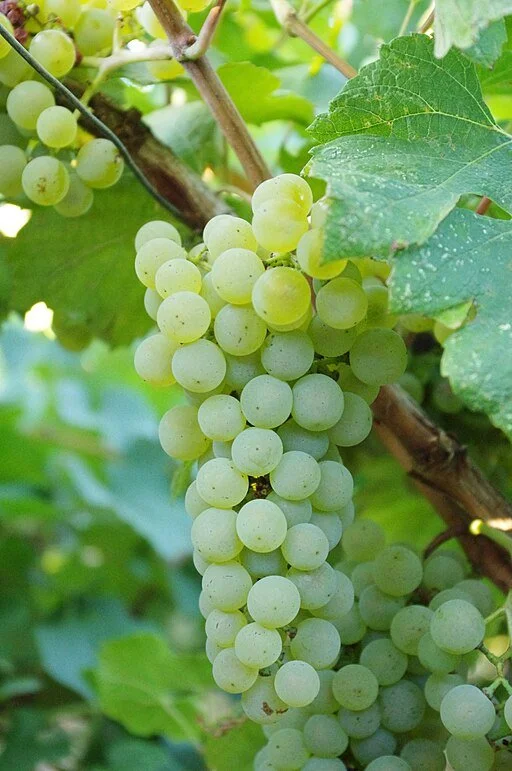
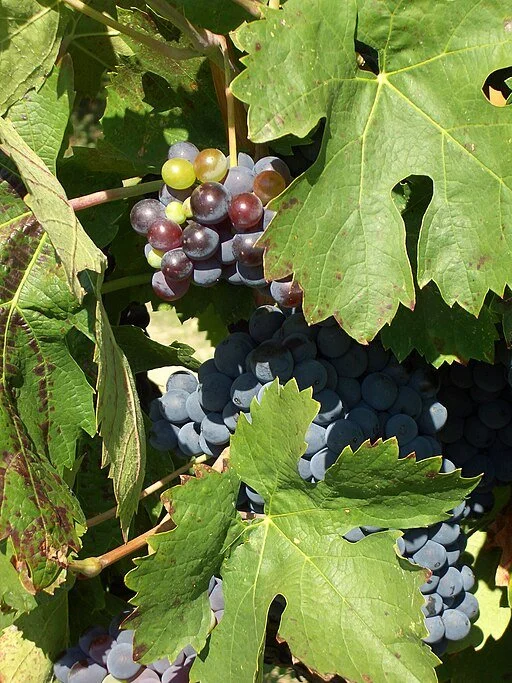
Image by Allie Caulfield on Wikimedia Commons

Cinsault (sin-so) is also known as “Cinsaut.”

Cinsault vines have been grown for centuries in southern France, making it one of the oldest grape varieties found in the region. It has traditionally been used in Southern Rhône blends along with Grenache, Syrah and Mourvèdre.

It is one of the permitted minor grape varieties in the Châteauneuf-du-Pape blend and widely used for the production of rosé wine in Provence.

As a varietal, it is brick-red in color with floral aromas and strawberry. On the palate, it is a light-bodied wine that is low in tannins and low in acidity.

When wines are produced from older vines ( >20 years) they can have more sweet spice flavors.

In blended wine, it imparts floral and strawberry-like aromas.

As a rosé, it provides aromas of raspberry, white peach, tea leaf and rose petals with flavors of tropical fruits of lychee, guava and papaya.

Cinsault can be aged a bit (5-7 years).

It should be served at 60 to 68 °F in a large bowl red wine glass.

Decanting is not usually necessary but can be done for up to 30 minutes.

A Tour of Wine Grapes: Chenin Blanc

Chenin Blanc

Chenin Blanc is a white wine grape variety that has been cultivated in France for nearly 1300 years. It is most commonly associated with France's Loire Valley.

French documents first mention Chenin Blanc as early as the year 845, and the variety has appeared in various parts of the Loire Valley under a multitude of synonyms since.

Today, just over half of the world’s production of the Chenin Blanc grape is from South Africa with approximately a third being grown in France.

Its high acidity levels mean it can be produced in a number of different styles: As (1) a sweet, botrytis-affected dessert wines, (2) light, honeyed sparkling wines and (3) as full-bodied, still white wines.

(1) The sweet, botrytis dessert wines are most famously from Sauternes, France. (2) Light honeyed sparkling wines are often from France including Vouvray Pétillant and Crémant de Loire. (3) Full-bodied still wines are produced around the world including South Africa, France, the United States, Argentina, Australia, and New Zealand.

The grape fell out of fashion somewhat in the early 20th Century, but renewed interest in the 1980s reinvigorated Chenin Blanc's position as a classic and noble grape variety.

Wines produced from Chenin Blanc grapes exhibit aromas of quince and yellow apple. They can also have a waxy or oily scent along with lemon zest and in warm climates, aromas of guava, pineapple and pear.

Flavors of Chenin Blanc include green apple, quince, pear and lemon. Warm climate wines (e.g., South Africa) have tropical flavors of pineapple, guava, mango and peach. If aged in oak, Chenin Blanc can take on flavors of vanilla, caramel, butterscotch and nutmeg.

Because of Chenin Blanc’s high acidity, it is very age-worthy. Dry Chenin Blanc wines can be aged 10-20 years.

Chenin Blanc should be served in the range of 45 - 55 °F with un-oaked wines being served cooler than oaked wines. Use a standard tapered rim glass.

Young wines can be decanted for 30 minutes to help soften the “steely” acidity.

A Tour of Wine Grapes: Chardonnay

Chardonnay

Chardonnay is one of the most widely planted varieties. Although it is probably best known as the white grape of Burgundy it’s also a major grape in the production of Champagne.

Chardonnay is a versatile grape, and its style can vary widely depending on where it’s grown and how it’s made.

Basically, Chardonnay grapes produce wines of a light golden hue, with notes of citrus, green apple, with floral aromas. On the palate, Chardonnay has moderate acidity and moderate alcohol with a medium body.

But it’s said that Chardonnay is a bit of a chameleon — it reflects its winemaking process more than almost any other grape.

Crisp and Bright - This style is based on Chardonnay’s natural high acidity with flavors of green apple, lemon, lime and pineapple. It is fermented and aged in stainless steel tanks so as to leave these flavors unaltered. They are minimally aged and consumed young so as to feature the bright acidity, crisp citrus and tropical fruit flavors as well as its minerality.

Soft and Buttery - These wines are the result of specific winemaking techniques that give the wine a rich, smooth texture and a creamier mouthfeel. One of the key factors that contribute to this style of Chardonnay is Malolactic Conversion where the harsh malic acid (the tart, green apple-like acid) is converted into softer lactic acid (found in milk and dairy products), which creates a smoother, creamier texture. Another key factor is oak aging which imparts flavors like vanilla, toast, and butter. Oak aging also helps soften the wine’s structure, adding complexity and a smooth, creamy mouthfeel. Another wine-making factor is aging Chardonnay on-lees (the dead yeast cells left over after fermentation). Aging on the lees (sur lie), can contribute to a fuller, creamier texture and develop subtle nutty or bread-like flavors. This can also increase the perception of softness in the wine.

Chardonnay can easily age 5-10 years under proper storage conditions.

Serve un-oaked Chardonnay in a U-shaped white wine glass with a smaller bowl. Oaked Chardonnay benefits from being served in a larger bowl wine glass to capture the aromas.

Both types of Chardonnay can be served at 45 -55 °F. Generally an un-oaked Chardonnay is served colder than an oak Chardonnay.

Chardonnay does not require decanting.

A Tour of Wine Grapes: Carmenere

Carménère 🍷

Carmenere grapes grown at Equinox Vineyard, Olanesti, Moldova (Wikimedia Commons)

The name Carménère (kar-men-nair) comes from the French word carmin (meaning crimson). Unlike many grapes whose leaves turn yellow or brown, Carménère leaves turn a brilliant, fiery red in the fall, long before the grapes are even ready to harvest.

Carménère was one of the six original red Bordeaux grapes.

Known for its deep crimson color, it was historically used to add color and structure to Bordeaux blends. Then, it was nearly wiped out by the 19th-century phylloxera epidemic. It was thought to be extinct until it was discovered thriving in Chile in 1994 - it had been mistaken there for Merlot!

Today, three-quarters of the world’s Carménère production continues to be from Chile where it is considered to be their signature wine.

Wines made from Carménère grapes exhibit notes including red cherry, blackberry, black pepper and green bell pepper/herbaceous notes. With oak aging, the wines will develop notes of cocoa powder, tobacco and leather.

Carménère can be aged for 5-15 years. It should be decanted for 30 minutes before serving in a red wine glass at 60-68 °F.