

Cinsault 🍷
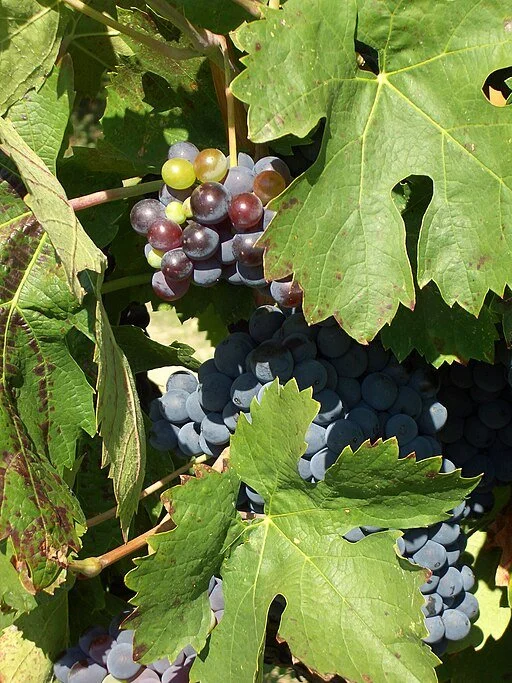
Image by Allie Caulfield on Wikimedia Commons
Cinsault (sin-so) is also known as “Cinsaut.”
Cinsault vines have been grown for centuries in southern France, making it one of the oldest grape varieties found in the region. It has traditionally been used in Southern Rhône blends along with Grenache, Syrah and Mourvèdre.
It is one of the permitted minor grape varieties in the Châteauneuf-du-Pape blend and widely used for the production of rosé wine in Provence.
As a varietal, it is brick-red in color with floral aromas and strawberry. On the palate, it is a light-bodied wine that is low in tannins and low in acidity.
When wines are produced from older vines ( >20 years) they can have more sweet spice flavors.
In blended wine, it imparts floral and strawberry-like aromas.
As a rosé, it provides aromas of raspberry, white peach, tea leaf and rose petals with flavors of tropical fruits of lychee, guava and papaya.
Cinsault can be aged a bit (5-7 years).
It should be served at 60 to 68 °F in a large bowl red wine glass.
Decanting is not usually necessary but can be done for up to 30 minutes.