A Tour of Wine Grapes: Carmenere

Carménère 🍷

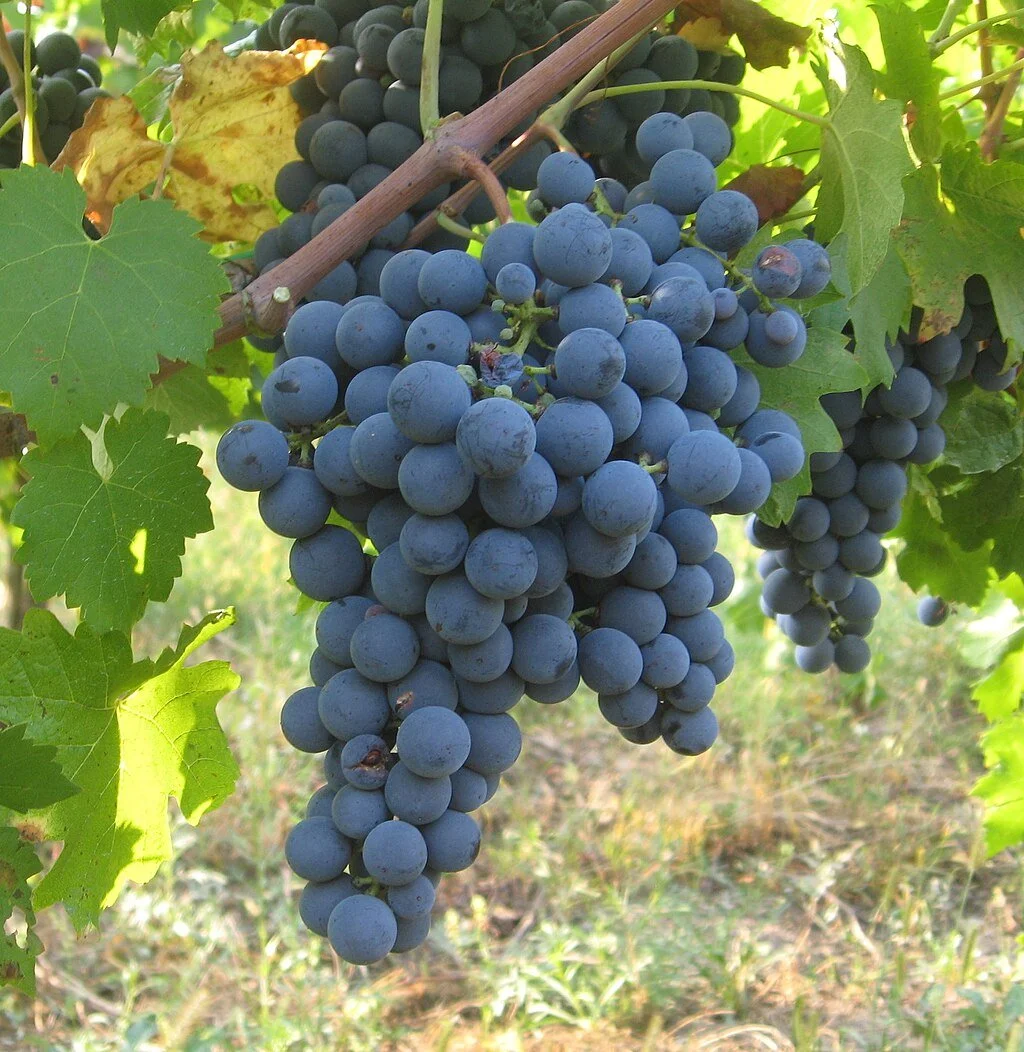
Carmenere grapes grown at Equinox Vineyard, Olanesti, Moldova (Wikimedia Commons)

The name Carménère (kar-men-nair) comes from the French word carmin (meaning crimson). Unlike many grapes whose leaves turn yellow or brown, Carménère leaves turn a brilliant, fiery red in the fall, long before the grapes are even ready to harvest.

Carménère was one of the six original red Bordeaux grapes.

Known for its deep crimson color, it was historically used to add color and structure to Bordeaux blends. Then, it was nearly wiped out by the 19th-century phylloxera epidemic. It was thought to be extinct until it was discovered thriving in Chile in 1994 - it had been mistaken there for Merlot!

Today, three-quarters of the world’s Carménère production continues to be from Chile where it is considered to be their signature wine.

Wines made from Carménère grapes exhibit notes including red cherry, blackberry, black pepper and green bell pepper/herbaceous notes. With oak aging, the wines will develop notes of cocoa powder, tobacco and leather.

Carménère can be aged for 5-15 years. It should be decanted for 30 minutes before serving in a red wine glass at 60-68 °F.
Behind the Cork™ - Montes Alpha Carmenere

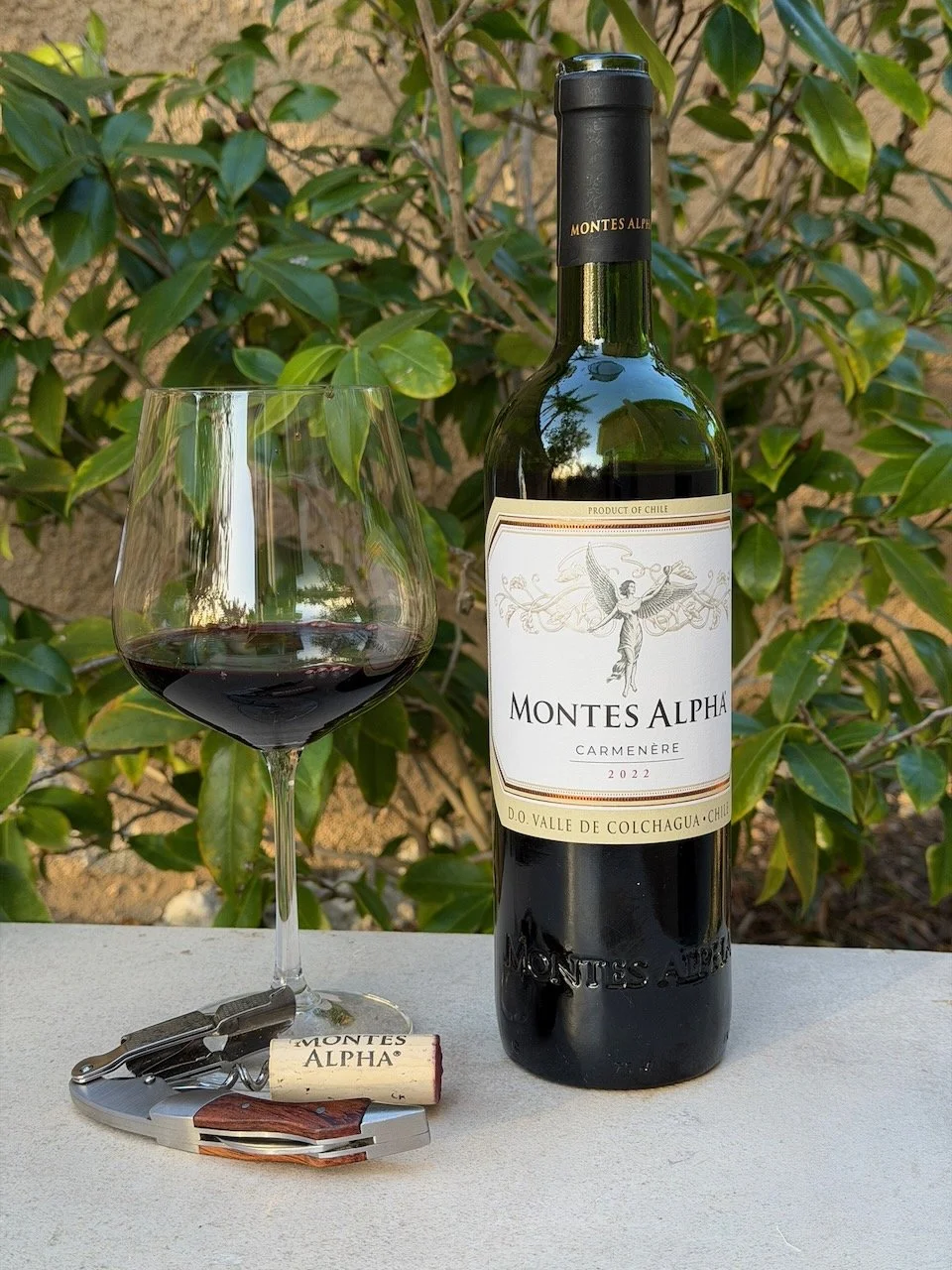
2022 Montes Alpha Carmenère ($24.99)

Montes — officially Viña Montes — was founded in 1987 by four partners with extensive experience in winemaking and viticulture: Aurelio Montes, Douglas Murray, Alfredo Vidaurre, and Pedro Grand. Their founding goal was bold and transformative: to craft premium-quality wines at a time when Chile was largely known for high-volume, inexpensive wine production rather than world-class bottles.

Montes didn’t just make great wine — it rewrote the story of Chilean viticulture. By insisting on premium quality, exploring new terroirs, innovating in both vineyard and cellar practices, and maintaining a deeply Chilean identity without reliance on foreign investment, Montes helped elevate the reputation of an entire nation’s wine industry.

This Montes Alpha Carmenère is produced from 90% Carmenère and 10% Cabernet Sauvignon that were macerated for 5 days after which selected yeasts were added and fermentation lasted 7-10 days. It then underwent malolactic conversion. Some of the wine was then transferred to French oak barrels where it aged for 12 months while the remaining wine was transferred to concrete tanks.

Montes Alpha Carmenère is deep ruby red in color with delicate aromas of both red and black fruit. On the palate this wine is full-bodied with rich flavors of blackberry, blueberry, fig and plums. Its tannins and acidity are well balanced. This wine finishes spicy with a hint of chocolate from its oak aging.

This 2022 Montes Alpha Carmenère is an excellent example of the wines coming out of Chile. It’s great tasting and a super value. A perfect fit as this week’s Behind the Cork™ Wine of the Week. Cheers!


Disclosure of Wine Sample Submission: I received this sample at no cost for review. The opinions expressed are entirely my own.

Media Sample Provided by Montes Winery via Kobrand Wine and Spirits

Behind the Cork™ - Carmenere Wine of Chile (Part 3 of 3)

Carménère (kar-men-nair) is a wine grape whose name is derived from the French carmin (meaning crimson). It was a grape that was thought to be nearly extinct. In 1994, fewer than 25 acres of Carménère remained in France’s Médoc, Bordeaux. But that all changed when it was discovered that an estimated one-third of what had been thought in Chile to be Merlot was actually Carménère. Carménère rose from near worldwide oblivion following the phylloxera crisis that had swept through the Médoc to now representing a country on the global stage: Carménère became synonymous with Chile.

Here are the final two in this series of Carménère wines from Chile…

2020 TerraNoble CA2 Costa Carménère ($36)

The Carménère grapes for this wine were grown in the Lolol vineyard that is located in the Colchagua Valley in Chile. The Lolol vineyard is located 25 miles from the ocean in the Chilean Coastal Mountain Range.

This 100% Carménère was cold macerated for 10 days. Fermentation took place for 8 to 12 days, then a post fermentative maceration of about two weeks. The wine was racked directly into French oak barrels and untoasted foudres where it underwent malolactic conversion and 16 months of aging.

This wine is deep ruby in color with medium-high aromas of black fruit and green pepper. On the palate, this medium-full bodied wine has spicy and rich dark fruit flavor with subtle notes from the oak. It finishes smooth and easy.

2020 Montes Wings Carménère ($55)

The grapes for this wine were grown in the Colchagua Valley, at on the winery’s Finca de Apalta estate. The vineyard is located on steep slopes, 650 feet above the valley floor. Some areas show the pronounced influence of the nearby Tinguiririca River, while others are more alluvial, featuring eroded material from the mountain tops that ring the valley.

This wine is produced from 85% Carménère and 15% Cabernet Franc that were cool macerated for 5-7 days followed by 12-15 days of fermentation before aging for 16 months in new French oak barrels (80%) and second- and third-use barrels (20%).

This wine is deep ruby in color with rich and complex aromas of black fruit, subtle herbs and hints of oak. On the palate, this medium-full bodied wine has deliciously rich dark fruit flavors, great complexity, easy tannin and a smooth and lingering fruit finish.

These two wines are excellent examples of Carménère wines that are being produced in Chile and are this week’s Behind the Cork Wines of the Week. Cheers!


Disclosure of Wine Sample Submission: I received these samples at no cost for review. The opinions expressed are entirely my own.

Media Samples Provided by TerraNoble and Montes Wines

Behind the Cork™ - Carmenere Wines of Chile (Part 1 of 3)

Carménère (kar-men-nair) is a wine grape whose name is derived from the French carmin (meaning crimson). It was a grape that was thought to be nearly extinct. In 1994, fewer than 25 acres of Carménère remained in France’s Médoc, Bordeaux. But that all changed when it was discovered that an estimated one-third of what had been thought in Chile to be Merlot was actually Carménère. Carménère rose from near worldwide oblivion following the phylloxera crisis that had swept through the Médoc to now representing a country on the global stage: Carménère became synonymous with Chile.

Here are two very nice Carménère wines from Chile…


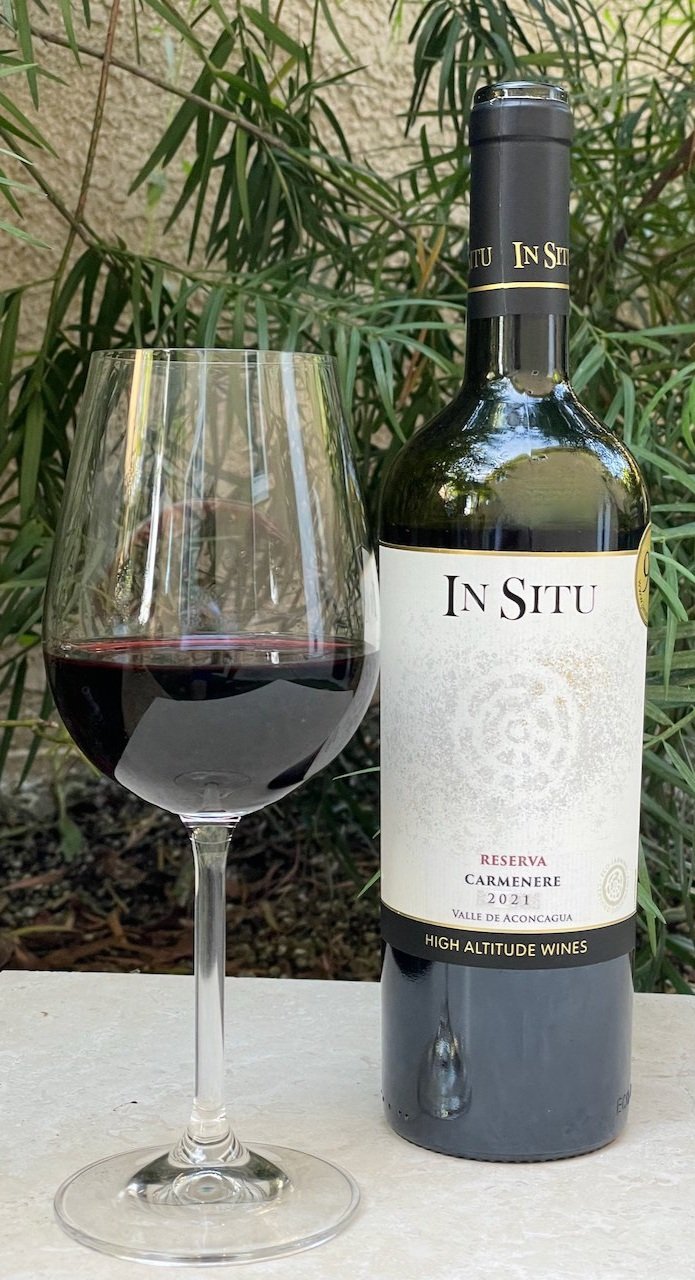
Viña San Esteban In Situ Carménère Reserva ($13)

This In Situ Carménère comes from the slopes of Paidahuen hill (3000 ft above sea level) and from the riverbanks of the Aconcagua River, just north of Santiago in Chile. It is produced from 95% Carménère and 5% Cabernet Sauvignon. It was macerated for 18 days and then aged in 50% French and 50% American oak barrels for 12 months (well beyond the 6-month requirement for a Reserva wine). After the bottling, it was aged for at least 3 additional months before release.

This In Situ Carménère is deep ruby in color with aromas of deep red and black fruit with some herbal notes. On the palate this medium-bodied wine has rich black cherry and black plum flavors, and subtle oak nuances. The fruit of this wine is prominent on the front and easy on the finish. (ABV=13%, Total Acidity=5.42 g/L, pH=3.55, Residual Sugar=3.4 g/L).


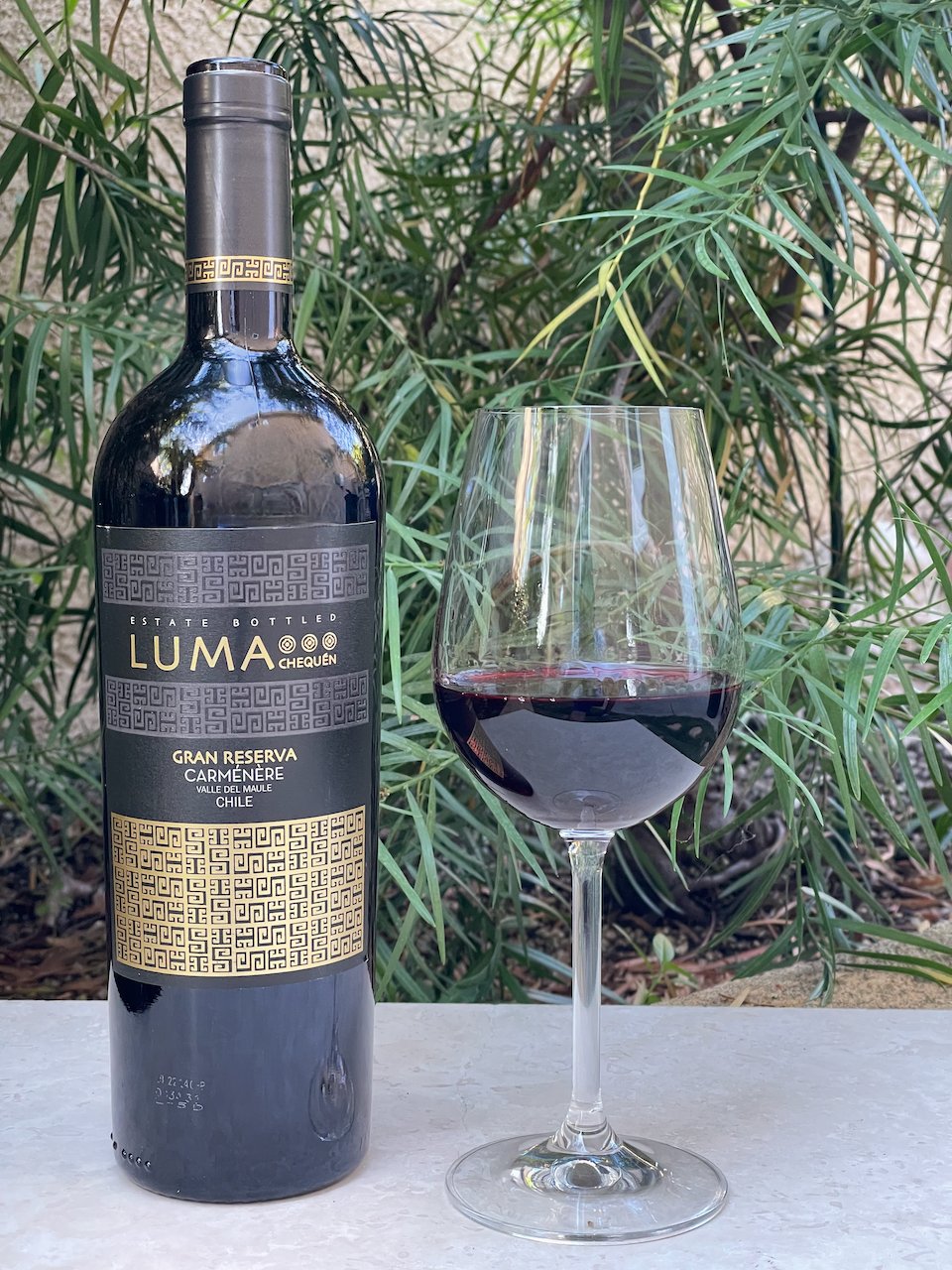
Luma Chequen Gran Reserva Carménère ($17)

This Luma Carménère is from the dry Mediterranean climate of the Valle del Maule, which is 155 miles south of Santiago, Chile. The temperatures there are moderated by the proximity to the cool Pacific Ocean. It is produced from 100% Carménère that is cold macerated for 5 days, then fermented in stainless steel tanks for 10 days. It was then aged for barrel for 12 months.

This Luma Carménère is deep ruby in color with subtle fruit aromas and herbal notes of bell pepper and spices. On the palate, this medium-bodied wine has rich flavors of black berry and black plum, it has soft tannin and is well balanced. It has a nice lingering finish. (ABV=13.9%).

These are two nice examples of the Carménère being produced in Chile. And, at these prices, they are a great value! Hence, these two Carménère wines from Chile are this week’s Behind the Cork Wines of the Week. Cheers!


Disclosure of Wine Sample Submission: I received these samples at no cost for review. The opinions expressed are entirely my own.

Wines Provided by InVina Wines and InSitu Family Vineyards

A Brief History of Carménère - Part 3 Fun Facts

Fun facts about Carménère

Here, courtesy of the Wines of Chile organization, are a few fun facts about Carménère:

  • Chile has the most Carménère under vine in the world, at 10,332 ha/25,530 acres in 2021. By comparison, France has just 80 ha/197 acres. DNA analyses carried out in New Zealand in 2006 showed that several vines planted as Cabernet Franc are in fact Carménère. It is also present in Veneto, Italy, plus a few vineyards in China.

  • Carménère is derived from the French carmin (crimson), due to the color the leaves turn in autumn. Other accepted names include Grande Vidure, Carmenelle, Cabernelle, Grant Carmenet, Carbouet and Cabernet Gernischt (which is only used in China).

  • A cross between Cabernet Franc and Gros Cabernet, it belongs to the group of pyrazine-rich varieties such as the aforementioned grapes, Cabernet Sauvignon and Merlot. This is what gives it its ashy, spicy, jalapeño-inflected character.

  • The sunny terroirs of Chile break down the pyrazines and bring out the fruity character of the variety when ripe. This character is generally to be found in   Colchagua and Cachapoal. The style typically also displays good body, a velvety texture and high alcohol content.  

  • The latest trend is to enhance the pyrazine-driven aspects of the grape’s character with less body and lower alcohol levels than previous versions.