

Roussanne 🥂
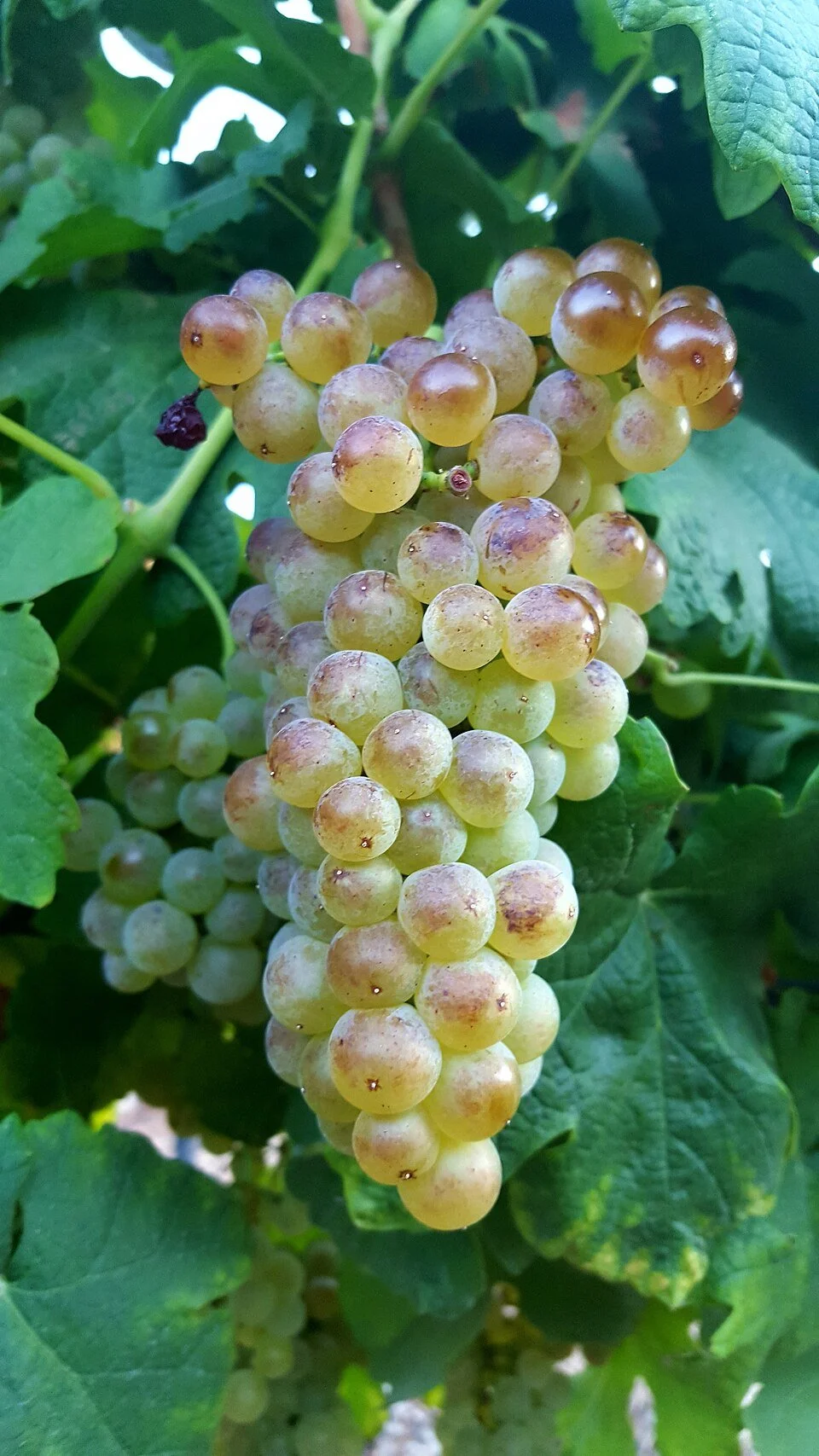
Photo by Carlos the Great on Wikimedia Commons
Roussanne (rooh-sahn) is native to the Rhône Valley in Southern France. Experts first wrote about it in the late 1700s in the Hermitage region.
Today, it is still a major grape in famous French wines like Châteauneuf-du-Pape and Hermitage, where winemakers often blend it with Marsanne to balance its flavors.
Outside of France, Roussanne has found a popular second home in California, particularly along the Central Coast. Winemakers also grow smaller amounts of this grape in Washington State, Australia, and Tuscany, Italy.
The grape gets its name from "roussille," which is the French word for the reddish-gold or russet color the berries turn right before they are harvested.
Wines made from Roussanne are famous for their intense and unique smells. When you take a sip, you will often smell herbal tea, wildflowers, pears, and white peaches. As the wine ages, it starts to smell like nutty almond paste and warm honey. On the palate, Roussanne feels heavy and smooth, almost like oil or cream. It has flavors of green apple, lemon zest, honey, and baking spices, such as vanilla, if the wine is aged in oak barrels.
Roussanne is excellent for aging. You can enjoy it fresh within its first three years, or you can let it sit in a cellar for up to 15 years.
Serve Roussanne slightly chilled at 50°F to 55°F (10°C to 13°C) in a standard white wine glass with a slightly narrow opening, which helps trap the intense aromas.