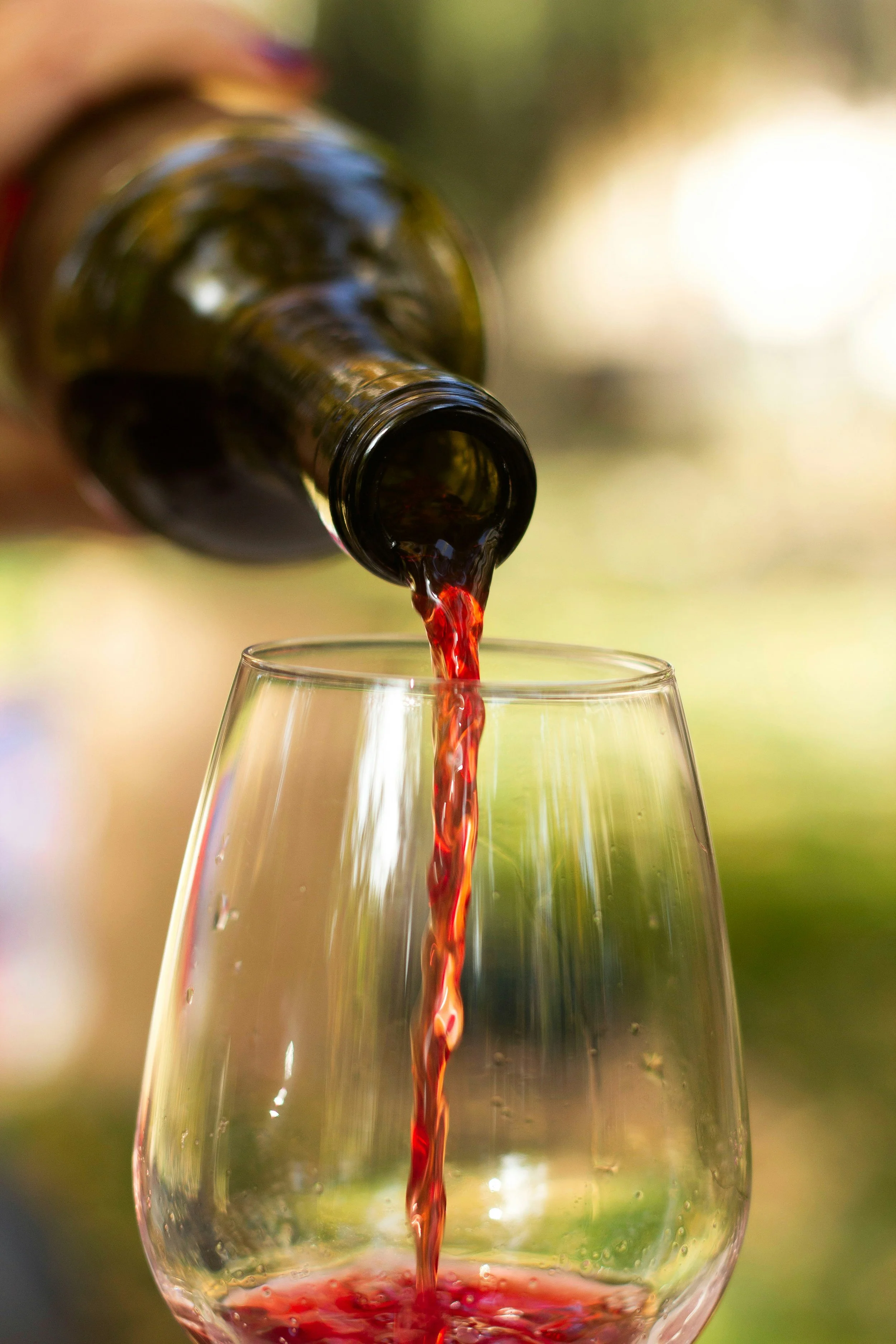
Give Non-Alcoholic Wines a Try for Your Dry January

Embarking on a “Dry January” involves voluntarily abstaining from alcohol consumption for the entire month of January. This practice has gained popularity as a New Year’s resolution, with individuals choosing a temporary break from drinking to kickstart a healthier lifestyle, reassess their relationship with alcohol, and experience various physical and mental benefits. Whether motivated by health goals, curiosity, or a desire for self-reflection, this month-long commitment has become a widespread phenomenon, fostering a supportive community that encourages individuals to reevaluate the role alcohol plays in their lives.

So, if you are going for a “Dry January", have you considered non-alcoholic wines as an alternative? They’ve been around for years. 

But, you may have wondered: 

  • “What exactly is non-alcoholic wine?” 

  • “How is it made?” 

  • “Is it any good?”

First, let’s consider non-alcoholic wine. It’s essentially ‘real’ wine that’s been made from fermented grapes. It can exhibit similar flavor profiles to regular wine, but without the alcohol content. However, it’s important to note that non-alcoholic wine may still contain a minuscule amount of alcohol. Therefore, it’s always a good idea to check the label for the precise amount of alcohol it contains.

Now, let’s briefly examine the process of making non-alcoholic wine. As mentioned earlier, it begins with “real” wine, which is made from fermented grapes. Subsequently, it undergoes one of two methods to eliminate the alcohol content. One method is known as vacuum distillation. In this process, the wine is heated to temperatures where the alcohol starts to evaporate. However, these temperatures are below the boiling point of the wine. Since the boiling point of alcohol is lower than water, the alcohol “boils” off and is extracted in a vacuum chamber. 

The other method is reverse osmosis. This process employs an exceptionally fine filter that permits only water and alcohol to pass through. The filter captures all the fine grape particles responsible for the wine’s color, tannin, and flavors. Subsequently, the mixture of water and alcohol is distilled to eliminate the alcohol. The remaining water is then reintroduced to the grape solids to create a non-alcoholic wine.

These same two processes are used for “low calorie” or low-alcohol wines except they don’t remove all the alcohol. 

Alright, I’m sure you are already thinking “Is non-alcoholic wine any good?” Well, as you might have guessed, it’s not exactly the same as regular wine, but it does have a lot of tasty similarities. 

If you’re considering participating in “Dry January,” consider exploring non-alcoholic or low-alcohol wine options. Stay hydrated and raise a glass to your success! Cheers!

Sparkling Wines are Perfect for the Holidays!

Sparkling wines are perfect for the holidays. Here’s a few types to consider enjoying:

Champagne

Champagne is a sparkling wine that is produced in the relatively small region of Champagne in France. Only those sparkling wines produced in this region are allowed to be labeled as 'Champagne.'  And an entry level bottle of Champagne is going to start in the $50 range. So, typically you are toasting with some other sparkling wine. Read more

Some Champagne facts:

  • Champagne is typically produced from three grapes — Pinot Noir (Yes! A red wine grape!), Chardonnay and Pinot Meunier

  • To be called Champagne, it must be produced in the Champagne region of France. Otherwise, it’s called Sparkling Wine

  • Champagne is produced using a process called the méthode champenoise where the bubbles are formed in the bottle during a second fermentation.

U.S. Sparkling Wine

In the U.S., there are a tremendous number of makers of sparkling wine. Most will produce a wine that can taste very much like the French Champagne. And, you can also find rosé sparkling wines.  An entry level bottle of sparkling wine in the U.S. can be as little as $5. Read more

Prosecco and Asti

In Italy, Prosecco is their signature sparkling wine. Produced in the Veneto region just north of Venice, this sparkling wine usually produces bigger bubbles. Bottles of Prosecco can be purchased in the $10- $15 range. Read more

Cava

The sparkling wine of Spain is Cava that is produced in the Catalonia region of Spain where Barcelona is located.  Nice bottles of Cava can be purchased for around $15. Read more

Styles of Champagne and Sparkling Wine

Brut Nature - This style is bone dry meaning it has little or no sugar content (0–3 g/L sugar).

Extra Brut - This style is also very dry but, it can have up to twice the sugar level of Brut Nature (0–6 g/L sugar). This little bit of sweetness creates a wonderful balance with Champagne’s naturally high acidity.

Brut - This is the most common style. While considered “Dry” this style can have up to twice the sugar of Extra Brut (0–12 g/L sugar).

Extra Dry - This is the one that always confuses people. This style is sweeter which actually makes it also taste a bit more fruity (12–17 g/L sugar).

Dry - The confusion continues. This style is getting up there in sweetness (17–32 g/L sugar).

Demi-Sec - Now you’re talking Sweet (32–50 g/L sugar). This style works well with desserts or bold cheeses.

Doux - This one, while very rare to find, is really sweet (50+ g/L sugar).

No matter which type or style you choose, give sparkling wines a try this holiday season. Cheers!

It's Time for Beaujolais Nouveau Again!

Georges Deboeuf Beaujolais Nouveau

Thursday November 21st is Beaujolais Nouveau Day!

Beaujolais Nouveau. Its name literally means 'new Beaujolais.' This wine is named for the village of Beaujeu in France, which is a small region just south of Burgundy.

On the third Thursday of each November, France releases Beaujolais Nouveau wine to the world. That means that it will be available on Thursday November 21th this year.

The 'new' part of this wine is due to the fact that the grapes used to make this wine are picked from the vineyards just a couple of months prior to its release! That's compared to most wines that spend a year or more going through the fermentation and aging process before being bottled and shipped to market.  But Beaujolais Nouveau gets from the vineyard to you in about two months!

Word has it that this wine was originally produced for the harvest workers in France to immediately thank them for all their hard work just after harvest was complete. But now its production is somewhere between 30-60 million bottles so that the entire world can enjoy.

Although there are more than 100 Beaujolais Nouveau festivals held each year in the Beaujolais region, the 'Les Sarmentelles' multi-day festival is said to be the biggest and most famous for celebrating the release of Beaujolais Nouveau. The festival includes music, dancing, fireworks and plenty of wine.

This wine is produced entirely from handpicked Gamay grapes and because it is so new, it is very fresh and fruity. Many describe Beaujolais Nouveau as having flavors of candied cherries, strawberries, red plum, bananas and even bubble gum.

Beaujolais Nouveau is meant to be enjoyed young, not critiqued. So, pick up a bottle or two next week and give it a slight chill. Then raise a glass of Beaujolais Nouveau to the French harvest workers. It's Beaujolais Nouveau time! Cheers!

Getting to Know the Various Styles of Rioja

November 14th is International Tempranillo Day. Let’s get to know this Spanish wine a bit better.

Rioja is maybe the best known Spanish wine, but did you know there are various styles of Rioja?

First, let’s review a bit about Rioja. It is a region in North-Central Spain that’s known for its wine. And, like most Old-World wines, the wine label identifies the wine region, not the grape varietal.

Rioja wine is made from Tempranillo grapes but is often a blend of Tempranillo, Garnacha and Mazuelo (a.k.a. Carignan).

But, have you’ve ever noticed that a Rioja wine is made in various styles?

The most basic Rioja wine is usually labeled simply as “Rioja.” Makes sense, right? It is aged for a matter of months, bottled and sold. It’s bright and fruity with big cherry flavors.

Then there is “Crianza.” You may not have noticed this word on the label since it doesn’t immediately mean anything to an English speaker. But, one of its translations means ‘aging.’ And, indeed, this style of Rioja is required to be aged for one year in oak and spend one year in the bottle before being sold. The controlling board in Rioja, the Consejo Regulador DOCa Rioja, ensures that these quality requirements are met.

Next is “Reserva.” Now this is a term that appears on a lot of wines, but in Rioja it actually means something. A Rioja Reserva is required to be aged for one year in oak and then spend two years in the bottle before being sold.

Finally, there is “Gran Reserva.” This wine must spend a minimum of two years in oak and three years in the bottle before being sold. But, often these wines are closer to ten years old when sold. This wine is produced from the best grapes and ends up with the best tannin structure.

So, when buying a Rioja, pay attention to the label and turn the bottle around to the backside to look for one of the identifying stickers. Then, you’ll know exactly what you are getting.

Cheers!

Do You Know Xinomavro?

November 1st was International Xinomavro Day! But are you familiar with this wine?

Let’s take a look at this lesser known wine.

Xinomavro (ksino-mav-roh) is native to Greece where it is almost exclusively grown. And, it is known as the finest red wine that Greece has to offer.

The word Xinomavro itself is a conjunction of the Greek words for acid and black, though this is sometimes translated as black and sour.

Xinomavro is typically a medium-full bodied wine with high tannin, high acidity and low sweetness. It has fruit flavors of raspberry, strawberry, plum along with spices such as allspice and anise, and even sundried tomato!

Xinomavro wines, with their high acidity, can age nicely for many years.

So, next time you come across a Xinomavro wine be sure to give it a try. Cheers!