Behind the Cork™ - Lucia Victoria Reserva Rioja

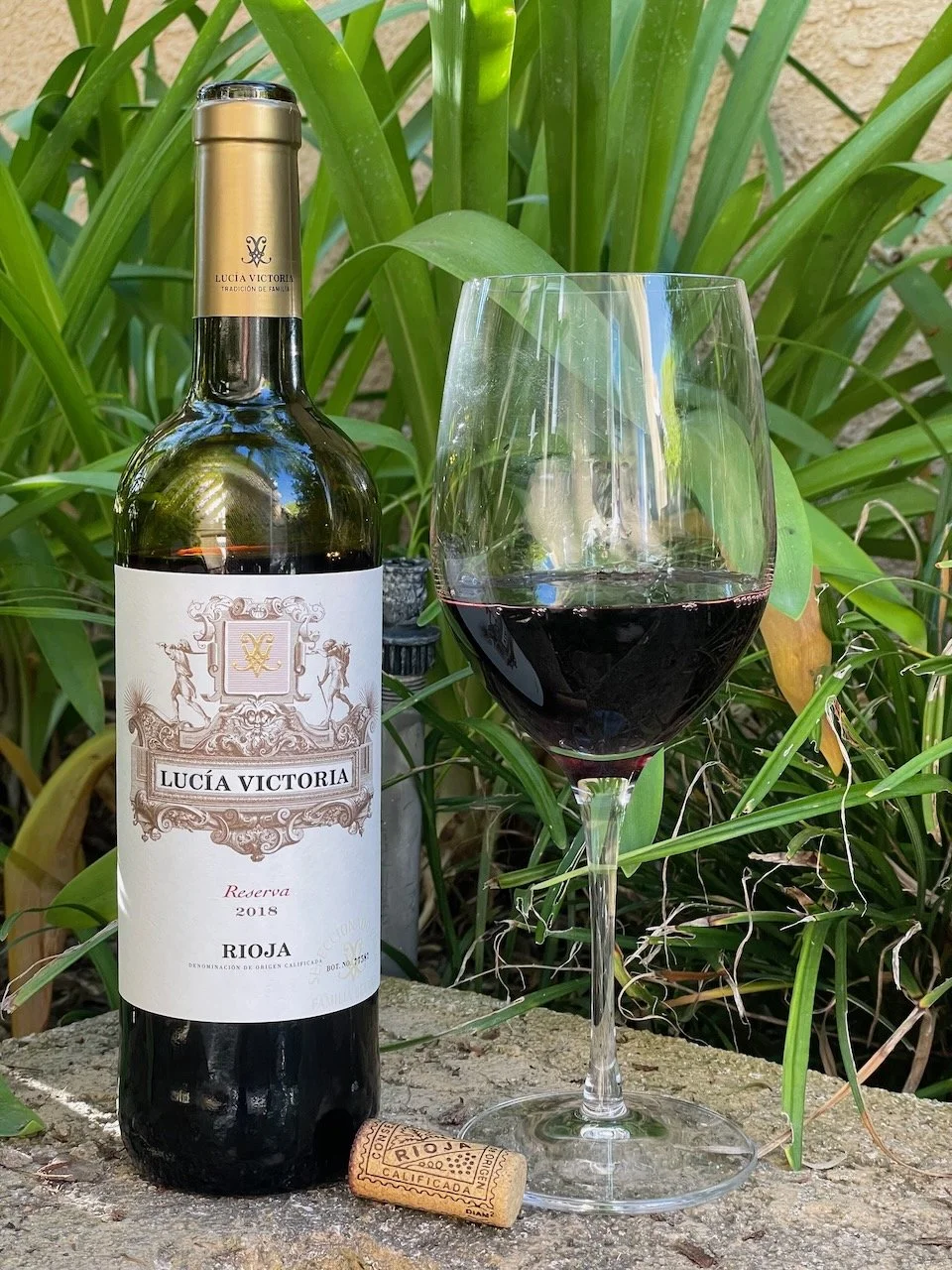
2018 Lucía Victoria Reserva Rioja ($8)

D.O. 5 Hispanobodegas is a group of wineries which produces and distributes quality wines from the most emblematic Officially Certified Wine growing Regions of Spain: Rioja, Ribera del Duero and Rueda.

Their group is made up of a set of three wineries: Bodegas Valdelacierva (Rioja), Viñedos y Bodegas Gormaz (Ribera del Duero) and Bodegas GarciGrande (Rueda).

Their wines are based on the rigorous control of the production processes, from the raw material until it is in the hands of the consumer as well as in the continuous improvement of the vinification and aging processes. To this end, they have the most stringent quality and food safety certifications (ISO, BRC, IFS) in each of their group’s wineries.

This Lucía Victoria Reserva Rioja was bottled for D.O. 5 Hispanobodegas. It is produced from 50+ year old Tempranillo vines that are grown at at altitude of nearly 1500 feet. After fermentation, it is aged 24 months in French and American 225 liter oak barrels followed by 12 months in the bottle before being shipped.

The wine is a beautiful medium purple in color with aromas of red and black cherry, fig and plum. On the palate, this medium-full bodied wine has nice flavors of red and black cherry, medium tannin, medium-high acidity and has a spicy finish with very a subtle hint of tartness.

Finding a 2018 wine under $10 is fantastic. And, it tastes great too! This make the Lucía Victoria Reserva Rioja the Behind the Cork™ Wine of the Week. Cheers!
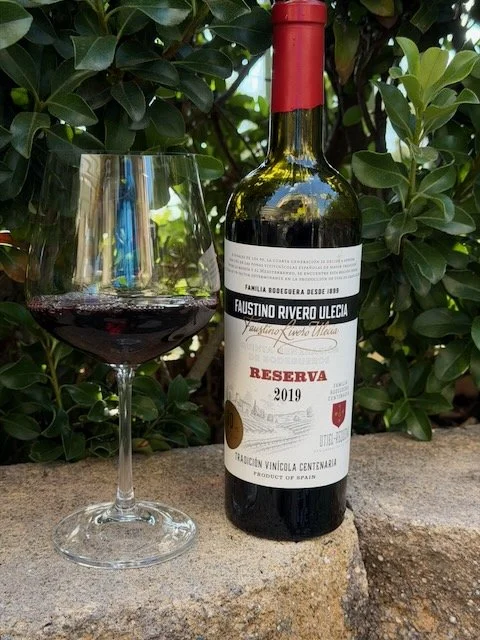
Reserva is Actually a Meaningful Term When It Appears on a Spanish Wine Label

In the U.S., the term “Reserve” on a wine label is not legally regulated. It can just be a marketing term to get consumer to believe the wine is somehow better than others. Or, it can actually mean that the winery has indeed gone above and beyond with higher quality grapes, longer aging or limited production. So, it’s buyer beware.

But, in Spain, the term "Reserva" is a legally regulated classification that indicates both minimum aging requirements and often a higher quality level compared to standard wines.

The term “Reserva” is regulated under Spanish wine laws (Denominación de Origen - DO, or Denominación de Origen Calificada - DOCa). A “Reserva” wine usually implies better grape selection and greater aging potential than a standard wine.

It should also be noted that “Reserva” is considered a step above "Crianza" and a step below "Gran Reserva" in aging hierarchy:

For Red (“Tinta”) wines:

  • Crianza = 2 years minimum aging with 1 year in oak

  • Reserva = 3 years minimum aging with 1 year in oak

  • Gran Reserva = 5 years total aging with 2 years in oak and 3 years in the bottle

So, next time you’re shopping for a Spanish wine, be sure to pay attention to the label. There are real differences. Cheers!

Behind the Cork™ - Conde Valdemar Reserva

2015 Conde Valdemar Reserva ($28.99)

Valdemar Family is comprised of 334 hectares (825 acres) of family-owned vineyards spanning Bodegas Valdemar in Roija, Spain and Valdemar Estates in Walla Walla, Washington. The winemaking legacy of the Martínez Bujanda family dates back to 1889. The fifth generation siblings Ana and Jesús are currently at the helm of both estates on two continents.

For a Rioja to be called a “Reserva” means that it undergoes a minimum of three years of aging with at least one year in barrels and six months in the bottle. In this case, this Conde Valdemar Reserva spent 19 months in American oak (65%) and French oak (35%).

Produced from 85% Tempranillo, 7% Garnacha, 5% Garciano and 3% Maturana, this wine is medium-full bodied. It is a medium ruby-garnet color, showing its age. On the nose, it has muted aromas of fig, plum and cherry. On the palate, this Conde Valdemar Reserva has soft flavors of raisin, prune and fig. Its tannins are smooth, with medium-low acidity. It finishes soft, showing its 10-year age. Its a very nice Rioja Reserva!

To find ten year old wines is difficult, but to find one at this price is amazing! This 2015 Conde Valdemar Reserva is a really nice wine that’s available at a great price. That makes it a perfect fit as this week’s Behind the Cork™ Wine of the Week. Cheers!


Disclosure of Wine Sample Submission: I received this sample at no cost for review.

Media Sample Provided by Valdemar Family via Ten27 Communications

Getting to Know the Various Styles of Rioja

November 14th is International Tempranillo Day. Let’s get to know this Spanish wine a bit better.

Rioja is maybe the best known Spanish wine, but did you know there are various styles of Rioja?

First, let’s review a bit about Rioja. It is a region in North-Central Spain that’s known for its wine. And, like most Old-World wines, the wine label identifies the wine region, not the grape varietal.

Rioja wine is made from Tempranillo grapes but is often a blend of Tempranillo, Garnacha and Mazuelo (a.k.a. Carignan).

But, have you’ve ever noticed that a Rioja wine is made in various styles?

The most basic Rioja wine is usually labeled simply as “Rioja.” Makes sense, right? It is aged for a matter of months, bottled and sold. It’s bright and fruity with big cherry flavors.

Then there is “Crianza.” You may not have noticed this word on the label since it doesn’t immediately mean anything to an English speaker. But, one of its translations means ‘aging.’ And, indeed, this style of Rioja is required to be aged for one year in oak and spend one year in the bottle before being sold. The controlling board in Rioja, the Consejo Regulador DOCa Rioja, ensures that these quality requirements are met.

Next is “Reserva.” Now this is a term that appears on a lot of wines, but in Rioja it actually means something. A Rioja Reserva is required to be aged for one year in oak and then spend two years in the bottle before being sold.

Finally, there is “Gran Reserva.” This wine must spend a minimum of two years in oak and three years in the bottle before being sold. But, often these wines are closer to ten years old when sold. This wine is produced from the best grapes and ends up with the best tannin structure.

So, when buying a Rioja, pay attention to the label and turn the bottle around to the backside to look for one of the identifying stickers. Then, you’ll know exactly what you are getting.

Cheers!

Behind the Cork™ - Herminia Rioja Wines


Herminia Casas was the beloved wife of a winemaker in the early 1900’s in La Rioja, Spain. She was a pioneer in entrepreneurship and a champion of education access for women and children.

Her husband memorialized her legacy and their mutual life project by naming the winery for her.

These wines honor a woman, the feisty, nonconformist and determined Herminia. She labored tirelessly in favor of her community questioning and challenging the established norms of her time. Charismatic, committed, and a pioneer.

Now more than 70 years later, they continue to make modern, bold, and pioneering Rioja wines that represent Herminia's original project as they carry on her legacy.

Both of these wines are produced from 90% Tempranillo, the signature grape of Rioja, and 10% Garnacha which is a variety which complements Tempranillo due to its body and aromatic features.

Herminia Crianza ($16) - This wine is aged for 12 months in American and French oak before bottling and then spends 6 months in the bottle before shipping. It is medium ruby in color with aromas of red fruit and brown sugar. On the palate this dry wine (14% ABV) is medium-full bodied with flavors of black cherry, and light hints of oak. It has medium tannin and a nice, easy finish of dark red fruits.

Herminia Reserva ($22) - This wine is aged for 24 months in American, Hungarian and French oak before bottling and then spends 12 months in the bottle before shipping. This wine is deep ruby in color with aromas of black cherry, cigar box and leather from it oak aging. On the palate, this dry wine (14% ABV) is medium-full bodied with rich black cherry flavor and vanilla/brown sugar. It finishes long with nice fruit flavor.

These are a couple of really nice Rioja wines from Herminia that are also quite affordable, making them a great fit as this week’s Behind the Cork™ Wines of the Week. Salud and Cheers!


Disclosure of Wine Sample Submission: I received these samples at no cost for review. The opinions expressed are entirely my own.

Samples Provided by Herminia Wines via IT Public Relations