
Behind the Cork™ - Senorio de Odon Crianza

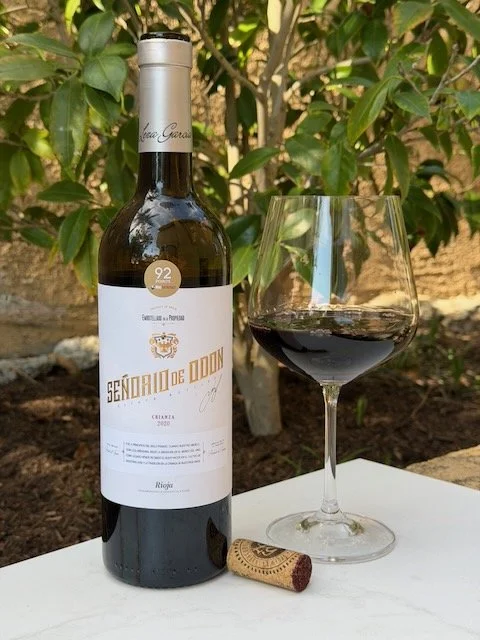
2020 Señorio de Odon Crianza ($6.99)

In Spanish wine, Crianza is a regulated aging classification that literally translates to "breeding" or "nurturing". It is the second tier of aged wine in Spain's quality system, sitting between young, un-aged wines (Joven) and more heavily aged wines (Reserva and Gran Reserva).

Crianza wines must have been aged a minimum of 24 months with at least one year of barrel aging followed by bottle aging.

This Crianza is produced by the family-owned Bodegas Leza García. It is 100% Tempranillo from the Rioja Alta region of Spain.

Señorio de Odon is deep ruby red in color with the classic Tempranillo aromas of cherry and spices. On the palate, this full-bodied wine has flavors of black cherry, fig and plum. It has medium-high tannin and acidity. It finishes lean with a bit of tannin and tartness.

The 2020 Señorio de Odon is widely available at Trader Joe’s and an excellent value. That makes it a nice fit as this week’s Behind the Cork™ Wine of the Week. Cheers!


The opinions expressed are entirely my own.
Behind the Cork™ - Marques De Cacres Crianza

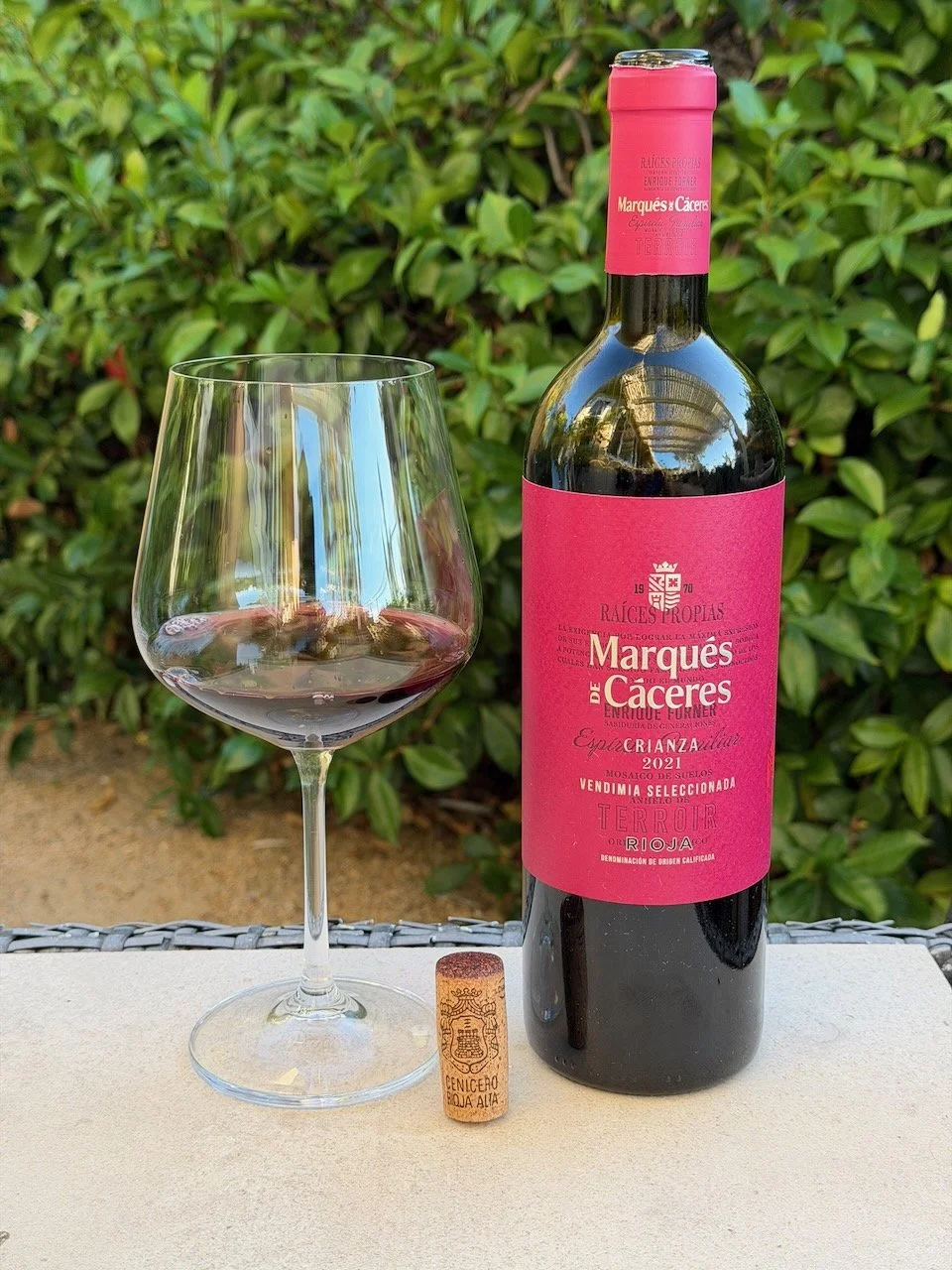
2021 Marqués De Cáceres Crianza ($13.99)

Enrique Forner founded the Bodegas Marqués de Cáceres winery in Spain in 1970. Don Vicente Noguera, the 7th Marquis of Cáceres (granted by the King of Spain) and a Grandee of Spain (a high-ranking nobleman of the highest rank in Spain), was a childhood friend of Forner and business partner who gave the winery his name. They had a special relationship that was forged when they were children and lasted until their final days.

Today, Juan Noguera, Vicente’s son, preserves the title of Marquis of Cáceres and has retained a direct personal relationship with the Forner family.

This Marqués de Cáceres Rioja Crianza is made from Tempranillo with some small amounts of Garnacha, Tinta and Graciano. The grapes were fermented in stainless steel. Maceration with the skins lasts up to 20 days in order to extract color, aromas and structure. Malolactic conversion occurred in new oak barrels and stainless steel tanks. The wine was then aged for 12 months in French oak (60%) and American oak (40%). The barrels consisted of 25% new oak, 25% oak used for two vintages and the other 50% in oak barrels that were used for a maximum of 3-4 vintages.

This Marqués de Cáceres Crianza is medium ruby in color with aromas of cherry and fig with hints of tobacco. On the palate, this medium-full bodied wine has nice flavors of cherry and red plum with medium tannin and acidity. It finishes lean and smooth with a hint of oak.

This is a really nice wine that’s easy to sip by itself but also pairs well with dishes with tomato-based sauces, stews, steak, grilled vegetables, barbecued chicken, smoked dishes, peppers. It’s a great value too! This makes the Marqués de Cáceres Crianza a great fit as this week’s Behind the Cork™ Wine of the Week. Cheers!


Disclosure of Wine Sample Submission: I received this sample at no cost for review.

Media Sample Provided by Marqués de Cáceres, Imported by Vineyards Brands

Reserva is Actually a Meaningful Term When It Appears on a Spanish Wine Label

In the U.S., the term “Reserve” on a wine label is not legally regulated. It can just be a marketing term to get consumer to believe the wine is somehow better than others. Or, it can actually mean that the winery has indeed gone above and beyond with higher quality grapes, longer aging or limited production. So, it’s buyer beware.

But, in Spain, the term "Reserva" is a legally regulated classification that indicates both minimum aging requirements and often a higher quality level compared to standard wines.

The term “Reserva” is regulated under Spanish wine laws (Denominación de Origen - DO, or Denominación de Origen Calificada - DOCa). A “Reserva” wine usually implies better grape selection and greater aging potential than a standard wine.

It should also be noted that “Reserva” is considered a step above "Crianza" and a step below "Gran Reserva" in aging hierarchy:

For Red (“Tinta”) wines:

  • Crianza = 2 years minimum aging with 1 year in oak

  • Reserva = 3 years minimum aging with 1 year in oak

  • Gran Reserva = 5 years total aging with 2 years in oak and 3 years in the bottle

So, next time you’re shopping for a Spanish wine, be sure to pay attention to the label. There are real differences. Cheers!

Behind the Cork™ - Conde Valdemar Crianza

2019 Conde Valdemar Crianza ($19.99)

Valdemar Family is comprised of 334 hectares (825 acres) of family-owned vineyards spanning Bodegas Valdemar in Roija, Spain and Valdemar Estates in Walla Walla, Washington. The winemaking legacy of the Martínez Bujanda family dates back to 1889. The fifth generation siblings Ana and Jesús are currently at the helm of both estates on two continents.

Crianza” is a word you may not have noticed on wine labels since it doesn’t immediately mean anything to an English speaker. But, one of its translations means ‘aging.’ And, indeed, this style of Rioja wine is required to be aged for at least one year in oak and spend one year or more in the bottle before being sold.

This Conde Valdemar Crianza is produced from 82% Tempranillo, 11% Mazuelo (aka Carignan), 4% Graciano and 3% Maturana that are grown in their vineyards in Rioja Alavesa and Rioja Alta.

It is deep purple in color with medium aromas of black cherry, plum and blackberry. On the palate, this medium-bodied wine has flavors of black fruit, tobacco leaf and chocolate (from the oak aging). It finishes smooth and easy with some spicy notes.

Conde Valdemar Crianza is a versatile wine with a nice balance between fruitiness and oak flavors. At this price, this wine is a perfect fit as the Behind the Cork™ Wine of the Week. Cheers!


Disclosure of Wine Sample Submission: I received this sample at no cost for review.

Media Sample Provided by Valdemar Family via Ten27 Communications

Getting to Know the Various Styles of Rioja

November 14th is International Tempranillo Day. Let’s get to know this Spanish wine a bit better.

Rioja is maybe the best known Spanish wine, but did you know there are various styles of Rioja?

First, let’s review a bit about Rioja. It is a region in North-Central Spain that’s known for its wine. And, like most Old-World wines, the wine label identifies the wine region, not the grape varietal.

Rioja wine is made from Tempranillo grapes but is often a blend of Tempranillo, Garnacha and Mazuelo (a.k.a. Carignan).

But, have you’ve ever noticed that a Rioja wine is made in various styles?

The most basic Rioja wine is usually labeled simply as “Rioja.” Makes sense, right? It is aged for a matter of months, bottled and sold. It’s bright and fruity with big cherry flavors.

Then there is “Crianza.” You may not have noticed this word on the label since it doesn’t immediately mean anything to an English speaker. But, one of its translations means ‘aging.’ And, indeed, this style of Rioja is required to be aged for one year in oak and spend one year in the bottle before being sold. The controlling board in Rioja, the Consejo Regulador DOCa Rioja, ensures that these quality requirements are met.

Next is “Reserva.” Now this is a term that appears on a lot of wines, but in Rioja it actually means something. A Rioja Reserva is required to be aged for one year in oak and then spend two years in the bottle before being sold.

Finally, there is “Gran Reserva.” This wine must spend a minimum of two years in oak and three years in the bottle before being sold. But, often these wines are closer to ten years old when sold. This wine is produced from the best grapes and ends up with the best tannin structure.

So, when buying a Rioja, pay attention to the label and turn the bottle around to the backside to look for one of the identifying stickers. Then, you’ll know exactly what you are getting.

Cheers!