
The Art of Wine Making: Choosing Aging Vessels Other Than Oak Barrels

An Amphora Wine Vessel

(Image by OpenClipart-Vectors from Pixabay)

Oak barrels are often the choice of a wine maker for an aging vessel. But, did you know, stainless steel, concrete and amphora are also used by wine makers in order to achieve the wine style that they desire.

Stainless steel is inert, meaning it doesn’t impart any flavors to the wine. This allows the pure expression of the grape variety, terroir, and vintage characteristics to shine through. Stainless steel aging vessels help preserve a wine’s aromas, bright fruit flavors and acidity. They can also be made airtight so that the wine is exposed to little or no oxidation during the aging process.

Winemakers have found that concrete aging vessels are semi-porous and allows for oxygenation like oak. It is also a neutral material that does not impart flavor and it is a natural insulator that stabilizes the temperature of the wine during aging. This allows winemakers to produce wines that tend to preserve the bright and fruit-forward flavors while still allowing for the important process of allowing the wine to ‘breathe’ during production.

Amphora is a ceramic vessel usually made of earthenware (e.g., clay or terra cotta) that was originally used in the transport of grains in Roman times. Research has shown that the use of amphorae dates to as early as 6,000 B.C. Amphora earthenware is naturally porous, like concrete, but it can also be made to be impervious to external oxygen by internally lining it with wax (i.e., beeswax) or tree resin. This creates a thin, smooth, polished coating that does not impart any flavor. Or, if the winemaker desires, it may be left unlined. Additionally, the amphora vessels can be left uncovered or sealed to prevent air contact with the wine.
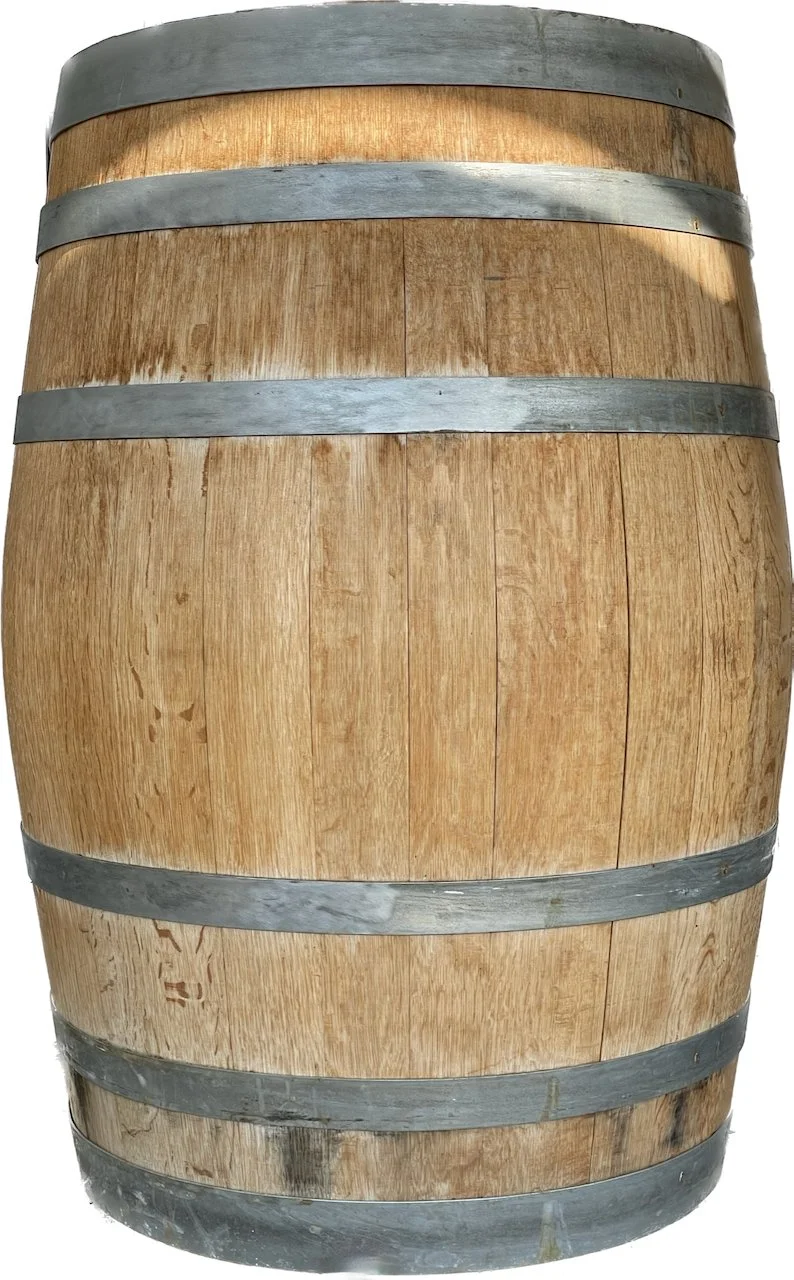
The Art of Wine Making: Choice of Oak Barrels for Wine Aging

Wine may be fermented and aged in a variety of materials including stainless steel, oak and ceramic vessels, including concrete. The use of oak barrels is very common and its use dates back to the early days of Roman wine making.

While stainless steel imparts no additional flavor to a wine, and ceramics and concrete can add hints of minerality, oak barrels can have influences that range from subtle to intense.

When wine is aged in oak barrels, it develops flavors from the wood. Most commonly, oak barrels result in vanilla flavor that works well with many white and red wines.

If a wine is aged in 100% new oak, it will likely be very bold, rich, spicy and, of course, oaky. But, wines pull these flavors out of barrels relatively quickly. After the first year of use, a barrel loses much of its flavoring ability and, after three vintages, the wine has extracted most all of the oak's flavors, thus it is considered neutral oak.

Wines may still be fermented or aged in neutral barrels. Such aging tends to soften wines, particularly tannic wines, without adding the extra flavors. Neutral oak is typically used to maintain the fruit qualities in a wine while still getting some of the other benefits of aging in oak.

Much of the flavor imparted by the oak occurs naturally from the raw wood. But winemakers learned long ago that by "toasting" the inside of an oak barrel, they can enhance these flavors.

After a barrel is built, its inside can be exposed to fire to "toast" it. This is done either over an open flame or using a hand-held torch. The fire 'caramelizes' the wood's natural sugars and brings out complex compounds. From this, the wine will ultimately take on flavors that are toasty, charred, spicy and sweet depending on the amount of time the wood is toasted.

A lightly toasted barrel spends about 25 minutes exposed to flame while a heavily toasted barrel may get up to one hour of flame exposure. Essentially, the heavier the toast, the stronger and more varied are the imparted flavors.

The Art of Wine Making: Making Decisions on Blending Wines

Blending of wines plays a large role in the art of wine making.

The main reason that winemakers produce blends is to make the best wine possible.

Blending different grape varieties is useful in accentuating a particular grape's virtues. But winemakers have also learned never to blend an inferior wine with a good wine because the result is usually an inferior wine.

Blending allows for wines that are well balanced and complex in their aromas, flavors, colors and textures. The blended grapes can add layers of flavor that will change through the process of taking the first sip, letting it sit on your tongue and then as you swallow.

Here are some of the types of blending strategies used by wine makers:

Varietal Blends: This is the most common blending done in wine making. Here, wine makers blend different grapes (varieties) to achieve the wine that they desire. Examples include Bordeaux wines, Rhone Wine and Super Tuscan wines. Also, in the U.S., most wines labeled as single varietals are actually blends.  The laws state that for a wine to be labeled as a single varietal, it must contain at least 75% of the noted grape. That leaves the other 25% for the winemaker to be creative and generally to blend in other grapes that results in their best possible wine.

Field Blends: These are wines that are made from different grape varieties that are grown together in the same vineyard, harvested at the same time, and fermented together in one batch.

Vineyard Blends: Wine makers may draw grapes from multiple vineyards or even multiple regions and blend them to achieve the desired traits.

Vintage Blends: While rarely done, a wine maker may find that their current vintage just isn’t up to their standards. They can then choose to blend this year’s vintage with some of last year’s vintage.

With the exception of field blends, the wines are typically blended after fermentation and aging, just prior to blending.

As this series has continually pointed out, wine making is both a science and an art. And the art of blending, when done well, can elevate a wine to something greater than the sum of its parts. Cheers!

The Art of Wine Making: Choosing Whether or Not to Filter a Wine

Just before the wine is bottled, it may go through one of several processes to remove any remaining sediment.

The processes for removing sediment from wine include (1) racking, (2) fining or (3) filtering. Let’s take quick look at each of these processes.

Racking allows for the natural settling of the sediment to the bottom of the barrels. Then, the wine is pumped out of the top of the barrel leaving the ‘bottom of the barrel’ remains. 

Filtering can also be used to remove sediment but too much filtering can remove important particles that yield a wine’s aromas and flavors. 

Fining is a process that also removes sediment from wine but it’s done by adding coagulants to the wine.  These coagulants immediately bind to the sediment particles and under the force of gravity, fall to the bottom of the vessel. Fining agents can include egg whites, gelatin or a milk protein called casein. In all cases, these fining agents do not remain in the wine, do not leave any residual flavor and are removed with the sediment.

The result of each process is a stable, clear and pleasant-looking glass of wine instead of something that would otherwise be cloudy-looking. Cheers!

The Art of Wine Making: Knowing When to Top Off Oak Wine Barrels

Another aspect of the art of wine making is knowing when to top off oak wine barrels during the winemaking process. Winemakers need to routinely do this during barrel aging.

Here's why…

1. Evaporation Through the Barrel

  • While the oak staves in the barrel do expand when saturated with the wine, these barrels are not completely airtight. So, they actually allow a small amount of oxygen to enter the barrel and interact with the wine.

  • Conversely, oak barrels also allow evaporation of the wine through the wood over time, especially in dry or warm conditions.

  • This evaporation creates air gaps, called “headspace” inside the barrel.

  • The amount of wine that evaporates from the barrel is often referred to as the "Angel’s Share" because it was imagined that angels must be taking their share of the wine from the heavens above.

2. Risk of Oxidation

  • The headspace is filled with air (that includes oxygen), and too much oxygen exposure can lead to oxidation, which can dull the wine’s flavors and aromas and, in the extreme, spoil the wine and give it a nutty-like flavor (much like Port wine flavor)

3. Knowing When to “Topping Off” the Barrels

  • The “art” of knowing when to top off a wine barrel is a mix of routine checks, sensory observation, and understanding the wine’s environment. Experienced winemakers can even predict when barrels need topping based on subtle cues like how the barrels plug (known as a bung plug) fits or the cellar conditions.

  • Topping off simply means refilling the barrel to its full capacity with the same wine (typically from a reserve tank or another barrel).

  • This minimizes the oxygen in the headspace and helps preserve wine quality.

4. Frequency of Topping Off

  • Winemakers typically top off barrels every few weeks to every couple of months, depending on cellar conditions (humidity, temperature), barrel size, and wine style.

So in short, topping off an oak wine barrel is a key part of maintaining the wine’s freshness during barrel aging. Yet another part of the art of wine making. Cheers!