The Art of Wine Making: Making Decisions on Blending Wines

Blending of wines plays a large role in the art of wine making.

The main reason that winemakers produce blends is to make the best wine possible.

Blending different grape varieties is useful in accentuating a particular grape's virtues. But winemakers have also learned never to blend an inferior wine with a good wine because the result is usually an inferior wine.

Blending allows for wines that are well balanced and complex in their aromas, flavors, colors and textures. The blended grapes can add layers of flavor that will change through the process of taking the first sip, letting it sit on your tongue and then as you swallow.

Here are some of the types of blending strategies used by wine makers:

Varietal Blends: This is the most common blending done in wine making. Here, wine makers blend different grapes (varieties) to achieve the wine that they desire. Examples include Bordeaux wines, Rhone Wine and Super Tuscan wines. Also, in the U.S., most wines labeled as single varietals are actually blends.  The laws state that for a wine to be labeled as a single varietal, it must contain at least 75% of the noted grape. That leaves the other 25% for the winemaker to be creative and generally to blend in other grapes that results in their best possible wine.

Field Blends: These are wines that are made from different grape varieties that are grown together in the same vineyard, harvested at the same time, and fermented together in one batch.

Vineyard Blends: Wine makers may draw grapes from multiple vineyards or even multiple regions and blend them to achieve the desired traits.

Vintage Blends: While rarely done, a wine maker may find that their current vintage just isn’t up to their standards. They can then choose to blend this year’s vintage with some of last year’s vintage.

With the exception of field blends, the wines are typically blended after fermentation and aging, just prior to blending.

As this series has continually pointed out, wine making is both a science and an art. And the art of blending, when done well, can elevate a wine to something greater than the sum of its parts. Cheers!

Why Do Winemakers Blend Viognier with Tannat?

Winemakers sometimes blend Viognier with Tannat. But why would they combine a white wine with a red wine?

Blending Viognier with Tannat actually provides several benefits to winemakers:

  1. Enhanced Color: Tannat is known for its deep ruby red color. Adding Viognier to Tannat actually acts to brighten the overall color of the wine and make it more visually appealing.

  2. Greater Structure and Complexity: Blending Viognier with Tannat helps soften the wine and balance it out, providing more even structure and greater complexity.

  3. Enhanced Aromas: Viognier is highly aromatic, providing floral and fruity notes. Adding a small amount of Viognier to Tannat enhances the aroma of the wine.

  4. Better Balance: Viognier tends to have higher acidity compared to Tannat. Blending in just a small amount of Viognier will raise the acidity level giving a brighter and a more balanced final product.

  5. Softening Tannins: Tannat is known for its bold tannins, which can sometimes be too overpowering. By blending Viognier, which has softer tannins, winemakers can reduce the harshness of Tannat, resulting in a smoother wine.

  6. Market Appeal: Viognier is a popular grape variety, especially in certain markets. Blending it with Tannat can help increase the market appeal of the wine, making it more attractive to consumers who may be drawn to the unique characteristics of Viognier.

Overall, blending Viognier with Tannat allows winemakers to create a wine that is well-balanced, complex, and appealing to a wider range of consumers.

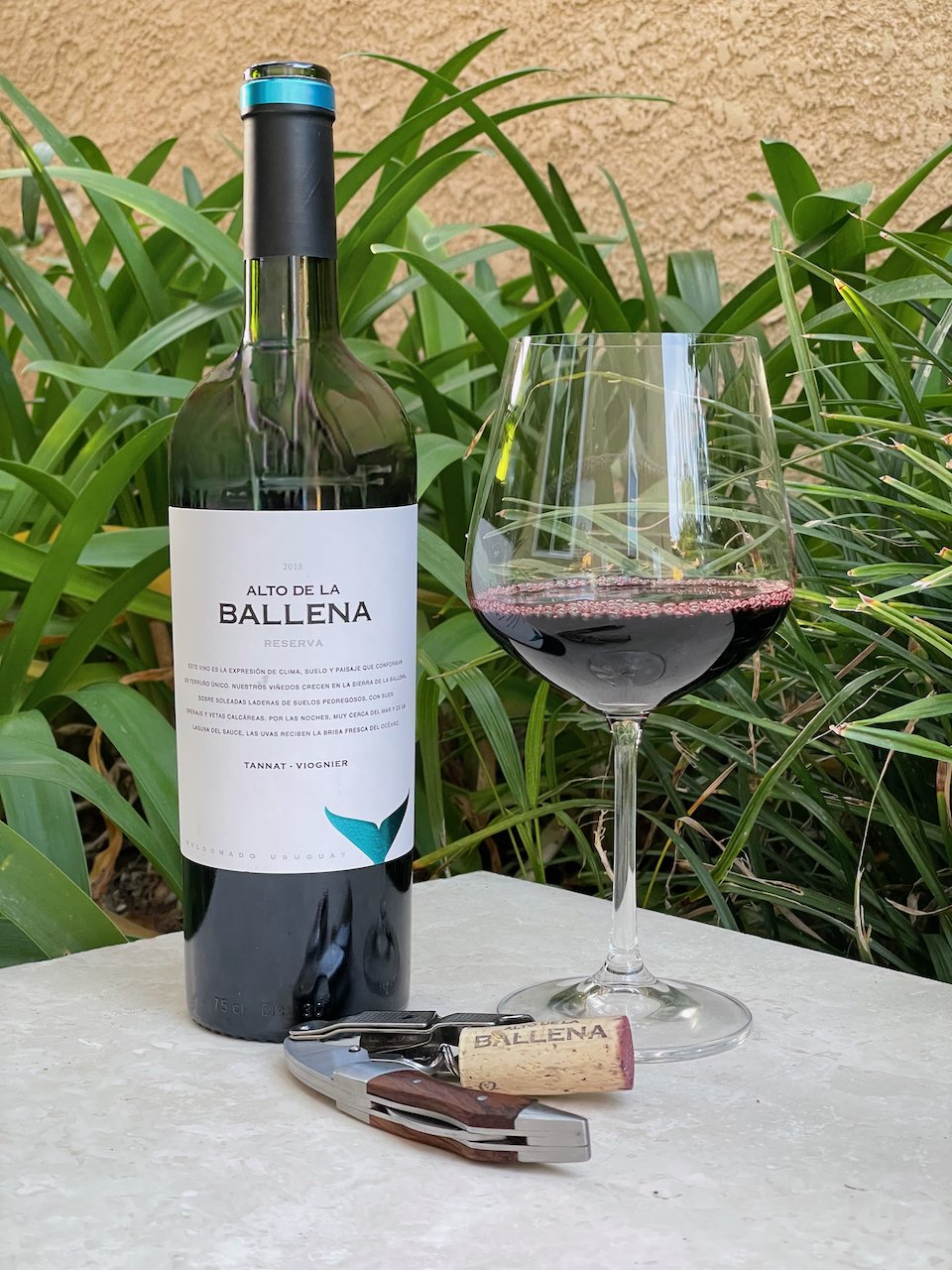
Look for a review of this Alto de la Ballena Reserve Tannat - Viognier in the next Behind the Cork™ Wine of the Week. Cheers!

Wine Blends Are an Interesting Combination of Art and Science

In years past in the U.S., red wine blends were sold by the jug as "Red Wine" or "Table Wine."  These were inexpensive wines that were blends of grapes, vineyards or even vintages. So, blends are often discounted or disregarded as being of poorer quality.

But we only need to look to France, home of some of the world’s best wines, to see that blends are nothing to turn your nose up at.  France's famous region of Bordeaux produces red blends almost exclusively.  Depending on which bank the wine is from in Bordeaux, it will be a different blend. The Left Bank is known for its blends based on Cabernet Sauvignon while the Right Bank blends are Merlot based. These blends may also include Cabernet Franc, Petite Verdot and Malbec.

Other famous regions known for their blends include the Rhône Valley that uses Grenache, Syrah and Mouvedre and the so-called Super Tuscans from Italy that may include Merlot, Cabernet Sauvignon, Sangiovese, Syrah, Cabernet Franc and others.

The main reason that winemakers produce blends is to make the best wine possible. Blending different grape varieties is useful in accentuating a particular grape's virtues. The goal is to produce a wine that is actually better than the sum of its parts. And blending allows wines to be more well balanced and complex in their aromas, flavors, colors and textures. The blended grapes can add layers of flavor that will change through the process of taking the first sip, letting it sit on your tongue and then as you swallow.

In blending wine, amounts as small as 1% of a varietal can make a difference. It’s not unusual to find blends that contain only 1% or 2% of a given varietal. And, yes, just 1% can make a difference. You may not be able to detect that 1% directly, but the winemaker has added that amount to make an overall positive difference to the final product.

Some varietals commonly used in wine blending:

  • Barbera for its acidity which helps the mouthfeel and structure of the wine

  • Carignan for its aromatic notes and to produce greater robustness with its red and black fruit flavors and its peppery finish

  • Cabernet Franc for its floral notes as well as its red fruit and peppery flavors

  • Malbec for its soft tannin and floral aromas as well as its color and flavor intensity

  • Petit Verdot for its herbal notes, as well as it bold color, flavor and tannin

  • Viognier for its floral notes and added body in white blends and its aromatic complexity and soft tannin in red blends

So, don't turn up your nose at red wine blends or question that 1% of a given varietal.  These can actually be some of the best wines in the world. Cheers!

Behind the Cork™ - Alto de la Bellena Reserva

2018 Alto de la Bellena Reserva ($24)

Nine miles away from the Atlantic Ocean, Alto de la Ballena is a small winery producing high-end wines from over 20 acres of vineyards in Uruguay. Starting vine plantations on a slope of Sierra de la Ballena (“Whale Hills”) in 2001, the estate opened new trends in wine growing by combining maritime climate, hills and rocky soils.

This Alto de la Bellena is a blend of 85% Tannat and 15% Viognier. Yes, it’s a blend of red wine and white wine. It is common to use Viognier as a blending wine to enhance the color, add floral aromas, and provide a silkier mouthfeel. The Viognier was fermented separately in barrels and its skins were co-fermented with the Tannat. The finished wines were then blended and aged for nine months in American oak.

This wine is deep ruby in color with aromas of plum and black cherry. On the palate, this full-bodied wine has jammy flavors of black fruit, medium-high tannin and acidity and a bit of tartness on the finish.

This Alto de la Bellena red blend is yet another great example of the fine wines being produced in Uruguay and a great fit as this week’s Behind the Cork™ Wine of the Week. Cheers!


Disclosure of Wine Sample Submission: I received this sample at no cost for review. The opinions expressed are entirely my own.

Sample Provided by Alto de la Bellena Winery via Creative Palate Communications

Ever Wonder? Why Do Wine Makers Produce Blended Wines?

In years past in the U.S., red wine blends were sold by the jug as "Red Wine" or "Table Wine."  These were inexpensive wines that were blends of grapes, vineyards or even vintages. This history has led to some people believing that blends are of lesser-quality than just pure varietals.

But we only need to look to France, home of some of the world’s best wines, to see that blends of high quality are very common.  France's famous region of Bordeaux produces red blends almost exclusively.  Depending on which bank the wine is from in Bordeaux, it will be a different blend. The Left Bank is known for its blends based on Cabernet Sauvignon while the Right Bank blends are Merlot based. These blends may also include Cabernet Franc, Petite Verdot and Malbec.

Other famous regions known for their blends include the Rhône Valley that uses Grenache, Syrah and Mouvedre and the so-called Super Tuscans from Italy that may include Merlot, Cabernet Sauvignon, Sangiovese, Syrah, Cabernet Franc and others.

The main reason that winemakers produce blends is to make the best wine possible. Blending different grape varieties is useful in accentuating a particular grape's virtues. But winemakers have also learned never to blend an inferior wine with a good wine because the result is usually an inferior wine. Again, the goal is to produce a wine that is actually better than the sum of its parts. And blending allows for wines that are well balanced and complex in their aromas, flavors, colors and textures. The blended grapes can add layers of flavor that will change through the process of taking the first sip, letting it sit on your tongue and then as you swallow.

Another thing you may not realize is that most wines labeled in the U.S. as single varietals are actually blends.  The laws state that for a wine to be labeled as a single varietal, it must contain at least 75% of the noted grape. But that leaves the other 25% for the winemaker to be creative and generally to blend in other grapes that results in their best possible wine.

So don't turn up your nose at red wine blends.  These can actually be some of the best wines in the world. Cheers!