Behind the Cork™ - Virginia Wine Governor's Cup Winner: Veritas Vineyards White Blend

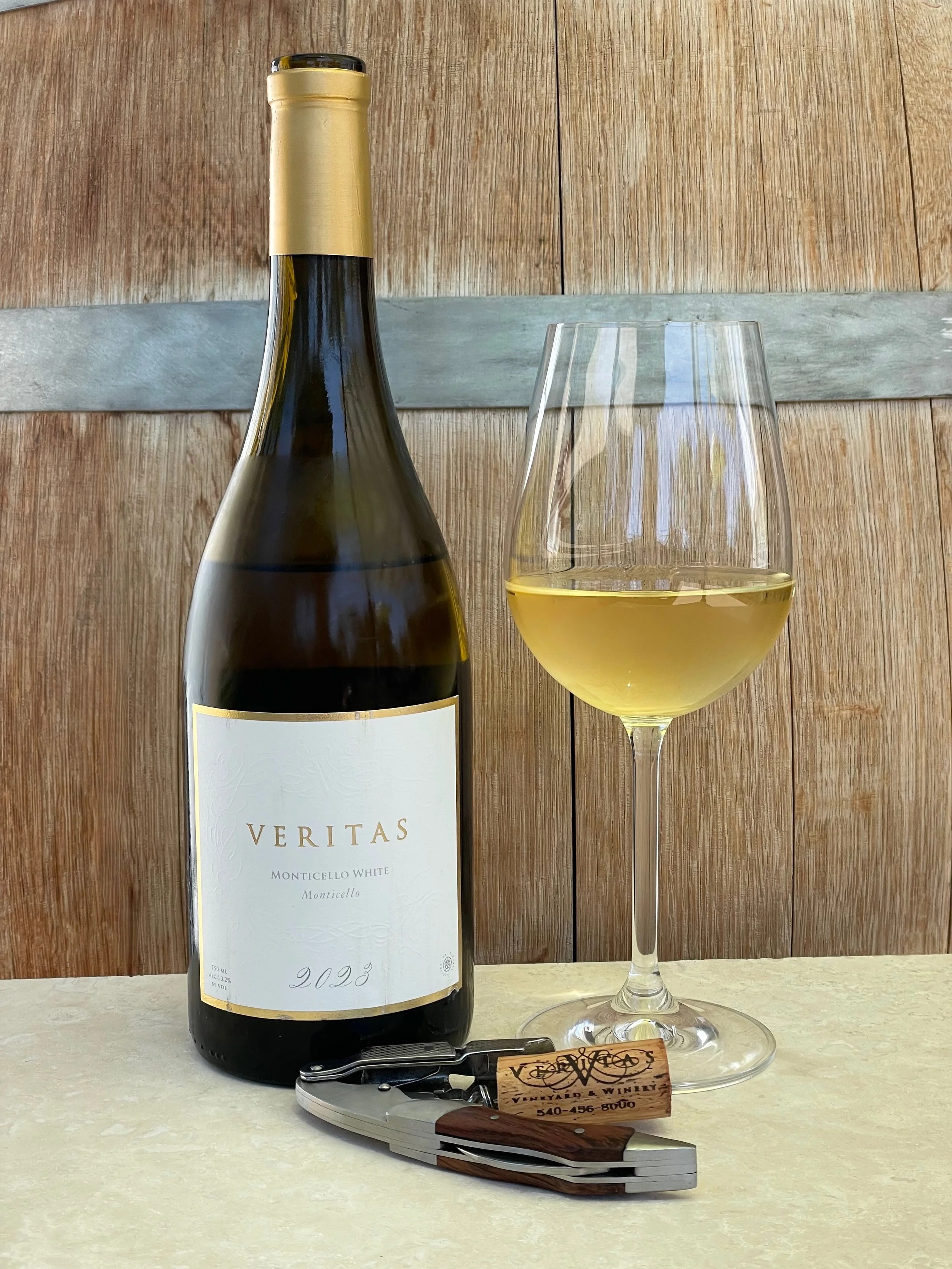
2023 Veritas Vineyards Monticello White Blend ($35)

Veritas Winery was started by Andrew and Patricia Hodson in 1999. Born out of their love of wine and commitment to producing quality wine, Veritas has grown into a 20-year-old family business that is on the leading edge of the Virginia wine industry.

With over 50 acres in the Monticello wine region, and producing a complex portfolio of wine ranging from sparkling to beautifully balanced red wines, Veritas wine quality starts in the vineyard, and the terroir of the Blue Ridge Mountains.

Winemaker Emily Hodson, daughter of Andrew and Patricia, has been the winemaker at Veritas for over 15 harvests.

This Veritas Vineyards Monticello White Blend is produced from 50% Chardonnay, 22% Viognier, 17% Sauvignon Blanc and 11% Petit Manseng. Fermentation took place in 30% stainless steel and 70% oak. The wine was aged for 10 months in a combination of 11% new oak, 56% two-year oak, and 33% neutral oak.

The wine is a beautiful medium gold color with aromas of melon, apple, pineapple and spice On the palate, this medium-light bodied wine has flavors of melon, guava and peach with subtle hint of flavor from the oak aging. It finishes soft and smooth with just a touch of acidity at the end.

Winemaker Emily Hodson said that she worked long and hard on this blend and finally got it “just right” on the sixth try. I have to agree! This Monticello White Blend is terrific! And obvious why it was a winner in the Virginia Governor’s Cup. A great wine at a super affordable price as this week’s Behind the Cork™ Wine of the Week. Cheers!


Disclosure of Wine Sample Submission: I received this sample at no cost for review.

Media Sample Provided by Veritas Vineyard and Winery, Virginia Wine and Donna White Communications

The Art of Wine Making: Making Decisions on Blending Wines

Blending of wines plays a large role in the art of wine making.

The main reason that winemakers produce blends is to make the best wine possible.

Blending different grape varieties is useful in accentuating a particular grape's virtues. But winemakers have also learned never to blend an inferior wine with a good wine because the result is usually an inferior wine.

Blending allows for wines that are well balanced and complex in their aromas, flavors, colors and textures. The blended grapes can add layers of flavor that will change through the process of taking the first sip, letting it sit on your tongue and then as you swallow.

Here are some of the types of blending strategies used by wine makers:

Varietal Blends: This is the most common blending done in wine making. Here, wine makers blend different grapes (varieties) to achieve the wine that they desire. Examples include Bordeaux wines, Rhone Wine and Super Tuscan wines. Also, in the U.S., most wines labeled as single varietals are actually blends.  The laws state that for a wine to be labeled as a single varietal, it must contain at least 75% of the noted grape. That leaves the other 25% for the winemaker to be creative and generally to blend in other grapes that results in their best possible wine.

Field Blends: These are wines that are made from different grape varieties that are grown together in the same vineyard, harvested at the same time, and fermented together in one batch.

Vineyard Blends: Wine makers may draw grapes from multiple vineyards or even multiple regions and blend them to achieve the desired traits.

Vintage Blends: While rarely done, a wine maker may find that their current vintage just isn’t up to their standards. They can then choose to blend this year’s vintage with some of last year’s vintage.

With the exception of field blends, the wines are typically blended after fermentation and aging, just prior to blending.

As this series has continually pointed out, wine making is both a science and an art. And the art of blending, when done well, can elevate a wine to something greater than the sum of its parts. Cheers!

Behind the Cork™ - Trujillo Madelyn White Wine Cuvée

2023 Madelyn White Wine Cuvée ($24)

Michael Trujillo, Winemaker at Trujillo Wines, says “In life, as in winemaking, a blend of great things often results in something fun and unique.” In tribute to his daughter, Sophia Madelyn Trujillo, he proudly makes this white wine cuvée (i.e., a wine made with more than one grape variety).

This wine is produced from a blend of 61% Sauvignon Blanc and 39% Gewürztraminer that was fermented and maintained in Stainless Steel tanks to preserve the bright fruit flavors.

This Madelyn Cuvée (KOO-vay) is medium straw in color with bright aromas of citrus, grapefruit and tropical fruits with the Gewürztraminer adding floral notes. On the palate it is medium-light in body and dry, not sweet, with refreshing citrus and grapefruit flavors, bright acidity and a lingering finish. [ABV: 14.1%, TA: 7.0 g/L, pH: 3.39, RS: 1.5 g/L] 588 Cases Produced

This Trujillo Madelyn White Wine Cuvée is a fun and refreshing wine that can be enjoyed in all casual setting and goes great with lite fare. This is a very enjoyable wine that’s offered at a great price, making it a nice fit as this week’s Behind the Cork™ Wine of the Week. Cheers!


Disclosure of Wine Sample Submission: I received this sample at no cost for review. The opinions expressed are entirely my own.

Media Sample Provided by Trujillo Wines

Behind the Cork™ - Bianca Giovese White Wine

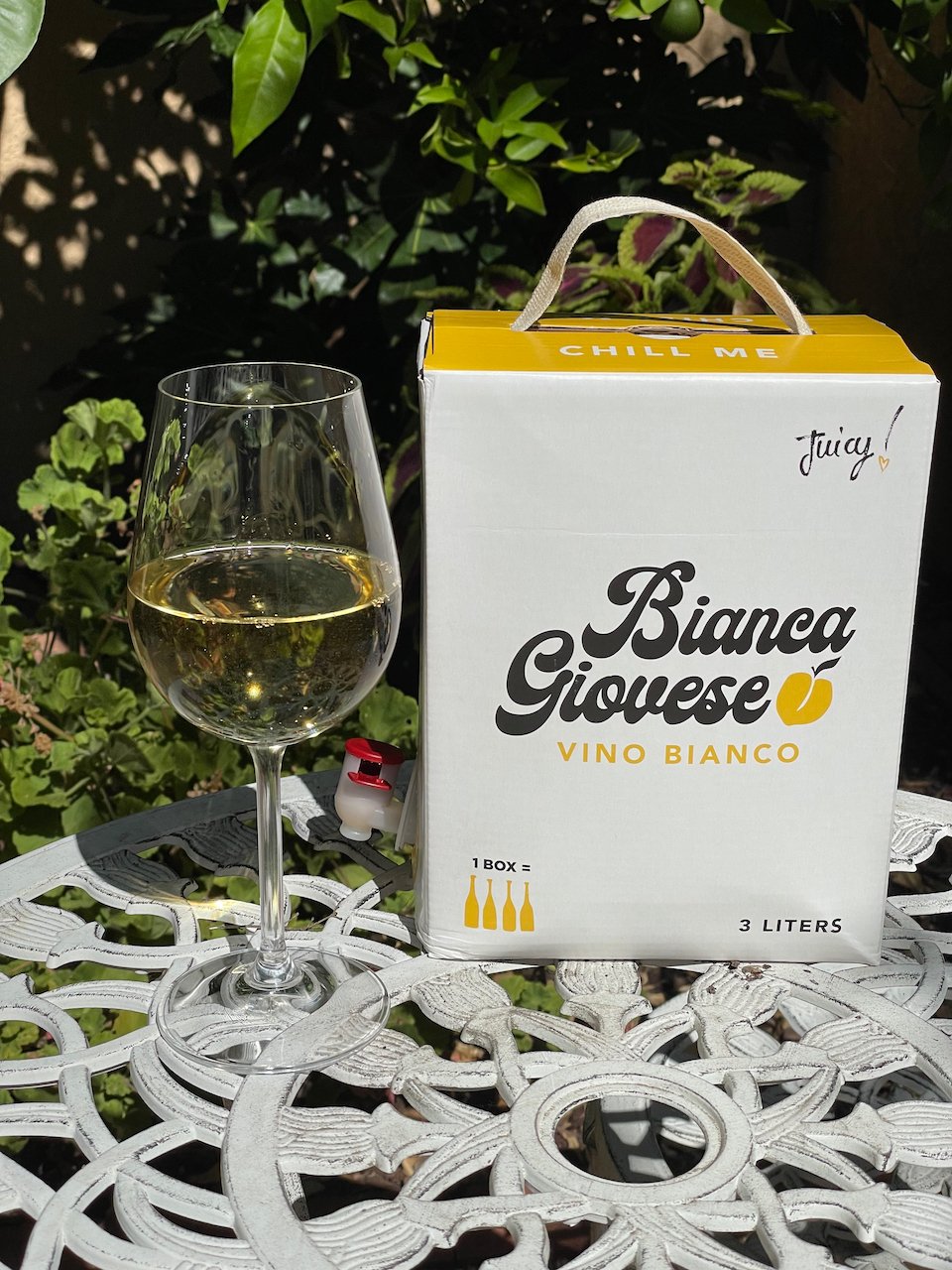
Bianca Giovese Vino Bianco ($34)

The Giovese Family of wines proudly announced the recent arrival of sister brand Bianca Giovese Vino Bianco, now available in retail stores, wine shops, bars, and restaurants across 20 US states and Western Canada. Each box contains the equivalent of four 750-ml. bottles of wine. That’s less than $10 a bottle-equivalent!

 Joining her “sisters” Sandy Giovese and Rosie Giovese in the newly established Giovese Family Wines portfolio, Bianca offers all the benefits that premium boxed wine presents to drinkers, including sustainability, longevity, and value that competes with comparable bottled wines. 

Like her sisters, Bianca is made from chemical-free, organically farmed Italian grapes, including Grechetto (55%) and Trebbiano (30%) blended with Sauvignon Blanc (%15). The grapes come from the pristine vineyards of Conti degli Azzoni, a sustainability-focused, family-owned winery pursuing B-Corp certification in the Marche region of central Italy.

Bianca Giovese is medium gold in color with delicate aromas of citrus. On the palate, this light-bodied wine has notes of citrus, nectarine and tangerine. It has bright refreshing acidity and has a fun sweet/tart finish. [ABV: 12%, TA: 5.2 g/L, pH: 3.47, RS: >2.0 g/L]

Don’t overlook this one as just another “box wine.” It may come in an earth-friendly recyclable cardboard container, but it delivers quality wine. And, at a great value! This makes the Bianca Giovese a great fit as the Behind the Cork™ Wine of the Week! Cheers!


Disclosure of Wine Sample Submission: I received this sample at no cost for review. The opinions expressed are entirely my own.

Media Sample Provided by Giovese Family Wines via Savona Communications

Behind the Cork™ - White Wines from Masciarelli Winery in Abruzzo

Masciarelli (Mass-shee-ah-RELL-ee) Winery is located in the Abruzzo region of Italy on the eastern coast, just east of Rome on the Adriatic Sea. It was established in 1981 from the entrepreneurial intuition of Gianni Masciarelli. Today, Miriam Masciarelli (Gianni’s daughter) works with her mother, Marina Cvetić Masciarelli, to run this fabulous family winery that now has 22 labels and seven product lines all sourced from 60 vineyards in all four provinces of Abruzzo. Two of the product lines featured here are Villa Gemma, honoring the modest family home where Gianni was born, and the Marina Cvetic line that Gianni named for his wife.

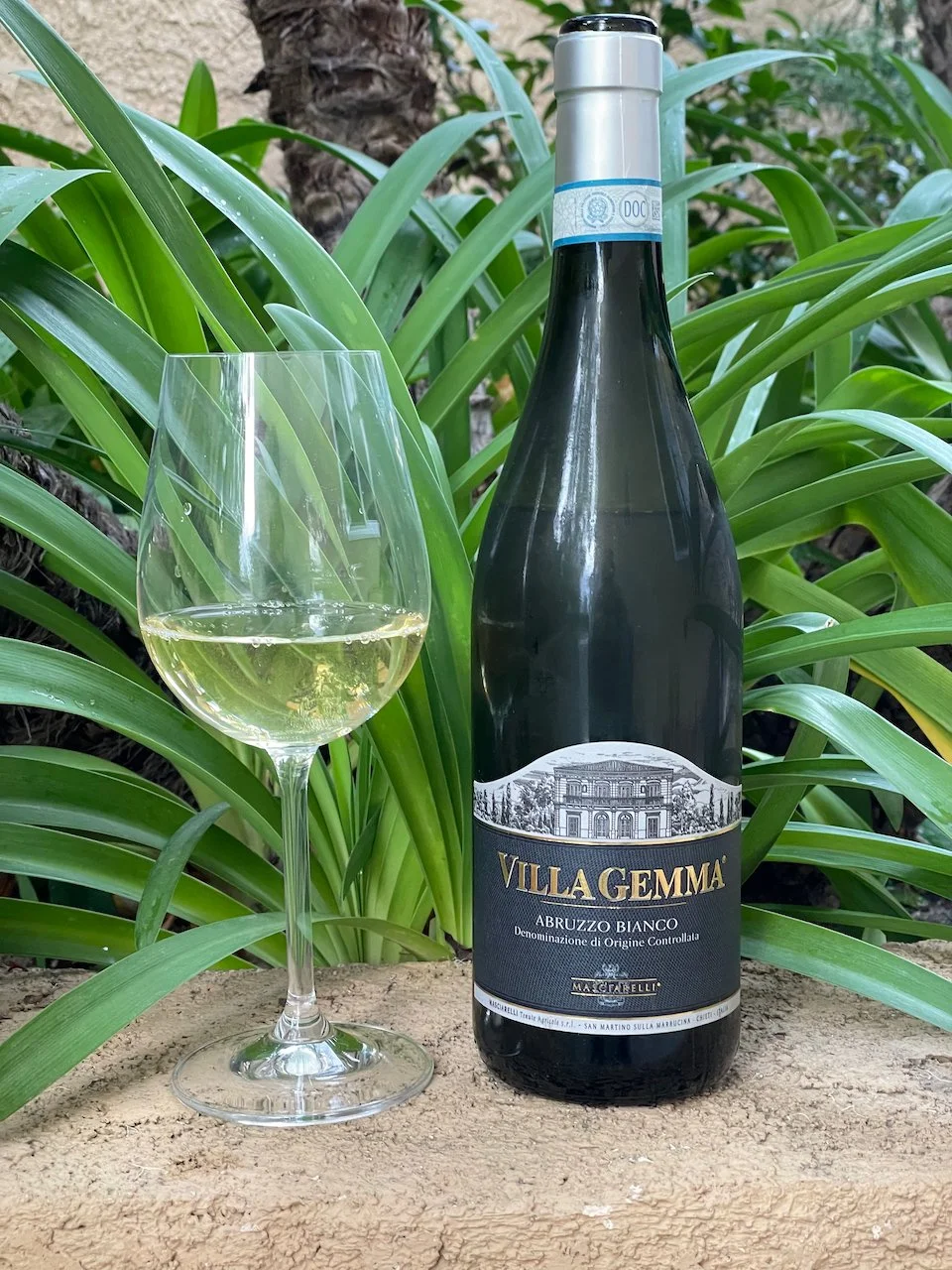
2022 Villa Gemma Abruzzo Bianco ($24)

This wine is produced from a blend of 50% Trebbiano Abruzzese, 30% Pecorino, and 20% Cococciola from four vineyards. Trebbiano Abruzzese delivers wines that can be simultaneously floral and fruity. Native Cococciola adds lime-like acidity and herbal notes, while Pecorino adds minerality and a fruit/floral balance.

Fermentation of the various grape varieties was conducted separately in low-temperature stainless steel tanks, followed by blending and bottling.

This Villa Gemma Abruzzo Bianco is pale straw in color. On the nose it nice aromas of citrus and pineapple with subtle herbal hints. On the palate, this medium-light-bodied wine is bright, with green apple flavors, good acidity and mineral notes.

2020 Marina Cvetic Trebbiano d’ Abruzzo Reserva ($60)

This wine is produced from 100% Trebbiano Abruzzese from two vineyards.

Fermentation took place in French oak barrels, both initial and malolactic conversion. After aging 12 months on lees, in new French barrels, the wine spent 12 months in the bottle before distribution. 

This Marina Cvetic Trebbiano d’ Abruzzo Reserva is pale gold in color with greenish highlights. On the nose it has very delicate fruit aromas and herbal hints along with notes from the oak influence. On the palate, this medium-light bodied wine has flavors of green apple and lemon along with oaky notes and yeast from the aging on lees. It finishes soft and smooth.

Both of these white wines from Masciarelli winery are delicious examples of the great wines coming from the Abruzzo region of Italy and featured as the Behind the Cork Wines of the Week. Cheers!


Disclosure of Wine Sample Submission: I received these samples at no cost for review. The opinions expressed are entirely my own.

Media Samples Provided by Masciarelli Winery