
Ever Had a Peppery Zinfandel?

Zinfandel is a very popular California wine. One that can take on two very different flavor personalities.

Zinfandel that is grown in warm places usually results in grapes that get very ripe and produce big jammy “fruit bomb” flavors. High alcohol levels are usually included in these wines. But, Zinfandel that is grown in cooler climates can result in wines with lots of herbal flavors.

While Zinfandel can have a variety of herbal flavors, the primary one is usually described as “peppery.” A recent article in Wine Spectator (June 2018) featured California Zinfandels with descriptions that included “…pepper…savory cracked pepper…green peppercorn…white pepper aromas…fresh pepper aromas…cracked pepper notes…white pepper flavors…loaded with pepper…smoky pepper flavors.”

The reason for these peppery flavors in wine is a bit technical, but let’s give it a try. It has to do with physical chemical compounds. And, the compound rotundone is responsible for contributing the spice qualities similar to the experience of cracked peppercorns. Now, just to take this one step further down the technical path, rotundone is part of a larger class of aromatic terpenes called sesquiterpenes, which is the primary compound found in black or white peppercorns.

But, there is no where near the quantity of rotundone found in the skins of wine grapes than in peppercorns. They are so few that they are not perceivable in the grape off the vine (that would be a bit weird to bite into a peppery grape!). But the tiny amounts of this compound often become perceivable in the taste of wines following the process of fermentation. And, yes, there’s a lot of chemistry going on there too.

Now, this peppercorn flavor from rotundone is not to be confused with bell peppers. This is also a flavor that is commonly found in wines. These are due to methoxypyrazines which are commonly occurring compounds that result in subtle vegetable or herb-like aromas and flavors, such as bell peppers, asparagus or mint. Methoxypyrazines (usually referred to as pyrazines) are found in numerous wines, including Zinfandels, when the grapes are picked slightly underripe or “green,” or when the grapes are fermented with grape stems, which are high in methoxypyrazines. So, it is not uncommon to find lighter, earlier picked or stem-fermented styles of Zinfandel that are also slightly herbal due to pyrazines.

So, bell pepper and black pepper flavor compounds are not the same but they can appear in wines for different reasons. Nonetheless, next time you get to enjoy a Zinfandel, try to determine which of the two flavor personalities it has — jammy or peppery. And, which peppery flavors you are experiencing.

Cheers!
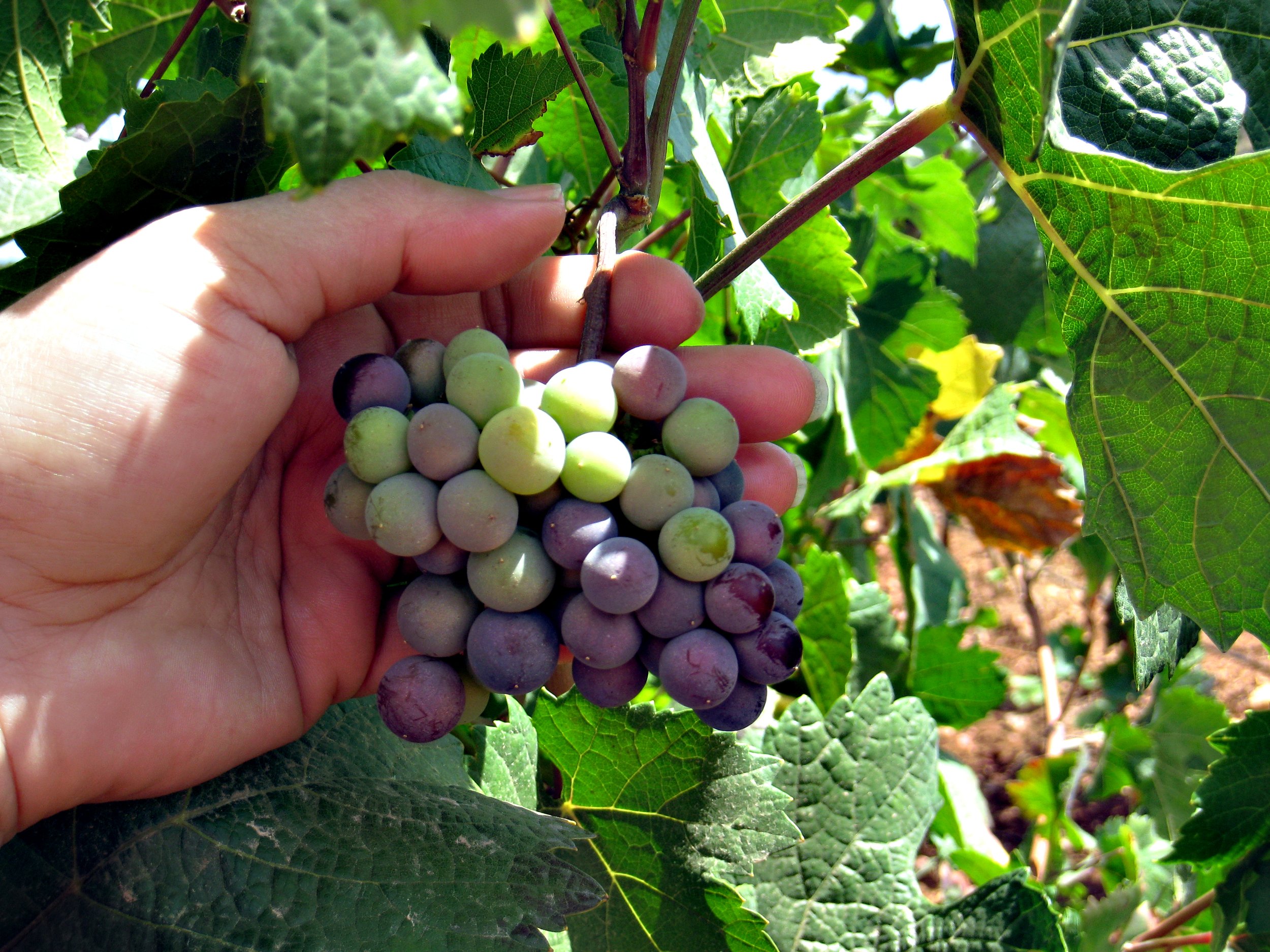
In the Winemaking World it's Veraison Time!

The grape growing cycle is currently at the point where berries (the actual term for individual grapes) begin to turn color. This marks the point at which the grape vines move from berry growth to berry ripening.

The term for this stage is called Veraison (vuh-rey-zhun). And this means that there is now approximately 45 days until the beginning of harvest.

While veraison is most obvious on red wine grapes, white grapes also go through veraison. While their color change isn't as dramatic as the reds, they do change from green to a more yellow or golden green. 

Veraison marks the point where the grapes stop growing in size. But, it's also when the sugar content of the grapes changes significantly. And, the acid begins to decline.

So, winemakers are now very closely watching and testing the grapes to find the point where the sugar content and acidity are just right for the particular wine they are trying to produce.

It's an exciting time in the vineyard and harvest is just around the corner! Cheers!

How Does Wind Affect a Wine?

I recently had a friend return from doing some wine tasting in Napa. While he said he enjoyed the wine, he did complain that it was windy and cold. And, he said he was told that the wind helped the wine. So, he asked me "How does wind affect a wine?"

Luckily, I had recently been doing some reading, and this exact situation was described. It turns out that it's not just the wind, it a cool wind that helps.  And, as is true with many of the premiere wine growing regions, Napa is helped by the cool afternoon breezes that come in off the ocean.  These cool winds actually cause the leaves in the vineyard to close-down their tiny pores (stoma). Without going any further into plant botany, this slows down the ripening process during the growing season. And, slower ripening results in grape skins that are thicker along with smaller berries (i.e., grapes) and smaller bunches.  This produces concentrated flavors and, in red grapes, a bit more tannin. It can also help with increased acidity. All good stuff for making wine.

So, when you visit wine county and feel the cool afternoon breezes, don't complain. They are helping to make the wine even better. Cheers!


Learn More About Appassimento Wine

A friend of mine recently recommended a wine that he really liked. When he showed me the wine's label I saw that it was an Italian Appassimento. That's a wine that I was not previously familiar with, so I took a look on-line and found a brief description of it. Soon thereafter, I went on the hunt for the wine so that I could give it a try. Unfortunately, I was unable to find it in any of my local stores, so he graciously brought me a bottle to try.

Simply put, Appassimento wines are made from grapes that have been dried before being pressed. The grapes are harvested and laid out on racks in large temperature controlled drying rooms for up to six months. After drying, the grapes are de-stemmed, crushed and fermented.

But, since the dried grapes lose up to 50% of their water during the drying process, the result of the press (i.e., the resulting must) is quite rich and concentrated. And, high in sugar. But, typically, the high sugar content simply results in high alcohol wines (15-16% ABV) when fermentation is completed. These wines are then generally barrel aged for one to two years before being bottled. The resulting wines are full-bodied, concentrated in dark fruit flavors and, not surprisingly, have just a hint of raisin flavor to them.

The Appassimento process is used traditionally in Italian wine regions to make the popular Amarone, Recioto, Valpolicella Ripasso, and Sforzato wines. The best known, Amarone Valpolicella, is the high-end of wines from Valpolicella and commands the highest prices.

While you can find inexpensive Appassimento wines (and the one I tried was well under $20), the process simply makes it more expensive.  First, you have to add a large, temperature controlled drying facility. Then, you have the labor involved in laying out all the grapes on the drying racks and stacking them. Finally, when it comes time to make the wine, it takes a lot more dried grapes to make a bottle of Appassimento than to make other wines. So, the cost of a bottle of Amarone Valpolicella can easily be the $50 - $80 price range.

So, keep your eyes out for an Appassimento and give it a try! Cheers!


Wine Flavors from Barrel Aging - Part 2

Last time we learned that aging wine in barrels can impart flavors ranging from none, in older 'neutral' barrels, to subtle hints of vanilla, or bolder flavors of chocolate and smokiness, depending on the barrels age and the degree to which its inside was toasted.

But, barrel aging can also affect a wine’s flavor in a very different way. And, that has to do with a very important component of air, namely oxygen.

Originally, wood barrels were used as a means of transporting wines over great distances. It was somewhat accidentally discovered during this transportation process, that the longer the wine was inside the barrels, the more the wines would change in character - in a positive way.  

This was partially due to the wine’s flavor being directly affected by long-term contact with the wood’s surface.  But, it was also discovered that wood, by its very nature, allows microscopic amounts of air to pass through the barrel and to the wine inside. This minimal exposure of wine to oxygen was found to soften the fruit flavors of the wines and create other flavor notes.

This, quite accidentally, began the practice of aging wine in wood barrels, notably oak.  Today, red wines will typically see a minimum of one to two years of aging in oak barrels before being bottled.

And, we’ll take a look at bottle aging next time. Until then,  Cheers!