

Tannat 🍷
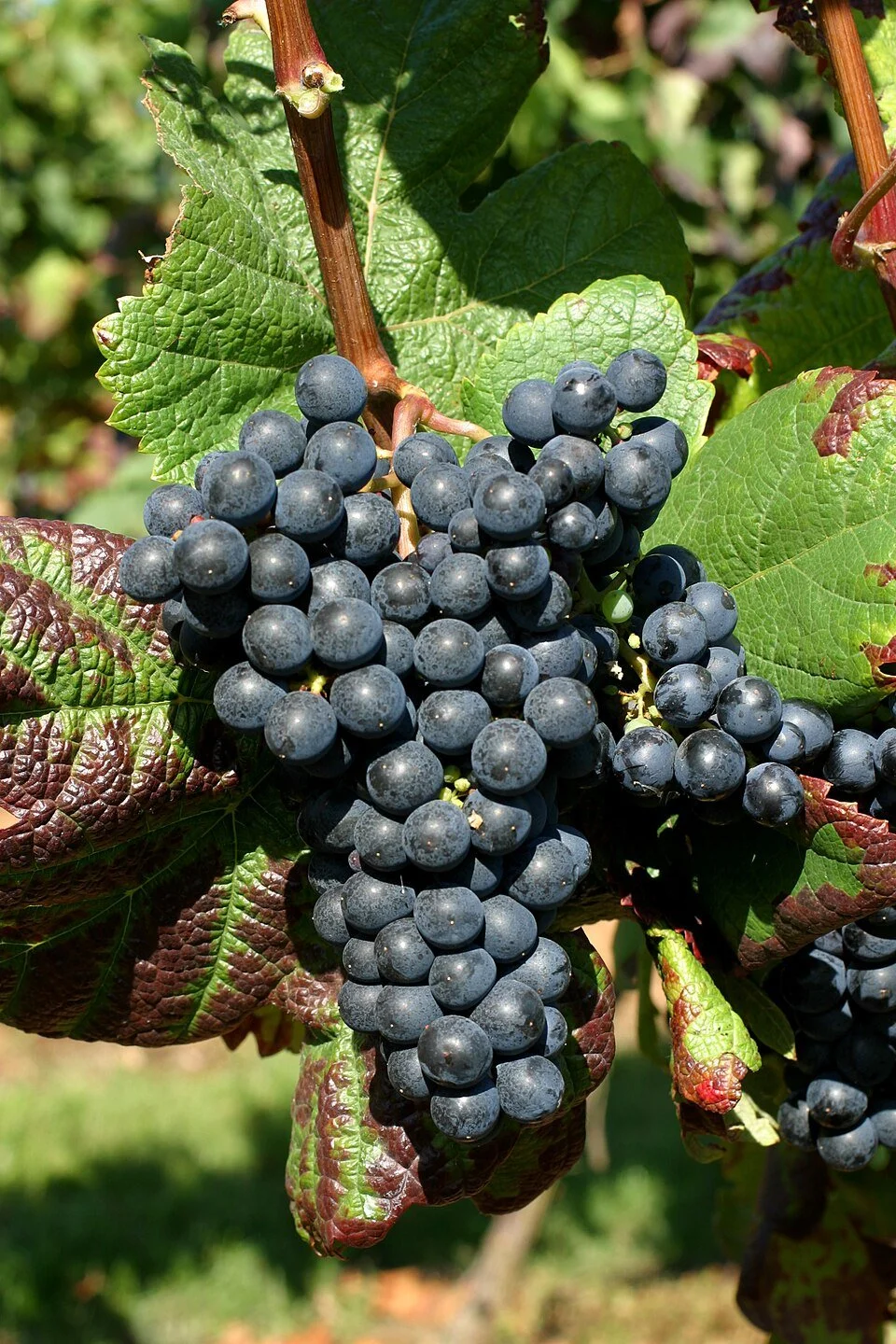
Photo by Doris Schneider on Wikimedia Commons
The Tannat (tahn-naht) grape originated in the Madiran region of South West France, where it has been grown for centuries. In the late 19th century, Basque immigrants carried the vine to Uruguay. Today, Tannat is the national signature grape of Uruguay, thriving in its coastal climate and producing softer styles of wine than its French counterparts. It is also grown in smaller amounts in places like California, Virginia, and Australia.
Tannt’s name comes from the local French word for "tanned," referencing both its dark skin color.
Wines made from Tannat will have aromas and flavors like blackberries, dark plums, and black currants. Additionally, there may be hints of dark chocolate, licorice, spices, and smoke. Because it naturally contains a very high amount of seed and skin compounds called tannins, the wine can feel quite drying in your mouth when it is young.
This high amount of tannins gives Tannat an exceptional ability to age. While many red wines are best consumed within a few years, Tannat wines can sit in a cellar for ten to twenty years.
Serve Tannat at a temperature between 60°F and 65°F (15°C to 18°C). It should be served in a large red wine glass with a wide bowl.