The Art of Wine Making: Choosing the Duration for Fermentation

Winemakers control the duration of fermentation by managing several key factors that influence how long the yeast remains active in converting the sugar in the grape juice to alcohol.

Here’s are some ways a wine maker can control the length of fermentation:

— Controlling Fermentation Temperature:

  • Cooler temperatures (e.g., 10–15°C or 50–59°F) slow down fermentation thus extending the process

  • Warmer temperatures (e.g., 20–30°C or 68–86°F) speed up the fermentation rate

— Selecting the Yeast Strain:

  • Different strains of yeast have different fermentation rates and tolerances

  • Some yeasts ferment quickly and efficiently, while others work more slowly or produce more complex flavors

— Adjusting the Sugar Content (Brix Level):

  • Winemakers can adjust this by harvesting grapes at different ripeness levels or by adding sugar (a.k.a., chaptalization) which is rarely done

  • More sugar means a longer fermentation, since the yeast has more to consume

— Adding Nutrients:

  • Adding nutrients, such as nitrogen, can keep yeast healthy and extend or support the fermentation process

  • A lack of nutrients can cause fermentation to end early

— Limiting Oxygen Exposure:

  • Yeast needs a small amount of oxygen early on in order to multiply. Limiting the fermenting grapes oxygen exposure later in the process can help finish fermentation more efficiently

— Intentionally Stopping Fermentation:

  • Winemakers can stop fermentation early to retain sweetness by:

    • Lowering the temperature rapidly

    • Adding sulfur dioxide (SO₂) or alcohol to kill or inhibit yeast

    • Filtration to physically remove the yeast

While typical wine fermentation durations vary depending on the type of wine, fermentation temperature, and winemaking goals, here are general guidelines:

  • Red Wines: Primary fermentation: 5 to 10 days

  • White Wines: Primary fermentation: 10 to 21 days

  • Rosé Wines: Typically similar to white wine fermentation in duration and temperature: 10 to 14 days

  • Sparkling Wines (Traditional Method):

    • Primary fermentation: like white wines, 10 to 21 days

    • Secondary fermentation: 1 to 3 months, followed by aging on lees for months or years

The Art of Wine Making: Selecting the Right Temperature for Fermentation

Temperature is a critical factor in wine fermentation, directly affecting the rate of fermentation, the development of aromas and flavors, and the survival of the fermentation yeast.

Winemakers make intentional, stylistic choices regarding fermentation temperature to shape the wine’s final character, including its affect on:

Yeast Activity

  • Yeast is responsible for converting sugars in grape juice into alcohol

    • Too low a temperature can slow or stall fermentation

    • Too high of a temperature can kill the yeast or lead to off-flavors

Flavor and Aroma Profile

  • Lower fermentation temperatures help preserve delicate aromatic compounds, especially important for white wines and aromatic varietals like Riesling or Sauvignon Blanc

  • Higher temperatures can enhance color and tannin extraction, and are useful in red wine production

Fermentation Interactions

  • Cooler temperatures result in slower, longer fermentations which can be desirable

  • Warmer temperatures can result in faster fermentations, which can risk volatile acidity or stuck fermentation if not properly controlled

Typical Wine Fermentation Temperature Ranges

  • White Wines: 12–18°C (54–64°F) — Preserves fruity aromas, crisp character

  • Red Wines: 20–30°C (68–86°F) — Enhances color/tannin extraction

  • Sparkling Wines: 10–15°C (50–59°F) — Very cool to retain freshness and bubbles

Great winemakers blend intuition, tradition, and technical knowledge. And, temperature control is one of the key tools they use to express their unique signature in their wine. Cheers!

Wine -- Too Warm? Too Cold? Or Just Right

Photo by Kevin Kelly on Unsplash

I recently ordered a glass of red wine at a nice restaurant. It came in a large wine glass and was a generous pour. But, upon taking my first sip it was obvious that it was much too warm.

The temperature at which a wine is served matters.  And here's why.  The 'proper' serving temperature will ensure that you get the best experience from your wine.  Serve it too cold or too warm and you can loose a lot of the wine's character.

This is partly due to your nose and how a wine's aroma works along with its taste. And, aroma is greatly affected by the wine's temperature.  A cold wine will have less of an aroma because fewer of the volatile compounds will be released from the wine. Conversely, a warmer wine will easily release these compounds and give you an opportunity to experience the wine's full aroma.

Then there's the way a wine tastes.  Serving a white wine too cold will mute its fruit flavors. White wines taste best when they are served cool because of their acidity and negligible tannin. The fruit flavors are zippy and bright and a bit of a chill will enhance this.  But full bodied white wines that have been aged in oak (e.g., Chardonnay) are best served not quite so cool to allow you experience the flavors that oak imparts.

Serving a red wine too cold will emphasize its acidity, bitterness and tannin. But serving a red wine too warm can make it seem heavy, lifeless and emphasize the alcohol, yielding a burning sensation in your throat.

So, here are some general guidelines for the 'proper' serving temperatures of wines:

  • Sparkling Wine: 42° - 50° F

  • Light Whites: 46° - 54° F

  • Full Bodied Whites: 54° - 60° F

  • Rosé: 45° - 55° F

  • Light Reds: 50° - 54° F

  • Medium Reds: 57° - 63° F

  • Full Bodied Reds: 59° - 65° F

Here are a couple quick rules-of-thumb on chilling wine.  Sparkling wine can be stored and served directly from a kitchen refrigerator. With white wine, place it in your kitchen refrigerator 30-60 minutes before serving. Or, if it's been stored in a kitchen refrigerator, remove it 30 minutes before serving.  For red wines, put them in a kitchen refrigerator for 30 minutes before serving. This way, your white wines will be cool but not too cold and your reds will be slightly cooled and not too warm. Cheers!

Tips for Keeping Wine Cool While Decanting

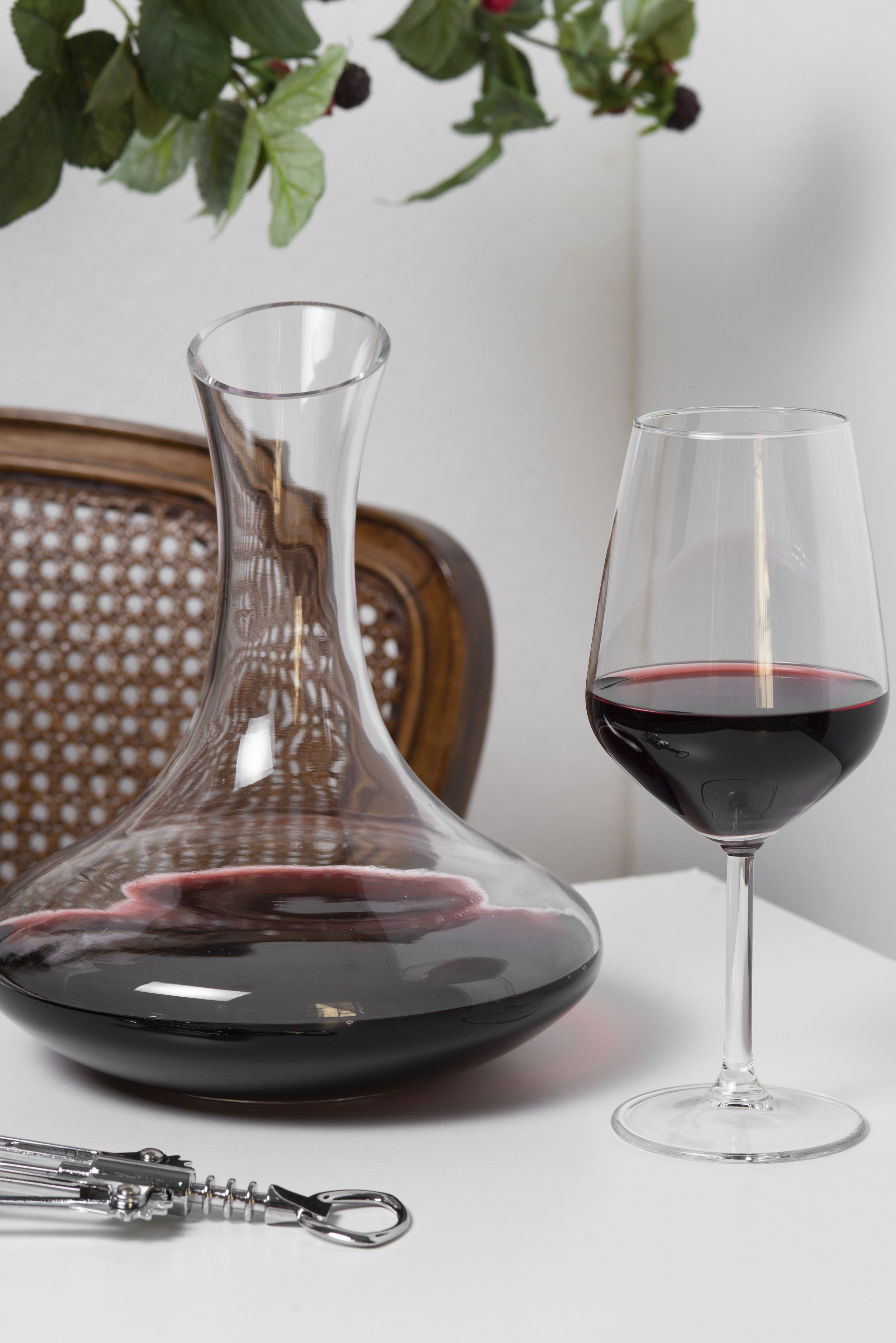
Image by FreePik

Decanting a wine, especially in the summer, can present a problem. Typical decanting times are 30 minutes to an hour our more. So, if you’ve been keeping your wine at a cellar temperature of 52-57°F for a red, or slightly chilled to 45℉ and 55℉ for a white, it going to warm up to room temperature during decanting.

Here are a few tips for keep a wine cool during and after decanting:

  • If you’ve got plenty of time and can plan in advance, go ahead and decant your wine at room temperature and then return it to the original bottle and place it back in the wine refrigerator for an hour or so to return it to the desired temperature

  • Your decanter should have a wide base to allow for maximum surface area contact of the wine with air, so place a chilled towel or a bag of frozen peas or corn over the base of the decanter to keep the wine chilled. For longer decanting times you may need to change out the towel or add another bag of frozen veggies

  • If your decanter can fit inside a refrigerator, just beware that it’s possible the wine can take on some ugly refrigerator smells, so check first or ensure you’ve got a fresh box of baking soda in the frige to soak up those nasty smells

  • If you have one of those freeze sleeves that can fit around a bottle of wine, see if it will simply fit around the neck of your decanter to help keep the decanting wine chilled

So, if decanting your wine, remember that all wines taste best if served at the proper temperature. Therefore, decant when necessary but ensure you serve your wine at its best temperature. Cheers!

The Serving Temperature of Your Wine Matters

The temperature at which a wine is served matters.  And, here's why.  The 'proper' serving temperature will ensure that you get the best experience from your wine.  Serve it too cold or too warm and you can loose a lot of the wine's character.

This is partly due to your nose and how a wine's aroma works along with its taste. A wine’s aroma is greatly affected by the wine's temperature.  A cold wine will have less of an aroma because fewer of the volatile compounds will be released from the wine. Conversely, a warmer wine will easily release these compounds and give you an opportunity to experience the wine's full aroma.

Then there's the way a wine tastes.  Serving a white wine too cold will mute its fruit flavors. White wines taste good when they are served cool because of their acidity and negligible tannin. The fruit flavors are zippy and bright and a bit of a chill will enhance this.  But full bodied white wines that have been aged in oak (e.g., Chardonnay) are best served not quite so cool to allow you experience the buttery and vanilla flavors that oak imparts.

Serving a red wine too cold will emphasize its acidity, bitterness and tannin.  But, serving a red wine at room temperature is a bit too warm and can emphasize the alcohol, yielding a burning sensation in your throat.

So, here are some general guidelines for the 'proper' serving temperatures of wines:

  • Sparkling Wine: 42° - 50° F

  • Light Whites: 46° - 54° F

  • Full Bodied Whites: 54° - 60° F

  • Rosé: 45° - 55° F

  • Light Reds: 50° - 54° F

  • Medium Reds: 57° - 63° F

  • Full Bodied Reds: 59° - 65° F

While most people don't have specialized multi-zone wine refrigerators to precisely control their wine temperatures, or take the time to use a fancy wine thermometer, here are a couple quick rules-of-thumb. 

  • Sparkling wine can be stored directly in a kitchen refrigerator and removed 30 minutes prior to serving

  • White wine can be placed in a kitchen refrigerator 30-60 minutes before serving. Or, if it's been stored in a kitchen refrigerator, simply remove it 30 minutes before serving 

  • Red wines can be placed in a kitchen refrigerator for 30 minutes prior to serving

If you really like your red and white wines at kitchen refrigerator temperatures (~34° F) or your red wines at room temperature, go ahead and continue enjoying them. But at some point, give these temperature suggestions a try. You just might find that your favorite wines are even better at the recommended temperatures. Cheers!