A Tour of Wine Grapes: Mourvedre

Mourvèdre & Monastrell🍷
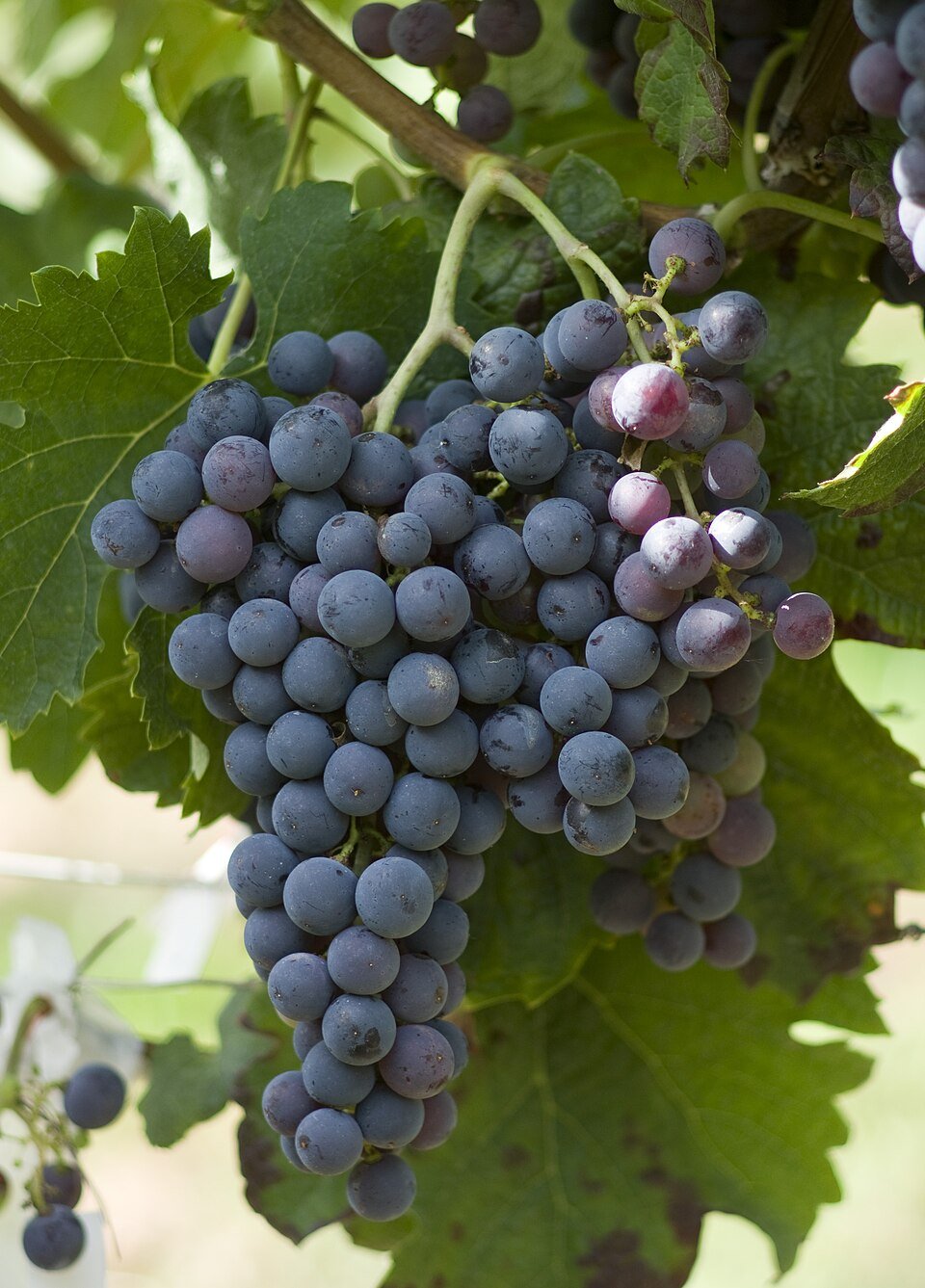
Mourvèdre is a thick-skinned, late-ripening red wine grape native to Spain, where it is known as Monastrell. Though it originated on the Iberian Peninsula, it has also found a famous secondary home along France’s Mediterranean coast and Southern Rhône Valley.

In Spain, Monastrell is frequently bottled as a single-varietal wine. In France, however, Mourvèdre (moohr-VED-ruh) is rarely bottled alone; instead, it is blended with Grenache and Syrah to create famous GSM wines.

Monastrell (moh-nah-STRELL) wines from Spain’s hot, intensely arid, and semi-desert environments are very fruit-forward, smooth, and tend to be high in alcohol. Aromas include blackberry, dark chocolate, licorice, and smoke.

GSM blends from France incorporate Mourvèdre to add structure and deep color to Grenache and Syrah. These full-bodied wines have medium acidity and medium-to-high tannins. This blend yields a complex mix of red fruit flavors (like ripe strawberry, raspberry, and red currant) alongside darker fruit profiles (such as blackberry, plum, and blueberry).

Serving Tips:

  • Monastrell: Serve in a standard red wine glass at 60–68°F after decanting for at least an hour.

  • GSM Blends: Serve in an oversized red wine glass at 60–68°F, decanting for about 30 minutes.
A Tour of Wine Grapes: Montepulciano

Montepulciano 🍷

Montepulciano (mon-tay-pull-chee-anno") is an Italian grape, mostly found in the Abruzzo region of Italy.

Although the Montepulciano grape shares its name with the Montepulciano region in Italy, the grape is from the Abruzzo region while the Montepulciano region is known for the Sangiovese grape. Are you still with me?

The modern era for the grape truly began in 1968 with the official creation of the Montepulciano d'Abruzzo DOC.

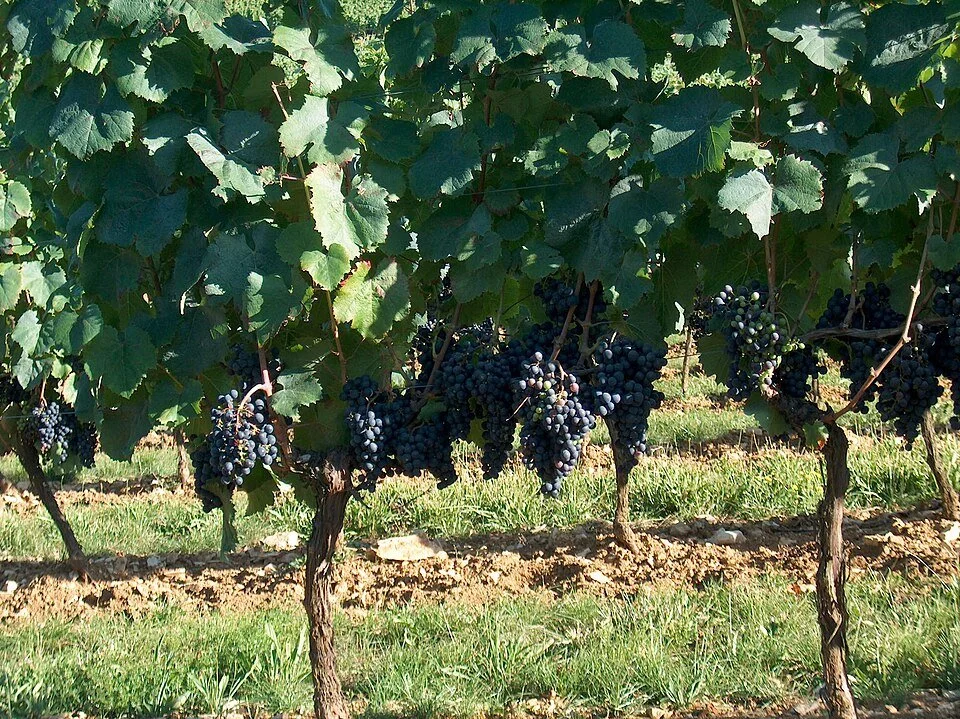
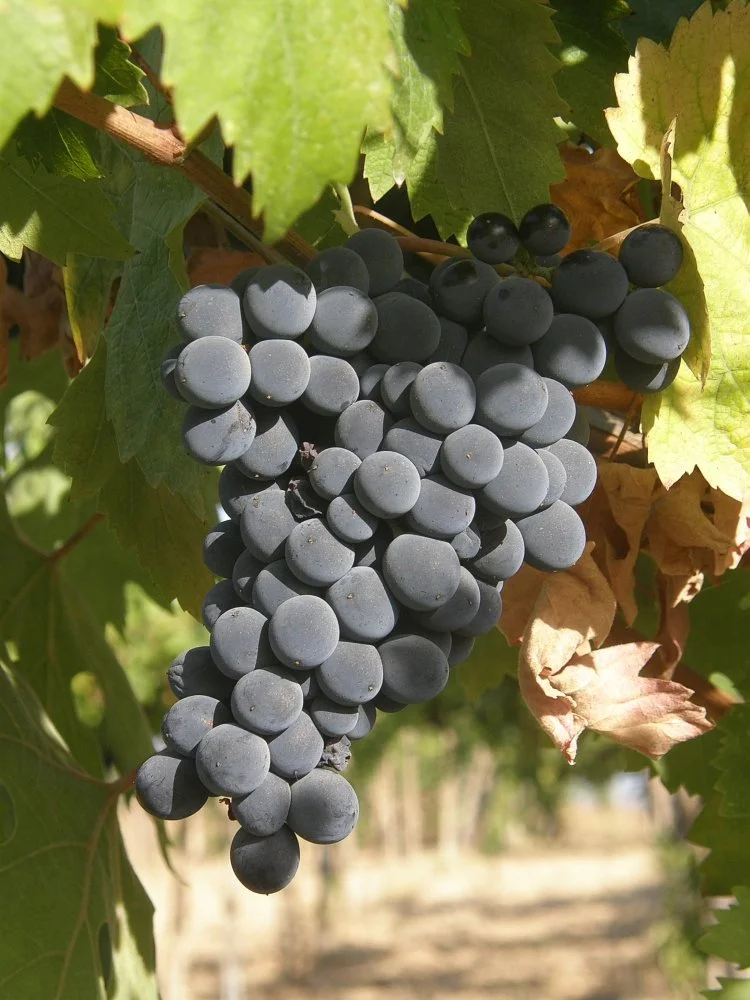
Montepulciano d’Abruzzo is a very dark skinned grape. In fact, its skin is so rich in color pigments, the juice is instantly an opaque purple upon crushing whereas most red wines get their color from long soaking periods with the juice in contact with the skins (i.e., maceration).

Wines produced from the Montepulciano grape can have two styles. The medium-bodied wine is the standard. Everyday versions are aged in stainless steel. The full-bodied style is achieved through longer maceration periods and aging in oak barrels.

Montepulciano d’Abruzzo has aromas of blackberry, black cherry, boysenberry and red plum. Herbal aromas can include sweet tobacco leaf, dried oregano and dried thyme. Flavors follow similarly with blackberry, plum, oregano and tobacco leaf. Oak aging yields flavors of vanilla and caramel as well as smoky and toasted flavors.

Montepulciano d’Abruzzo can be aged 5-15 years.

It should be served in an oversized, bowl-shaped wine glass at 60-68 F, after being decanted for at least an hour.

A Tour of Wine Grapes: Merlot

Merlot 🍷

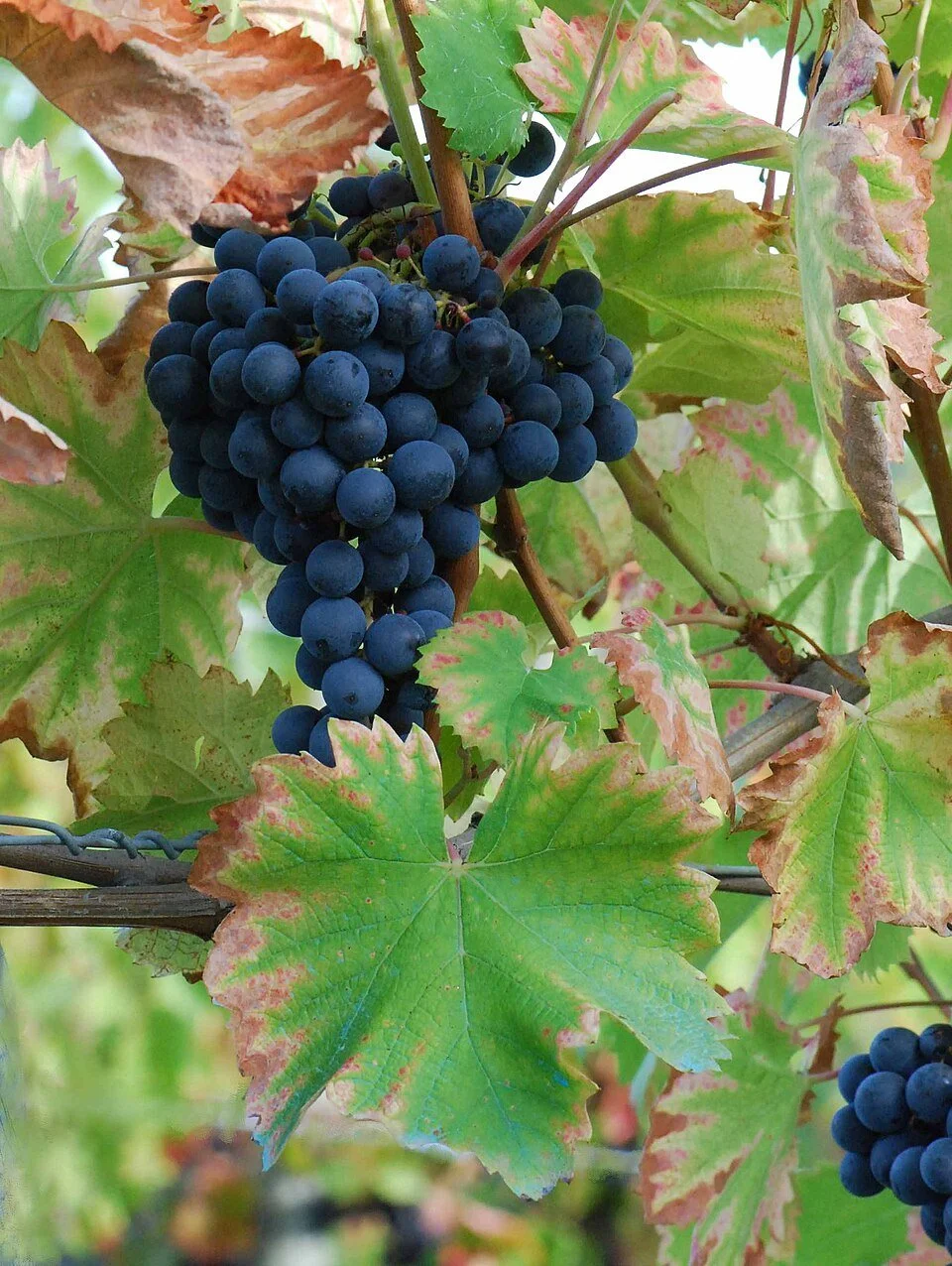
Merlot (murr-low) originated from the Bordeaux region of France. Its name is derived from merle, the French word for blackbird, likely due to the grape's deep color.

Modern DNA profiling proves Merlot is a natural cross between Cabernet Franc and the rare, ancient Magdeleine Noire des Charentes. It was first officially recorded in Bordeaux in 1784 under the local name Merlau.

Although Merlot is grown across the world, it remains the most widely planted wine grape in all of France.

Originally considered a secondary grape, it gained massive importance on Bordeaux's Left Bank where it is blended with Cabernet Sauvignon, Cabernet Franc, Petit Verdot and Malbec.

On the Right Bank it is the dominate grape with Cabernet Franc and/or Cabernet Sauvignon being a more minor blending partner (5-30%).

Wines produced from the Merlot grape are medium to full-bodied red wines that tend to have lower acidity and softer tannins than Cabernet Sauvignon. Flavors include plum, black cherry, and raspberry. Oak aging imparts flavors of chocolate, vanilla.

Merlot wines typically age well for 3 to 7 years, with premium bottles aging up to 20 years when properly stored.

After decanting for 30 minutes, serve Merlot slightly chilled (around 62°F / 17°C) in a big bowl glass.

A Tour of Wine Grapes: Marsanne

Marsanne 🟡

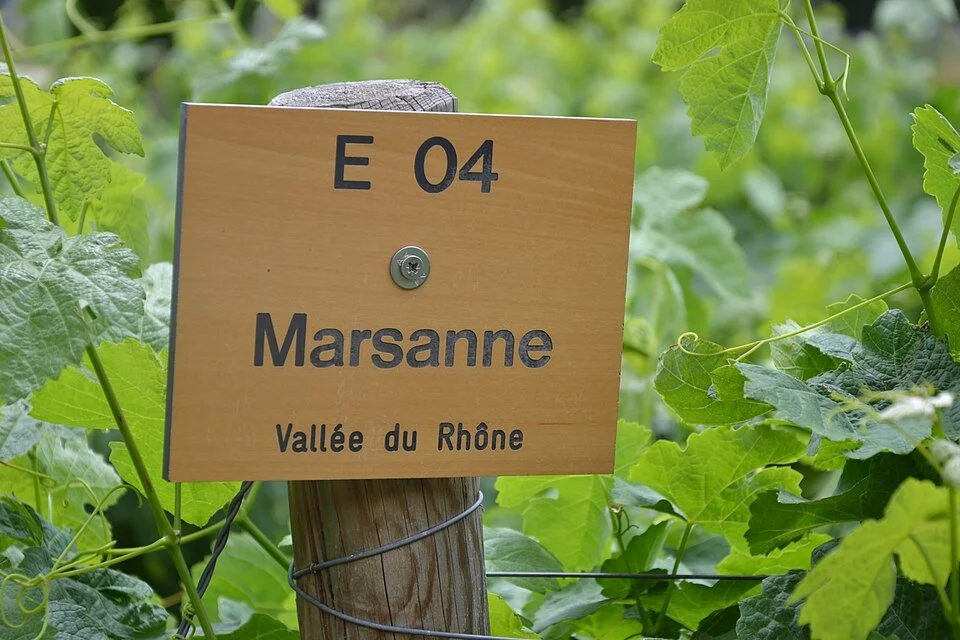
Marsanne (mar-shon) is a white wine grape from France that has its origins in the Northern Rhône Valley.

The grape's cultivation was first recorded in the 16th century. It was formally documented as a distinct varietal in 1781, establishing its status in Rhône winemaking. During the Middle Ages, local monasteries kept the grape alive using it primarily as a blending component long before it was bottled as a single varietal.

By the 17th and 18th centuries, White Hermitage (made mostly of Marsanne) was globally famous. U.S. wine connoisseur Thomas Jefferson famously declared it "the first white wine in the world without a single exception."

In the late 1860s, Marsanne was exported to Victoria, Australia. Because Europe's vineyards were later devastated by the Phylloxera pest, Australia's now houses the world's oldest living Marsanne vines which were planted in 1927. The grape did not reach California until the 1980s.

While Marsanne often lacks any depth of aroma or flavor, it does tend to be use predominately as a blending variety with its more aromatic Rhône cousin Roussanne, and the more international pairing with Viognier.

Marsanne wine is light in body with low acidity. It generally tends to lack any depth of aroma but can exhibit flavors of honeydew melon, quince, Mandarin Orange, apricot and pear.

Marsanne as a varietal is not particularly age-worthy and should be consumed young (less than 5 years old).

Serve Marsanne cold (45 - 55 F) in a white wine glass with no decanting required.

A Tour of Wine Grapes: Malbec

Malbec 🍷

Malbec's roots trace back to southwestern France, where it has been cultivated for over a thousand years. In the rugged Cahors region, it goes by many names — Côt, Auxerrois, or Pressac — and produces famously dark, tannic wines that the locals call "black wine." Malbec's thick skin is so loaded with anthocyanins (color pigments) that it was historically used as a natural ink and fabric dye in France.

It remains one of the six permitted grapes in Bordeaux blends, adding color and structure to the mix.

While Cahors championed Malbec, the grape remained a minor player in Bordeaux and never gained broader recognition across France. The brutal frost of 1956 wiped out much of the Cahors vineyards due to the grape's vulnerability to the cold, damp European climate. It was fading into obscurity — until Argentina changed everything.

In 1853, a French agricultural engineer named Michel Pouget took Malbec cuttings to Mendoza, Argentina. It was there, that Malbec found its footing. The intense sun, cool nights, low humidity, and mineral-rich soils transformed the grape entirely. What had been a workhorse blending variety in France became a world-class, full-bodied varietal wine in South America.

Today, Argentina is the major producer of Malbec accounting for nearly 75% of the world’s supply. France is the other major producer. The U.S. produces only a small amount.

Malbec’s aromas include dark fruits such as plum, blackberry and black cherry along with floral scents. Oak aging imparts aromas of dark chocolate, vanilla, tobacco leaf, mocha and leather. On the palate, Malbec is a full-bodied wine with, you guessed it, black fruit flavors of blackberry along with plum and blueberry. Flavors derived from oak aging include cocoa and coffee. The finish of a Malbec is medium in length.

Malbec wines can be aged for 5-10 years, typically.

Malbec should be decanted for 30 minutes before serving in a red wine glass at 60 - 68 F.