

Marsanne 🟡
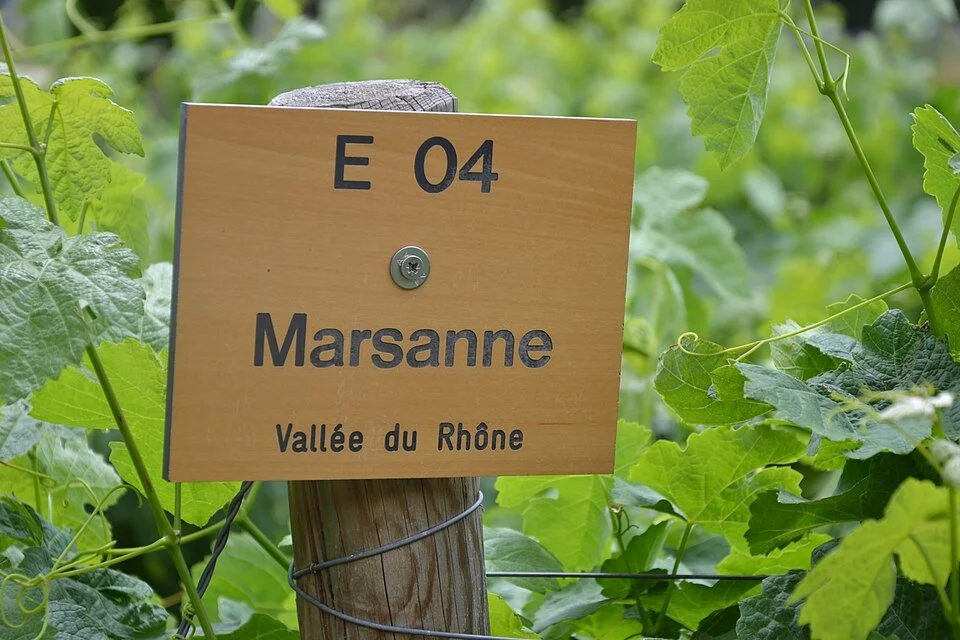
Photo by Marianne Casamance on Wikimedia Commons
Marsanne (mar-shon) is a white wine grape from France that has its origins in the Northern Rhône Valley.
The grape's cultivation was first recorded in the 16th century. It was formally documented as a distinct varietal in 1781, establishing its status in Rhône winemaking. During the Middle Ages, local monasteries kept the grape alive using it primarily as a blending component long before it was bottled as a single varietal.
By the 17th and 18th centuries, White Hermitage (made mostly of Marsanne) was globally famous. U.S. wine connoisseur Thomas Jefferson famously declared it "the first white wine in the world without a single exception."
In the late 1860s, Marsanne was exported to Victoria, Australia. Because Europe's vineyards were later devastated by the Phylloxera pest, Australia's now houses the world's oldest living Marsanne vines which were planted in 1927. The grape did not reach California until the 1980s.
While Marsanne often lacks any depth of aroma or flavor, it does tend to be use predominately as a blending variety with its more aromatic Rhône cousin Roussanne, and the more international pairing with Viognier.
Marsanne wine is light in body with low acidity. It generally tends to lack any depth of aroma but can exhibit flavors of honeydew melon, quince, Mandarin Orange, apricot and pear.
Marsanne as a varietal is not particularly age-worthy and should be consumed young (less than 5 years old).
Serve Marsanne cold (45 - 55 F) in a white wine glass with no decanting required.