
A Tour of Wine Grapes: Montepulciano

Montepulciano 🍷

Montepulciano (mon-tay-pull-chee-anno") is an Italian grape, mostly found in the Abruzzo region of Italy.

Although the Montepulciano grape shares its name with the Montepulciano region in Italy, the grape is from the Abruzzo region while the Montepulciano region is known for the Sangiovese grape. Are you still with me?

The modern era for the grape truly began in 1968 with the official creation of the Montepulciano d'Abruzzo DOC.

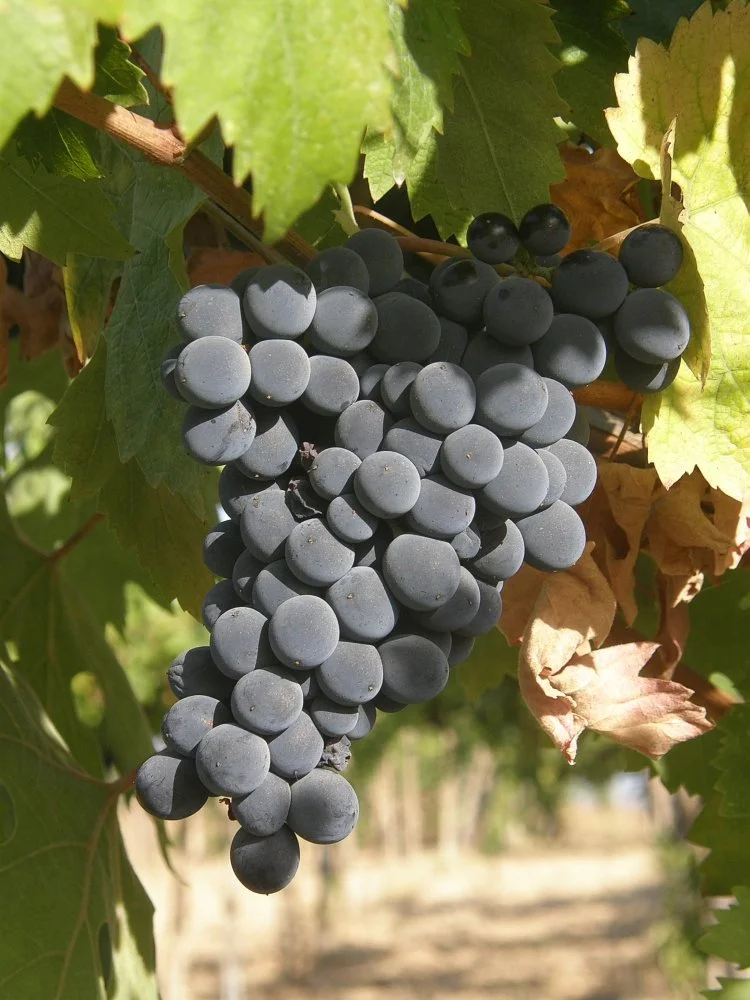
Montepulciano d’Abruzzo is a very dark skinned grape. In fact, its skin is so rich in color pigments, the juice is instantly an opaque purple upon crushing whereas most red wines get their color from long soaking periods with the juice in contact with the skins (i.e., maceration).

Wines produced from the Montepulciano grape can have two styles. The medium-bodied wine is the standard. Everyday versions are aged in stainless steel. The full-bodied style is achieved through longer maceration periods and aging in oak barrels.

Montepulciano d’Abruzzo has aromas of blackberry, black cherry, boysenberry and red plum. Herbal aromas can include sweet tobacco leaf, dried oregano and dried thyme. Flavors follow similarly with blackberry, plum, oregano and tobacco leaf. Oak aging yields flavors of vanilla and caramel as well as smoky and toasted flavors.

Montepulciano d’Abruzzo can be aged 5-15 years.

It should be served in an oversized, bowl-shaped wine glass at 60-68 F, after being decanted for at least an hour.

Behind the Cork™ - Villa Gemma Cerasuolo D'Abruzzo Superiore

Masciarelli (Mass-shee-ah-RELL-ee) Winery is located in the Abruzzo region of Italy on the eastern coast, just east of Rome on the Adriatic Sea. It was established in 1981 from the entrepreneurial intuition of Gianni Masciarelli. Today, Miriam Masciarelli (Gianni’s daughter) works with her mother, Marina Cvetić Masciarelli, to run this fabulous family winery that now has 22 labels and seven product lines all sourced from 60 vineyards in all four provinces of Abruzzo. One of their product lines, Villa Gemma, honors the modest family home where Gianni Masciarelli was born.

2022 Villa Gemma Cerasuolo D'Abruzzo Superiore ($24)

This wine is produced from 100% Montepulciano but is made as a rosé. But instead of calling it a rosé, they call it a Cerasuolo, meaning ‘cherry-colored.’ And, indeed, this wine is a beautiful cherry color.

This Cerasuolo shows how well suited the Montepulciano grape is for a rosé. The grapes are grown in eight vineyards, harvested in crates, destemmed and remain on the skins for 12 hours, followed by fermentation in stainless steel. It remained on lees for three months prior to bottling.

The use of Montepulciano grapes that remain on skins for such a brief period and then on lees, produces an excellent wine. You may not be a rosé fan, but this Cerasuolo will win you over! With notes of cherry and strawberry on the nose, it has wonderful candied-cherry flavors with medium acidity and a light finish. It is medium-full bodied, 14% ABV and dry.

This is a super wine that isn’t your typical rosé - it’s a Cerasuolo! And, at this price, it’s a great fit as this week’s Behind the Cork Wine of the Week. Cheers!


Disclosure of Wine Sample Submission: I received this sample at no cost for review. The opinions expressed are entirely my own.

Media Sample Provided by Masciarelli Winery

Ever Wonder? Is Montepulciano a Wine Grape or a Wine-Producing Region?

A Montepulciano (mon-ta-pull-channo) wine can be a bit confusing. Typically, the name of the wine either represents the type of grape used to produce the wine or, most commonly in Europe, the place where the grapes are grown.

Montepulciano as you might guess by its name, is an Italian wine. So, you’d probably also guess that it’s from a region or town of Montepulciano, Italy. But, there you’d be wrong.

It is true that Montepulciano is a beautiful medieval town in Tuscany, in central Italy. But, oddly enough, Montepulciano wines are not produced in Montepulciano.

Instead, Montepulciano wines are from Marche, Molise, northern Puglia and most notably, Abruzzo regions of Italy. All of these regions are along the eastern coast of Italy and benefit from the cooling winds off the Adriatic Sea.

So, yes, Montepulciano wines are made of Montepulciano grapes but they have nothing to do with the town Montepulciano.

To make things even more confusing, the wines that are produced in Montepulciano are, like most Tuscan wines, made from the Sangiovese grape.

Montepulciano is the second most planted red grape in Italy. Sangiovese, the grape used to make Chianti, is the most widely planted grape of Italy.

Montepulciano has long held a reputation for being low-priced fruity red wines that go well with pizza and bold tomato-based sauces. This reputation is true. But, there are many producers, especially in Abruzzo, that are making some very well-structured wines displaying notes of cherry, crushed herbs and tobacco.

Although a bit confusing, Montepulciano wines can be quite good and, as the most exported Italian wine to the U.S., it can be very reasonably priced. Cheers!

Ever Wonder about Montepulciano Wine?

Montepulciano (mon-ta-pull-channo), as you might guess by its name, is an Italian wine. You might also guess that it’s from a region or town of Montepulciano, Italy. There, you’d be wrong.

Montepulciano is a beautiful medieval town in Tuscany, in central Italy. But, oddly enough, Montepulciano wines are not produced there.

Instead, Montepulciano wines are from Marche, Molise, northern Puglia and most notably, Abruzzo. All of these regions are along the eastern coast of Italy and benefit from the cooling winds off the Adriatic Sea.

So, Montepulciano wines are made of Montepulciano grapes but they have nothing to do with the town Montepulciano.

To make things even more confusing, the wines that are produced in Montepulciano are, like most Tuscan wines, made from Sangiovese.

Montepulciano is the second most planted red grape in Italy. Sangiovese, the grape used to make Chianti, is the most widely planted grape of Italy.

Montepulciano has long held a reputation for being low-priced fruity red wines that go well with pizza and bold tomato-based sauces. This reputation is true. But, there are many producers, especially in Abruzzo, that are making some very well-structured wines displaying notes of cherry, crushed herbs and tobacco.

Finally, for a wine to be a certified Montepulciano d’Abruzzo it has to comply with the following rules:

  • It must be made with at least 85% Montepulciano grapes (up to 15% Sangiovese is allowed)

  • The wine must be aged for at least 5 months before it is released

  • To be labeled as a Riserva, the wine must be aged for at least two years including a minimum of nine months in wood barrels

Although a bit confusing, Montepulciano wines can be quite good and, as the most exported Italian wine to the U.S., it can be very reasonably priced. Cheers!

Behind the Cork™ - Art of Earth Montepulciano d'Abruzzo

Art+of+Earth.jpg

2019 Art of Earth Montepulciano d’Abruzzo ($12)

This Art of Earth Montepulciano d’Abruzzo is a certified Organic wine. And it’s a 2019. Those two factors make this a very unusual wine. In a good way!

First, this Art of Earth is a wine made from organic grapes. This is a small but growing category of wine. This means there were no synthetic pesticides or herbicides used in the vineyard. Yeast and any other agricultural ingredients used in winemaking aren’t required to be organic, but have to be produced without excluded methods (like genetic engineering). Finally, sulfites may be added to these wines.

Secondly, this is a 2019 vintage. Yes, it’s a less than one year old red wine. Unusual.

On the nose this Art of Earth Montepulciano d’Abruzzo has aromas of bright red fruits. Namely cherry and raspberry. Not surprising for a very young wine. On the palate it’s got very firm tannins. Again, not surprising for a very young wine. But then it’s got this big berry flavor, good acidity and a seemingly strong oak influence. But I had to question myself - a wine that’s less than one year old with strong oak influence? It wasn’t until well after tasting this wine that I reviewed common characteristics of the Montepulciano grape. It was then that I discovered that it is well known for having a ‘smoky sweet finish.’ Exactly! That’s what I was experiencing!

So, if you can’t tell by now, this was a surprisingly good wine. And at a price of $12, a perfect fit for a Behind the Cork™ wine of the week feature. If you can find this one pick up a bottle or two. I think you too will be favorably surprised. Cheers!


Disclosure of Wine Sample Submission: I received this sample at no cost for review. The opinions expressed are entirely my own.

Sample Provided by Donna White, Donna White Communications