
The Never Ending Search for Great Wine

A few years back as I started to become interested in wines, I was searching for a really great wine that I could dependably go back to time after time. While the search for a great wine was a fun adventure, it never seemed to converge on a wine that I could always go back to and enjoy as much as the first time.  As it turns out, that was just the start of the never ending search for a great wine.

Part of the reason that it's difficult, if not impossible, to find a consistently good wine year after year is the very nature of wine making.  Each year's harvest is different, with weather playing a huge role. The spring weather determines how many of the grapevine buds will turn into bunches of grapes. And the fall sun or rain determines how well the grapes will ripen. And not only is there the variability of the grape harvest, but there are all the factors that go into fermentation and aging of the wines.  All these variables make for ever-changes nuances in wines.

Then you come to understand that there's yet another factor.  As you make your way along the journey in search of a great wine, you get exposed to more and more wines. And in this process, your pallet changes.  What was once a really nice wine becomes a so-so wine. So you keep searching, trying to find that one really great wine.

And to this day, I'm sure that there has to be that one great wine out there. Somewhere.  So I'll keep searching. But I also realize that it's a never ending search for great wine.  Enjoy your search. Cheers!
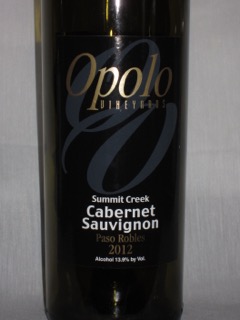

Behind the Cork™ Wine of the Week -  Opolo Vineyard Summit Creek Cabernet Sauvignon ($20)

This wine from Paso Robles CA is a great find. Described as having defined tannins with flavors of cherry, blackberry, toasted almonds and vanilla this Cabernet is a winner.  A super wine to enjoy grilled meats, cheeses, or just by itself.  Check this one out!

Why Do Some Wines Age Better Than Others?

Last time we addressed some general guidelines on how long wines can age, noting that rosé should be consumed immediately after bottling while still bright, fruity and fresh, most white wines are typically best within a couple of years of bottling, and red wines can be aged for several years.

So, the common thought is that red wines age best. And, that is correct.  But why is that? Why can red wine be aged longer than whites?  After all, they are both made from the juice of grapes! The answer has a lot to do with tannins, but acidity also plays a role too.

Tannins are chemical compounds that act as natural preservatives in wine. They come from the skins, seeds and stems of grapes. Tannins also come from the wood barrels where the wines are aged. 

But, as previously noted, the key difference between red wines and white wines is that red wines are fermented along with the grape skins, seeds and some or all of the stems while the juice for white wines is separated from the skins, seeds and stems before fermentation. Thus, red wines have much higher tannin levels than white wines even before they go into barrels for aging. It's the chemical compounds in these tannins that have the power to preserve a wine.

But the levels of tannins in red wines vary by the variety of grapes used. High tannin red wine grapes include Cabernet Sauvignon, Cabernet Franc, Nebbiolo, Sangiovese, Tempranillo, Bordeaux blends, Merlot and Petite Sirah, just to name a few.  Medium tannin wines include Malbec, Syrah and Zinfandel, while low tannin wines include Gamay, Barbera, Pinot Noir and Valpolicella blends.  So it's the high tannin wines that typically age best.

Acidity also plays a role in how well a wine may age. The natural acid levels in a wine acts to preserve the wine. That's why only certain white wines can withstand aging. Wines such as French Chablis, German Riesling and Loire Valley Chenin Blanc all have naturally high acid levels and are capable of extended aging.

So forget the myth that all wines improve with age. It's the rare few that actually do age well. And, there is actually a peak after which any wine will go into decline. So choose wisely if you are looking to age wines, ensure they are properly stored and, if you have the luxury of owning multiple bottles of a particular wine that you are aging, open one periodically so as to catch it in its peak.

Next time I'll share a bit more about acidity in wines and how you perceive it.  Cheers!


Behind the Cork™ Wine of the Week - Layer Cake Cabernet Sauvignon ($13)

Don't let the chocolate cake on the label fool you. This is a serious wine, from a serious wine maker.  Jason Woodbridge is the owner of Hundred Acre. His 2012 Hundred Acre Cabernet Sauvignon received Wine Spectator's 94 point rating and is a $450 bottle of wine!  He is also the owner of Layer Cake stating that he "Likes the idea of a young man putting 20 bucks on the counter and getting some change back on a good wine."  This California Cabernet Sauvignon is a great value and well worth trying. Enjoy!

Are there "Better" Wines Made by Wineries?

There are a lot of wines available on store shelves. A grocery store, liquor store, or big-box wine seller will have plenty of wine offerings. But most of the wines are large production wines from big wineries. And, as previously discussed, the terms 'Reserve' or 'Estate' can be misleading or completely meaningless when looking for "better" wines. 

But there truly are different 'grades' of wines made by wineries. For example, I recently had the opportunity to enjoy a bottle of Francis Ford Coppola 'Director's Cut' Cabernet Sauvignon (See my notes in Behind the Cork™). While Coppola turns out a lot of good wine, their line of 'Director's Cut' wines are a step up in quality and wine making craftsmanship. And this is true for most wineries. They make their large production wines that show up on store shelves and then they make wines that are limited production. You may be able to buy some of these in stores but most often they are held by the wineries for sale in their tasting rooms or for their wine club members.

It's definitely worth taking an extra moment on the wine aisle to read labels and do some comparison shopping. You may be surprised to find a higher-end bottle of wine from some of the big wine producers. Many times these wines will distinguish themselves from the winery's mainstream wines by providing the vineyard's name where the grapes were grown, or the label may be 'fancier' than the other label by the same winery. Price will also be an indication.

Where you really get 'better' wines is by visiting wineries.  I had an acquaintance once ask why I bothered to go to wine country to buy wines when I could just go to the store. And besides, he said, the wines at the wineries are more expensive!  Well, yes, the wines at the wineries can be more expensive but that's because you are getting something 'better' than you can buy in stores. A lot better.  Wineries will truly have 'Reserve' and special 'Estate' wines that are of better quality than those on the grocery store shelves.

So take a closer look at the wines on the store shelves, visit a smaller wine shop or, better yet, visit a winery.  You will certainly find wines that are a 'Cut' above. Cheers!


Chateau St Jean.jpg

Behind the Cork™ Wine of the Week - Chateau St. Jean Sonoma Coast Pinot Noir

This Pinot Noir from the Sonoma Coast is really a great value at $13.  It's delicate, as a Pinot should be, with the cherry, raspberry and cola flavors that are typical of Pinot Noir from the Sonoma region.  Pinot Noir pairs amazingly well with everything from Salmon to Steaks.


2015 Year in Review

EverWonderWine was started just a year ago.  I had no experience with blogging or managing and maintain a website. But, I had an overflowing passion for the world of wine along with a burning curiosity of wine-related information. I had thoughts of sharing what I had learned to-date as well as what I would surely continue to learn and experience in the future.  So, with the encouragement and support of my family, I set off to pass along my love of all things having to do with wine. EverWonderWine was born!

EverWonderWine was started with no particular direction or strategy other than to share basic information on wine.  Throughout the year I randomly touched on topics that included "How to Choose a Wine" and "What Wines Should I Try?"  I briefly discussed flavors and textures in wine, along with how to serve wines, how to visit wineries, and how to do wine tasting. Finally, I wrapped up the year with a brief series on fortified wines and dessert and Late Harvest wines.  And, there were many other topics sprinkled in along the way.

It's hard to believe that a year flew by; it was a lot of fun. But I feel that I've just begun to scratch the surface of wines. There are so many topics that I can't wait to share and even more that I'm sure I discover along this wonderful exploration of wines.

So, for those who have supported me, I say a genuine "Thank you."  I've truly enjoying this journey and am looking forward to the year ahead, wherever the path may lead.

Cheers!

Have You Tried Albariño? You Really Should!

In recent postings we've explored some of the most common red and white wines and then taken a more in-depth look at other similar wines.  As we walked through the white wines, Pinot Grigio was discussed. It was described as a light-bodied wine with a zesty and thirst quenching appeal.  Then, as other similar white wines were described, Albariño was introduced.  But, you may have asked yourself 'What is Albariño?" and thought "I've never heard of it."  Or, you may have completely passed over this relatively unheard of wine. And that would be a mistake!

Albariño (aha-bar-reen-yo) is a white wine whose grapes originally came from Spain. The wine's name, Alba-Riño literally means white (wine) of the Rhine.  What could be better, right?  This grape is primarily grown in Spain as well as Portugal (where it's called "Alvarihno") but has spread to the U.S. where it is grown in cooler California climates, notably Napa, Sonoma Coast and Paso Robles.

This very refreshing wine is quite dry (i.e., little to no residual sugar) and has aromas of apple, grapefruit, melon and lemon and includes flavors of peach and citrus.  Albariño can have a smooth, creamy, almost oily or waxy mouthfeel and a finish with a hint of saline (yes, salt).  So, if you enjoy a smooth, creamy Chardonnay, you should give this lighter white a try.

And, if you happen to come upon a Vihno Verde (Portuguese), you'll also be enjoying a wine made from Albariño grapes.  This too is a light, refreshing and citrus infused wine that can be produced still or slightly sparkling.

One way or another, keep your eyes out for Albariño.  If you enjoy white wine, you need to give it a try!  Cheers!