
The Art of Wine Making: Choosing the Right Time to Harvest Grapes

As previously mentioned, wine making is a blend of art and science. Another aspect that is often regarded as an art form is choosing the right time to harvest the grapes.

The art of determining when to harvest wine grapes is a crucial skill in winemaking, as it directly impacts the quality and style of the wine.

Here's a quick summary of the factors that winemakers must include when deciding when to harvest:

  • Sugar Levels (Brix) - Winemakers will use technology to monitor the sugar levels of the grapes but have to decide when the best time is for harvesting.

  • Acidity - As grapes ripen, their acidity generally decreases, so winemakers must find a balance between the grapes’ sugar and acidity.

  • Tannins and Phenolics (in Red Wines) - As grapes ripen, tannins change. In the early stages of ripening, tannins may be bitter, but as the grape ripens, they will soften and become smoother.

  • Flavors and Aromas - Winemakers will actually taste the grapes during ripening to monitor the development of flavors and to determine when the fruit has reached the desired complexity.

  • Weather Conditions - Winemakers must be prepared for the possibility of unexpected rainfall or heatwaves, which can affect the quality of the grapes. And, generally speaking, harvest has to happen at the lowest temperatures (e.g., night time) in order to keep the grapes fresh during transport from the vineyard to the winery.

So, harvesting is a decision that involves a blend of science and art. By monitoring sugar levels, acidity, tannins, weather conditions, and the sensory characteristics of the fruit, a skilled winemaker can determine the perfect time to harvest, ensuring that the resulting wine reflects the desired balance and quality. Cheers!

The Art of Wine Making: Removing Clusters Before They Ripen

As previously mentioned, wine making is a blend of scientific and artistic expression. Another aspect that is often regarded as an art form is “green harvesting.”

Winemakers sometimes remove clusters of maturing fruit from grapevines before they ripen, a process called green harvesting or crop thinning.”

This is done for several reasons:

  • Improved Fruit Quality: By redirecting the vine’s energy to the remaining grapes, green harvesting allows them to ripen more fully. This enhanced ripeness can lead to a concentration of flavors, sugars, and acids, and ultimately results in higher-quality wine.

  • Controlled Yield: A vine has a limited capacity to produce grapes. If it’s overloaded, it may not yield the best fruit. So,k thinning the clusters reduces the yield, often leading to more intense and complex flavors.

  • Better Ripening: With fewer grapes on the vine, the remaining clusters may receive more sunlight and airflow, facilitating even ripening. This is particularly crucial in cooler growing regions or during challenging weather conditions.

  • Disease Prevention: Removing clusters, like trimming the canopy, improves air circulation around the remaining grapes, reducing the risk of mold, mildew, and other diseases that can negatively impact fruit quality.

Green Harvesting, a practice that blends science and art, requires an artistic touch to make precise decisions at the right time. Here’s why it’s considered an art form:

  1. Timing: Winemakers must make a delicate balance between thinning clusters and preserving the vine’s health and desired wine style. The optimal timing depends on an understanding of the vineyard, the season, and the grape variety.

  2. Knowing the Right Amount to Trim: Determining the appropriate number of clusters to remove and which ones yield the best results is not straightforward. It involves removing just enough to enhance quality without compromising quantity.

  3. Balance: Winemakers try to achieve overall vine balance. The goal is to ensure that the vine’s growth and fruit development lead to the best possible outcome, not just for the coming harvest but also for future ones.

  4. Knowing the Terroir: Different regions, climates, and even specific vineyards (terroir) require unique green harvesting approaches. A skilled winemaker adapts the technique to suit the unique conditions of their vineyard.

  5. Shaping the Environment: Ultimately, the objective is to enhance the wine’s quality, an artistic endeavor in itself. The winemaker essentially crafts the wine by shaping the environment in which the grapes grow. This involves making decisions that influence the wine’s complexity, structure, and character.

So, while green harvesting involves knowledge and technique, it’s also a creative and intuitive process—definitely an art as much as it is a science. Cheers!

Ever Wonder? How is Wine Made?

Wine making, on the surface, might seem pretty simple. You take grape juice, add yeast and presto, you have wine. And, indeed, a wine maker did tell me that it’s that easy. But, he went on to add, making good wine is not easy!

Wine does begin with grapes. But, knowing when to pick the grapes is very important. That’s because grapes, unlike many other fruits, don’t continue to ripen after being picked. So, you have to get it “right.” And “right” to one wine maker isn’t quite “right” to another wine maker. That’s because some wine makers want slightly under-ripe grapes in order to produce more highly acidic wines such as many white wines and sparkling wine. Other wine makers will choose over-ripe grapes either to produce a sweeter flavored wine or a late-harvest dessert wine. But the vast majority of wine makers are looking for the “Goldielocks” grapes that are just right! These are the grapes that have just the right amount of sugar to ensure proper fermentation.

Once the grapes are picked they are swiftly moved from the vineyard to the winery to ensure they are at peak freshness. White wine grapes will immediately be pressed to extract their juice. Red wine grapes will often go through a sorting process to remove leafs and any other foreign materials and then be de-stemmed. Other wine makers will leave the grapes attached to the stems for added tannin and character.

Next, fermentation begins in tanks made of stainless steel, wood or concrete depending on the style of wine that the wine maker is seeking to achieve. The juice from the pressed white wine grapes goes into the fermentation tanks while the whole grapes or bunches of red wine grape to into the fermentation tanks.

Then comes the yeast. And, we’ll pick up there next time. Until then, Cheers!

How Winemaker's Know It's Harvest Time

Finally, Fall is just around the corner and harvest time is beginning. This is the point where grape growers and wine makers become very focused on the grapes as they ripen. Then, once the grapes reach just the right level of ripeness, they are quickly harvested because, unlike other fruits, grapes don't continue to ripen once picked. So, you have to get it right.

If the grapes are picked too early they can be too acidic, too tannic and not contain the proper amount of sugar for a full and proper fermentation. Conversely, if the grapes are picked too late, the sugar level will be too high which can lead to an overly sweet wine. This is because fermentation will only go to the point where the yeast naturally dies due to the level of alcohol in the wine. So, the “residual sugar” doesn’t get converted to alcohol and remains in the wine.

The bottom line for grape growers and winemakers is to find the perfect time for harvest. While there is some science and chemistry involved there is also a lot of experience and intuition that goes into the decision to harvest the grapes.

Here’s a quick overview of some of the signs that the grapes are ready for harvest:

The Visual Appearance of the Grapes

From the experience and intuition categories, winemakers look for the exact color of the grapes to know when to harvest. The grapes may also take on different textures and levels of shininess versus dustiness as they reach the proper ripeness.

The Visual Appearance of the Seed Color

Winemakers also look at the stems and seeds as a sign of ripeness. As the grapes ripen, the stems will turn from green to brown. An un-ripe grape will have seeds that are white or green. When the grape seeds turn brown, they are nearing time for harvest. Winemakers may also taste the seeds. Unripe seeds can be highly tannic and bitter.

The Taste of the Grapes

It might seem obvious, but the taste of the ripening grape will also yield telltale signs to the winemaker. The grapes will have gotten mostly through the tannic and bitter stage and moved into being sweet. But again, the experience of the winemaker will determine if the grapes have just the right amount of tart and tannic qualities (that are very important in winemaking) while also having just the right amount of sweetness.

The Brix Level

From the science and chemistry side of things, winemakers will use a device called a refractometer to measure the ripeness of individual grapes. Brix measures the sugar levels in the grapes and allow a winemaker to convert that to how much alcohol the finished wine will have.

The Feel of the Grapes

Ripe grape berries (the individual grapes) are generally easier to pull from the stalks.

So, these are the primary methods used by winemakers to determine when the grapes are ready for harvest. A bit of science and a whole lot of experience goes into the final harvest decision. Cheers!

The Never Ending Search for Great Wine

A few years back as I started to become interested in wines, I was searching for a really great wine that I could dependably go back to time after time. While the search for a great wine was a fun adventure, it never seemed to converge on a wine that I could always go back to and enjoy as much as the first time.  As it turns out, that was just the start of the never ending search for a great wine.

Part of the reason that it's difficult, if not impossible, to find a consistently good wine year after year is the very nature of wine making.  Each year's harvest is different, with weather playing a huge role. The spring weather determines how many of the grapevine buds will turn into bunches of grapes. And the fall sun or rain determines how well the grapes will ripen. And not only is there the variability of the grape harvest, but there are all the factors that go into fermentation and aging of the wines.  All these variables make for ever-changes nuances in wines.

Then you come to understand that there's yet another factor.  As you make your way along the journey in search of a great wine, you get exposed to more and more wines. And in this process, your pallet changes.  What was once a really nice wine becomes a so-so wine. So you keep searching, trying to find that one really great wine.

And to this day, I'm sure that there has to be that one great wine out there. Somewhere.  So I'll keep searching. But I also realize that it's a never ending search for great wine.  Enjoy your search. Cheers!


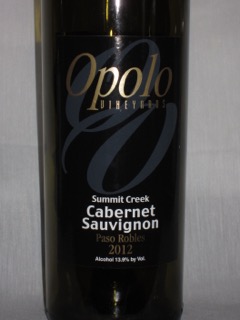
Behind the Cork™ Wine of the Week -  Opolo Vineyard Summit Creek Cabernet Sauvignon ($20)

This wine from Paso Robles CA is a great find. Described as having defined tannins with flavors of cherry, blackberry, toasted almonds and vanilla this Cabernet is a winner.  A super wine to enjoy grilled meats, cheeses, or just by itself.  Check this one out!