
Ever Wonder What it Means for a Wine to Have Grippy Tannin?

Photo by Mario Amé on Unsplash

There is a lot of wine ‘lingo’ that gets tossed around. And here is yet another phrase that is commonly used - grippy tannin.

One of the components of a wine, especially a red wine, is its tannin. It is derived primarily from grape skins, seeds and stems, but also from oak barrels.

While some may describe tannin in a wine as causing an astringent reaction in your mouth, others describe tannin as making your mouth feel like it’s full of cotton balls, dust or like having a sandpaper-surface sensation. Others simply describe a wine as having “grippy'“ tannin.

This term “grippy” comes from the sandpaper analogy. If you rub two pieces of sandpaper together, there’s going to be a lot of friction or stickiness.

In your mouth, the astringency of a wine’s tannin can make your tongue feel like it’s rough - like sandpaper. And, it can make the roof of your mouth feel rough - like sandpaper. Then, when you slide your tongue against the roof of your mouth you’ll experience this friction or “grippy” sensation.

So, next time your hear or read about a wine as having “grippy” tannin, you’ll know that you’re in for a wine that is highly tannic. Get your decanter ready! Cheers!
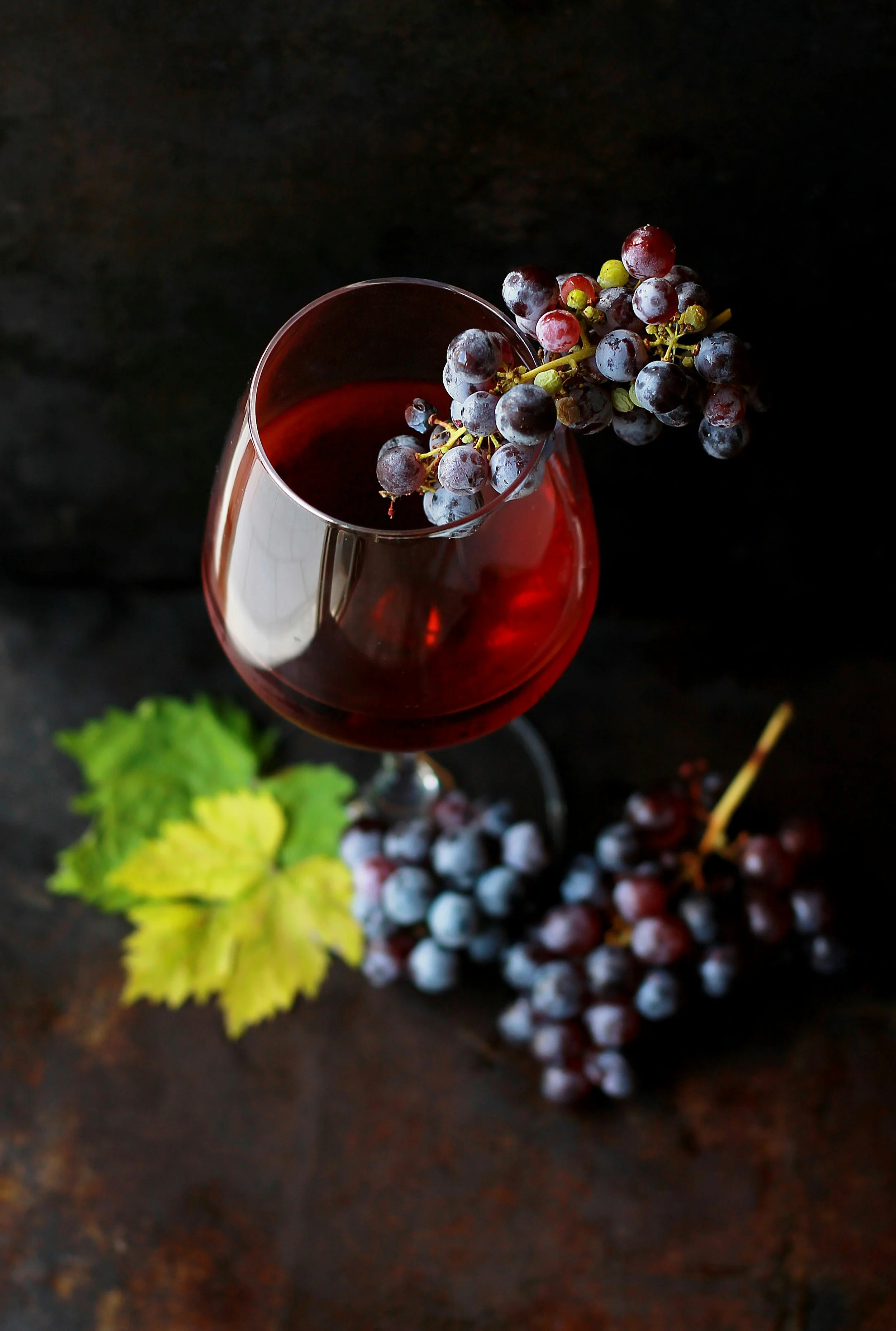
Think Wine is Just Grape Juice and Yeast. Think Again!

What is more natural than a glass of wine?

Grow some grape vines, wait for them to produce grapes, harvest the grape bunches, de-stem them (sometimes), crush them to produce juice, leave the crushed grapes in contact with the juice to create color (in the case of red wines and rosé) and then rely on natural yeasts or added yeast to convert the natural sugars in the grape juice to alcohol and, voilà, - you have wine! It’s just that simple, right?

Well, wine isn’t always that simple. While some wines are indeed produced with these simple steps and ingredients, there are some other ingredients that can be used in the winemaking process. And, the only two ingredients that are required to appear on a wine label are the alcohol content and if it contains sulfites.

Here’s a few of the other ingredients that may be used in wine making or remain in a wine:

  • Added Yeast Nutrients and Enzymes

    • Yeast nutrients are used to speed up the process of fermentation.

  • Potassium Sorbate and Potassium Metabisultite

    • Both of these ingredients are used to guard against bacteria and protect the yeast from spoiling, and are commonly used together during the fermentation process to help the yeast ferment efficiently while improving the overall flavor.

  • Acid, Sugar, and Tannin Additions

    • Adding acid will decrease the pH and increase the total acidity of the wine to ensure it is in overall balance

    • Adding sugar before or during fermentation can help boost the alcohol content. The process is called ‘chaptalization’ and also assists the yeast during the fermentation process.

    • Powdered tannins may be added early in the process to help add balance

  • Acid Reducers

    • Calcium carbonate is used to reduce the acidity of the finished wine, and is sometimes added if the grapes have had trouble ripening. It’s usually added before or at the start of fermentation, so it doesn’t impact on the aroma of the wine.

    • Potassium Bicarbonate is also used to help lower the acidity

  • Oak and Oak Chips, Powders, and Granules

    • Winemakers rely on oak barrels to flavor wine with notes of vanilla or subtle spices,

    • If the wine doesn’t come into direct contact with wood (i.e., stainless steel tanks), some producers will add oak chips, powders or staves to add oak flavors.

  • Stabilizers and Anti-Sediment Additions

    • Potassium bitartrate is used as a seeding agent to promote tartrate precipitation during cold stabilization

    • Urease is added to reduce the level of urea in wines, when this is excessive, in order to avoid the formation of ethyl carbamate during aging.  The enzyme transforms urea into ammonia and carbon dioxide.

  • Fining Agents

    • Fining agents are used for clarifying wine. These agents, such as bentonite (powdered clay), isinglass (fish bladder), casein (milk protein), gelatin or egg whites, combine with sediment particles and cause them to settle to the bottom of the vessel, where they can be easily removed before the wine is bottled.

  • Grape Concentrate

    • Grape juice concentrate is sometimes included to boost the color of red wine and add a bit of sugar to smooth out the mouthfeel.

  • Coloring Agents or Color Stabilizers

    • Coloring agents may be used to deepen the color of red wines, or to add ‘blush’ to whites

    • Stabilizers ensure the wine’s color does not change during fermentation and aging

  • Dimethyl Di-carbonate, Ammonium Phosphate and Di-ammonium Phosphates

    • Dimethyl di-carbonate is used to stabilize wine by preventing microbial spoilage

    • Di-ammonium Phosphate is used to speed up the fermentation process

  • Sulfur Dioxide

    • Usually listed as ‘sulfites’. It’s used to preserve the grapes and prevent oxidation during the winemaking process.

  • Preservatives and Antibacterial Agents (e.g., potassium sorbate, dimethyl dicarbonate, sorbic acid, copper sulfate)

    • Preservative such as potassium sorbate or sorbic acid are used to 'stabilize' a wine and prevent a renewed fermentation by inhibiting the yeast cell from being able to multiply, grow and begin a new fermentation.

    • Dimethyl dicarbonate is used to stabilize the wine by preventing microbial spoilage

  • Alcohol

    • Adding alcohol, usually from another grape-derived spirit such as brandy, is called fortification. Since yeast naturally dies at 15% ABV, addition of extra alcohol will push the alcohol concentration of a wine over the 15% mark.

    • Alcohol is added to “Fortified” wines such as Port, Sherry, Madeira, Marsala and Vermouth

Don't Confuse a Dry Wine with a Tannic Wine

Photo by Bundo Kim on Unsplash

Wine terms can be confusing. Especially the terms “dry” and “tannic.”

Have you ever taken a sip of red wine and noticed that your mouth feels dry or dusty? Almost that ‘cotton-mouth’ feel? Well, that is a sensation that is generally associated with red wines.

The dry sensation is due to the wine being astringent and its effect on the tissue in your mouth. Some people have also described the sensation as making their mouth pucker.

The culprits that causes this drying sensation in your mouth are actually chemical compounds (phenolics) that naturally occur in grapes. These ‘tannin’ come from the grape skins, seeds and stems.

So, while a ‘dry’ sensation in your mouth is associated with tannin, the wine term “Dry” actually refers to the lack of sweetness - the amount of residual sugar. A “Dry” wine will have little to no residual sugar, meaning that the fermentation process converted all the natural sugar in the grape juice to alcohol. Residual Sugar (RS) is categorized as follows:

  • Dry: Less than 1% sweetness or <10 gm/L of Residual Sugar

  • Off-Dry: 3% to 5% sweetness or 10-35 gm/L RS

  • Sweet: Above 5% sweetness or 35-120 gm/L RS

  • Very Sweet: Above 12% sweetness or 120 - 220 gm/L RS

So, in summary, a wine that makes your mouth fell dry is ‘Tannic’ while a ‘Dry‘ wine is one with little or no residual sugar. Cheers!

Ever Wonder? Why are Wines Referred to as Dry?

You may have heard of wines being described as “dry.” When I started out learning about wines, I was told that the best wines are dry wines. But what does that really mean?  The problem is that the term can mean a couple of different things.

Some people will refer to a wine as being dry because of the way that it tastes or the sensation that the wine produces in their mouth.  And, yes, wines can make your mouth feel dry.

The sensation of dryness in the mouth is actually the result of tannic compounds in the wine or 'the tannins.'  Tannins come from the skins and seeds of the grape. And these tannic compounds are the same ones that you experience when you drink a strong cup of tea or when you eat nuts such as walnuts.  They yield the same effect; a drying sensation in the mouth.

But 'dry' generally refers to the lack of residual sugar in a wine. That is, during the fermentation process, the yeast is allowed to consume all the natural sugar in the juice of the grape and convert it into alcohol. Thus, dry wines actually contain little to no sugar.  If the fermentation process is interrupted before the natural sugars are converted to alcohol, then you end up with a wine that has a residual sugar level greater than zero.  These wines are referred to as being ‘off-dry'.’

Now, the question that still don’t know the answer to is why the word ‘dry’ became synonymous with wines of low or no residual sugar. But, I’ll keep digging!

Cheers!

Ever Wonder? What Makes a Wine Age-Worthy?

It is commonly known that red wines age best. But why, you may ask, is that? Why can red wine be aged longer than whites?  After all, they are both made from the juice of grapes!

The answer has a lot to do with tannins and acidity, but residual sugar and alcohol levels can also play a role.

Tannins are chemical compounds that act as natural preservatives in wine. They come from the skins, seeds and stems of grapes. And, red wines spend considerable time in contact with their skins, seeds and stems during the maceration process as opposed to white wines where the juice is immediately removed from the skins, seeds and stems.

The maceration process for red wines involves steeping the grape skins and solids in the grape’s juice (must) during fermentation, when the developing alcohol acts as a solvent to extract color, tannins and aroma from the skins. Red wines typically will have maceration times ranging from 7 to 40 days. Tannins in wine also come from the wood barrels where the wines are aged. 

The natural acid levels and residual sugar that remains in wine after fermentation can act to preserve the wine. And, wines that are higher in alcohol generally are more likely to age well. Especially fortified wines (e.g., Port, Sherry, Brandy).

But, the bottom line on a wine being age-worthy is that it needs to be “well balanced” to begin. That is, having a balance between tannin, acid, alcohol and residual sugar. If any of these are ‘off’ the wine probably doesn’t stand a chance of improving with age.

But that leads to the question “When I’m staring at bottles of wine on the store shelf, how do I know if a wine is well balanced?” We’ll get to that next time. Cheers!