Behind the Cork™ - Three Excellent Examples of Albarino from Uruguay

Wine has been made in Uruguay for a long time. Like other Latin American countries whose growth was fueled by European immigration in the mid-19th century, wine was made to satisfy the thirst of those nostalgic for their homeland. Bordered by the Uruguay River, the Río de la Plata, and the Atlantic Ocean, Uruguay today boasts 168 wineries, most of them family-owned, that between them produce 10 million cases to meet a current annual demand of around 20 liters (5.28 gallons) per capita.

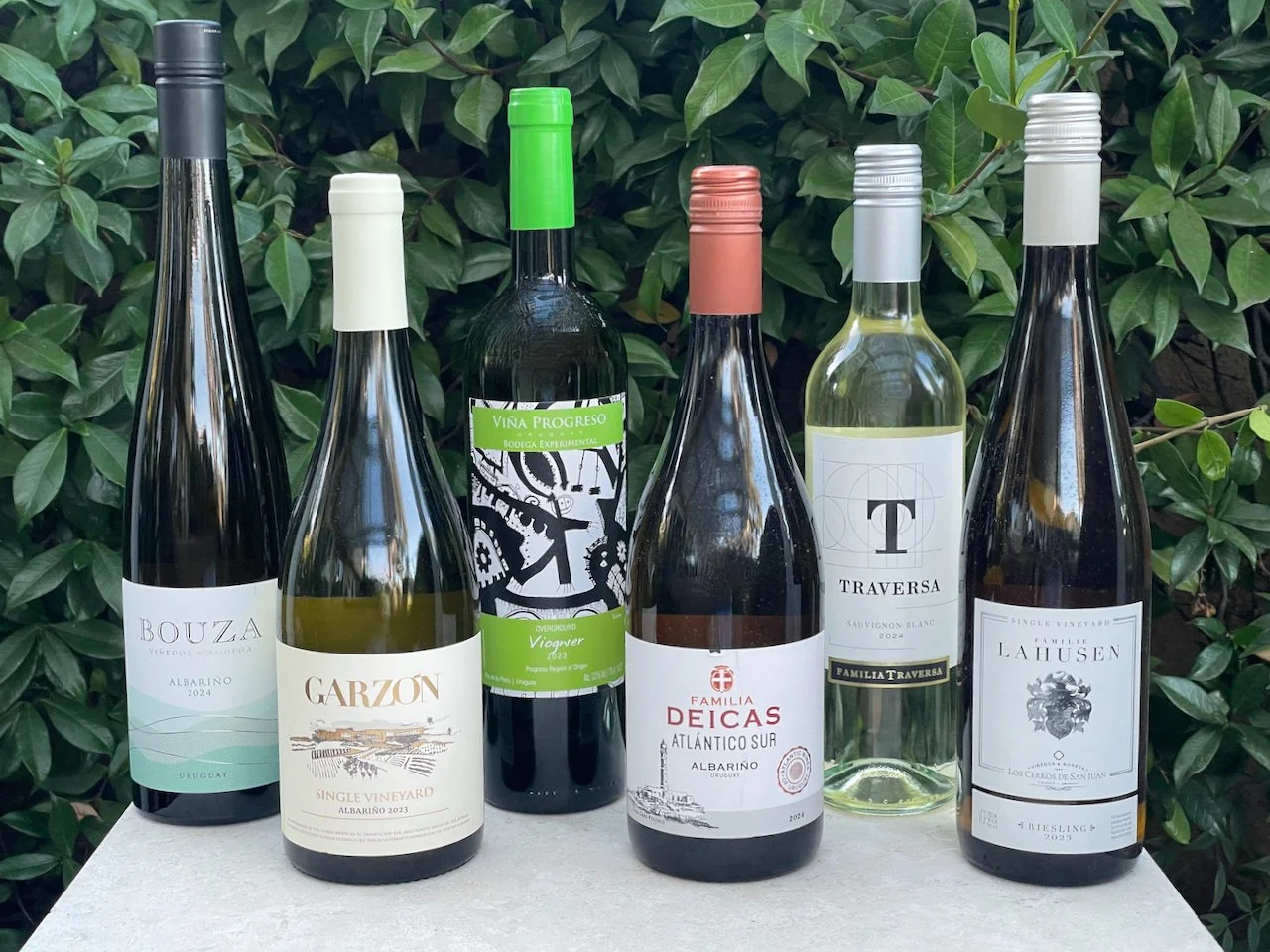
Here are three excellent examples of Albariño from Uruguay:

2024 Bouza Albariño ($28)

Hailing from Galicia, the Bouza family were the first to plant Albariño in Uruguay, a variety that has now eclipsed Chardonnay to become the third most widely planted white grape.

This wine is produced from 100% Albariño that is undergoes pre-fermentation maceration for four hours. 90% of the wine is fermented in stainless steel tanks while 10% is fermented in French oak barrels. It is then aged on-lees for four months. (ABV: 12.5%, Total Acidity: 3.9 g/L, pH:3.05, RS: 1.9 g/L).

This wine is pale gold in color with a delicate aromas. On the palate, this medium-light bodied wine has subtle flavors of nectarine and grapefruit and medium acidity. It finishes soft and smooth with hints of minerality and saline.

2024 Familia Deicas Atlantico Sur Albariño ($20)

Santiago Deicas grows Albariño at his estate vineyards in Canelones and Maldonado, and finds that he prefers the “explosive flavor” of the grape in the clay and calcareous soils of Juanicó, in Canelones.

Produced from 100% Albariño that is fermented and stored in a tank with lees stirring for several months. It is aged in chilled tanks for four to six months. (ABV: 12.3%, Total Acidity: 4.2 g/L, pH: 3.13)

This wine is medium gold in color with a light aroma. On the palate, this Albariño has flavors of nectarine and grapefruit and finishes with a slight hint of tartness.
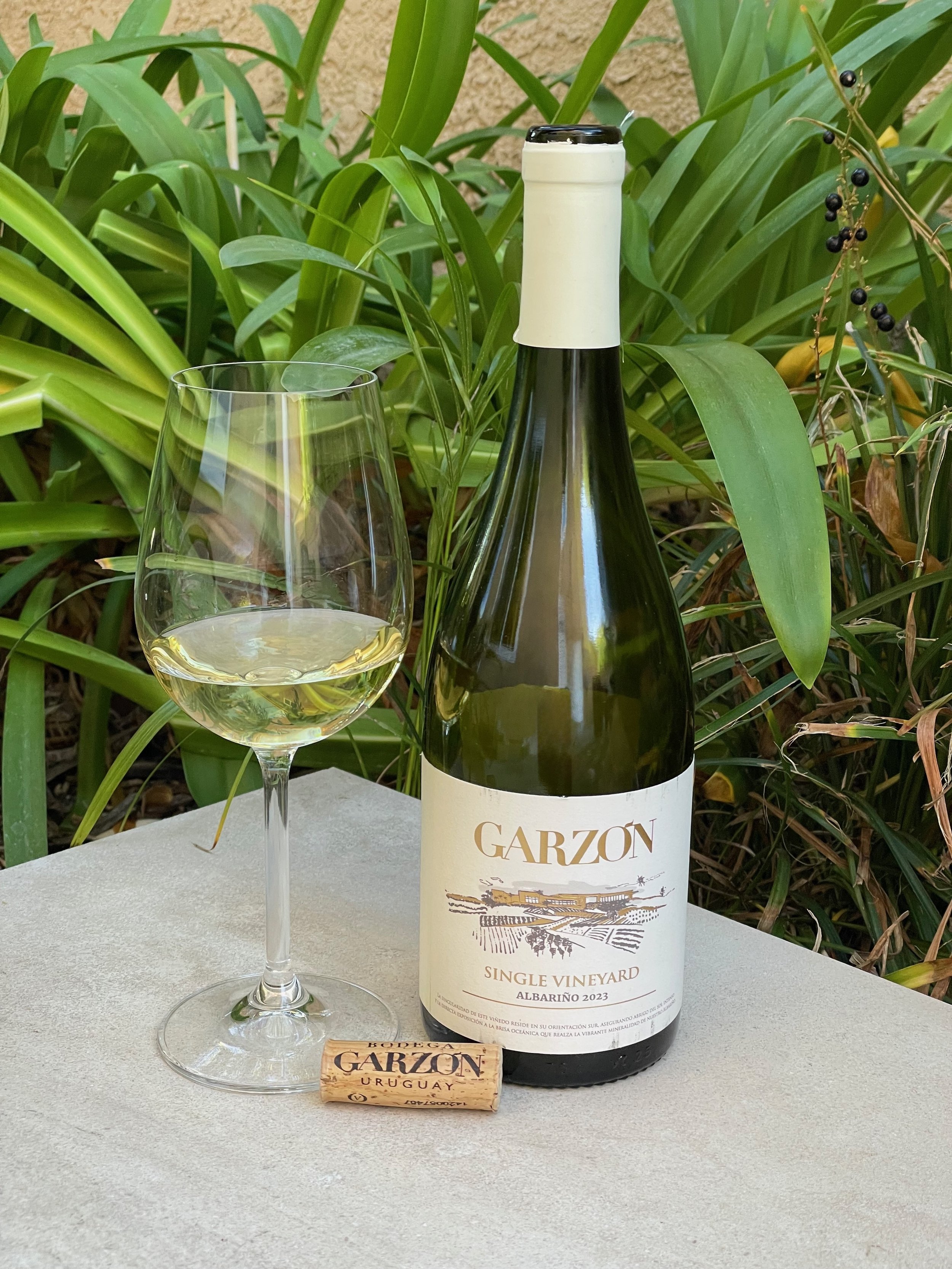
2023 Bodega Garzón Single Vineyard Albariño ($35)

Antonio Antonini considered the granitic soils of Garzón and the rainy Atlantic climate when he suggested the team at Bodega Garzón plant Albariño—and they now produce three in each vintage. Their single vineyard used for this wine lies in its southern orientation that shelters the vines from the intense sunlight and direct exposure to the ocean breeze.

This wine is produced from 100% Albariño that is fermented in cement tanks before being aged on-lees for 8 months also in cement tanks. (ABV: 14%, TA: 7.6 g/L, pH: 3.21, RS: 2.7 g/L)

Medium gold in color with an aroma of honeydew. On the palate, this medium-bodied wine has flavors of apricot and citrus along with medium-high acidity. The finish is balanced and smooth.

These three Albariño wines are excellent examples of the wines being produced in Uruguay. And, at these prices, are great fits as this week’s Behind the Cork™ Wines of the Week. Cheers!


Disclosure of Wine Sample Submission: I received these samples at no cost for review. The opinions expressed are entirely my own.

Media Sample Provided by Bodega Bouza, Bodega Familia Deicas and Bodega Garzón
Uruguay's Wine Country

Continuing with the theme of wines of Uruguay, here’s a listing of their wine producing regions and the overall wine grape planting percentages of each sub-region (which are also knows as “Departments”):

  • Northern Riverside (light brown regions): Artigas (0.1%), Salto (0.9%) and Paysandú (1.9%)

  • Southern Riverside (light purple regions): Rio Negro (<0.01%), Soriano (0.1%) and Colonia (5.1%)

  • Metropolitan (Yellow regions): San José (4.7%), Canelones (67%) and Montevideo (12%)

  • Northern (Green regions): Rivera (0.5%) and Tacuarembó (0.1%)

  • Central (Dark Brown regions): Durazno (0.3%), Florida (0.3%), Lavalleja (0.1%) and Treinta y Tres (<0.01%)

  • Oceanic (Blue regions): Rocha (0.3%) and Maldonado (7%)

As you can see by the percentages, the Metropolitan region accounts for nearly 84% of all grape plantings in Uruguay.

While there are many great cities to visit across the wine regions of Uruguay, here are three that are well worth a visit:

MONTEVIDEO

The capital city of Uruguay is also the epicenter of viticultural gastronomy. The metropolitan area contains two thirds of the country’s vineyards, making it easy to visit some of the country’s most fabled wineries.

In the Ciudad Vieja (old city), a walk through the pedestrian district, from the Cabildo de Montevideo to Plaza Zabala, is an excellent introduction to historic Montevideo, within what was the walled city built in 1724. The port market a few blocks away is an excellent place to enjoy lunch. La Rambla, which runs along the edge of the city, offers another perspective on the life that bustles within, especially between Parque Rodó and Punta Carretas. At sunset, the pink granite of the walk lights up to create an enchanting atmosphere for Montevideans to begin their evening. Pocitos and the surrounding area is a great place to enjoy dinner. Wineries worth visiting include the classic Carrau, and the more modern Bouza and Pizzorno Winery. A little further away, in Juanicó, one finds Familia Deicas/Establecimiento Juanicó, one of Uruguay’s most historic wineries.

PUNTA DEL ESTE

The most famous city in Maldonado is also an obligatory stop on the wine tour. A couple of Punta del Este’s major attractions, along with the avant-garde architecture of its hotels, are two different versions of the sea: a calm one, found at a long beach stretching to the west along the Río de la Plata, with barely perceptible waves, and a wilder incarnation that runs north along the Atlantic shore. José Ignacio is a lovely town to visit along this coast. Inland, down rural roads, one finds wineries set in the hilly, sierra landscape. Wineries worth visiting include Garzón, Alto de la Ballena, Bodega Oceánica, and Viña Edén. In addition, there is Bracco Bosca in the Canelones region on the way to Punta del Este in Atlántida. All were founded within the last 20 years and make wines for export. The newest winery is Cerro del Toro in Piriápol is in the Maldonado region.

COLONIA

Colonia del Sacramento is the capital city of the Department of Colonia and was declared a World Heritage Site by UNESCO in 1995. With its colonial architecture, cobbled streets, and tiled roofs, it doesn’t look too different to when it was founded back in 1680 on the shore of the Río de la Plata. Several wine and cheese makers are located in the surrounding area. Los Cerros de San Juan, the oldest winery in Uruguay, was founded in 1854 and is fifteen minutes away on the road to Carmelo. Housed in a recently refurbished stone building, its pulpería (seafood) restaurant is a journey into the past. Carmelo, meanwhile, is a peaceful town at the mouth of the River Uruguay. It boasts old vineyards, as well as more modern ones, along with luxury hotels and several country inns. The wineries aren’t too far away and can be visited by bicycle, except for Narbona, which is a little more remote. Campotinto, Almacén de la Bodega Cordano and El Legado are small, family-run wineries that have appeared in recent years. Familia Irurtia, in contrast, has a more industrial past that it is now looking to revive.

An Overview of the Wines of Uruguay

Uruguay is home to a proud winemaking tradition in an unusual location, and a far cry from the desert-and Andes-dominated landscapes associated with most vineyard regions in the South America continent.

  • Uruguay means “river of the painted birds” in the indigenous Guarani language

  • In Uruguay, the dominant factor is the Atlantic Ocean, whose winds, storms, and tides ensure a cool climate.

  • Uruguay is about the same size as the U.S. state of Wisconsin and its population of 3.5 million is roughly that of Connecticut.

  • In terms of planted vineyards (14,804 acres), it’s a little smaller than Alexander Valley in California’s Sonoma Valley.

  • In terms of worldwide production of Tannat (tahn-naht), Uruguay is second only to France. And, in Uruguay, Tannat accounts for 27% of vineyard plantings.

    • In Uruguay, Tannat is also known as Harriague (Ha-ree-AH-gay), surname of the first producer to plant it in the country

  • Even so, Uruguay is the 4th largest wine producer in South America

  • Other principal grape varieties include:

    • Reds: Merlot, Cabernet Sauvignon, Cabernet Franc

    • Whites: Sauvignon Blanc, Chardonnay, Viognier, Albariño

  • There are 180 active wineries

  • The oldest winery in Uruguay dates back to 1854 and is called Los Cerros de San Juan

  • Only 5% of the wines produced in Uruguay are exported. And, just under 20% of the exports are to the U.S. (i.e., ~1% of wines from Uruguay make it to the U.S.)

  • Most wineries are family businesses with many now in the 3rd and 4th generations

  • Today, Uruguay has a dual character: on the one hand it continues to produce in a traditional style to suit local tastes, with Tannat dominating the scene. On the other, alternative and innovative styles, such as sparkling whites and much lighter reds are appearing.

Look for upcoming Behind the Cork Wine of the Week blogs featuring Tannat from some of the best wineries in Uruguay. Cheers!

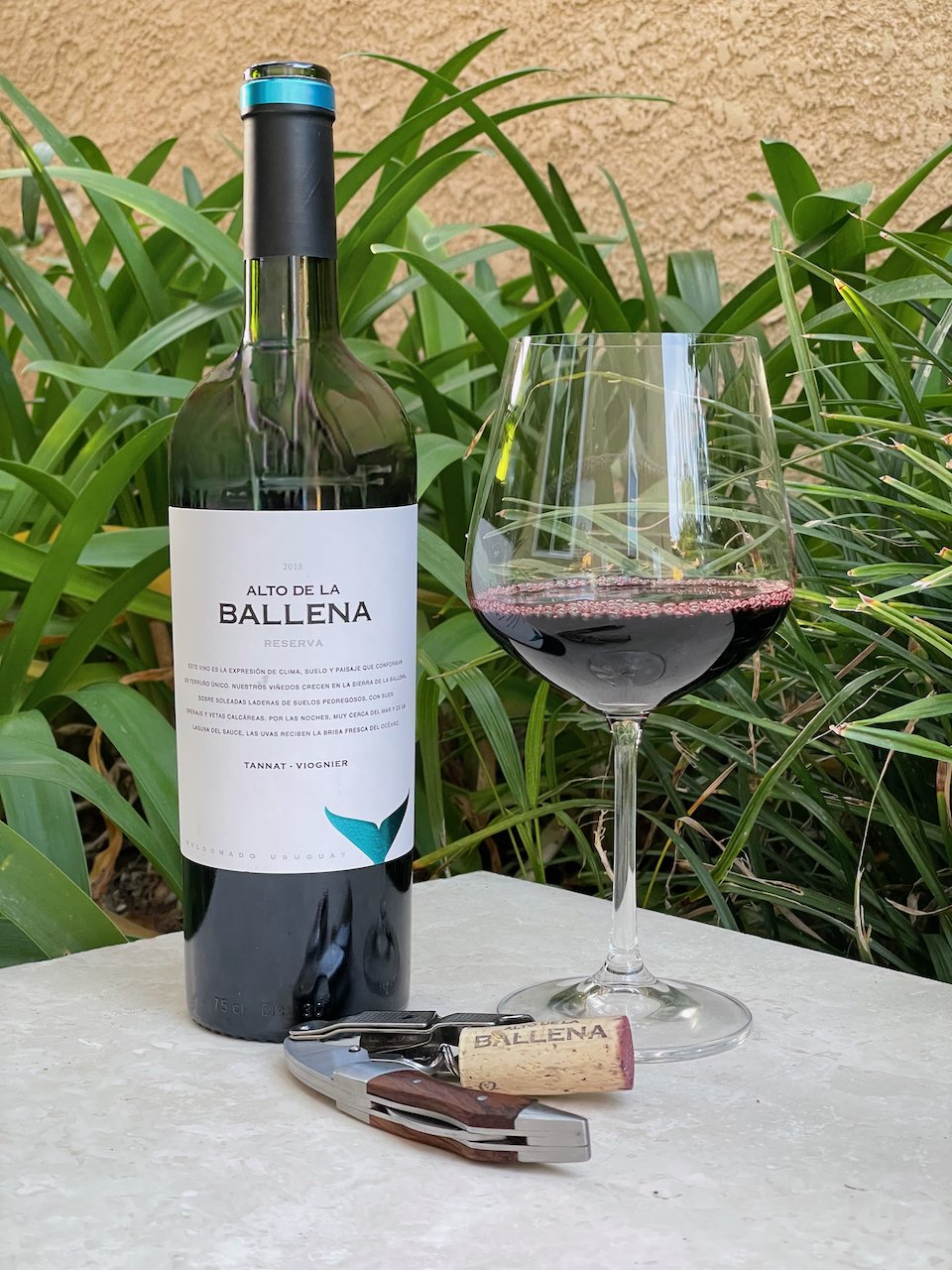
Behind the Cork™ - Alto de la Bellena Reserva

2018 Alto de la Bellena Reserva ($24)

Nine miles away from the Atlantic Ocean, Alto de la Ballena is a small winery producing high-end wines from over 20 acres of vineyards in Uruguay. Starting vine plantations on a slope of Sierra de la Ballena (“Whale Hills”) in 2001, the estate opened new trends in wine growing by combining maritime climate, hills and rocky soils.

This Alto de la Bellena is a blend of 85% Tannat and 15% Viognier. Yes, it’s a blend of red wine and white wine. It is common to use Viognier as a blending wine to enhance the color, add floral aromas, and provide a silkier mouthfeel. The Viognier was fermented separately in barrels and its skins were co-fermented with the Tannat. The finished wines were then blended and aged for nine months in American oak.

This wine is deep ruby in color with aromas of plum and black cherry. On the palate, this full-bodied wine has jammy flavors of black fruit, medium-high tannin and acidity and a bit of tartness on the finish.

This Alto de la Bellena red blend is yet another great example of the fine wines being produced in Uruguay and a great fit as this week’s Behind the Cork™ Wine of the Week. Cheers!


Disclosure of Wine Sample Submission: I received this sample at no cost for review. The opinions expressed are entirely my own.

Sample Provided by Alto de la Bellena Winery via Creative Palate Communications