
More On the Amazing Sauvignon Blanc Grape

The Sauvignon Blanc grape is one of the most widely planted wine grapes in the world.  While the Sauvignon Blanc grape is most famously associated with the France's Loire Valley regions of Sancerre and Pouilly-Fumé, it most likely originated in Bordeaux. Today, this versatile grape is successfully producing great wines throughout the world including Italy, Spain, Ukraine, Romania, New Zealand, Australia, South Africa, Chile, Argentina, and the United States.

Like many other grapes with "Blanc" in their name, it is a light-skinned grape that produces white wine. The literal translation of "Blanc" is white while "Sauvignon" is derived from the French word sauvage, which means wild, because the grape grew like a weed throughout the region. So, Sauvignon Blanc is a wild white grape.

Sauvignon Blanc, like many other wines, can take on different flavors depending on where it is grown. In France's Loire Valley it tends to have the distinctive flavors of freshly cut grass, green apples, lime, kiwi, green melon, gooseberry and earthy minerals associated with the regions limestone soil.  In France's Bordeaux region, Sauvignon Blanc can have flavors of white peach, lemon curd, and nectarine. But when grown in cooler climates like New Zealand, the Sauvignon Blanc grape produces wines with flavors of pink grapefruit, lemon, lime and passion fruit. Regardless of the region, Sauvignon Blanc is a highly acidic wine, but considered light-bodied.

In somewhat of a twist, the Sauvignon Blanc grape, that produces white wine, naturally crossbred with the Cabernet Franc grape, that produces red wine, during the 18th century in Bordeaux to create what we now call Cabernet Sauvignon. Both the parent and the offspring have become two of the most widely planted wine-producing grapes in the world.

So, there you go. Sauvignon Blanc is a nice, tangy, "zingy" wine that can be enjoyed on its own or with a variety of meals. And, by the way, it's a great beginner's wine. Give it a try! Cheers!


Behind the Cork™ Wine of the Week - Simi Sauvignon Blanc ($13)

This Sonoma County Sauvignon Blanc has zesty notes of tangerine, lime and grapefruit.  It is produced in stainless steel tanks that retain the refreshing, full and vibrant fruity flavors of the wine.



What is Fumé Blanc?

I was recently asked about Fumé Blanc. And, as you might guess, it's made from the Fumé Blanc grape.  Except, you'd be wrong. Just like I was.  Fumé Blanc wine is produced from the Sauvignon Blanc grape.

It was back in 1966 that wine maker Robert Mondavi decided to grow Sauvignon Blanc grapes in Napa Valley, California. But Sauvignon Blanc had developed a bit of a negative reputation for being poorly made, too grassy and too sweet. So, in what turned out to be a great marketing ploy, he decided to call his Sauvignon Blanc wine by another name. And the name he chose had a lot to do with fine Sauvignon Blanc wines from France.

In the Loire Valley of central France (South of Paris) is the wine region of Pouilly-Fumé.  This region, along with the region of Sancerre, which lies just across the Loire River to the west, is best known for its Sauvignon Blanc wines. And these wines were a strong influence on Robert Mondavi. So, in honor of the wonderful Sauvignon Blanc wines of Pouilly-Fumé, Mondavi named his wine made from the Sauvignon Blanc grape Fumé Blanc.

One of the primary differences between the Sauvignon Blanc wines of France and Fumé Blanc is that Fumé Blanc spends some time aging in oak barrels. The French Sauvignon Blanc wines are generally not aged in oak.  This oak aging can give Fumé Blanc a bit more of a rich, creamy taste to go along with the green flavors of pear, melon and mineral notes (think chalk, slate and wet stone).

Next time I'll give you a bit more about Sauvignon Blanc. It has a famous child. Can you guess? So in the meantime, raise a glass of Fumé Blanc to the late, great, Robert Mondavi. Cheers!


Behind the Cork™ Wine of the Week - Robert Mondavi Fumé Blanc ($15)

Originated by Robert Mondavi in 1966, this Sauvignon Blanc spends time aging in oak to give it a bit more of a rich, creamy taste along with the green flavors of pear, melon and mineral notes. If you are a Chardonnay drinker and not so sure about Sauvignon Blanc, then you need to try this Fumé Blanc.

The Role of Acidity in a Wine

When it comes to a wine's ability to be aged, both tannin and acidity play a role. Tannins were described last time as having compounds that act as natural preservatives in wine.  The natural acids in the juice of the grape also help to preserve a wine for better aging.

Acids are common in fruits and give them their refreshing qualities. Fruits like apples, lemons, limes, and grapefruit are acidic and have that crisp, fresh, mouth-watering quality. Grapes too have acids that are highest before they ripen and are reduced as they ripen.

Acids can give wines a crisp, tart, refreshing and zesty flavor such as you might experience when drinking a glass of lemonade. And, the acids produce additional saliva which leave you with a mouth-watering affect immediately after consuming. This is common in white wines such as Sauvignon Blanc, Pinot Grigio and Riesling.

Along with preserving a wine and giving it a fresh crisp flavor, acids also help to 'balance' wines.  The balance is typically between acids, sugars, tannin and alcohol. If any one of these traits is too high or too low the wine will be un-balanced and just taste wrong. Too much sugar results in a syrupy sweet wine. Too much alcohol gives a hot burning sensation in your mouth and throat. And too high of a tannin level results in a harsh mouth drying and puckering sensation.  If a wine has too much acid it will seem sharp and if it lacks acids it can seem dull, boring, flat or 'flabby' as the wine world calls it. So balance is important.

The balance of acids is especially evident in red wines where you don't get the crisp and zesty flavors. Red wines are typically less acidic than white wines and the higher tannin and alcohol act to significantly reduce the acidic sensation and produce the 'smooth' mouth-feel sensations most often associated with Cabernet Sauvignon, Merlot and Zinfandels.

To put the levels of acids in perspective, we must briefly revisit chemistry and pH levels. Water is neutral from an acidity perspective and has a pH of 7 on a scale of 1 to 14, with the most acidic items having a pH of 1 (a seemingly backwards scale). Typically coffee is thought to be highly acidic but it comes in around a pH of 5-6. Lemonade on the other hand has a pH typically around 3. Wines will range in between with a pH of 4 for some red wines and go to a pH around 3 for some types of white wines.

As just another way of describing balance in beverages, the balance of acids and sugars is strongly evident in lemonade and cola drinks.  They are both higher in acidity than all wines but have a tremendous amount of sugar that acts to balance out the acid and create enjoyable drinks.

So all of these traits need to be in balance. And acids play an important role in this balancing act. So whether it be a crisp and zesty Riesling or a smooth Cabernet Sauvignon, know that acids are important to the overall flavor and the ability of a wine to age.  Cheers!


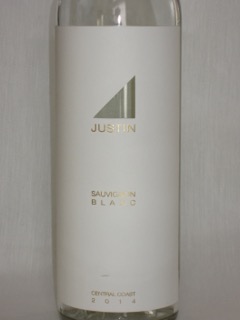
Behind the Cork™ Wine of the Week - Justin Sauvignon Blanc ($13)

This Sauvignon Blanc from Paso Robles is a great example of a crisp, zesty and refreshing wine. The winery describes this wine as having fruit elements of guava and pineapple with subtle orange peel, and fresh herbal notes including chamomile flower.

It is dry, crisp and refreshing with lemon, green apple, white peach and guava. The finish is bright and clean, with a slight mineral texture.  This is an excellent value and worth searching out.

Why Do Some Wines Age Better Than Others?

Last time we addressed some general guidelines on how long wines can age, noting that rosé should be consumed immediately after bottling while still bright, fruity and fresh, most white wines are typically best within a couple of years of bottling, and red wines can be aged for several years.

So, the common thought is that red wines age best. And, that is correct.  But why is that? Why can red wine be aged longer than whites?  After all, they are both made from the juice of grapes! The answer has a lot to do with tannins, but acidity also plays a role too.

Tannins are chemical compounds that act as natural preservatives in wine. They come from the skins, seeds and stems of grapes. Tannins also come from the wood barrels where the wines are aged. 

But, as previously noted, the key difference between red wines and white wines is that red wines are fermented along with the grape skins, seeds and some or all of the stems while the juice for white wines is separated from the skins, seeds and stems before fermentation. Thus, red wines have much higher tannin levels than white wines even before they go into barrels for aging. It's the chemical compounds in these tannins that have the power to preserve a wine.

But the levels of tannins in red wines vary by the variety of grapes used. High tannin red wine grapes include Cabernet Sauvignon, Cabernet Franc, Nebbiolo, Sangiovese, Tempranillo, Bordeaux blends, Merlot and Petite Sirah, just to name a few.  Medium tannin wines include Malbec, Syrah and Zinfandel, while low tannin wines include Gamay, Barbera, Pinot Noir and Valpolicella blends.  So it's the high tannin wines that typically age best.

Acidity also plays a role in how well a wine may age. The natural acid levels in a wine acts to preserve the wine. That's why only certain white wines can withstand aging. Wines such as French Chablis, German Riesling and Loire Valley Chenin Blanc all have naturally high acid levels and are capable of extended aging.

So forget the myth that all wines improve with age. It's the rare few that actually do age well. And, there is actually a peak after which any wine will go into decline. So choose wisely if you are looking to age wines, ensure they are properly stored and, if you have the luxury of owning multiple bottles of a particular wine that you are aging, open one periodically so as to catch it in its peak.

Next time I'll share a bit more about acidity in wines and how you perceive it.  Cheers!


Behind the Cork™ Wine of the Week - Layer Cake Cabernet Sauvignon ($13)

Don't let the chocolate cake on the label fool you. This is a serious wine, from a serious wine maker.  Jason Woodbridge is the owner of Hundred Acre. His 2012 Hundred Acre Cabernet Sauvignon received Wine Spectator's 94 point rating and is a $450 bottle of wine!  He is also the owner of Layer Cake stating that he "Likes the idea of a young man putting 20 bucks on the counter and getting some change back on a good wine."  This California Cabernet Sauvignon is a great value and well worth trying. Enjoy!

How Long Should You Age a Wine?

Last time I mentioned buying a rosé that turned out to be more than three years old, that may not have been properly stored, had turned a brown-orange color and had nutty flavors that a fresh, fruity rosé should not have.  And, several years ago I discovered a bottle of Chardonnay that had gotten stuck away at home and was re-discovered after a couple of years. It too had become a golden-brown color and lost all it original flavor.

The general rule of thumb on rosés is to drink them right away while they are fresh. And with white wines, they can tolerate some aging but most should be consumed within a couple of years after their vintage date. And, with red wines, the assumption is that they just keep getting better with age. But, this is not generally true.

Most wines today are meant to be consumed immediately.  Wineries bottle their wines when they are ready to drink. You should feel confident in opening a bottle of red wine immediately after you purchase it.  If you do choose to put away some wine to let it age, you have to be a bit careful. The line I love is that "A cellar is not a wine hospital, it doesn't make a bad wine better."  So before you put some wine away for aging, ensure that it's starting out as a good wine.

You also really need to be careful of how and where you age your wines. You need a cool (50-55 F), dark place with something around 75% humidity. If your basement fits these criteria, you are good to go. Otherwise, you really need a wine refrigerator. Not a standard refrigerator. They are too cold and have little to no humidity.

Then, the question becomes "How long should you age a wine?"  Well, you may be surprised by Wine Enthusiast's recent 2015 Vintage Chart (February 2016 issue).  Interestingly, their recommendation for Napa Cabernet's (considered a top U.S. wine) is that anything older than 2001 is either past its peak, in decline or may be undrinkable!  And that's with all the proper storage techniques. Reviewing all the rest of the U.S. made wines shows that they are past their peak if they were vinted in 2003 or earlier. And something like a Syrah, produced in the South Coast of California, is questionable if it's older than 2009.  So aging has its limits.

If you do choose to put some wine away, first ensure that it's a good wine to start with, store it under the proper controlled conditions, and don't let it go too long.  A common practice, among those who have wine cellars, is to purchase a case of a single wine and open a bottle each year to see how it's aging. You'd hate to put a case of good wine away for a dozen years, then pull out a bottle and find that they have all gone well past their peak.

There are many factors that affect a wine's ability to age, and we'll touch on those next time.  For now, I'm going to pull the cork on a nice 2010 Sonoma Zinfandel that should be at its peak maturity now. Cheers!


Behind the Cork™ Wine of the Week - Sextant Wheelhouse Zinfandel ($15)

This is a nice Zinfandel with flavors of blackberries, dark cherries and some toasted flavors that finishes well. It is a bold, somewhat jammy wine that works well just sipping by the glass or enjoying with a meal.