Behind the Cork™ - Craggy Range Sauvignon Blanc

2025 Craggy Range Sauvignon Blanc ($27.99)
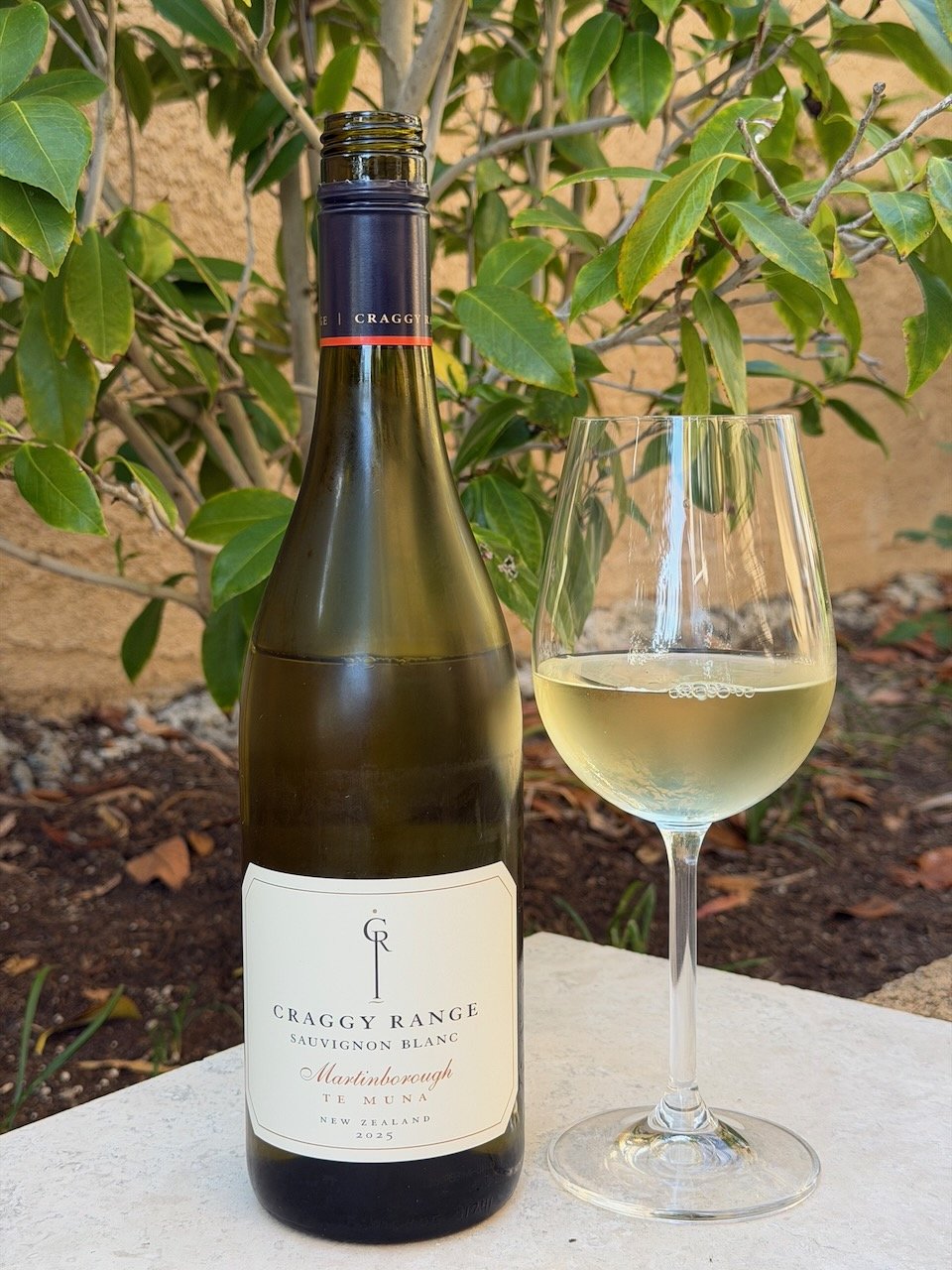
Established in 1998 by the Peabody family, Craggy Range is a family-owned estate that revolutionized New Zealand wine by matching specific grapes to unique terroirs. While their main winery is located in Hawke's Bay, their Te Muna Road property in Martinborough has become a landmark site for crafting high-quality white wines.

This 2025 Craggy Range Sauvignon Blanc is indeed from the Te Muna Vineyard in Martinborough. The name Te Muna translates to "secret place" in the local Māori language.

This wine was made from 100% Sauvignon Blanc grapes that are grown on a stony lower terrace formed by an ancient riverbed. The grapes are partially picked by hand and most are removed from their stems before pressing. Fermentation mostly takes place in stainless steel tanks with a small portion being fermented in French and Austrian oak barrels. The wine then was left on-lees for three to five months before bottling.

This 2025 Craggy Range Sauvignon Blanc is a medium straw color with bold tropical aromas as well as the scent of freshly cut grass. On the palate, this medium-bodied wine has highly refreshing acidity, with flavors of lime, grapefruit and green apple. It finishes bright and smooth.

This Craggy Range Sauvignon Blanc is just perfect for a warm evening - with a meal or just by the glass. That makes it a perfect fit as this week's Behind the Cork™ Wine of the Week. Cheers!


Disclosure of Wine Sample Submission: I received this sample at no cost for review. The opinions expressed are entirely my own.

Media Sample Provided by Craggy Range Winery via Kobrand Wine and Spirits
A Tour of Wine Grapes: Sauvignon Blanc (Part 2)

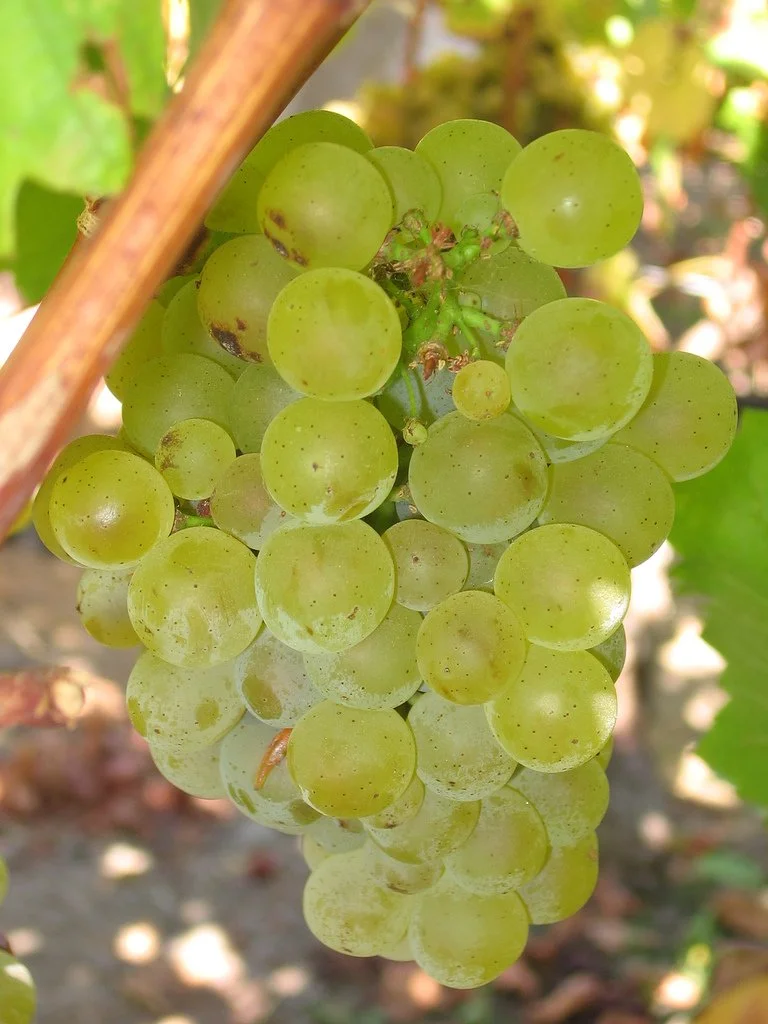
Sauvignon Blanc 🥂

Photo: Geolina163 & 1971markus on Wikimedia Commons

Last time we looked at Sauvignon Blanc - its history, aromas and flavors. Now, let’s take a look at two different growing regions for Sauvignon Blanc: California and New Zealand.

Sauvignon Blanc is a white wine made from the same grape variety, but the wines produced in California and New Zealand are different because of their climates.

California Sauvignon Blanc generally comes from a warmer climate, which alters how the grapes ripen on the vine. The warm weather causes the grapes to develop higher sugar levels and lower natural sharpness, or acidity. As a result, the final wine usually features dominant flavors of ripe fruits like melon, peach, and citrus. The texture of the wine tends to be smoother and less sharp on the tongue.

In contrast, New Zealand Sauvignon Blanc is mostly grown in the Marlborough region, which has a much cooler ocean climate combined with high levels of sunlight. The cool nights keep the natural acidity levels high, giving the wine very sharp, crisp, and refreshing flavors. New Zealand versions have aromas and flavors of grapefruit, lime, passion fruit, fresh-cut grass, and green bell pepper.

In summary, when comparing the two side-by-side, the differences come down to acidity and flavor profiles. California versions are less tart, have a heavier or smoother texture, and lean toward sweeter fruit flavors. New Zealand versions are highly tart, feel lighter in the mouth, and lean toward green herbs and citrus flavors.

A Tour of Wine Grapes: Sauvignon Blanc (Part 1)

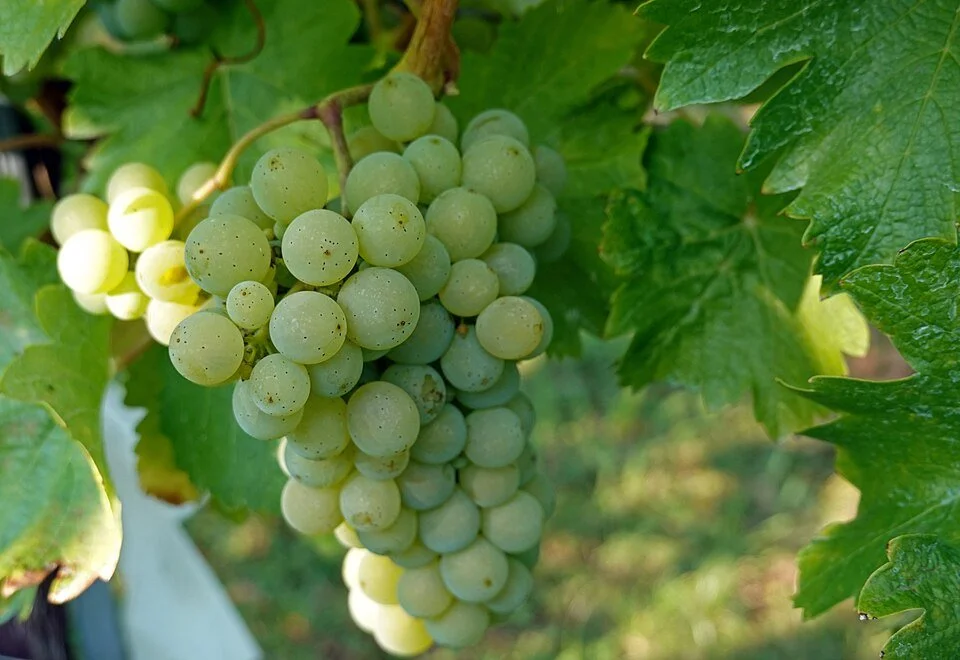
Sauvignon Blanc 🥂

Photo by Nathan on Wikimedia Commons

The name originates from the French words sauvage ("wild") and vigne ("vine"). Native to western France, written records document its cultivation in the Loire Valley and Bordeaux by the 18th century.

It is a natural cross between Sauvignon Blanc and Cabernet Franc grapes.

Today, winemakers grow it throughout the world. France produces lean, high-acid styles, while New Zealand's Marlborough region focuses on highly aromatic, pungent styles. California produces both crisp styles and barrel-aged varieties, while Chile, South Africa, and South Australia also maintain significant commercial production.

Sauvignon Blanc wines have notes of green grass, lime, and green bell pepper. Warmer climates yield tropical fruit profiles like passion fruit and peach. On the palate, it is a dry wine with a light body and bright acidity.

Winemakers use two main methods: unoaked (fermented in stainless steel to preserve fruit and acidity) and oaked (aged in barrels to add a creamy texture and vanilla notes). In California, the oaked style is labeled Fumé Blanc.

Sauvignon Blanc should be consumed within one to three years of the vintage date. Serve it chilled between 45°F and 50°F (7°C to 10°C) in a white wine glass with a narrow bowl to direct aromas upward.

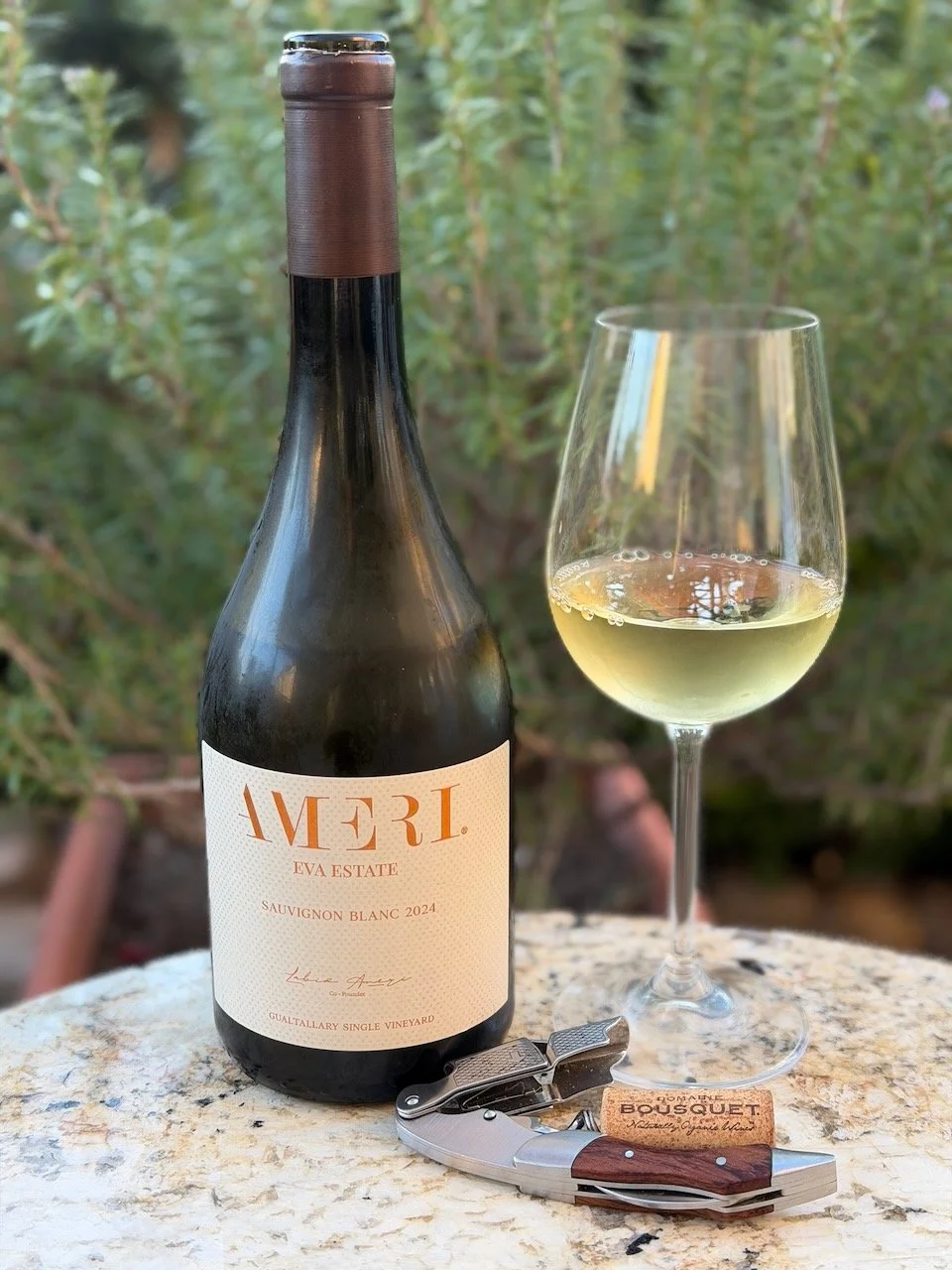
Behind the Cork™ - 2024 Ameri “Eva Estate” Sauvignon Blanc by Domaine Bousquet

2024 Ameri “Eva Estate” Sauvignon Blanc ($35)

Domaine Bousquet, Argentina’s largest producer and exporter of wines made from 100% certified organic fruit, is introducing their 2024 single-vineyard Ameri Sauvignon Blanc, the first white wine from the winery’s Ameri label. Named for co-owner Labid Al Ameri, Domaine Bousquet’s “Ameri” wines are only made in exceptional years and exclusively from selected grape clusters harvested from the estates’ best vineyard.

The grapes used to produce Ameri Sauvignon Blanc were sourced from the heart of Plot No. 9 of their Eva Estate vineyard in Gualtallary Argentina at an elevation of 4124 ft (1,257 m), a high-altitude wine region in the Uco Valley of Mendoza, Argentina. The sandy-calcareous soils have been found to be the most expressive sections of the vineyard.

The grapes were hand-harvested early in the morning to preserve their freshness. The grapes were then gently pressed under reductive conditions (i.e., minimal exposure to oxygen) with dry ice to protect the aromatic profile. The wine fermented in French oak barrels (50% new, 50% second use) at low temperatures (13 °C / 55 °F), with no malolactic conversion. The wine was then aged for 8 months in barrel and 6 months in bottle.

This Ameri Sauvignon Blanc is pale gold in color with nice tropic fruit aromas, some baked pear and a touch of vanilla from the oak aging. On the palate, this light-bodied wine has wonderful tropical fruit flavors of pineapple along with green apple and pear. It is light and bright but finishes smooth with just a bit creaminess.

This Domaine Bousquet 2024 Ameri “Eva Estate” Sauvignon Blanc is a real treat at this price, making it a great fit as this week’s Behind the Cork™ Wine of the Week. Cheers!


Disclosure of Wine Sample Submission: I received this sample at no cost for review. The opinions expressed are entirely my own.

Media Sample Provided by Domaine Bousquet

Behind the Cork™ - St. Supery Sauvignon Blanc

2019 St. Supéry Sauvignon Blanc ($24.99)

St. Supéry Estate Vineyards and Winery  produces 100% estate grown, certified Napa Green wines, focusing on sauvignon blanc, cabernet sauvignon, and additional red Bordeaux varietals.

Napa Green is an environmental certification program for vineyards and wineries. This program is one of the most comprehensive environmental accreditations in the wine industry, covering every step from soil to bottle and requiring continuous improvement to maintain their certifications. All of of their land is certified Napa Green.

This St. Supéry Sauvignon Blanc is produce from 100% Sauvignon Blanc grapes that are estate grown in their Dollarhide Vineyard. The grapes were pressed to tank and immediately chilled and settled prior to fermentation. All fermentation was completed in stainless steel tanks at cool temperatures to maintain and enhance the natural flavors. The final blend was completed soon thereafter.

This Sauvignon Blanc is pale gold in color with hints of green. It has nice aromas of tropical fruit, grapefruit and lime. On the palate, this wine has delicate tropical fruit flavors, moderate acidity and finishes soft and balanced with a hint of honey. (ABV: 13.5%, Total Acidity: 6.8 g/L, pH: 3.29, Residual Sugar: 0.2 g/L)

This is indeed a ‘super’ Sauvignon Blanc from St. Supéry winery. It’s widely available and nicely priced for a quality wine from Napa. That makes it a perfect fit as this week’s Behind the Cork™ Wine of the Week. Cheers!