
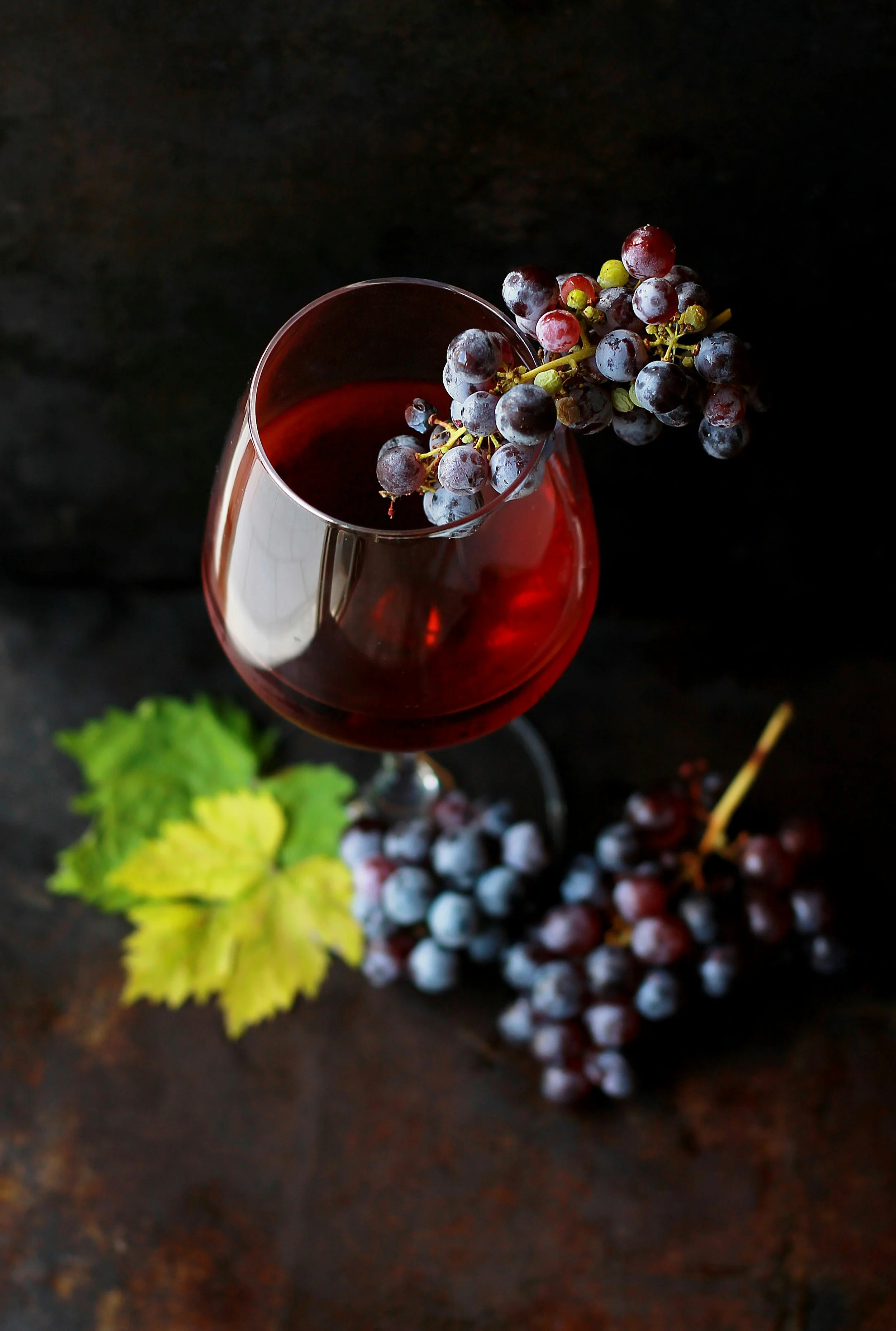
Think Wine is Just Grape Juice and Yeast. Think Again!

What is more natural than a glass of wine?

Grow some grape vines, wait for them to produce grapes, harvest the grape bunches, de-stem them (sometimes), crush them to produce juice, leave the crushed grapes in contact with the juice to create color (in the case of red wines and rosé) and then rely on natural yeasts or added yeast to convert the natural sugars in the grape juice to alcohol and, voilà, - you have wine! It’s just that simple, right?

Well, wine isn’t always that simple. While some wines are indeed produced with these simple steps and ingredients, there are some other ingredients that can be used in the winemaking process. And, the only two ingredients that are required to appear on a wine label are the alcohol content and if it contains sulfites.

Here’s a few of the other ingredients that may be used in wine making or remain in a wine:

  • Added Yeast Nutrients and Enzymes

    • Yeast nutrients are used to speed up the process of fermentation.

  • Potassium Sorbate and Potassium Metabisultite

    • Both of these ingredients are used to guard against bacteria and protect the yeast from spoiling, and are commonly used together during the fermentation process to help the yeast ferment efficiently while improving the overall flavor.

  • Acid, Sugar, and Tannin Additions

    • Adding acid will decrease the pH and increase the total acidity of the wine to ensure it is in overall balance

    • Adding sugar before or during fermentation can help boost the alcohol content. The process is called ‘chaptalization’ and also assists the yeast during the fermentation process.

    • Powdered tannins may be added early in the process to help add balance

  • Acid Reducers

    • Calcium carbonate is used to reduce the acidity of the finished wine, and is sometimes added if the grapes have had trouble ripening. It’s usually added before or at the start of fermentation, so it doesn’t impact on the aroma of the wine.

    • Potassium Bicarbonate is also used to help lower the acidity

  • Oak and Oak Chips, Powders, and Granules

    • Winemakers rely on oak barrels to flavor wine with notes of vanilla or subtle spices,

    • If the wine doesn’t come into direct contact with wood (i.e., stainless steel tanks), some producers will add oak chips, powders or staves to add oak flavors.

  • Stabilizers and Anti-Sediment Additions

    • Potassium bitartrate is used as a seeding agent to promote tartrate precipitation during cold stabilization

    • Urease is added to reduce the level of urea in wines, when this is excessive, in order to avoid the formation of ethyl carbamate during aging.  The enzyme transforms urea into ammonia and carbon dioxide.

  • Fining Agents

    • Fining agents are used for clarifying wine. These agents, such as bentonite (powdered clay), isinglass (fish bladder), casein (milk protein), gelatin or egg whites, combine with sediment particles and cause them to settle to the bottom of the vessel, where they can be easily removed before the wine is bottled.

  • Grape Concentrate

    • Grape juice concentrate is sometimes included to boost the color of red wine and add a bit of sugar to smooth out the mouthfeel.

  • Coloring Agents or Color Stabilizers

    • Coloring agents may be used to deepen the color of red wines, or to add ‘blush’ to whites

    • Stabilizers ensure the wine’s color does not change during fermentation and aging

  • Dimethyl Di-carbonate, Ammonium Phosphate and Di-ammonium Phosphates

    • Dimethyl di-carbonate is used to stabilize wine by preventing microbial spoilage

    • Di-ammonium Phosphate is used to speed up the fermentation process

  • Sulfur Dioxide

    • Usually listed as ‘sulfites’. It’s used to preserve the grapes and prevent oxidation during the winemaking process.

  • Preservatives and Antibacterial Agents (e.g., potassium sorbate, dimethyl dicarbonate, sorbic acid, copper sulfate)

    • Preservative such as potassium sorbate or sorbic acid are used to 'stabilize' a wine and prevent a renewed fermentation by inhibiting the yeast cell from being able to multiply, grow and begin a new fermentation.

    • Dimethyl dicarbonate is used to stabilize the wine by preventing microbial spoilage

  • Alcohol

    • Adding alcohol, usually from another grape-derived spirit such as brandy, is called fortification. Since yeast naturally dies at 15% ABV, addition of extra alcohol will push the alcohol concentration of a wine over the 15% mark.

    • Alcohol is added to “Fortified” wines such as Port, Sherry, Madeira, Marsala and Vermouth

Are You Observing a Dry January? Try Non-Alcoholic Wines for a Change

Embarking on a “Dry January” involves voluntarily abstaining from alcohol consumption for the entire month of January. This practice has gained popularity as a New Year's resolution, with individuals opting for a temporary break from drinking to kickstart a healthier lifestyle, reassess their relationship with alcohol, and experience various physical and mental benefits. Whether driven by health goals, curiosity, or a desire for self-reflection, this month-long commitment has become a widespread phenomenon, creating a community that encourages individuals to reevaluate the role of alcohol in their lives.

So, if you are going for a “Dry January", have you considered non-alcoholic wines as an alternative? They’ve been around for years.

But, you may have wondered:

  • “What exactly is non-alcoholic wine?”

  • “How is it made?”

  • “Is it any good?”

First, let’s look at non-alcoholic wine. It actually is ‘real’ wine that’s been made from fermented grapes. It can have similar flavors to wine, just without the alcohol. Although, non-alcoholic wine may still contain a very small amount of alcohol. So, check the label - it will tell you the exact amount of alcohol that it contains.

Now, let’s take a brief look at how non-alcoholic wine made. As stated previously, it starts with "‘real’ wine made from fermented grapes. Then it goes through one of two processes to remove the alcohol. One method is called vacuum distillation where the wine is heated to temperatures where the alcohol begins to evaporate. This temperature is below the boiling point of the wine but, because the boiling point of alcohol is lower than water, the alcohol ‘boils’ off and is pulled away in a vacuum chamber.

The other method is reverse osmosis. This process uses an extremely fine filter that only allows the water and the alcohol to pass through. The filter catches all the fine grape particles that give the wine its color, its tannin and its flavors. The mixture of water and alcohol is then distilled to remove the alcohol. The left-over water is then recombined with the grape solids to form a non-alcoholic wine.

The same processes are used for “low calorie” or low-alcohol wines except they don’t remove all the alcohol.

So, we get to the final question “Is non-alcoholic wine any good?” Well, as you might have guessed, it’s not the same as “real” wine but it does have a lot of similarities. We’ll discuss this a bit more next time. Until then, Stay Dry! Cheers!

How Amphora is Used in the Making of Wine

Amphora is a ceramic vessel usually made of earthenware (e.g., clay or terra cotta) that was originally used in the transport of grains in Roman times. Research has shown that the use of amphorae dates to as early as 6,000 B.C.

Over time, amphora was found to be useful in the production, aging and storage of wine.

Amphora earthenware is naturally porous. It can be made to be impervious to external oxygen by internally lining it with wax (i.e., beeswax) or tree resin. This creates a thin, smooth, polished coating that does not impart any flavor. Or, if the winemaker desires, it may be left unlined.

Amphora vessels may be placed below ground or stand above ground.

To produce wine, crushed grapes go into the amphora vessels for fermentation. During fermentation, the grapes are stirred with a wooden paddle and punched down to maximize the wine’s skin-contact. Also, during fermentation, the amphora is usually moistened externally to help keep the temperature of the fermenting grapes down. The amphora may also be wrapped in wet burlap or other fabrics to enhance the cooling effect.

The amphora vessels were often covered with wooden or clay tops or paper. These covering didn’t seal the vessel from oxidation so some winemakers used a thin layer of olive oil as a liquid cap to prevent air contact with the wine.

The use of Amphora in winemaking has been experiencing a renaissance across the globe and can now be seen in places like the United States, Chile, Portugal and Australia. Modern amphoras provide natural micro-oxygenation without added flavors/aromas that oak can impart, temperature regulation, preservation of wine freshness, cleanliness, and when well-maintained they can practically last forever.

Today's use of amphorae in winemaking is a remarkable connection between ancient traditions and modern innovation. As winemakers continue to explore and experiment with this age-old vessel, they unleash a wave of creativity that breathes new life into the world of wine. From preserving the character of the grapes, to enhancing complexity and showcasing terroir, amphorae have become an indispensable tool in the winemaker's arsenal.

As we toast to the future, let us raise our glasses to the ancient wisdom of the past, forever etched within the graceful curves of the amphora, ensuring that the story of wine continues to evolve and captivate for generations to come. Cheers!

Some Thoughts on the Standard 750 ml Wine Bottle


Photo by cottonbro studio

Today, a standard bottle of wine is 750 ml or 25.36 fluid ounces. This is seemingly an odd amount for a bottle to hold. And, having done a bit of research, it’s not perfectly clear how this number was picked.

But, here are some findings…

  • French winemakers adopted this size to accommodate the volume required to serve a standard number of glasses

  • This standardized size was influenced by the technological advancements in glass manufacturing

  • This size made it easier for winemakers to store and distribute their products

  • This bottle size made it optimal for wine aging and maturation. It creates the right balance between oxygen exchange and wine volume, thus the wine ages gracefully and develops its desired aromas and flavors over a reasonable amount of time

  • A 750 ml bottle fits well on retail shelves, allowing for efficient display and storage

  • It’s a manageable size for consumers to hold and pour

So, while not directly answering the question, the 750ml wine bottle has become the standard size due to historical, traditional, practical, and regulatory reasons while providing a level of consistency and convenience that benefits both wine producers and consumers. Cheers!

Ever Wonder Why Some Wines Have Tiny Bubbles in Them?

Occasionally, when opening a bottle of still white wine and pouring it into a glass, you may see some tiny bubbles in the wine. And, if you use a bottle stopper and pump to extract the air in the bottle, you may see bubbles coming up through the wine. So, what exactly causes this phenomenon and should you be concerned?

The bubbles actually come from small amounts to carbon dioxide (CO2). This is the gas used to carbonate your favorite soft drinks and appears in beer and sparkling wine. It is a natural product of the wine fermentation process. Usually, all the CO2 escapes from the wine during processing, but it’s possible that very small amounts remain trapped in the wine prior to bottling. This is especially true of wines that quickly go from fermentation to the bottle (i.e., “young wines”).

Carbon dioxide is also a natural preservative for wine. So, winemakers may actually add a small amount of carbon dioxide to prevent a wine from oxidizing (i.e., absorbing oxygen).

Finally, it’s also possible that the wine has continued to ferment in the bottle, thus trapping the CO2 in the wine. This is unlikely, but if your wine also has some sediment and/or appears hazy, the bubbles would be due to this post-bottling mini-fermentation.

The bottom-line is that a few fine bubbles in a wine are totally harmless. Simply the act of pouring the wine into a glass should free-up these bubbles or, if you give the glass a swirl, the bubbles should quickly disappear. But, the bubbles don’t mean the wine has gone bad; it’s nothing that can harm you. Cheers!