
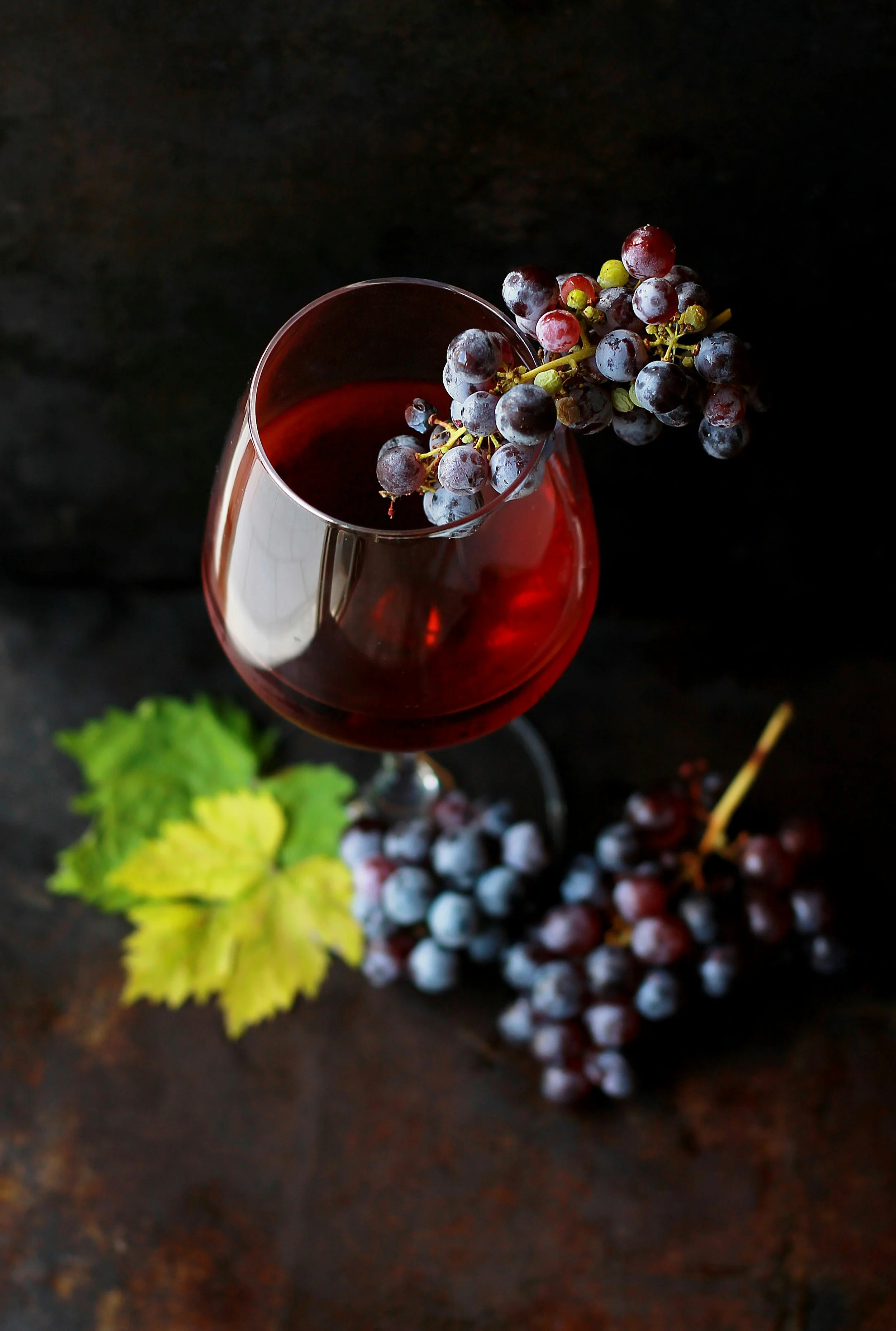
Think Wine is Just Grape Juice and Yeast. Think Again!

What is more natural than a glass of wine?

Grow some grape vines, wait for them to produce grapes, harvest the grape bunches, de-stem them (sometimes), crush them to produce juice, leave the crushed grapes in contact with the juice to create color (in the case of red wines and rosé) and then rely on natural yeasts or added yeast to convert the natural sugars in the grape juice to alcohol and, voilà, - you have wine! It’s just that simple, right?

Well, wine isn’t always that simple. While some wines are indeed produced with these simple steps and ingredients, there are some other ingredients that can be used in the winemaking process. And, the only two ingredients that are required to appear on a wine label are the alcohol content and if it contains sulfites.

Here’s a few of the other ingredients that may be used in wine making or remain in a wine:

  • Added Yeast Nutrients and Enzymes

    • Yeast nutrients are used to speed up the process of fermentation.

  • Potassium Sorbate and Potassium Metabisultite

    • Both of these ingredients are used to guard against bacteria and protect the yeast from spoiling, and are commonly used together during the fermentation process to help the yeast ferment efficiently while improving the overall flavor.

  • Acid, Sugar, and Tannin Additions

    • Adding acid will decrease the pH and increase the total acidity of the wine to ensure it is in overall balance

    • Adding sugar before or during fermentation can help boost the alcohol content. The process is called ‘chaptalization’ and also assists the yeast during the fermentation process.

    • Powdered tannins may be added early in the process to help add balance

  • Acid Reducers

    • Calcium carbonate is used to reduce the acidity of the finished wine, and is sometimes added if the grapes have had trouble ripening. It’s usually added before or at the start of fermentation, so it doesn’t impact on the aroma of the wine.

    • Potassium Bicarbonate is also used to help lower the acidity

  • Oak and Oak Chips, Powders, and Granules

    • Winemakers rely on oak barrels to flavor wine with notes of vanilla or subtle spices,

    • If the wine doesn’t come into direct contact with wood (i.e., stainless steel tanks), some producers will add oak chips, powders or staves to add oak flavors.

  • Stabilizers and Anti-Sediment Additions

    • Potassium bitartrate is used as a seeding agent to promote tartrate precipitation during cold stabilization

    • Urease is added to reduce the level of urea in wines, when this is excessive, in order to avoid the formation of ethyl carbamate during aging.  The enzyme transforms urea into ammonia and carbon dioxide.

  • Fining Agents

    • Fining agents are used for clarifying wine. These agents, such as bentonite (powdered clay), isinglass (fish bladder), casein (milk protein), gelatin or egg whites, combine with sediment particles and cause them to settle to the bottom of the vessel, where they can be easily removed before the wine is bottled.

  • Grape Concentrate

    • Grape juice concentrate is sometimes included to boost the color of red wine and add a bit of sugar to smooth out the mouthfeel.

  • Coloring Agents or Color Stabilizers

    • Coloring agents may be used to deepen the color of red wines, or to add ‘blush’ to whites

    • Stabilizers ensure the wine’s color does not change during fermentation and aging

  • Dimethyl Di-carbonate, Ammonium Phosphate and Di-ammonium Phosphates

    • Dimethyl di-carbonate is used to stabilize wine by preventing microbial spoilage

    • Di-ammonium Phosphate is used to speed up the fermentation process

  • Sulfur Dioxide

    • Usually listed as ‘sulfites’. It’s used to preserve the grapes and prevent oxidation during the winemaking process.

  • Preservatives and Antibacterial Agents (e.g., potassium sorbate, dimethyl dicarbonate, sorbic acid, copper sulfate)

    • Preservative such as potassium sorbate or sorbic acid are used to 'stabilize' a wine and prevent a renewed fermentation by inhibiting the yeast cell from being able to multiply, grow and begin a new fermentation.

    • Dimethyl dicarbonate is used to stabilize the wine by preventing microbial spoilage

  • Alcohol

    • Adding alcohol, usually from another grape-derived spirit such as brandy, is called fortification. Since yeast naturally dies at 15% ABV, addition of extra alcohol will push the alcohol concentration of a wine over the 15% mark.

    • Alcohol is added to “Fortified” wines such as Port, Sherry, Madeira, Marsala and Vermouth

The Top Two Most Prominent Acids in Wine - Tartaric and Malic

Last time we looked at acidity levels in wine that are measured on the pH scale and in terms of grams of acid per liter (Total Acidity). While Total Acidity is a measure of the concentration of acids in a wine, the pH level tells you how intense those acids will be.

So, let’s now look a bit more into the acids in wines.

There are four primary types of acids in wines - tartaric acid, malic acid, citric acid, and lactic acid.

“Wine Diamonds” on a Cork

Tartaric acid is the primary acid in wine grapes. But, only about half the tartaric acid in a grape is soluble in wine. The rest tends to attach itself to pulp debris, tannins, and pigments during the fermentation and aging process. And, sometimes that undissolved tartaric acid crystallizes in the wine. That’s what “wine diamonds” are. Those little broken-glass-looking shards you sometimes find on a cork or in your wine. But, don’t worry, they’re completely harmless.

Now, let’s move on to Malic acid which is the second most prominent type of acid in wine grapes. It too is produced as part of the grape growing process. But, Malic acid in grape vines decreases as vines grow older and the grapes ripen.

If malic acid is too high, winemakers can initiate a process called malolactic “fermentation” (MLF) which converts some of the malic acid (like that of a tart green apple) to the more mild lactic acid. This conversion gives a wine a buttery, creamy mouthfeel. You may know lactic acid as the primary acid present in a lot of fermented products, like yogurt, kefir, and sourdough bread.

Malolactic Fermentation is not actually a fermentation. It’s just a chemical process that converts one type of acid to another type of acid. So, it is more correctly a Malolactic Conversion, not a fermentation.

And, while most red wines undergo malolactic conversion, only some white wines, notably Chardonnay, undergo this process.

If you don’t care for highly acidic flavors in wines, try a full-bodied red wine such as Cabernet Sauvignon, Merlot or a Syrah. But, if you love a crisp, refreshingly tart flavor, look for light-bodied white wines such as Albariño, Sauvignon Blanc, Riesling or a brut sparkling wine.

Acidity Levels in Wine

Acidity in wine is one of the four fundamental traits of a good wine (Acidity, Tannin, Alcohol and Sweetness). For a wine to be considered “good,” each of these traits must be in proper proportion or ‘balance’ to each another. If there’s too much of one part, the wine will be off. And, if there’s not enough of a specific component, the wine will be lacking.

So, the acidity of a wine must play its own fine balancing act. While there are no magic “right” numbers for the level of acidity in a wine, there are generally accepted ideals. But, as usual, personal taste is still the simplest determining factor.

As a quick review, pH is a measure of acidity and is a logarithmic scale. So, a pH of 3 is ten times more acidic than a pH of 4 (the lower the pH the more acidic).

Wines lie on the acidic side of the pH spectrum, and most range from 3 to about 4.5 pH. This is compared with water, which is neutral, with a pH of 7 (not acidic), milk at a pH of 6.7, coffee at 4.5-5.0, and lemonade at 2.6 (very acidic).

Acid is important in wine because it acts biologically as a preservative. A red wine with a pH of 3.5 to 4 protects against most spoilage bacteria allowing it to age over years rather than months and allows it to develop deeper more complex flavors. In white wines there is generally stronger acidity with the pH being between 3.0 to 3.5.

In addition to the pH level of a wine, its “Titratable Acidity” or “Total Acidity” (TA) is another way of measuring acidity. And, this is a measure that usually appears on a wine’s Tech Sheet that is generally available on-line from the winery.

Most red wines will have a total acidity of about 0.6 to 0.7% TA that converts to 6 to 7 grams/Liter (g/L) – that is 6 to 7 grams of acid per liter of wine. A white wine will have a higher TA between 6.5 to 7.5 g/L

  • Dry White Wines – 6.5 – 7.5g/L

  • Sweet White Wine – 7 – 8.5g/L

  • Dry Red Wine – 6 – 7g/L

  • Sweet Red Wines – 6.5 – 8g/L

  • Sherry – 5 – 6g/L

So, keep those taste buds perked up and see if you can detect an acidic wine (e.g., Sauvignon Blanc) over one that is not (e.g., Viognier), or a wine where the acidity is out of balance with its other components. Cheers!

Ever Wonder? Why is a Wine Said to be "Refreshing?"

There are a lot of terms that are thrown around regarding wines. And, one that you may hear about in the warmer months is “refreshing.” But, what exactly does it mean for a wine to be considered refreshing?

Well, in a word, it’s acidity.

Acid is a natural component in a grape. But a wine maker is looking for just the right balance between the grape’s acid level and its sweetness before harvesting the grapes. The sugar in a grape is what is converted to alcohol during fermentation and the acid is what gives the wine it balance, flavor and mouth-feel.

Have you ever noticed after sipping a lemonade that it can make your mouth tingle and give you a mouth- watering sensation? Well, it’s the acidity of the lemon that gives you that mouth-watering sensation. You may also experience a mouth-watering sensation when sipping your favorite cola drink. In both cases, acid is the primary factor in the sensation in your mouth or the “mouth feel.”

So, now that you know that it’s acid that causes a wine to be described as “refreshing,” what are some higher acid wines? In general, they are going to be the light-bodied white wines but rosés and sparkling wines can also be refreshing.

Here’s a brief listing of high-acid white wines:

  • Sauvignon Blanc

  • Pinot Gris (Pinot Grigio)

  • Albariño

  • Chenin Blanc

  • Grüner Veltliner

  • Riesling

  • Vinho Verde

By no means is this an exhaustive listing of high-acid white wines, but these are the best-known ones.

So, acid is just one of the four fundamental traits in good wines. Next time we’ll take a quick look at the other three. Until then, Cheers!

Malolactic "Fermentation" of Wine - Not

SlashCircle_Fermentation.jpg

The flavors in wine come from three things - the grapes, fermentation and aging. We've explored the flavors from the juice of the grape, the flavors from the grape skins, seeds and stems and we've seen that the yeast can affect flavors during fermentation. But, there's another process that affects a wine's flavor and it's often called Malolactic Fermentation.

But, getting right to the point, this is not a fermentation. It's actually a process in which one type of acid in the wine is converted to another type of acid. So, it is more correctly a Malolactic Conversion, not a fermentation.

In this conversion process, a tart acid that naturally forms in wine, malic acid, is converted to lactic acid. While the tart malic acid can yield flavor sensations much like a tart green apple, the lactic acid is much softer and creates a richer mouthfeel that is often called buttery and can make a wine seem velvety smooth.

Most red wines undergo malolactic conversion while only some white wines, notably Chardonnay, undergo malolactic conversion. This process is most often performed shortly after the end of primary fermentation and just prior to the aging process.

And, speaking of the aging process, we'll explore the flavors that are imparted to wines as they age in next week's blog. Until then, Cheers!