
Ever Wonder How Rosé is Made?

Spring-time is a great time to start enjoying Rosé. It’s bright fruit flavors and wonderful acidity makes a nice chilled rosé very thirst quenching. And its bright pink hue just seems to go with all the beautiful blooms of the season. But, you may wonder how the color of this wine is achieved.

Rosé is made from red wine grapes.  But, it's made in the traditional white wine making process. Hence, the process can be a bit confusing. 

So, first, realize that all juice from wine grapes, whether from red grapes or white grape, is nearly clear. And, all the color in a finished wine comes from the skin of the grapes, not from the juice.

With that in mind, rosé wines are made in a couple different ways.

Maceration is the most common method used. The word 'Maceration' literally means to soften by soaking. And in the case of rosé production, it means to allow the grape skins to soak in the grape's juice. For rosé, the red wine grape skins spend limited time (2-24 hours) soaking with the juice. Just enough to give it its pink color.

The Saignèe ("San-yay") method allows the grapes to be crushed under their own weight and the 'free run' juice is collected.  Since this juice spends such little time in contact with the red grape skins, the resulting color is light pink.

Regardless of the method used, rosés can be dry or sweet. Typically, rosés with alcohol levels around 8 or 9 percent are going to be quite sweet.  In the 11 to 12 percent range, they will be mid-range between sweet and dry. And, above 12 percent it's going to be dry. So, check the label. The alcohol level must always be shown.

And, remember, with rosé wines they should be enjoyed young (within two years of its vintage) while they still have their bright fruit flavors and crisp acidity, and they should be served cold.

Ever Wonder? - The Solera System of Winemaking

Last time we learned that Marsala wine is not just for cooking. It’s actually a fortified wine that is sometimes made using the Solera system.

A Solera is a system used for blending wines and is a way of keeping a consistent style of wine for years.

The diagram illustrates the system as a stack of barrels with the oldest barrels of wine on the bottom and the youngest barrels of wine on top.

Wine is bottled from the barrels on the bottom, but these barrels are never drained more than part-way. After being partially drained for bottling, the bottom row of barrels is refilled with wine from the row above, and those are filled with the wine from the barrels above them. And so on until the newest vintage enters the top row and begins its aging journey down through the system, being blended each year by the winemaker.

Since the barrels are never completely drained, the oldest barrels on the bottom always contains some of the original vintage used in the Solera.

The Solera system is not only used for Marsala wines, but also for other fortified wines such as Port. And, this can also be used in the production of non-vintage sparkling wines. So, if you’ve ever wondered how a winery can produce such a consistent non-vintage product year-after-year, they may be using some form of this system.

Cheers!

Ever Wonder -- Can Oak Flavor in Wine Come from Powder, Chips and Staves?

Oak has been used as an aging vessel for wines for centuries. Wines get added flavors and complexity from being aged in oak barrels, especially new oak.

But oak barrels are expensive. And they only impart flavor to wines during their first two to three uses.

So, to get the oak flavors without all the cost, some wines are made with oak chips, oak staves and even oak powder.

Using these oak barrel alternatives allows wine makers to use less expensive containers (e.g., Stainless Steel tanks) and still get the desired oak flavors.

After the wine has the necessary time in contact with the chips, staves or powder, they are physically removed or filtered out and consumers never know the difference.

This may seem ‘wrong’ to many wine purists, but it is allowing winemakers to produce oak flavors in their wines at considerably lower costs. And, studies have been done that show consumers can’t tell the difference.

But, since wine labels don’t tell us the difference, I wonder if we’d change our opinions of wines that are produced with these oak alternatives instead of the traditional oak barrels?

Ever Wonder Why there is a Dimple on the Bottom of a Wine Bottle?

Last time, we learned that a wine bottle’s glass thickness, or weight, doesn’t really tell you anything about the wine’s quality. But, the thicker glass can serve to make a sparkling wine bottle more structurally capable of holding the high pressure.

Then there’s that odd ‘dimple’ on the bottom of a lot of wine bottles. What’s up with that?

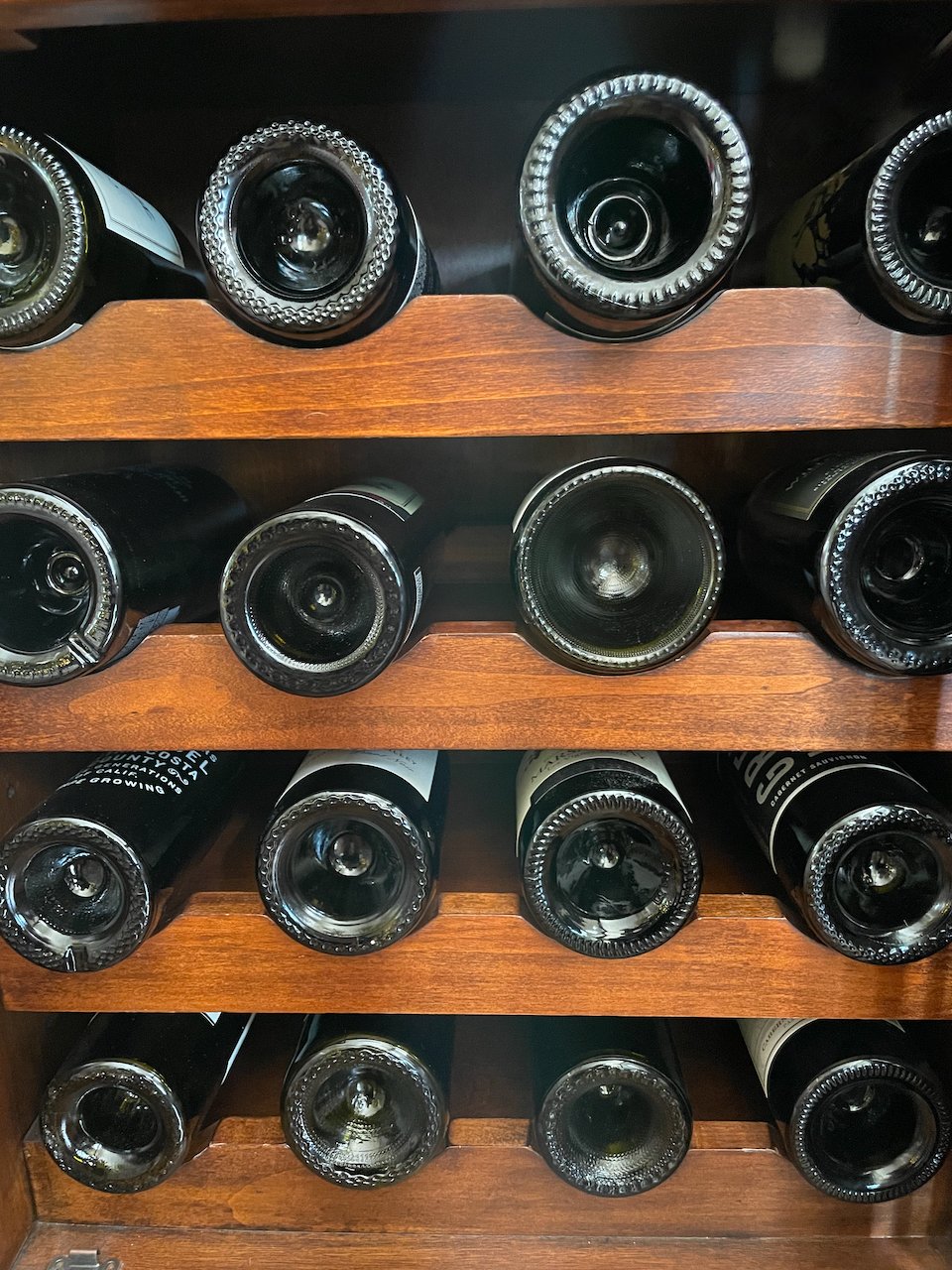
While you may hear or read multiple reasons for this ‘dimple,’ it seems that these indentations, called ‘punts’ were actually put there by early glassblowers to ensure a bottle could stand on its own. Without a punt, the rounded bottle needed some other means of staying upright, including the woven straw baskets so famously associated with Italian bottles of Chianti.

It’s also thought that the punt adds to the bottle’s structural integrity, such that the thin layer of glass at the end of the glassblower’s bottle would not so easily rupture.

Regardless of the many plausible reasons for a wine bottle punt, today’s bottles are much better made. So, the punt is simply part of tradition. Except, it may be useful for sparkling wines. Giving their bottles a bit stronger structure.

But, much like the thickness or weight of a wine bottle, the type of punt on a wine bottle really doesn’t mean anything about the contents of the bottle. So, while it may be difficult to ignore the packaging of the product, try to focus your attention on the content of the bottle rather than the bottle itself. Cheers!

Does Weight Equal Quality in a Wine Bottle?

You may have experienced it when shopping for a bottle of wine. You lift the bottle to look more closely at the label and you notice how heavy it is relative to other bottles of wine. And immediately you equate this substantial bottle with high quality. But, is it really?

There is no doubt that weight influences quality. And, a high quality product deserves high-quality packaging. Heavy just seems to feel good. Right!

Well, according to wine servers in restaurants, a heavy bottle is a pain to carry, open and pour.

Also, these heavier bottles tend to be slightly larger than a standard bottle, so they often don’t always fit in a standard wine rack.

And don’t forget that a heavier bottle means a case of that wine is going to be significantly heavier. And that adds to the shipping cost.

So, shouldn’t we really be paying more attention to the quality of wine inside the bottle than the bottle itself? In most cases, the bottle weight really doesn’t mean anything. The one exception is for sparkling wine. A thicker bottle is necessary to handle the high pressure inside the bottle. Otherwise, a heavy bottle is just a packaging option that the winemaker is using.

Then, there’s that ‘dimple’ in the bottle of wine. What’s up with that? Well, we’ll get into that next time. But for now, Cheers!