Why is There a Foil Capsule on a Wine Bottle?

Last time we looked at where cork comes from and learned that it's actually the bark of the Cork Oak tree. It is bark that can take 25 to 50 years to get to the point where it is usable for wine bottles and each tree can only be harvested every nine years so as to not do permanent damage to the inner bark of the tree.  But then there is a capsule that covers the cork and the top of the bottle. Ever wonder why there is a capsule on a wine bottle?

Originally the capsule was placed over the cork as a means of protecting the cork from insects and rodents that found the cork to be an enjoyable meal.  The capsule served as a barrier between the critters and the cork.  There are also some theories that the capsule was also a way of covering the cork from would-be wine thieves. The capsule kept unscrupulous individuals from being able to pull the cork on a good bottle, drink the contents, replace it with inferior wine and re-cork the bottle!  I'm not completely sure of this one, but it makes some sense. But, it certainly was the original reason behind the wire-netting that was used over some bottles of wines.

The wine bottle capsule, and wire-netting, continue to be used today. But not to protect the cork from critters or the wines from dishonest thieves. Today the capsule and netting serve purely as decorative elements of the wine bottle packaging.  This was abundantly clear during a recent visit to a small winery. While standing at the tasting bar, the owner came out with a couple different gold-colored capsules and asked which one looked best with their label.  After a bit of comparison with the colors on the wine label, it seemed obvious that one was the better shade of gold.  "Yes" the owner said, "but it's considerably more expensive than the other one."  I don't actually know which capsule they ended up choosing, but the capsule is all about packaging. And economics. 

Originally the capsule was made of lead. It was a very malleable metal that was easily formed into the proper shape. But, in the 1990's, it was confirmed that the lead left enough residue on the bottle's lip so as to be a potential lead poisoning health hazard to wine drinkers. So lead was replaced with tin or plastic.  There are also many wineries that are eliminating the capsule completely, or just placing a small dollop of sealing wax over the top of the cork.

One other bit of trivia regarding the capsule. If you take a close look at the top of the capsule you'll typically see one or two tiny pinholes in the cap.  These holes have been attributed to allowing the cork and the wine to ever-so-slightly breath over time. But the commonly accepted reason is much more practical.  These tiny holes in the top of a wine capsule actually allow the air to escape while the capsule is being installed. Without these 'vents' the air inside the capsule would become trapped and the capsule would not be able to fully seat on the lip of the bottle.

Well, that's a lot of information on something that we usually ignore and simply cut off before enjoying a bottle of wine.  So here's to pulling that cork and enjoying a nice glass of wine. Cheers!


Behind the Cork™ Wine of the Week - Columbia Crest Chardonnay ($8)

Looking for an attainable, affordable wine?  You've come to the right place. Each week I feature just such a wine on the Behind the Cork™ Wine of the Week page of EverWonderWine.com. 

This week's wine is Columbia Crest Chardonnay. A great value at $8!  While the pendulum of Chardonnays has swung away from the heavily oaked "Big Buttery" Chardonnays, the Columbia Crest still gives buttery-oak Chardonnay lovers a viable option.  While the oak is bold and rich, it is not over-the-top. This is a great wine with seafood, chicken or a salad.
Where Do Corks Come From?

During a visit to the Dry Creek Valley in Sonoma California, I stopped at the beautiful Ferrari-Carano winery. After tasting their wonderful wines, my server stated that walking their gardens was not to be missed. And while in the gardens, he said to be sure to stop by and check out the Cork Oak.

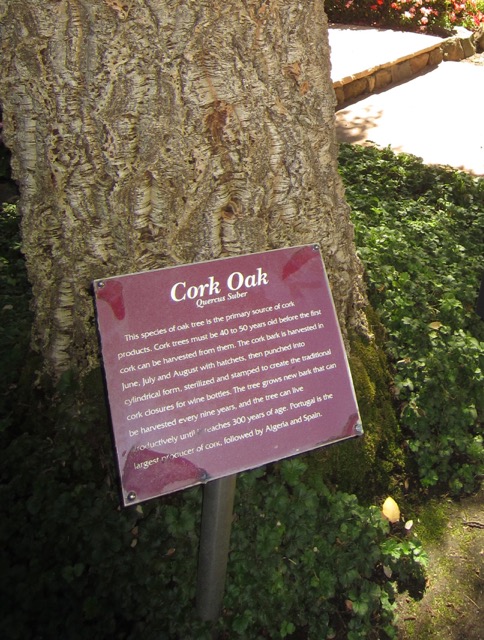
I had always known that cork comes from a tree, but not much beyond that.  So, while strolling through the garden, I came upon the Cork Oak (Quercus Suber) shown in the photo.  In reading about the Cork Oak I was surprised by several facts.

First, and most surprising, was that cork comes from the bark of the Cork Oak.  I had always assumed that the cork somehow came from some soft inner wood of the trunk. But no. It's from the bark.  And then to learn that the bark can only be harvested every nine years, so as to not harm the tree.  The Cork Oak actually has two layers of bark. The outer soft, woody, bark and another inner bark that must not be harmed while harvesting the cork.

Another interesting fact is that cork trees can take 25 years before they are ready for their first harvest.  And typically this first harvest is not suitable for wine stoppers. The first harvest of cork is usually ground up and molded into large block for use as other cork products such as cork tiles and message boards. It isn't until the tree is approximately 50 years old, and on its third harvest, that it produces cork suitable for wine stoppers.

Finally, a Cork Oak can yield 13 to 18 harvests during its life of around 300 years old!

The Cork Oak is grown around the Mediterranean in Portugal, Spain, Morocco, France, Algeria, and Italy.  Attempts to commercially grow Cork Oak in other parts of the world have not been successful.

Whenever wine corks are discussed, the topic of synthetic corks and twist-offs comes up. And I'll hold off on that topic for a future blog.  But next time I want to address that beautiful foil capsule that covers the cork and the upper portion of the bottle. Until then, cheers!


Behind the Cork™ Wine of the Week - Kenwood Jack London Zinfandel ($16)

Looking for an attainable, affordable wine?  You've come to the right place. Each week I feature just such a wine that may be great for taking to a party, enjoying with a dinner or just sipping on Wine Wednesday. 

This week's wine is Kenwood's Jack London Zinfandel. This is a great one that I enjoyed with a short rib dinner. From Sonoma Mountain, this wine is described by the winery as having "fruity aromas of raspberry and fig combined with subtle notes of vanilla and white pepper. With its delicate and well-structured tannins, it provides an elegant mouth feel and a long finish." Another great one to try!

What is Fumé Blanc?

I was recently asked about Fumé Blanc. And, as you might guess, it's made from the Fumé Blanc grape.  Except, you'd be wrong. Just like I was.  Fumé Blanc wine is produced from the Sauvignon Blanc grape.

It was back in 1966 that wine maker Robert Mondavi decided to grow Sauvignon Blanc grapes in Napa Valley, California. But Sauvignon Blanc had developed a bit of a negative reputation for being poorly made, too grassy and too sweet. So, in what turned out to be a great marketing ploy, he decided to call his Sauvignon Blanc wine by another name. And the name he chose had a lot to do with fine Sauvignon Blanc wines from France.

In the Loire Valley of central France (South of Paris) is the wine region of Pouilly-Fumé.  This region, along with the region of Sancerre, which lies just across the Loire River to the west, is best known for its Sauvignon Blanc wines. And these wines were a strong influence on Robert Mondavi. So, in honor of the wonderful Sauvignon Blanc wines of Pouilly-Fumé, Mondavi named his wine made from the Sauvignon Blanc grape Fumé Blanc.

One of the primary differences between the Sauvignon Blanc wines of France and Fumé Blanc is that Fumé Blanc spends some time aging in oak barrels. The French Sauvignon Blanc wines are generally not aged in oak.  This oak aging can give Fumé Blanc a bit more of a rich, creamy taste to go along with the green flavors of pear, melon and mineral notes (think chalk, slate and wet stone).

Next time I'll give you a bit more about Sauvignon Blanc. It has a famous child. Can you guess? So in the meantime, raise a glass of Fumé Blanc to the late, great, Robert Mondavi. Cheers!


Behind the Cork™ Wine of the Week - Robert Mondavi Fumé Blanc ($15)

Originated by Robert Mondavi in 1966, this Sauvignon Blanc spends time aging in oak to give it a bit more of a rich, creamy taste along with the green flavors of pear, melon and mineral notes. If you are a Chardonnay drinker and not so sure about Sauvignon Blanc, then you need to try this Fumé Blanc.

The Role of Acidity in a Wine

When it comes to a wine's ability to be aged, both tannin and acidity play a role. Tannins were described last time as having compounds that act as natural preservatives in wine.  The natural acids in the juice of the grape also help to preserve a wine for better aging.

Acids are common in fruits and give them their refreshing qualities. Fruits like apples, lemons, limes, and grapefruit are acidic and have that crisp, fresh, mouth-watering quality. Grapes too have acids that are highest before they ripen and are reduced as they ripen.

Acids can give wines a crisp, tart, refreshing and zesty flavor such as you might experience when drinking a glass of lemonade. And, the acids produce additional saliva which leave you with a mouth-watering affect immediately after consuming. This is common in white wines such as Sauvignon Blanc, Pinot Grigio and Riesling.

Along with preserving a wine and giving it a fresh crisp flavor, acids also help to 'balance' wines.  The balance is typically between acids, sugars, tannin and alcohol. If any one of these traits is too high or too low the wine will be un-balanced and just taste wrong. Too much sugar results in a syrupy sweet wine. Too much alcohol gives a hot burning sensation in your mouth and throat. And too high of a tannin level results in a harsh mouth drying and puckering sensation.  If a wine has too much acid it will seem sharp and if it lacks acids it can seem dull, boring, flat or 'flabby' as the wine world calls it. So balance is important.

The balance of acids is especially evident in red wines where you don't get the crisp and zesty flavors. Red wines are typically less acidic than white wines and the higher tannin and alcohol act to significantly reduce the acidic sensation and produce the 'smooth' mouth-feel sensations most often associated with Cabernet Sauvignon, Merlot and Zinfandels.

To put the levels of acids in perspective, we must briefly revisit chemistry and pH levels. Water is neutral from an acidity perspective and has a pH of 7 on a scale of 1 to 14, with the most acidic items having a pH of 1 (a seemingly backwards scale). Typically coffee is thought to be highly acidic but it comes in around a pH of 5-6. Lemonade on the other hand has a pH typically around 3. Wines will range in between with a pH of 4 for some red wines and go to a pH around 3 for some types of white wines.

As just another way of describing balance in beverages, the balance of acids and sugars is strongly evident in lemonade and cola drinks.  They are both higher in acidity than all wines but have a tremendous amount of sugar that acts to balance out the acid and create enjoyable drinks.

So all of these traits need to be in balance. And acids play an important role in this balancing act. So whether it be a crisp and zesty Riesling or a smooth Cabernet Sauvignon, know that acids are important to the overall flavor and the ability of a wine to age.  Cheers!


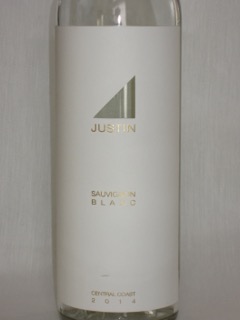
Behind the Cork™ Wine of the Week - Justin Sauvignon Blanc ($13)

This Sauvignon Blanc from Paso Robles is a great example of a crisp, zesty and refreshing wine. The winery describes this wine as having fruit elements of guava and pineapple with subtle orange peel, and fresh herbal notes including chamomile flower.

It is dry, crisp and refreshing with lemon, green apple, white peach and guava. The finish is bright and clean, with a slight mineral texture.  This is an excellent value and worth searching out.

How are Rosé Wines Made?

There seems to be a lot of information and some misinformation out there about the production of rosé wine. I'm not sure why this topic is so complicated or confusing. Rosé is quite simple and such a simple pleasure. So, let's take a look at how rosé is made.

Rosé is made from red wine grapes.  But, it's made in the traditional white wine making process. Hence the confusion.  So, first, realize that all juice from wine grapes, whether from red grapes or white grape, is nearly clear. And, all the color in a finished wine comes from the skin of the grapes, not from the juice.

So with that in mind, rosé wines are made in one of the following ways:

  • Maceration -- This process is the most common method used in the production of rosé wines. The word 'Maceration' literally means to soften by soaking. And in the case of wine production, it means to allow the grape skins to soak in the grape's juice. With red wine, the juice spends a lot of time (weeks) soaking with the grape's dark purple skin that gives red wine its deep color.  In the production of white wines, maceration is avoided. But for rosé, the red wine grape skins spend some limited time soaking with the juice, but not to the extent of red wine production. As a matter of fact, the juice gets very little time in contact with the grape skins. Usually a matter of 2 to 24 hours.  Once the winemaker achieves the desired color they are looking for, the juice is separated from the grape skins and allowed to ferment in a separate tank. For rosé, this is typically a stainless steel tank that is chilled in order to maintain the freshness of the juice.

  • Saignèe ("San-yay") -- While somewhat similar to maceration, this method allows the grapes to be crushed under their own weight and the 'free run' juice is collected.  Since this juice spends little time in contact with the red grape skins, the resulting color is light pink.  Some argue that this is the highest quality rosé because it is the most pure.  Others consider this just a bi-product of red wine production since the remaining grapes and juice go on to become a more highly concentrated red wine.  Regardless, the rosé juice yielded from this process is separated, fermented in stainless steel tanks and kept at cool temperatures to preserve its freshness.

  • Blending -- While this is a process that yields pink wine, it is highly frowned upon and outlawed in France and several other countries.  This method uses mostly white wine that is blended with just a touch of red wine, resulting in a pink wine.  This method is certainly not used in most rosés.

Regardless of the method used, rosés can be dry or sweet. As previously mentioned, one key to finding a dry rosé is the alcohol level. But, rosés can also vary by grape type:

  • Dry Rosés -- Below are listed some of the most common dry rosé wine varieties, used alone or in a blend:

    • Grenache, Sangiovese, Syrah, Mouvedre, Carignan, Cinsault, Pinot Noir

  • Sweet Rosés -- Like any wine, rosé wine can be made sweet by not fermenting all the natural sugar in the grape juice to alcohol. So, if you are looking for a sweet rosé, these are typical examples:

    • White Zinfandel, White Merlot, Pink Moscato

Always remember with rosé wines that they should be enjoyed young (within two years of its vintage) while they still have their bright fruit flavors and crisp acidity, and they should be served cold.

One way or the other, give rosé wines another try. Cheers!


Behind the Cork™ Wine of the Week - Sobon Estate Rosé ($12)

This is a nice dry rosé from Amador County, Ca.  This rosé is made from 96% Grenache grapes and 4% Syrah. It is crisp, fruity and refreshing with a nice dry finish. Chill it and enjoy!