Where Do All the Amazing Aromas and Flavors in Wine Come From?

Photo by Mauro Lima on Unsplash

Some may be surprised to learn that there are only two ingredients in wine: grapes and yeast.  Yet, white wines can be described as having flavors that include lemon, lime, grapefruit, apple, peach, pear and orange. And red wines can be described as having flavors of cherry, raspberry, strawberry, blackberry, blueberry, plum and fig.  And then there are descriptions of vanilla, butterscotch, caramel, chocolate, tobacco, leather, and even tar, just to name a few.  But, if wine is only made from grapes and yeast, how do wines get all those other flavors? 

When you sip a wine, you are getting information from your tongue, nose and nasal passages. And while there are only the four tastes being detected by your tongue there are a multitude of aromas being detected by your nose and nasal passages. The aromas get released by the wine through the alcohol, which is lighter than air, and evaporates easily from your glass. Your brain then puts together the information on the tastes and smells of the wine and equates them with tastes and smells that you already know. Thus, those amazing little grapes are able to cause your brain to sense additional fruit flavors without even a trace of the fruits actually being in the wine.

Aging wine in oak barrels also adds many other dimensions to the flavors in wines. Oak barrels can add flavors of vanilla, butterscotch, coconut, toffee, caramel, butter, mocha, coffee and smokiness. 

So, yes, wine is made from grape juice and yeast but can have a multitude of wonderful flavors. Cheers!

The Relative Sweetness of Common Red and White Wines

Last time we looked at the difference between a “Dry” wine and a “Tannic” wine. In the wine world, “Dry” refers to the sweetness, or amount of residual sugar, in the wine while “Tannic” refers to the astringent effect on your palate of the wine that comes from the grape skins, seeds, stems and oak aging.

To recap from last time, the amount of Residual Sugar (RS) in a wine is categorized as follows:

  • Dry: Less than 1% sweetness or <10 gm/L of RS

  • Off-Dry: 3% to 5% sweetness or 10-35 gm/L RS

  • Sweet: Above 5% sweetness or 35-120 gm/L RS

  • Very Sweet: Above 12% sweetness or 120 - 220 gm/L RS

The final amount of residual sugar in a wine is entirely up to the wine maker.

One thing wine makers can do is to harvest the grapes a bit later in the growing cycle when the grapes have developed more natural sugar. But, even this doesn’t ensure a sweeter wine. In fact, if sufficient yeast is added to the juice of the grapes (the must), it will convert nearly all of natural sugar to alcohol. So, a high sugar content grape juice can actually lead to a dry wine, but its alcohol content will be higher.

It’s also true that many wine makers may choose to include some residual sugar to please a particular customer segment.

Now, it may surprise you but most common varietal wines are indeed “Dry” based on the amount of RS in them. So, let’s focus in a bit on the relative sweetness of some common wines.

Red Wines

  • Dry Wines: Cabernet Sauvignon, Cabernet Franc, Merlot, Zinfandel, Syrah, Malbec, Zinfandel, Pinot Noir, Garnache, Petit Verdot, Petite Sirah, Gamay, Tannat, Barbera, Nebbiolo, Montepulciano, Sangiovese and Tempranillo

  • Off-Dry Wines: Lambrusco

  • Sweet Wines: Port, Marsala

White Wines

  • Dry Wines: Chardonnay, Chablis, Sémillon, Sauvignon Blanc, Chenin Blanc, Viognier, Pinot Grigio, Albariño, Extra Brut & Brut Sparkling Wines

  • Off-Dry Wines: Muscat, Gewurztraminer, Riesling, Extra-Dry Sparkling Wine

  • Sweet Wines: Sauternes, Moscato, Tokaji, Ice Wines, Demi-Sec & Doux Sparkling Wines

Again, everyone’s palate is different. What you might find to be “too sweet” may be just perfect for someone else. Wine is a journey, and it's all about exploring different wines and finding what best suits your palate. Just remember, when it comes to exploring wine, keep it fun and simple; don't get caught up in overthinking the process. Cheers!

Don't Confuse a Dry Wine with a Tannic Wine

Photo by Bundo Kim on Unsplash

Wine terms can be confusing. Especially the terms “dry” and “tannic.”

Have you ever taken a sip of red wine and noticed that your mouth feels dry or dusty? Almost that ‘cotton-mouth’ feel? Well, that is a sensation that is generally associated with red wines.

The dry sensation is due to the wine being astringent and its effect on the tissue in your mouth. Some people have also described the sensation as making their mouth pucker.

The culprits that causes this drying sensation in your mouth are actually chemical compounds (phenolics) that naturally occur in grapes. These ‘tannin’ come from the grape skins, seeds and stems.

So, while a ‘dry’ sensation in your mouth is associated with tannin, the wine term “Dry” actually refers to the lack of sweetness - the amount of residual sugar. A “Dry” wine will have little to no residual sugar, meaning that the fermentation process converted all the natural sugar in the grape juice to alcohol. Residual Sugar (RS) is categorized as follows:

  • Dry: Less than 1% sweetness or <10 gm/L of Residual Sugar

  • Off-Dry: 3% to 5% sweetness or 10-35 gm/L RS

  • Sweet: Above 5% sweetness or 35-120 gm/L RS

  • Very Sweet: Above 12% sweetness or 120 - 220 gm/L RS

So, in summary, a wine that makes your mouth fell dry is ‘Tannic’ while a ‘Dry‘ wine is one with little or no residual sugar. Cheers!

How to Tell if Your Wine is Oxidized


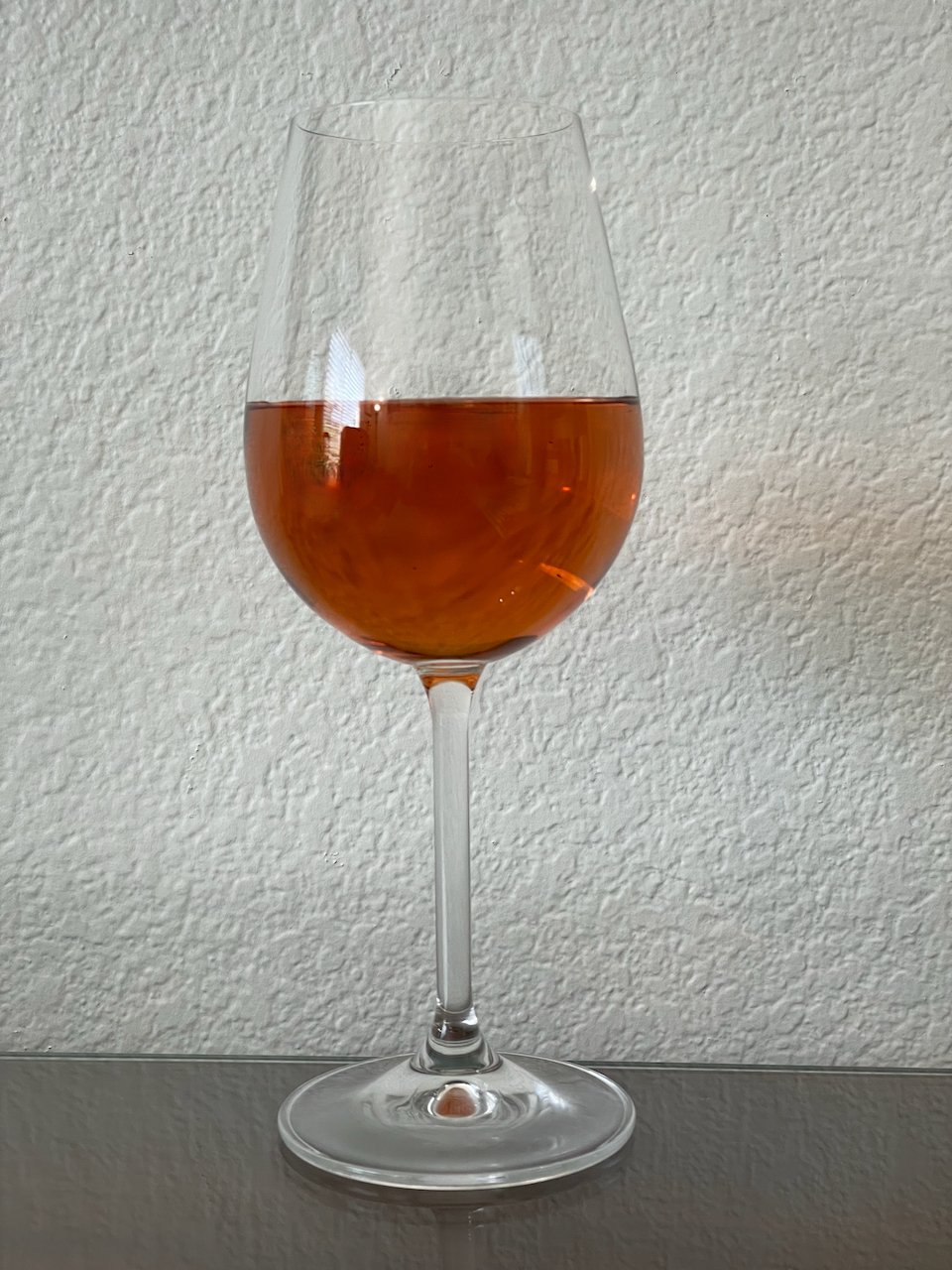
I recently opened a bottle of rosé on a warm evening, looking forward to a cool, crisp and refreshing glass of wine.

When I poured myself a glass, I quickly noted that instead of the beautiful pink color that I was expecting, I got an brownish-orange glass of wine.

That was my first clue.

I then lifted the glass and got a whiff of a nutty aroma. One more like a sherry or a port.

That was my second clue.

I went ahead a took a sip. Instead of bright fruit flavors of strawberry and citrus, it was indeed nutty in flavor.

I’d gotten my final clue.

This wine had gone bad. The color, aroma and taste were dead giveaways of an oxidized wine.

Much like an apple or a banana will turn brown if exposed to air, so too will a wine. In this case, the brownish-pink combination resulted in orange.

Is an oxidized wine drinkable? Well, yes. It won’t hurt you or make you sick. And, if you are a sherry lover, you’ll probably like an oxidized wine. But you won’t get to enjoy the bright, crisp fresh fruit flavors that a rosé, a white wine or even a red wine, should have.

Oxidation is just one of several wine faults that can occur in a ‘sealed’ wine. But, once you’ve experienced an oxidized wine you’ll know exactly what clues to look for in the future.

Cheers!

Ever Wonder? What is Corked Wine?

In the wine world, there is such a thing as “Corked” wine. And, no, it doesn’t mean that the cork has been removed from a bottle of wine. Pulling the cork is usually a good thing. But, a “Corked” wine is actually a bad thing.

You may have had “Corked” wine and not even noticed. But, usually it’s quite apparent. That is, if you know what you’re looking for.

“Corked” wine refers to a wine that has been contaminated with ‘cork taint.’ This can happen if the wine is bottled with an infected cork. This infection occurs when natural cork fungi come in contact with certain chlorides found in bleaches and other cleaning products. This combination forms Trichloroanisole (TCA) which is what is responsible for ‘cork taint.’

This cork ‘infection’ can have two very different effects on a wine. The one that is easiest to detect is an odor that’s been compared to the smell of wet cardboard, wet newspaper, a damp basement or even a wet dog! The other less detectable effect is that the wine will seem to lack aromas and have little or no taste. This seems to be from the fact that TCA has a way interfering with your sense of smell.

So, if you pull the cork on a wine and get a musty aroma, or if you are very familiar with a wine, and this bottle just doesn’t seem anything like it should, you’re likely dealing with a “Corked” wine. Now, there’s actually no harm in consuming a “Corked” wine. But, the musty aroma or the complete lack of aroma may strongly affect your enjoyment of the wine. The literature suggests that as much as 3% of wines that are sealed with a cork will be “Corked.” So, always remember to practice the 5 S’s of wine, with one of those being ‘Smell.’ And, here’s to drinking un-tainted wine! Cheers!