
Ever Wonder? Where Does the Color of a Wine Come From?

Wine can be beautiful shades of yellow, gold, pink, purple or ruby in color with pale, medium and deep intensities. But, where do all these beautiful colors come from?

The final color and hue of a wine comes down to how the various types of wines are made.

  • To produce white wines, the green grapes are pressed to extract the juice from the grapes for fermentation

  • For Rosé wines, red/purple grapes are pressed and the juice is briefly left in contact with the skins and seeds of the grapes before fermentation

  • With red wines, the grape juice, skins and seeds all stay together for fermentation

The key here is that all juice from grapes is essentially clear to begin with. It’s the skins of the grapes that imparts the final color to the wine.

You can actually produce a white wine from a red wine grape - you simply don’t allow for any contact between the clear grape juice and the skins of the red/purple grapes. So, you basically follow the white wine-making process but using red grapes. One of the most famous white wines that is made from red grapes is Champagne. Traditional Champagne is made from two red grapes (Pinot Noir and Pinot Meunier (Pee-noh Mehr-n'yay)) and one white wine grape (Chardonnay). Champagne is a white sparkling wine because the clear juice from the Pinot Noir and Pinot Meunier grapes are combined with the clear juice from the Chardonnay grape prior to fermentation with no skin contact.

So, again, a wine’s color is all about how long, if at all, the juice of the grapes is left in contact with the skins.

By the way, there is another color of wine and it’s orange. We’ll look into that next time. Cheers!
How to Tell if Your Wine is Oxidized


I recently opened a bottle of rosé on a warm evening, looking forward to a cool, crisp and refreshing glass of wine.

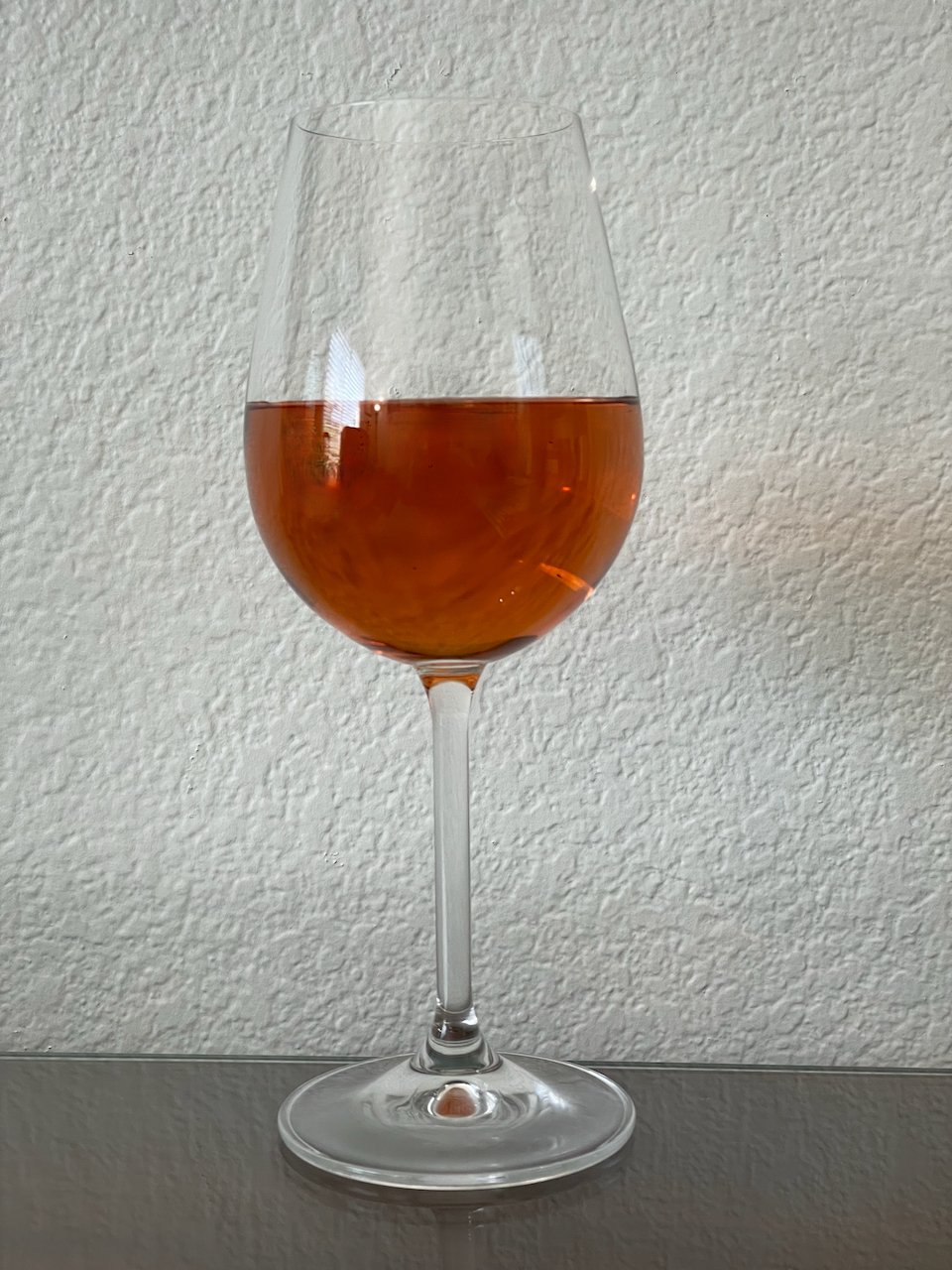
When I poured myself a glass, I quickly noted that instead of the beautiful pink color that I was expecting, I got an brownish-orange glass of wine.

That was my first clue.

I then lifted the glass and got a whiff of a nutty aroma. One more like a sherry or a port.

That was my second clue.

I went ahead a took a sip. Instead of bright fruit flavors of strawberry and citrus, it was indeed nutty in flavor.

I’d gotten my final clue.

This wine had gone bad. The color, aroma and taste were dead giveaways of an oxidized wine.

Much like an apple or a banana will turn brown if exposed to air, so too will a wine. In this case, the brownish-pink combination resulted in orange.

Is an oxidized wine drinkable? Well, yes. It won’t hurt you or make you sick. And, if you are a sherry lover, you’ll probably like an oxidized wine. But you won’t get to enjoy the bright, crisp fresh fruit flavors that a rosé, a white wine or even a red wine, should have.

Oxidation is just one of several wine faults that can occur in a ‘sealed’ wine. But, once you’ve experienced an oxidized wine you’ll know exactly what clues to look for in the future.

Cheers!

Ever Wonder? Why Do the Colors of Red Wines Differ?

I was recently asked about the color of wine. Specifically, why does the color of a red wine vary, especially within the same variety. So, let’s take a look at the factors that affect a red wine’s color.

As the grapes are harvested, they are piled into containers. And, under their own weight, some of the grapes get squeezed to the point of releasing their juice. This is referred to as ‘free-run’ juice. The color of this juice is generally pretty light and transparent, as shown in the photo.

But, the colors of finished and bottled red wines can range from pale pink (rosé wines), to purple (Syrah), to ruby (Cabernet Sauvignon) and to deep garnet (Borolo).

This range of color in red wines comes from the pigment from the skins of grapes. By soaking the grape skins in the juice, the pigment ends up “staining” the juice and producing the various colors. Rosé wine spend very little, if any, time in contact with the grape skins while other wines will spend as much as two weeks in contact with the skins. And, different red varieties (i.e., Gamay vs Cabernet Sauvignon) just naturally produce different levels of pigment.

Thus, deeply opaque red wines simply have more pigment in them. And, it should be noted that wines generally lose pigment as they age. So an older wine will actually have less intensity of color (and likely a bunch of sediment in the bottom of the bottle!).

So, there’s a quick overview of how the colors of red wines differ. Cheers!

Learning From the Color of Your White Wine

Last time we examined what can be learned from looking at a wine's color. Different colors can indicate the wine's body and its age.

White wines can vary from straw white to deep brown. And, these visual clues can immediately tell you something about the wine before ever tasting it.

Very light, pale colored white wines (some even have a slight greenish tint) are going to be very light in body, meaning they will have bright, fresh fruit flavors and have refreshing acidity (i.e., makes your mouth water after drinking). The fruit flavors and clear colors are usually preserved by aging in Stainless Steel tanks. Examples may include Pinot Grigio, Sauvignon Blanc and Albariño. These wines are meant to be consumed young and well chilled.

White wines that are more of a yellow to pale golden yellow color are more medium bodied. These wines tend to also have bright fruit flavors and good acidity. Examples include Sauvignon Blanc, Chenin Blanc and un-oaked Chardonnay.

The full-bodied white wines will have boldest flavors and have deep golden colors. The deeper color comes from being aged in oak or on lees (a.k.a. sur lei). The lees are the dead yeast cells, grapeseeds, stems, pulp and tartrates (harmless tartaric acid crystals) that remaining in a barrel or tank during and after fermentation. An oaked Chardonnay is synonymous with full-bodied white wines but others include Sémillon, Viognier, Marsanne and oaked Sauvignon Blanc (a.k.a Fume Blanc).

If you come across a white wine that is orange or brown in color, you've likely found a wine that's been exposed to a lot of light or is simply heavily oxidized.  If you taste it (and you should as a learning experience), an oxidized wine will have a very nutty flavor.

Dark brown wines also include Sherry and Port that are intentionally oxidized.

So, next time you are raising a glass, take a look at it first. You can learn a lot from the color of your wine. Cheers!

What Can Be Learned From a Wine's Color

You may have seen it.  Someone with a glass of wine looking very closely at it. Or even slightly tipping the glass of wine over a bit to take an even closer look.

Well, there are several things that can be learned by just looking at your wine. And, using a white background, as shown in the photo, will greatly help in this activity.

The first thing that you can learn by looking closely at your glass of wine has to do with the body, or boldness, of your wine. A lighter colored wine will have a lighter body, or lighter flavor, than one that's a deeper hue.

A red wine will vary in color from a pale, almost pinkish, red to a deep purple.  Pale reds are going to be lighter in flavor and intensity. Prime examples would include Gamay (Beaujolais) and Pinot Noir (Red Burgundy). A medium-bodied wine will be more opaque but will usually have a lighter hue around the edges. These wines include Merlot, Zinfandel and Sangiovese (Chianti). Then, you get to the full-bodied red wines that are deep purple in color, opaque, and full of flavor. These will have big flavor and, when young, big tannin (which leads to that astringent mouth-drying sensation). These wines include Malbec, Petite Sirah, Syrah and Cabernet Sauvignon.

Color also varies with the age of a wine. Older red wines will generally get lighter in color and often take on some orange or brown hues around the edge of the glass. Older red wines can be amazing as their tannin softens. But an oxidized wine will have off-flavors (nutty) and generally be undesirable to drink.

The color of white wines can also tell you a lot about the wine. And, we'll get to that next time. Until then, Cheers!