
Behind the Cork™ - Winter White Wines (Part 2)

In Part 1 of “Winter White Wines” we looked at a dry Riesling from Austria and a Verdejo from Spain. Here are two more nice “Winter Whites” involving Chardonnay:

2021 Chateau Domecq White Blend ($13.99)

Chateau Domecq is one of the leading brands in Mexico. The Chateau Domecq wines offer exceptional value in the growing category of Mexican wines from the Valle de Guadalupe which is located inland from Ensenada in Baja California. The Mediterranean climate, morning fog from the Pacific Ocean, and valley topography is similar to parts of California.

This Chateau Domecq White is 70% Chardonnay and 30% Viognier. The Chardonnay is fermented and aged in 2nd use French oak barrels for 6 months with periodic bâtonnage (stirring the lees or, dead yeast, during the aging and maturation of wine) to give body and smoothness. The Viognier adds some richness and a smooth mouth-feel. The Chardonnay and Viognier are blended just before bottling. It is deep gold in color with subtle aromas of pear. On the palate it has great richness and smoothness with flavors of peach and pineapple.

2019 Ritual Chardonnay ($20.99)

This wine is from the Casablanca Valley of Chile, a cool climate area on the northwestern side of Chile’s coastal range that is less than 20 miles from the Pacific Ocean.

This wine is produced from 100% Chardonnay grapes. A portion of the fruit is whole-cluster fermented in concrete eggs (20%) to increase the wine’s texture and fruit flavors. The rest is fermented in oak barrels (20% new/60% neutral) which delivers structure, complexity and silkiness. After fermentation, the wine is stirred on-lees regularly in order to achieve its maximum expression.

This Ritual Chardonnay is medium gold in color with aromas of baked apple, pear and citrus along with some earthiness. On the palate, this dry Chardonnay (1.3 G/L residual sugar) has bright citrus fruit flavors and bold acidity (7.79 G/L).

Remember, as we learned previously, to get the fullest and richest flavors from these wines, serve them a bit warmer, in the 50-55° F range. Cheers!


Disclosure of Wine Sample Submission: I received these samples at no cost for review. The opinions expressed are entirely my own.

Samples Provided by Gonzalez Byass via Donna White Communications
Behind the Cork™ - Winter White Wines (Part 1)

Standard convention says that during the colder days of winter, a hearty red wine is the one to pick. And, while that’s not wrong, there are also white wines that are well-suited for winter drinking.

Winter white wines are not the bright, fruity and refreshing ones that you may normally think of, such as Sauvignon Blanc, but rather whites that are a bit bigger and more powerful in flavor such that they pair well with heartier winter dishes.

And, these winter whites don’t need to be extra chilled in a standard refrigerator. Winter whites should be served in the 50-55° F range.

Here are a couple of nice examples:

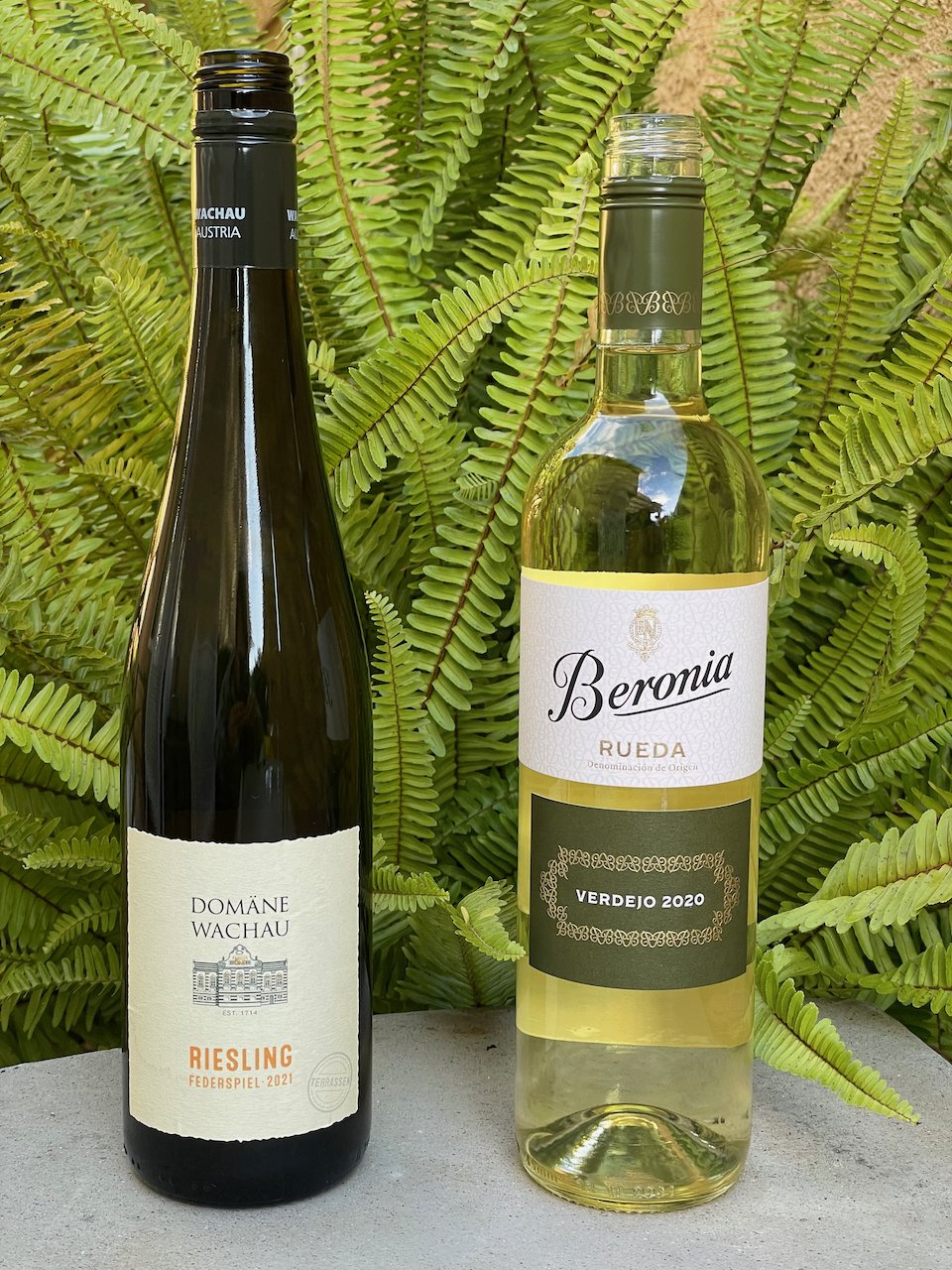
2021 Domäne Wachau Riesling ($18.99)

This Domäne Wachau Federspiel Terrassen Riesling is from the Wachau Valley on the Danube River in Austria where Riesling is famous. It comes from sustainable and increasingly organic principles. It is hand-picked, pressed and then fermented on lees in stainless steel tanks to preserve the fruit flavors. It is medium straw in color with delicate aromas of lime and green apple. On the palate, this dry Riesling (1.2 g/L residual sugar) has flavors of peach, apricot and bee’s wax.

2020 Beronia Rueda ($13.99)

Rueda is a wine region located on the Duero river in Spain just northwest of the Spanish capital, Madrid. And, it is known for its white wines made predominantly from the Verdejo grape variety. This 100% Verdejo wine is fermented in both stainless steel (which preserves the complexity and intensity of the aroma) and concrete tanks (which promotes contact with the lees and helps to a full-bodied wine). This Beronia Rueda is pale yellow in color with green hints. On the nose it exhibits rich fruit flavors and fennel which is typical of the Verdejo grape. On the palate, this dry wine (<2 g/L residual sugar) has the flavor of grapefruit pith which leads to a slight touch of bitterness on the finish which is also typical of the Verdejo grape.

Both of these wines are fine examples of white wines that can be enjoyed with winter meals and, again, can be served in the 50-55° F range. Cheers!


Disclosure of Wine Sample Submission: I received these samples at no cost for review. The opinions expressed are entirely my own.

Samples Provided by Gonzalez Byass via Donna White Communications
Behind the Cork™ - Alto de la Bellena Reserva

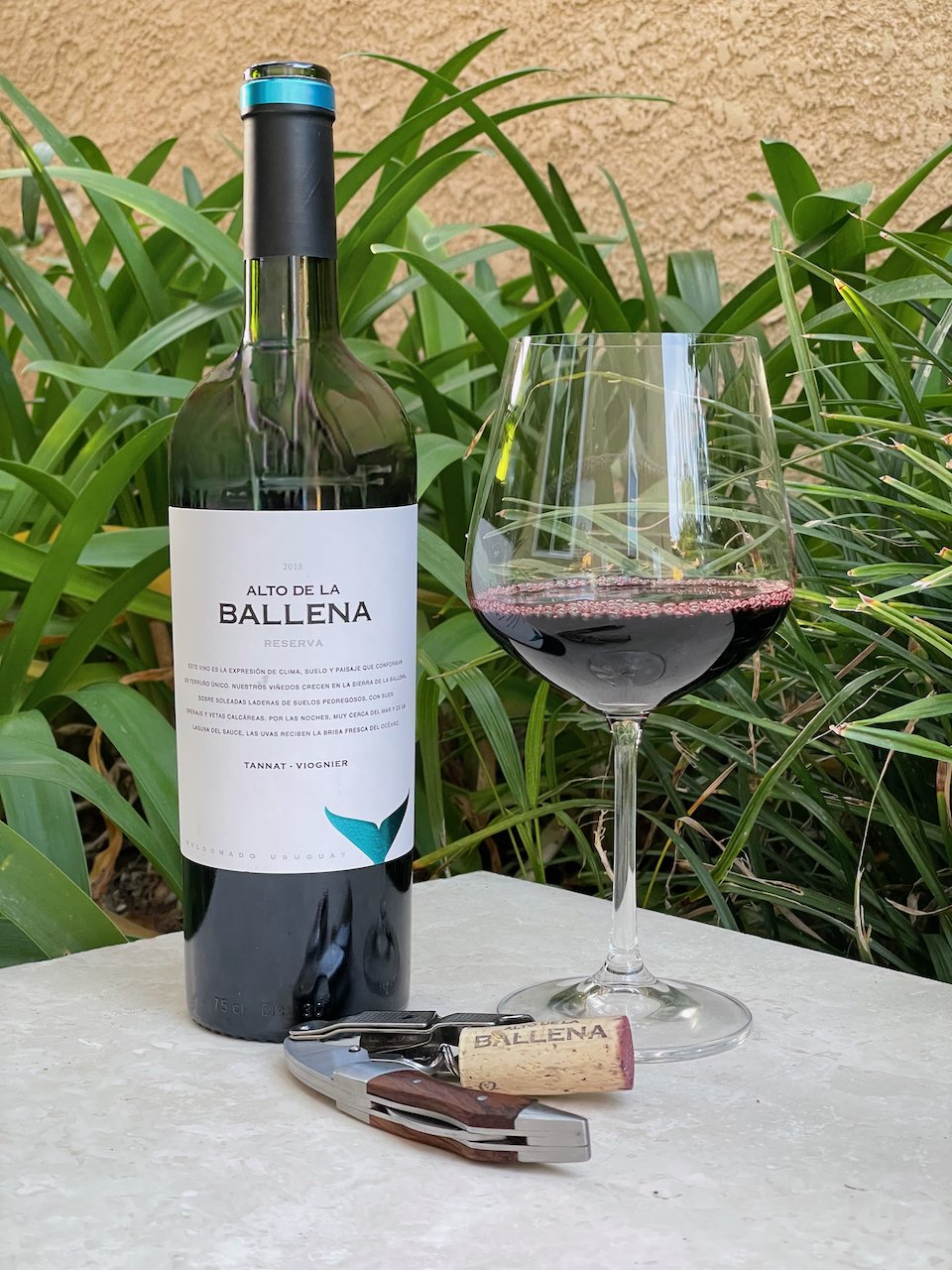
2018 Alto de la Bellena Reserva ($24)

Nine miles away from the Atlantic Ocean, Alto de la Ballena is a small winery producing high-end wines from over 20 acres of vineyards in Uruguay. Starting vine plantations on a slope of Sierra de la Ballena (“Whale Hills”) in 2001, the estate opened new trends in wine growing by combining maritime climate, hills and rocky soils.

This Alto de la Bellena is a blend of 85% Tannat and 15% Viognier. Yes, it’s a blend of red wine and white wine. It is common to use Viognier as a blending wine to enhance the color, add floral aromas, and provide a silkier mouthfeel. The Viognier was fermented separately in barrels and its skins were co-fermented with the Tannat. The finished wines were then blended and aged for nine months in American oak.

This wine is deep ruby in color with aromas of plum and black cherry. On the palate, this full-bodied wine has jammy flavors of black fruit, medium-high tannin and acidity and a bit of tartness on the finish.

This Alto de la Bellena red blend is yet another great example of the fine wines being produced in Uruguay and a great fit as this week’s Behind the Cork™ Wine of the Week. Cheers!


Disclosure of Wine Sample Submission: I received this sample at no cost for review. The opinions expressed are entirely my own.

Sample Provided by Alto de la Bellena Winery via Creative Palate Communications

Behind the Cork™ - Bouza Monte Vide Eu Red Blend

2019 Bouza Monte Vide Eu Red Blend ($67)

Red-blend wines are some of the best in the world.

This is a red blend from Bouza, is produced in the southern region of Montevideo in Uruguay. The name, Monte Vide Eu, loosely translates to “I see a hill” which is attributed to a sailor on expedition with Ferdinand Magellan upon seeing hills in southern Uruguay (today’s region of Montevideo).

This red blend is produced with 50% Tannat, 30% Merlot and 20% Tempranillo. The three varietals were aged separately between 9 and 16 months, depending on the plot, in French and American oak barrels.

This Bouza Monte Vide Eu red blend is deep ruby in color with aromas of cherry and plum. On the palate, this full-bodied wine has rich black fruit flavors, medium tannin and acidity, to go along with wonderful complexity and a nice lingering finish.

This is an excellent example of wines being produced in Uruguay with their signature grape, Tannat, as perfect as the Behind the Cork™ Wine of the Week. Cheers!


Disclosure of Wine Sample Submission: I received this sample at no cost for review. The opinions expressed are entirely my own.

Sample Provided by Bodega Bouza via Creative Palate Communications

Behind the Cork™ - Bodegones Del Sur Cabernet Franc

2020 Bodegones Del Sur Cabernet Franc ($20)

In Uruguay, Bodegones literally translates as “still lifes,” pictorial compositions that represent foodstuffs and daily objects where wine always has a privileged place. Del Sur mean “from the south.”

This Bodegones Del Sur Cabernet Franc is produced in Uruguay’s Juanicó region which is just north of Montevideo in southern Uruguay. And, just as a reminder, Cabernet Franc is the parent grape of both Merlot and Cabernet Sauvignon!

After a pre-selection of the grape clusters in the vineyard, a further grape-by-grape selection is then done at the winery. To extract all the desirable compounds from the grapes, maceration precedes as well as follows the fermentation with selected yeasts. Finally, 30% of the wine ages in American and French oak barrels.

This Bodegones Del Sur Cabernet Franc is medium purple in color with aromas of red fruit, raspberries and herbs. On the palate it is medium-bodied with medium tannin and medium-high acidity. It has red fruit and cherry flavors with just a hint of tartness. This is a young wine that could probably use a bit more time in the bottle to fully develop. (note: this wine was decanted for 30 minutes prior to serving).

The wines of Uruguay, including this Bodegones Del Sur Cabernet Franc, are great values that fit right in as a Behind the Cork™ Wine of the Week. Cheers!


Disclosure of Wine Sample Submission: I received this sample at no cost for review. The opinions expressed are entirely my own.

Sample Provided by Juanico.com and Creative Palate Communications