Behind the Cork™ - Domaine Bousquet Cabernet Sauvignon

Domaine Bousquet, a French-Argentine estate, has achieved success with its certified organic fruit, high-altitude terroir, and unique profile. Their naturally elegant and environmentally friendly wines have gained global recognition, now available in 61 countries. As Argentina’s leading exporter of organically grown grapes, Domaine Bousquet stands out.

From the very beginning, farming organically in the dry and phylloxera-resistant sandy soil of the area was both feasible and wise.

Their wines are made with hand-picked, hand-selected organic fruit, receiving the utmost gentle treatment to minimize handling and intervention.
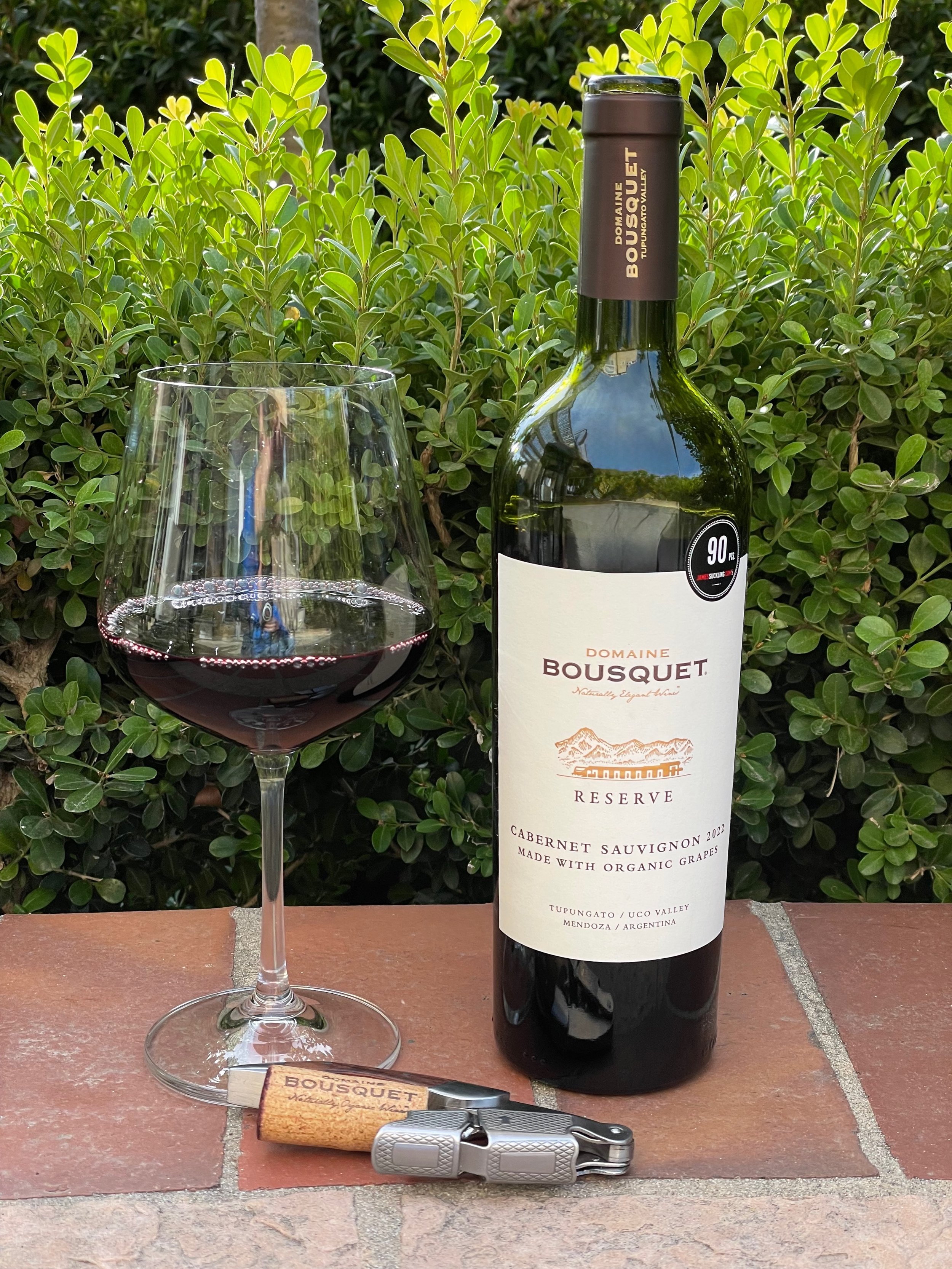

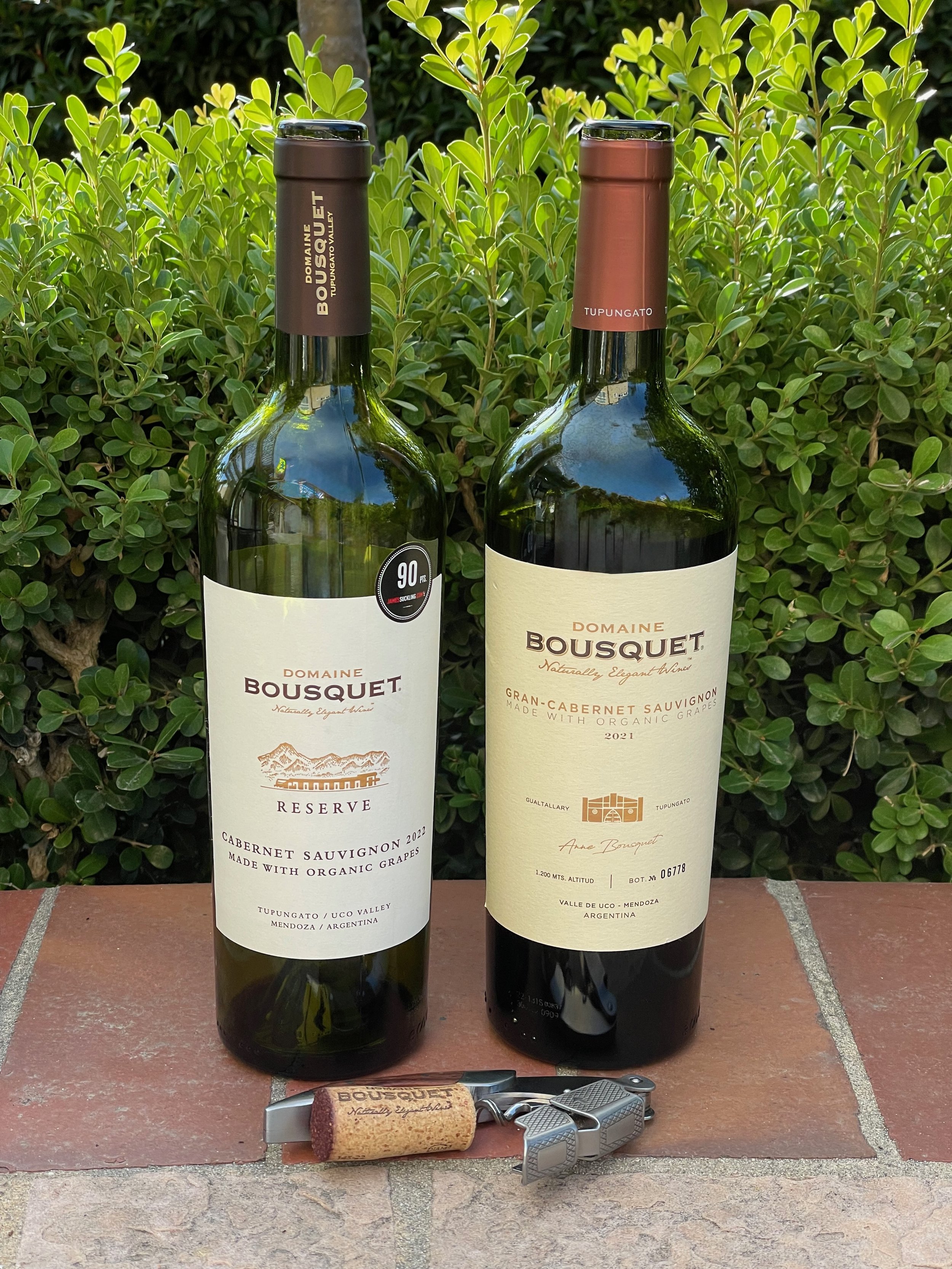
2022 Domaine Bousquet Reserve Organic Cabernet Sauvignon ($18)

Reserve wines from this family-owned estate are meticulously crafted from hand-picked, organic estate fruit. This Cabernet Sauvignon (85%) is blended with Malbec (15%).

The fermentation process involves the careful selection of yeasts and a 20-day process that includes both a 10-day fermentation and an additional 10-day maceration. Afterward, the wine undergoes a six-month aging period in 400L French oak barrels, with the remaining portion aged in stainless steel and concrete tanks. (ABV: 14.5%, Total Acidity: 5.28 g/L, pH:3.69, Residual Sugar: 1.8 g/L)

Presenting a deep ruby color, this Domaine Bousquet Reserve Organic Cabernet Sauvignon has fresh aromas of black fruit. On the palate, it offers a full-bodied experience with flavors of black fruit, including black plum and black cherry. The wine has moderate tannin and is best served decanted for at least an hour. 

2021 Domaine Bousquet Gran Organic Cabernet Sauvignon ($25)

The Gran Bousquet Line blends grapes from four distinct soil types found in the vineyard: sandy, sandy calcareous, stony calcareous, and super stony. This unique approach allows for the creation of diverse components, offering a wide range of styles and blending possibilities.

The wine is composed of 85% Cabernet Sauvignon and 15% Malbec. Fermentation took place in 10,000-liter tanks for 12 days, followed by eight days of maceration. Afterward, it underwent a complete Malolactic conversion before being aged in French oak barrels for ten months (50% new and 50% used). (ABV: 14.5%, TA: 5.2 g/L, pH: 3.68, RS: 3.68 g/L)

The Domaine Bousquet Gran Organic Cabernet Sauvignon has a deep garnet color and a delicate aroma. On the palate, this full-bodied wine has flavors of black fruit, including black cherry. It has medium-high tannin (decant for at least an hour) and medium-high acidity. The oak aging adds a subtle vanilla flavor to the finish. 

Domaine Bousquet’s Organic Cabernet Sauvignon wines from the Uco Valley in Argentina are an excellent choice for this week’s Behind the Cork™ Wines of the Week. They’re incredibly affordable, making them a budget-friendly option for all wine enthusiasts. Cheers!


Disclosure of Wine Sample Submission: I received these samples at no cost for review. The opinions expressed are entirely my own.

Media Samples Provided by Domaine Bousquet
Ever Wonder About Organic Grapes or Organic Wines?

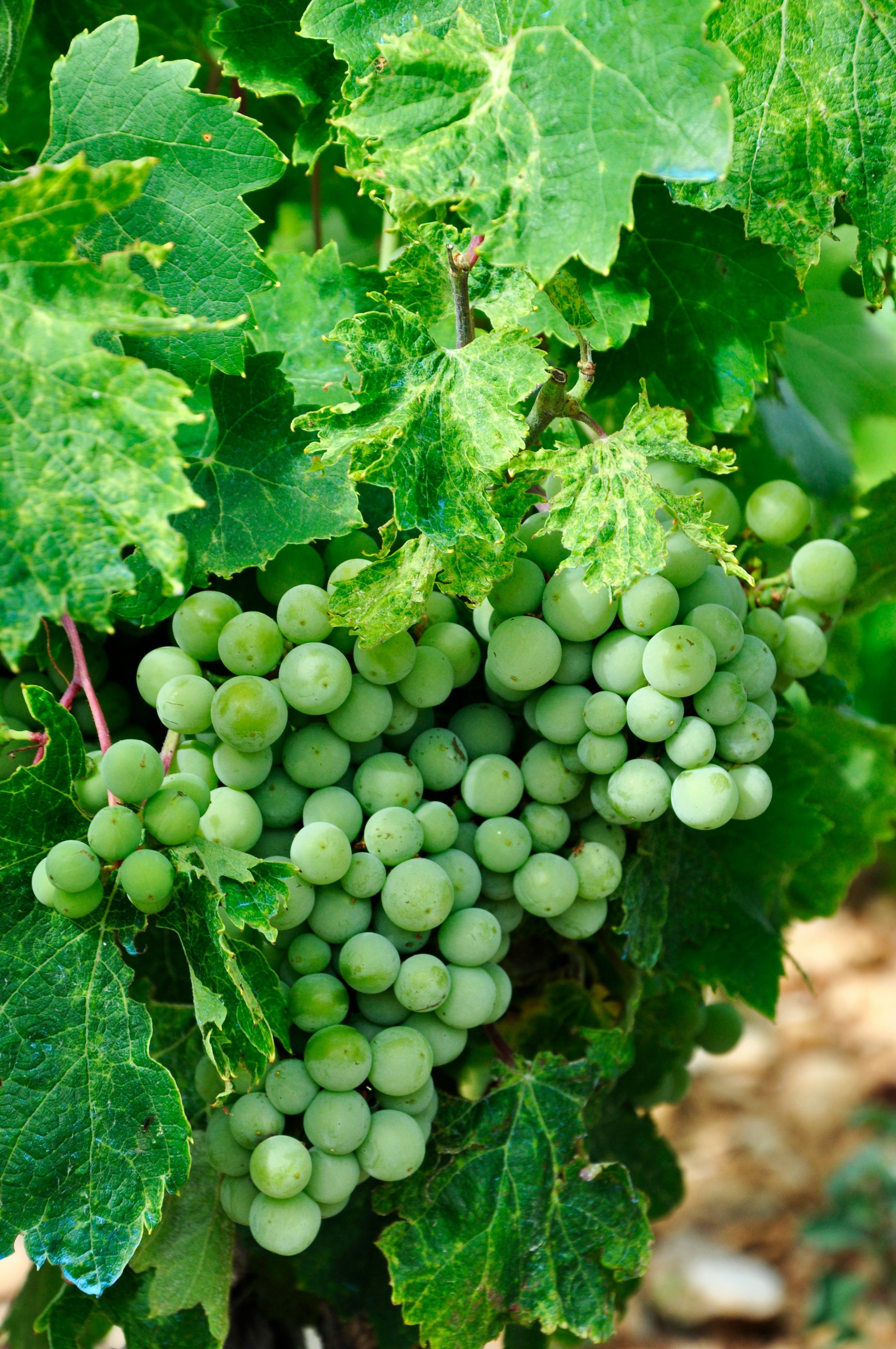
Photo by Alex Block on Unsplash

When it comes to wines, there are two major categories of organics: ‘Wines made with Organic Grapes’ and ‘Organic Wine.’

Here’s a quick overview of each.

Wines Made with Organic Grapes

Wines made from organically grown grapes are much more common. This means there were no synthetic pesticides or herbicides used in the vineyard. Yeast and any other agricultural ingredients used in winemaking aren’t required to be organic, but have to be produced without excluded methods (like genetic engineering). Organic grape production prohibits the use of genetically modified organisms. This means that organic grapevines are not genetically engineered or modified in any way.

So, wines made from organic grapes are produced with a focus on environmental sustainability, soil health, and biodiversity, while avoiding synthetic chemicals and genetically modified organisms. This is not only better for the environment but also contributes to the production of wines that reflect the unique characteristics of their winery’s terroir.

Organic Wines

For a wine to be labeled as ‘Organic’ it must only use organically grown grapes and avoid synthetic additives. Both the growing of the grapes and the winemaking process must be certified. This includes making sure the grapes are grown without synthetic fertilizers. Other agricultural ingredients that go into the wine, such as yeast, also have to be certified organic. And then, any non-agricultural ingredients must be specifically allowed and can’t exceed 5% of the total product.

In addition to organic farming practices, many organic vineyards also adhere to broader sustainable agriculture principles. This may include practices such as water conservation, energy efficiency, biodiversity preservation, and waste reduction.

Finally, while the winemaking process naturally yields some sulfur dioxide (sulfites), the winemaker cannot add sulfites to an organic wine. (Note: Sulfites are commonly added to wines to stop the fermentation process and/or as a preservative in the bottle).

Although this is a brief overview, please note that the specific regulations and certification standards for organic wines can vary depending on the country or region. Cheers!

Behind the Cork™ - Organic Wines of Veramonte

In anticipation of Earth Day 2023 on April 22nd, here’s a great trio of organic, vegan wines to celebrate with!

The wines from Veramonte are from the Casablanca Valley in Chile. Veramonte follows organic practices in all their vineyards to ensure the best conditions for the development of the vine thus achieving vineyards that are sustainable. Through cultivating healthy, living soils and maintaining a natural balance in their vineyards and winemaking process, Veramonte obtains quality grapes that express the full potential of the terroir, leading to wines with character and authenticity.

2020 Veramonte Pinot Noir ($13.99)

Produced from 100% Organic Pinot Noir, 15% of the grapes underwent whole cluster maceration and fermentation with natural yeasts. It then spent 8 months aging in oak. It is pale ruby in color with red fruit aromas of raspberry and cherry. One the palate it has juicy fruit flavors of cherry and cranberry and finishes light. (13.5% ABV, 1.3 g/L RS, 5.8 g/L acidity)

2022 Veramonte Chardonnay ($13.99)

Produced from 100% Organic Chardonnay, the grapes are whole cluster pressed and sit for 24 hours before being racked off. Part of the wine is barrel fermented in neutral oak with wild yeasts while the rest is fermented in stainless steel tanks to retain its bright flavors. Then, 30% of the wine undergoes malolactic conversion. Finally, 15% of the wine is aged in neutral oak for 8 months. It is medium gold in color with citrus and apple aromas. On the palate it is bright and refreshing. (14% ABV, 3.33 g/L RS, 7.35 g/L acidity)

2022 Veramonte Sauvignon Blanc ($13.99)

This wine is composed of 100% Organic Sauvignon Blanc grapes that are fermented in stainless steel tanks. It is medium gold in color with subtle citrus aromas. On the palate it has bright citrus flavors of grapefruit and lime with a refreshing finish. (13.5% ABV, 0.78 g/L RS, 7.73 g/L acidity)

Each of these sustainably-made wines is organic and vegan which make them not only a perfect fit for Earth Day 2023 but also most any day that you’re looking for an affordable wine that pairs well with a variety of foods. Cheers!


Disclosure of Wine Sample Submission: I received these samples at no cost for review. The opinions expressed are entirely my own.

Sample Provided by Veramonte Wines, González Byass (via Donna White Communications)

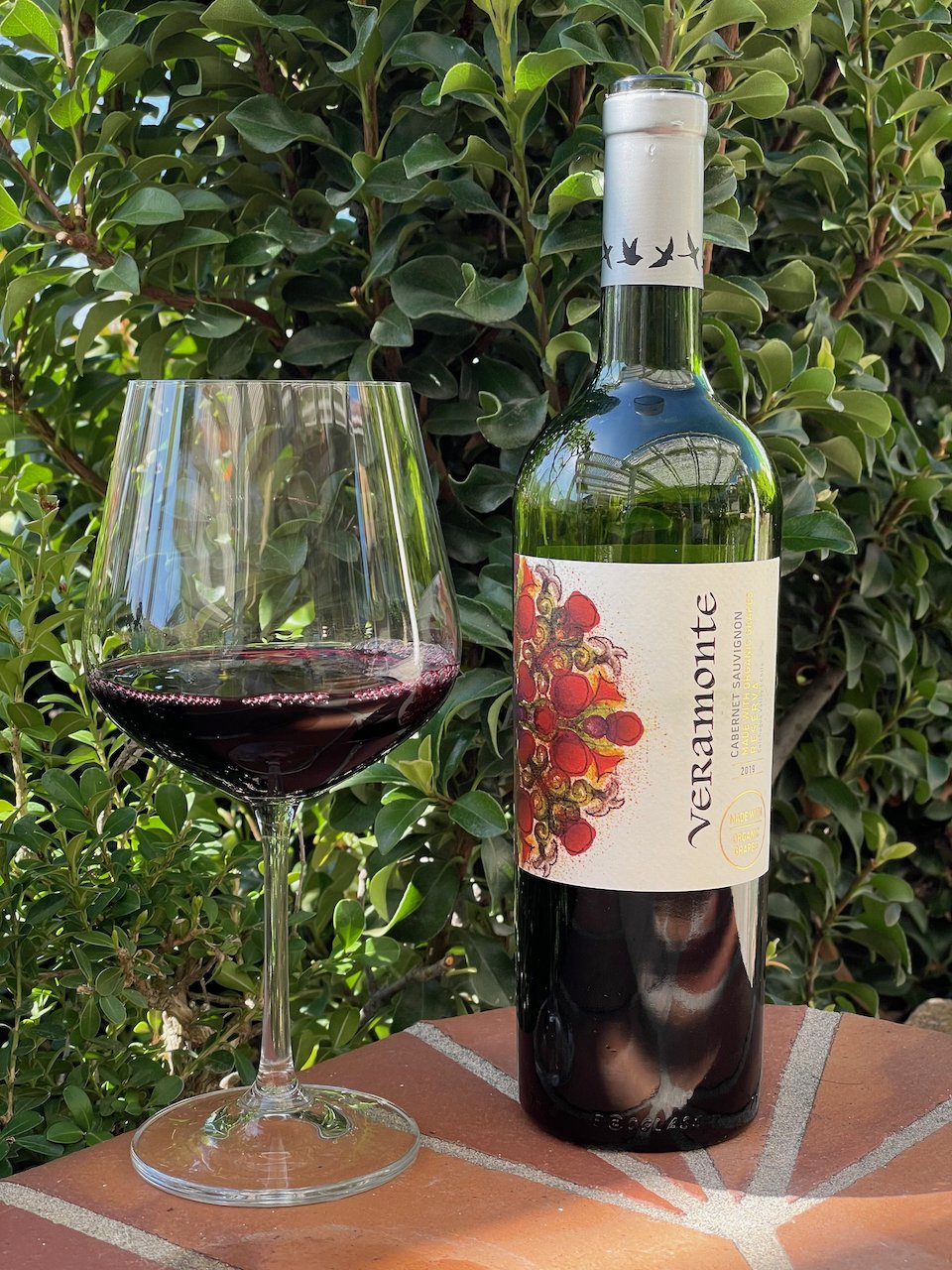
Behind the Cork™ - Veramonte Cabernet Sauvignon

2019 Veramonte Cabernet Sauvignon ($11.99)

Here’s another returning favorite from Veramonte which is made with Organic grapes and a really good value.

The Veramonte wines are from organically farmed vineyards in Chile. Veramonte follows organic practices throughout their estate, ensuring optimum conditions for vine growth and that the vineyards are sustainable over time. Living, balanced soil produces quality grapes that express the fullest potential of the terroir.

The 2018 Veramonte Organic Cabernet Sauvignon is produced from 100% Cabernet Sauvignon grapes grown in the Colchagua Valley. It underwent cold maceration for five days in stainless steel tanks and was fermented with native yeasts. After the primary fermentation, the wine is macerated with its skins for another ten days to achieve greater smoothness and intensity of flavor. It was then aged in neutral oak barrels for eight months.

It’s medium-ruby in color with deep, dark fruit aromas. This Cabernet Sauvignon is fruity with flavors of red fruit and sour cherry. And, a great value for a Cabernet Sauvignon!

These Veramonte wines are imported by González Byass USA and distributed nationally. For more information on these wines visit www.GonzalezByassUSA.com Cheers!


Disclosure of Wine Sample Submission: I received this sample at no cost for review. The opinions expressed are entirely my own.

Sample Provided by Donna White Communications