

Sauvignon Blanc 🥂
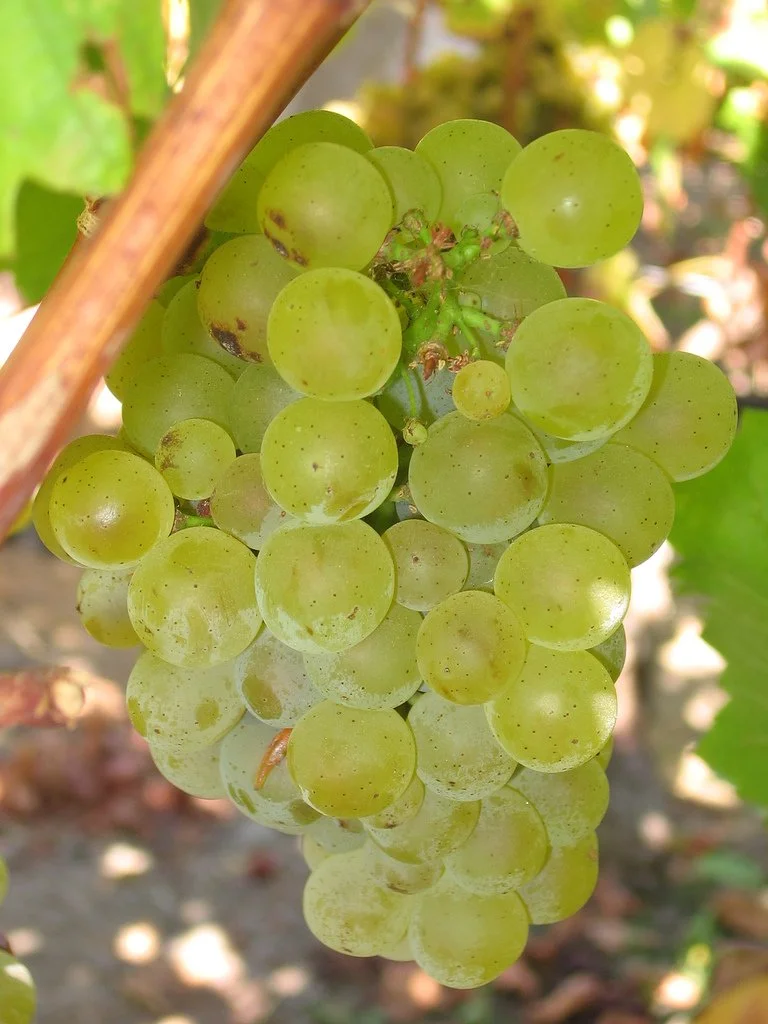
Photo by Nathan on Wikimedia Commons
The name originates from the French words sauvage ("wild") and vigne ("vine"). Native to western France, written records document its cultivation in the Loire Valley and Bordeaux by the 18th century.
It is a natural cross between Sauvignon Blanc and Cabernet Franc grapes.
Today, winemakers grow it throughout the world. France produces lean, high-acid styles, while New Zealand's Marlborough region focuses on highly aromatic, pungent styles. California produces both crisp styles and barrel-aged varieties, while Chile, South Africa, and South Australia also maintain significant commercial production.
Sauvignon Blanc wines have notes of green grass, lime, and green bell pepper. Warmer climates yield tropical fruit profiles like passion fruit and peach. On the palate, it is a dry wine with a light body and bright acidity.
Winemakers use two main methods: unoaked (fermented in stainless steel to preserve fruit and acidity) and oaked (aged in barrels to add a creamy texture and vanilla notes). In California, the oaked style is labeled Fumé Blanc.
Sauvignon Blanc should be consumed within one to three years of the vintage date. Serve it chilled between 45°F and 50°F (7°C to 10°C) in a white wine glass with a narrow bowl to direct aromas upward.