Behind the Cork™ - Bezel Pinot Noir

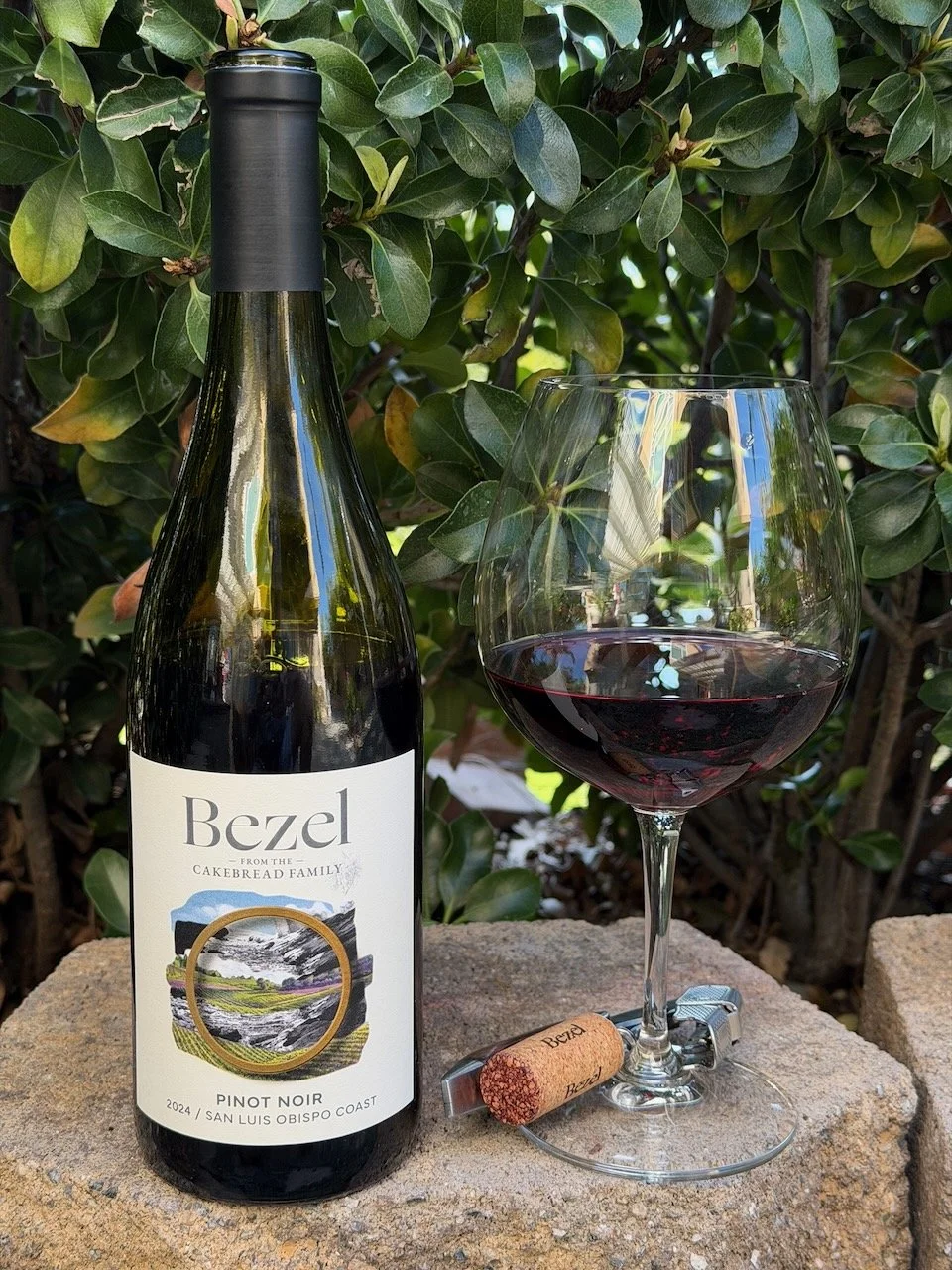
Bezel Pinot Noir ($29.99)

This Pinot Noir is part of the “A Tour of Wine Grapes” series.

Bezel Wines is a fresh wine adventure from the well-known Cakebread Family of wines.

Since 1973, they’ve been making wine in Napa Valley at Cakebread Cellars in Rutherford, California. But with Bezel, they’re venturing out of Napa to discover the hidden treasures of California wine country on the Central Coast.

In this case, the Bezel Pinot Noir was crafted in Paso Robles using Pinot Noir grapes from the Edna Valley, a cool-climate region renowned for its outstanding, elegant Pinot Noir. It spent 8 months aging in French oak.

This Bezel Pinot Noir has a medium ruby hue, with aromas of cherry and raspberry, along with some floral hints. On the palate, this medium-bodied wine offers flavors of black cherry and plum, complemented by bright acidity and medium-high tannin. It concludes with a light touch of sweetness.

Bezel Pinot Noir is part of the wonderful Cakebread family of wines. It’s delicious, reasonably priced, and widely available. It’s a fantastic choice for the Behind the Cork™ Wine of the Week. Cheers!


Disclosure of Wine Sample Submission: I received this sample at no cost for review. The opinions expressed are entirely my own.

Media Sample Provided by Bezel Winery via Kobrand Wine and Spirits
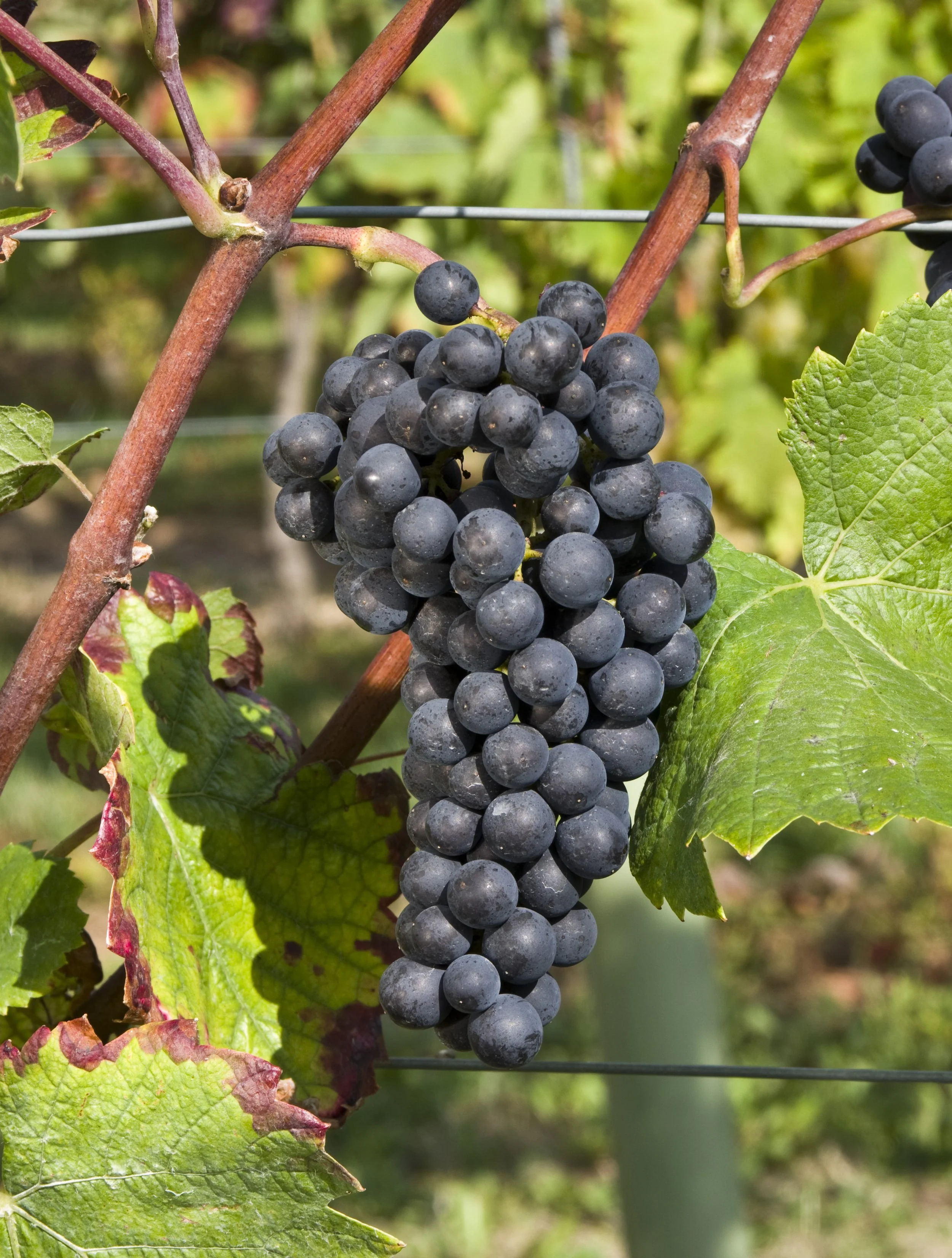
A Tour of Wine Grapes: Pinot Noir Part 1

Pinot Noir 🍷

Photo by Ursula Brühl, Julius Kühn-Institut (JKI) on Wikimedia Commons

Pinot Noir is one of the world’s oldest cultivated grapes. Historically, it has its beginning with the Romans more than 2000 years ago and was then cultivated by Monks in medieval Burgundy, France.

Pinot Noir translates to black, or dark, pinecone because the small grape clusters resemble pinecones on the vine.

In France today, the wine makers of Burgundy are required to use Pinot Noir exclusively. And, in the Champagne region of France, Pinot Noir is one of the primary grapes used in making Champagne.

Pinot Noir is also grown in the U.S., New Zealand, Australia, Italy (where it is called Pinot Nero), Germany, Chile and South Africa.

Pinot Noir is famous for its delicate flavors rather than its power.

Young wines often display aromas of fresh cherry, raspberry, strawberry, and cranberry.

On the palate, Pinot Noir is typically light- to medium-bodied with light tannins, bright acidity, and moderate alcohol. Common flavor notes include red cherry, wild strawberry, raspberry, and cranberry.

Everyday Pinot Noir is generally best consumed within three to five years of release, while premium bottlings may age well for 10 to 20 years or even longer.

For the best tasting experience, serve Pinot Noir slightly cooler than room temperature, ideally between 55–60°F (13–16°C). A large Burgundy-style wine glass with a wide bowl is ideal because it allows the wine's delicate aromas to collect.

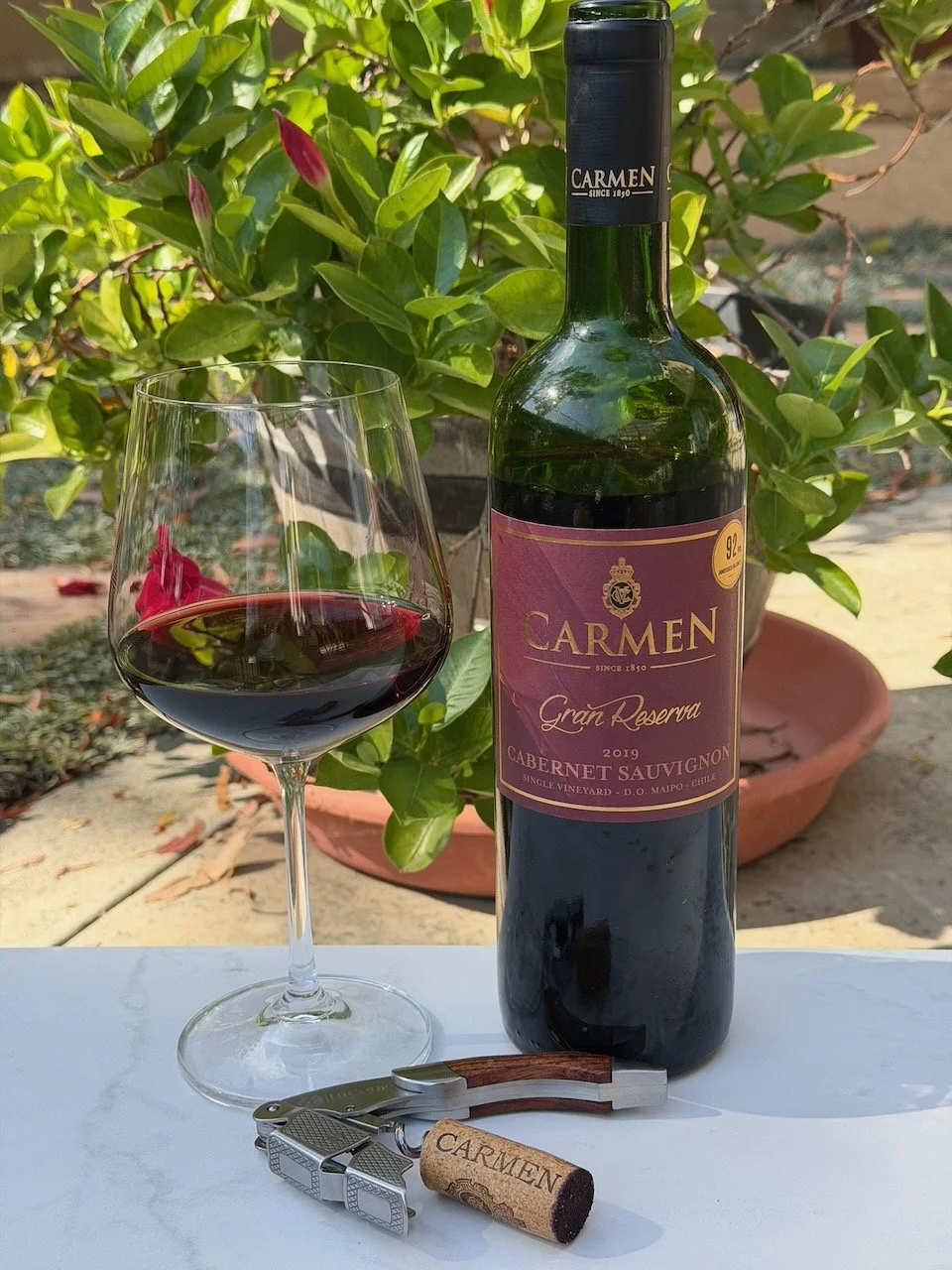
Behind the Cork™ - Carmen Gran Reserva Cabernet Sauvignon

2019 Carmen Gran Reserva Cabernet Sauvignon ($14.99)

Viña Carmen was founded by Christian Lanz in 1850 and named in honor of his wife. The winery, located in Chile, now has more than 160 years of history having been the first and now oldest winery. In 1987, Viña Carmen became part of Grupo Claro. In 1994, the wine grape Carmenere was re-discovered in one of the Carmen vineyards in the Alto Maipo Valley. The Carmenere grape was long thought to be extinct after having been infected with phylloxera in the mid-19th century. But, this find returned Carmenere to the world.

Carmen wines come from Maipo Valley, Apalta Valley, Leyda Valley, Casablanca Valley and the Colchagua Valley.

This Cabernet Sauvignon is from a single vineyard in Alto Maipo Valley containing 20 year-old vines. It was produced from 100% Cabernet Sauvignon that underwent a cold soak for 10 days before fermentation to draw out color and aromatics. Fermentation occurred in stainless steel tanks, to retain the fruit flavors, for 14 to 22 days. The wine underwent malolactic conversion, to soften the sharp acids, before being aged for 12 month (making it a “Gran Reserva”) in French oak barrels.

Carmen Gran Reserva Cabernet Sauvignon is deep purple in color with aromas of red fruit, plum and black currant. On the palate, this full-bodied wine has bold flavors of dark fruit, good acidity, big “dusty” tannins (i.e., fine, dry, and powdery) and finishes with a bit of tartness.

This 2019 Carmen Gran Reserva Cabernet Sauvignon is a really nice wine from the Maipo Valley in Chile. And, it is very affordable. That’s a fit as this week’s Behind the Cork™ Wine of the Week. Cheers!


The opinions expressed are entirely my own.

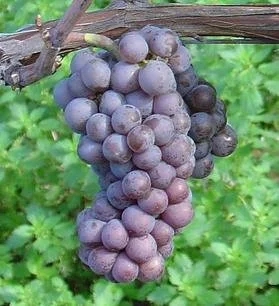
A Tour of Wine Grapes: Pinot Gris

Pinot Gris 🥂

Pinot Gris is a natural color mutation of the famous red wine grape, Pinot Noir. They are genetically identical, except Pinot Gris has a pinkish-gray skin.

It originated in the Burgundy region of France during the Middle Ages. In 1375, it was exported to Hungary by Cistercian monks at the request of Emperor Charles IV. The monks planted it along Lake Balaton, where it was nicknamed the "Grey Monk" (Szürkebarát). It eventually traveled to Switzerland and Northern Italy, where its popularity skyrocketed

Pinot Gris berries take on their distinctive array of colors; anything from orange-pink to pale, dusty purple. The adjective Gris is French for "gray", and refers to the dusty, light-gray sheen the grapes often take on. This convention is widely used in Europe, notably in Italian where it is called Pinot Grigio.

Even though the Pinot Gris grape has dark skin it produces a white wine. If the winemaker were to leave the juice sitting on the skins for a short time, the wine would turn a copper-pink color. In Italy, this traditional style is called Ramato.

Pinot Gris wines are produced from grapes that are picked later, when they riper whereas Pinot Grigio wines have sharper acidity due to being harvested early.

Pinot Gris wines have bright aromas of lemon, green apple and pear but can also have deeper flavors of peach, apricot, mango and honey.

Pinot Gris wines are meant to be opened and enjoyed immediately.

Serve Pinot Gris very cold, between 45°F and 55°F (7°C to 13°C) which can be achieved by putting the bottle in the refrigerator for about 2 to 3 hours before opening.

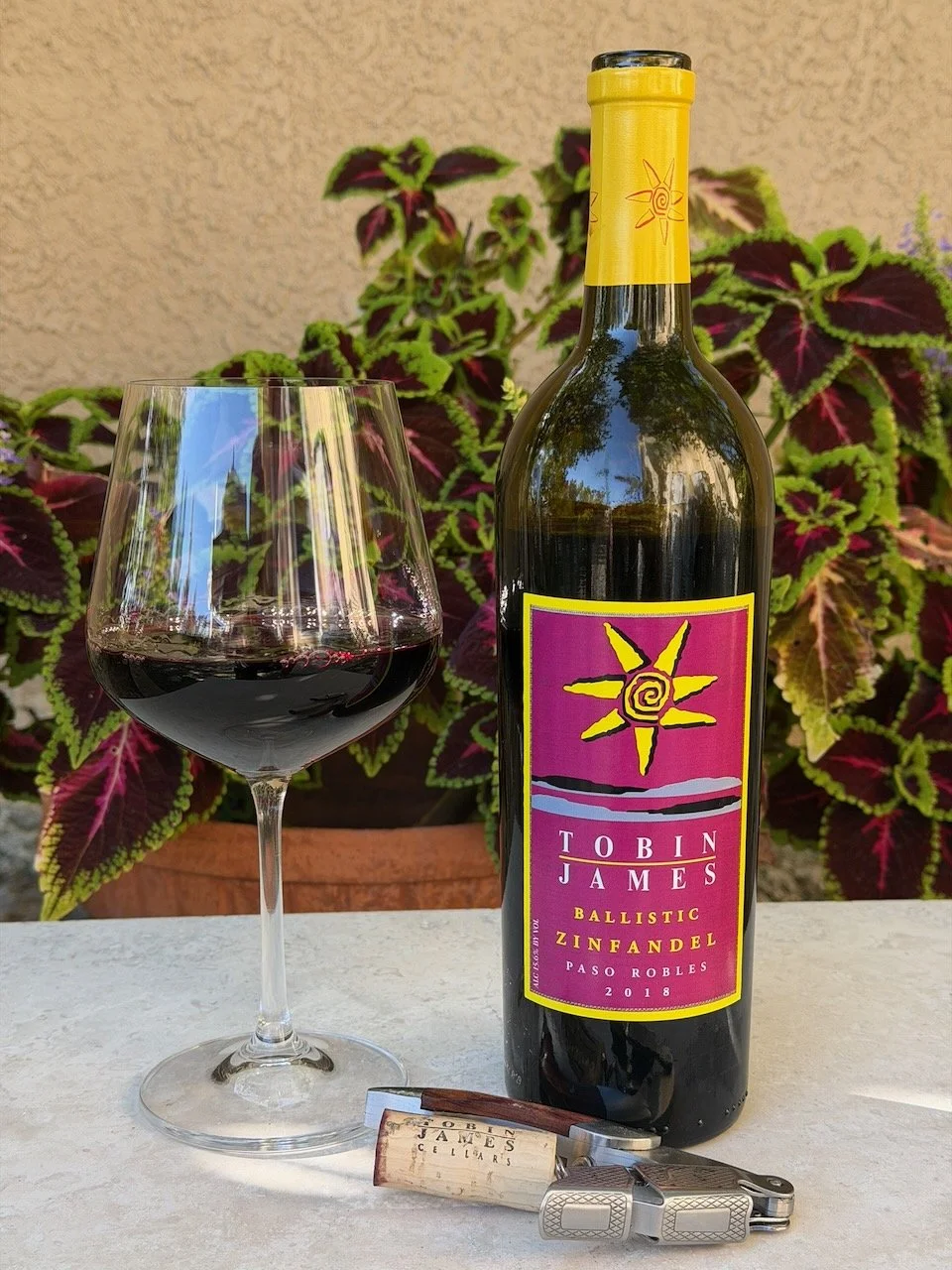
Behind the Cork™ - Tobin James Ballistic Zinfandel

2018 Tobin James Ballistic Zinfandel ($17)

When a local grape harvester showed up at with six tons of Zinfandel grapes that he was willing to give away, Tobin “Toby” James, a young assistant winemaker at the time, asked if he could have the grapes to make his own wine.

"Sure kid, knock yourself out," the owner replied.

A year and a half later, Toby’s first wine won double gold medals, and a spot on The Wine Spectator’s coveted "Top 100 Wines of the Year.” Tobin James Cellars was born.

For the next few years, Toby quietly produced his own popular small-batch wines, tasting and selling them out of a local wine shop in Paso Robles. Then in 1993, Toby finally took the plunge and built Tobin James Cellars.

In 1996, Toby was joined by partners and winemakers, Lance and Claire Silver, who updated and expanded the winery to what it is today.

They call Ballistic Zinfandel "Paso in a glass" as it is made up of 100% Zinfandel sourced from 27 individual vineyards from the diverse AVAs that Paso has to offer.

Ballastic Zinfandel is deep purple in color with aroma of black fruit and sweet tobacco leaf. On the palate, this full-bodied wine is rich and delicious with dark jammy fruit flavors and a peppery finish.

This 2018 Tobin James Ballistic Zinfandel is a great tasting wine that’s affordable and attainable. A perfect fit as this week’s Behind the Cork™ Wine of the Week. Cheers!