A Tour of Wine Grapes: Pinot Blanc


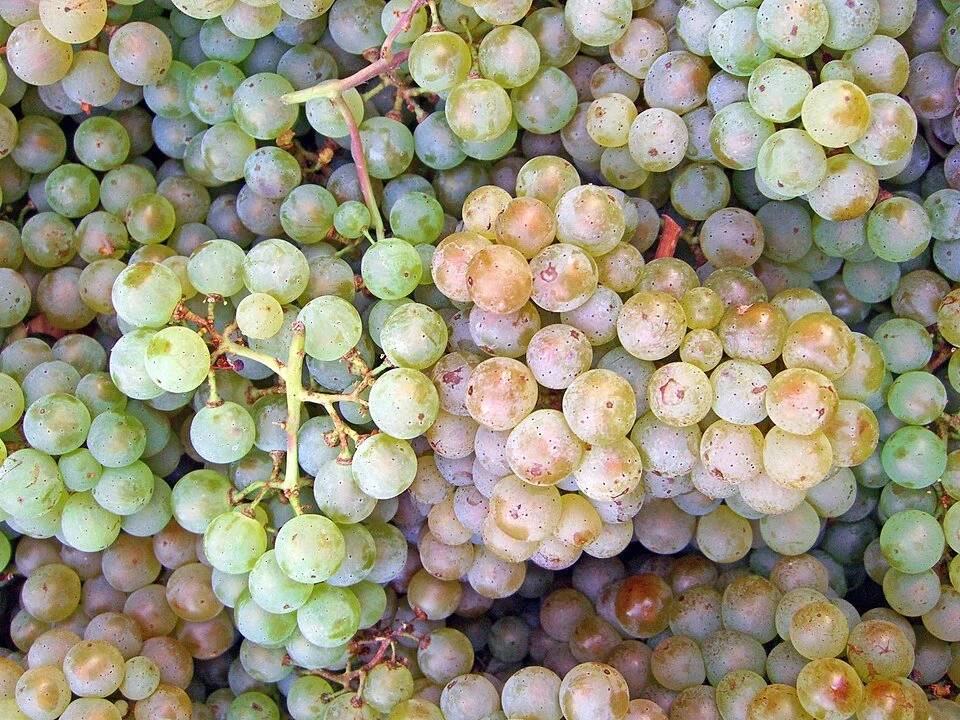
Pinot Blanc 🥂

Pinot Blanc (pee-noh blahnk) originated centuries ago in Burgundy, France. It is not a separate grape species, but a natural, white-skinned color mutation of the red Pinot Noir grape. In fact, it shares the exact same genetic DNA fingerprint as Pinot Noir and Pinot Gris.

It wasn't until 1895 that grape experts officially identified Pinot Blanc as its own distinct variety. Eventually, Burgundy phased it out in favor of Chardonnay.

Today, Pinot Blanc thrives in cool-climate vineyards across Europe and the New World, changing its name and personality depending on where it is grown. For example, in France, it serves as the base for Crémant d'Alsace which is France's most popular non-Champagne sparkling wine. In Germany, it is known locally as Weissburgunder. And, in Italy, it’s called Pinot Bianco.

The Pinot Blanc grape produces medium to full-bodied white wines with aromas of green apple, lemon zest, pear with floral notes. On the palate, these wines are described as zesty and refreshing with flavors of citrus and stone fruits, with moderate to high acidity.

Serve Pinot Blanc well-chilled between 45–50°F in a standard white wine glass
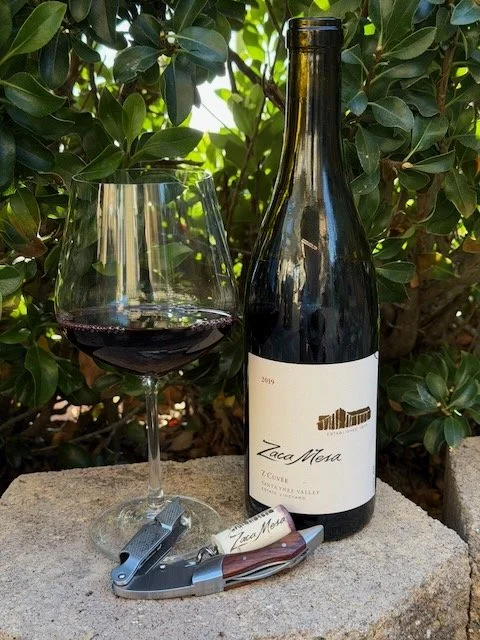
Behind the Cork™ - Zaca Mesa Z Cuvee

2019 Zaca Mesa Z Cuvée ($15)

Zaca Mesa Winery & Vineyards was founded in 1973 by John Cushman and five friends, who purchased the property the year prior.

As the third winery established in Santa Barbara County, experimentation was an integral part of Zaca Mesa’s early days. Several different varieties were planted to see which grapes would be the best suited to the estate’s unique terroir. After many trials, Zaca Mesa’s first winemaker, Ken Brown, planted Syrah in 1978, establishing Zaca Mesa as the first to plant Syrah in Santa Barbara County. This block of Syrah remains the oldest Syrah block on the Central Coast and is now known as the Black Bear Block.

These grapes were purely estate-grown across unique blocks. Syrah comes from the high, flat tabletop of the Mesa Block (1,400 feet elevation). Grenache is harvested from the sloped, shale-loam soils of the Cushman Block. Old-vine Mourvèdre and Cinsault are selected from the Chapel and Mariposa blocks respectively.

Each of the four varieties was harvested, de-stemmed, and fermented separately. After primary fermentation, the separate lots were transferred into neutral French oak barrels. The wine rests in these barrels for 15 months. After the aging period, the winemaker blended the components together to create the exact 57% Mourvèdre, 29% Grenache, 11% Syrah, and 3% Cinsault ratio.

Zaca Mesa Z Cuvée (which means “blend”) is medium ruby in color with nice aromas of cherry and red currant. On the palate, this medium-full bodied wine has flavors of black cherry and boysenberry. The tannin is medium-low resulting in a wine that’s drinkable right out of the bottle and leads to a smooth, balanced and somewhat spicy finish. [ABV: 14%, TA: 0.59 gm/100 mL, pH:3.55]

This Zaca Mesa Z Cuvée is a really nice wine (I went back for more!) that’s a great value, too. That makes it a perfect fit as this week’s Behind the Cork™ Wine of the Week. Cheers!

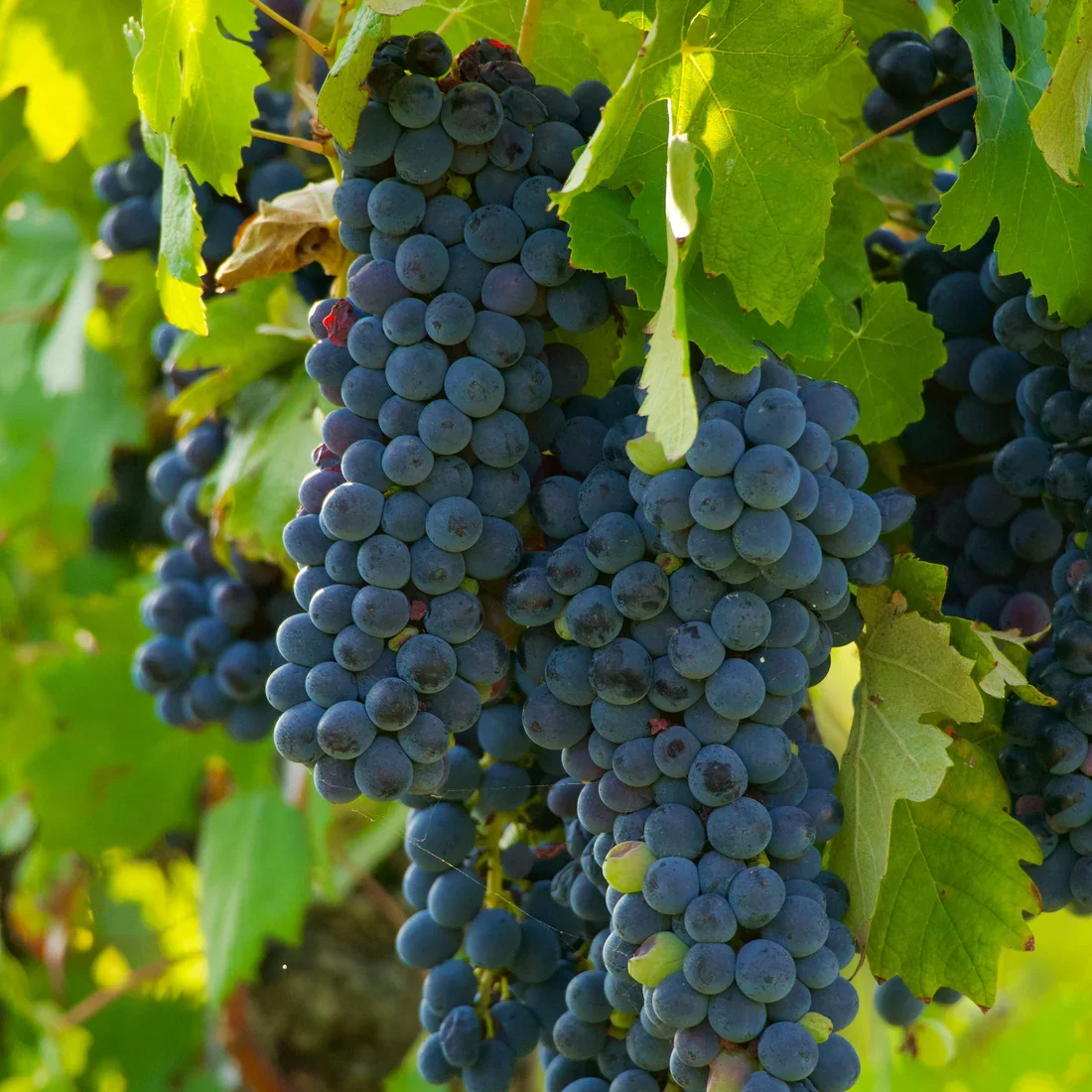
A Tour of Wine Grapes: Petite Sirah

Petite Sirah 🍷

Petite Sirah (peh-teet-sear-ah) was created by French botanist Dr. François Durif in the mid-1860s in an attempt to develop a vine resistant to mildew. The grape is also known as Durif in honor of its originator.

Unfortunately, the grape was largely discarded in France because its tight clusters were prone to rot in wet weather.

The grape was imported to Northern California in 1884. Today, more than 80% of the world’s planting of Petite Sirah are in California.

Petite Sirah is not the same as Syrah and is distinct from petit syrah which French growers use to describe small-berried clones of true Syrah.

Because the Petite Sirah berry (i.e., grape) is so small, it has a very high skin-to-juice ratio. This results in wines that are opaque with inky black-purple color.

Aromas include blueberry, violets, dark chocolate and black tea.

Flavors tend toward to black fruit such as blackberry and sugarplum along with cracked black pepper.

Because of the thick skin, Petite Sirah wines are considered a full-bodied and have very high tannin. The acidity tends to be medium to high.

It is commonly said that there is nothing petite about Petite Sirah.

Petite Sirah is very good for aging because of its very high tannin. High quality bottles can easily age for decades.

Serve Petite Sirah in a red wine glass at 60-68 F after decanting for at least an hour.

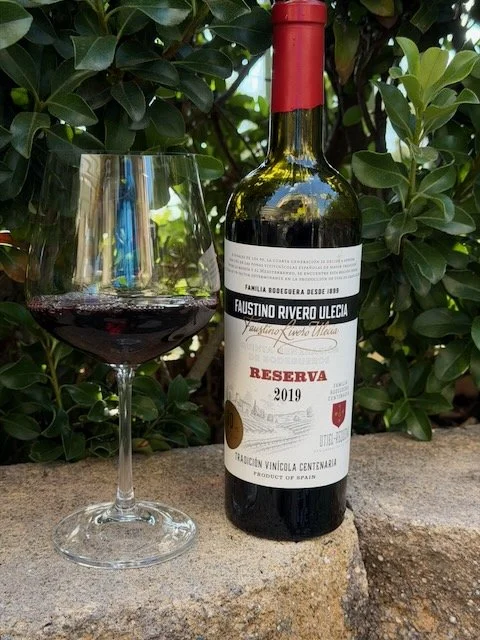
Behind the Cork™ - Faustino Rivero Ulecia Reserva

2019 Faustino Rivero Ulecia Reserva ($10.99)

Bodegas Faustino Rivero Ulecia is part of a five-generation winemaking family that started back in 1899.

The winery was founded in 1899 by Olegario Rivero. It operated locally for decades selling bulk wine. Then, in the 1940s, the winery, known as Bodega Rivero, was passed to the third generation: brothers Amador and Faustino Rivero. Faustino and his brother had the intuition that bottled, branded wine was the future. When the family finally purchased their first bottling machine and officially launched their signature label in the late 1960s, they named the winery in honor of Faustino. The name follows the traditional Iberian naming structure, combining paternal and maternal surnames to preserve family lineage: Faustino - The given first name of the pivotal third-generation winemaker. Rivero - The paternal family surname, and Ulecia - The maternal surname introduced into the family line.

To produce this wine, the estate relies on their "soul winemaker," Rodrigo Espinosa. Espinosa used a unique regional blend of 75% Bobal and 25% Tempranillo for this red blend. To achieve the "Reserva" status, he aged the wine for 24 months in medium-toasted French and American oak barrels, followed by bottle aging for a total of 36 months before shipping.

This Faustino Rivero Ulecia Reserva is medium ruby in color with aromas of red fruit. On the palate, this medium-bodied wine has flavors of cherry, black cherry and plum. Its tannins and acidity are medium-high, but the oak aging does not add heavy flavors. While good right from the bottle, it could use 30 to 60 minutes in a decanter.

This 2019 Faustino Rivero Ulecia Reserva from Spain is a tremendous value that makes it a great fit as this week’s Behind the Cork™ Wine of the Week. Cheers!

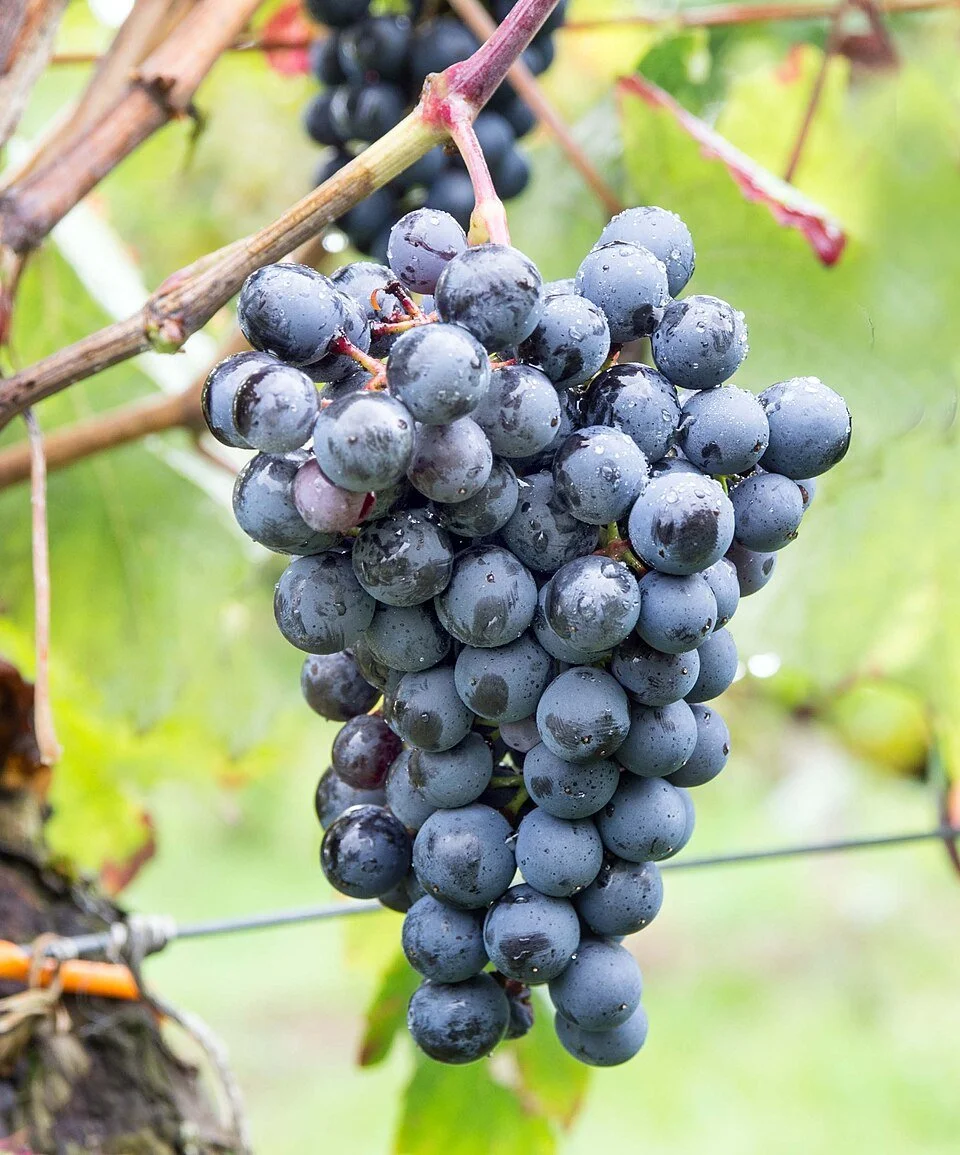
A Tour of Wine Grapes: Petit Verdot

Petit Verdot 🍷

If you’ve ever had a Bordeaux blend, you’ve probably tasted Petit Verdot—even if you didn’t realize it. This bold, dark grape, long known as a blending agent in Bordeaux red wines, is now also a great varietal.

Petit Verdot, pronounced “pah-tee vur-doe,” is an old grape. In fact, it’s believed to be older than Cabernet Sauvignon in its native region of Bordeaux, France.

Its name translates to “little green,” because it ripens much later than other varieties. It often remained green and unripened on the vine during the cool French autumns. For centuries, winemakers only grew a small amount of it, using just 1% to 2% of the grape to add color, structure, and tannin to their blends.

Petit Verdot boasts some of the thickest skins in the wine world, resulting in wines that are deep in color.

Aromas associated with Petit Verdot include blackberry, plum, along with floral notes and dried herbs.

The flavors of Petit Verdot include blackberry, blueberry, and black cherry. Oak aging imparts rich molasses and mocha notes, as well as vanilla and allspice.

It’s renowned for its massive tannins, crisp acidity, and a bold, mouth-coating finish.

Petit Verdot should be served in a over-side red wine glass at 60-68 F after decanting for a minimum of one hour.

Because of its bold tannins, Petit Verdot pairs well with rich, fatty foods such as beef brisket, grilled ribeye, or roasted lamb.