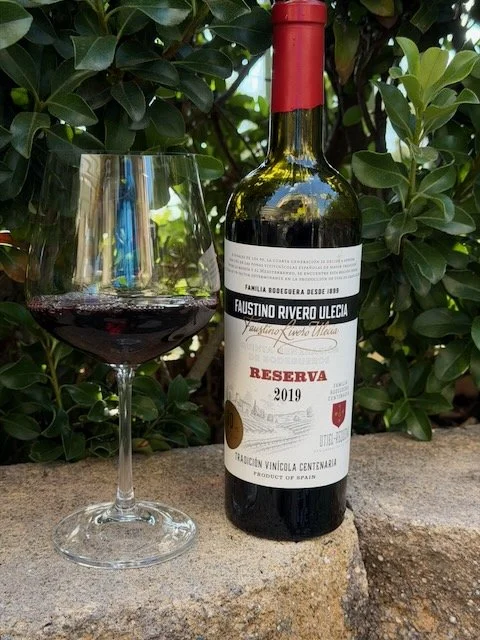
Behind the Cork™ - Faustino Rivero Ulecia Reserva

2019 Faustino Rivero Ulecia Reserva ($10.99)
Bodegas Faustino Rivero Ulecia is part of a five-generation winemaking family that started back in 1899.

The winery was founded in 1899 by Olegario Rivero. It operated locally for decades selling bulk wine. Then, in the 1940s, the winery, known as Bodega Rivero, was passed to the third generation: brothers Amador and Faustino Rivero. Faustino and his brother had the intuition that bottled, branded wine was the future. When the family finally purchased their first bottling machine and officially launched their signature label in the late 1960s, they named the winery in honor of Faustino. The name follows the traditional Iberian naming structure, combining paternal and maternal surnames to preserve family lineage: Faustino - The given first name of the pivotal third-generation winemaker. Rivero - The paternal family surname, and Ulecia - The maternal surname introduced into the family line.

To produce this wine, the estate relies on their "soul winemaker," Rodrigo Espinosa. Espinosa used a unique regional blend of 75% Bobal and 25% Tempranillo for this red blend. To achieve the "Reserva" status, he aged the wine for 24 months in medium-toasted French and American oak barrels, followed by bottle aging for a total of 36 months before shipping.

This Faustino Rivero Ulecia Reserva is medium ruby in color with aromas of red fruit. On the palate, this medium-bodied wine has flavors of cherry, black cherry and plum. Its tannins and acidity are medium-high, but the oak aging does not add heavy flavors. While good right from the bottle, it could use 30 to 60 minutes in a decanter.

This 2019 Faustino Rivero Ulecia Reserva from Spain is a tremendous value that makes it a great fit as this week’s Behind the Cork™ Wine of the Week. Cheers!
A Tour of Wine Grapes: Petit Verdot

Petit Verdot 🍷

If you’ve ever had a Bordeaux blend, you’ve probably tasted Petit Verdot—even if you didn’t realize it. This bold, dark grape, long known as a blending agent in Bordeaux red wines, is now also a great varietal.

Petit Verdot, pronounced “pah-tee vur-doe,” is an old grape. In fact, it’s believed to be older than Cabernet Sauvignon in its native region of Bordeaux, France.

Its name translates to “little green,” because it ripens much later than other varieties. It often remained green and unripened on the vine during the cool French autumns. For centuries, winemakers only grew a small amount of it, using just 1% to 2% of the grape to add color, structure, and tannin to their blends.

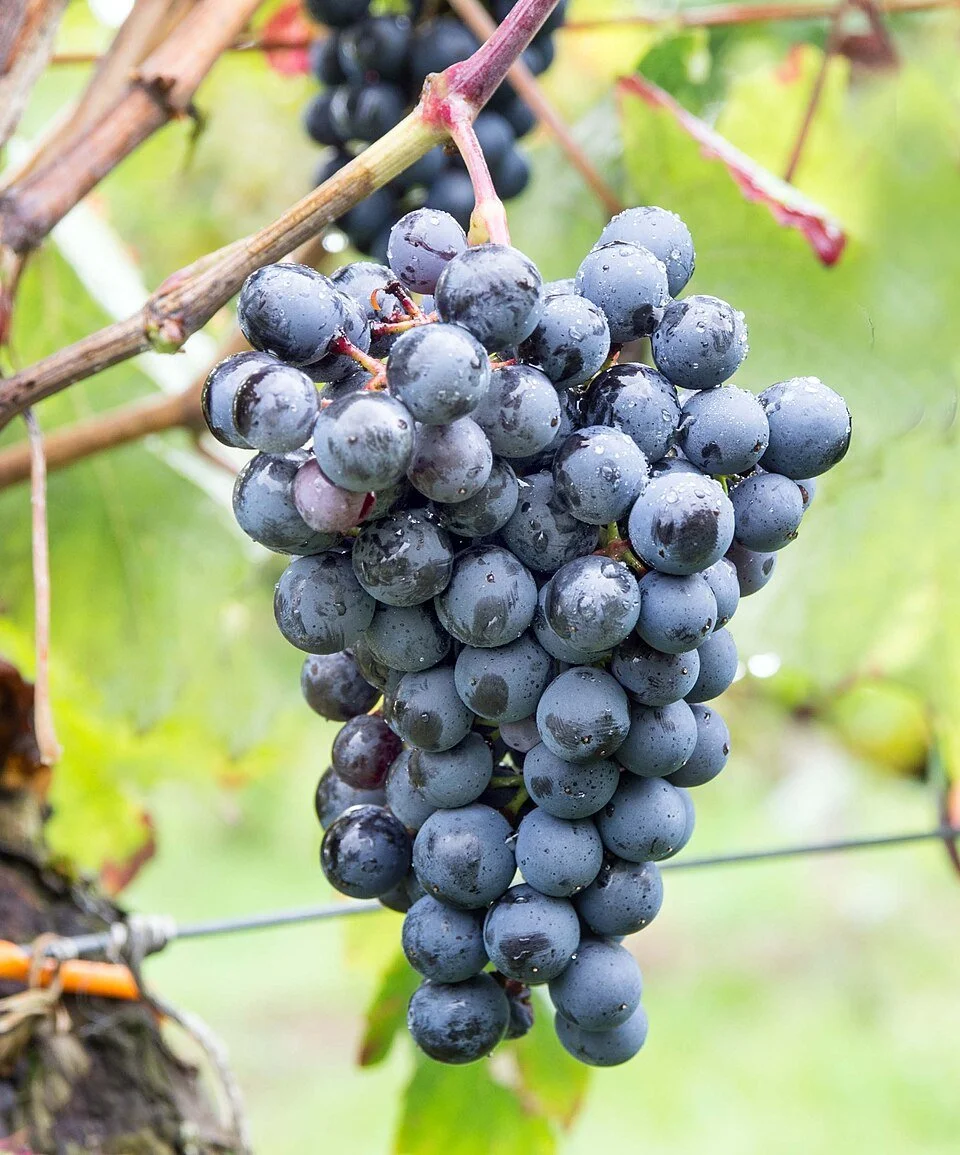
Petit Verdot boasts some of the thickest skins in the wine world, resulting in wines that are deep in color.

Aromas associated with Petit Verdot include blackberry, plum, along with floral notes and dried herbs.

The flavors of Petit Verdot include blackberry, blueberry, and black cherry. Oak aging imparts rich molasses and mocha notes, as well as vanilla and allspice.

It’s renowned for its massive tannins, crisp acidity, and a bold, mouth-coating finish.

Petit Verdot should be served in a over-side red wine glass at 60-68 F after decanting for a minimum of one hour.

Because of its bold tannins, Petit Verdot pairs well with rich, fatty foods such as beef brisket, grilled ribeye, or roasted lamb.

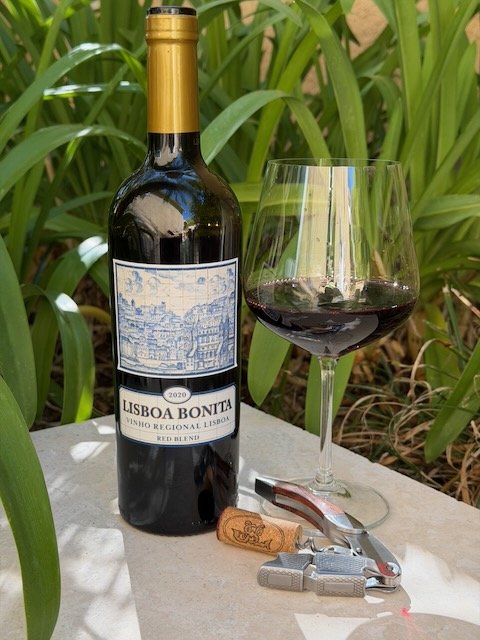
Behind the Cork™ - Lisboa Bonita Red Blend

Lisboa Bonita Red Blend ($19)

Casa Santos Lima is a multi-generational, family-owned winery that stands as one of Portugal's most prolific and highly decorated wine producers. Based at its primary estate, Quinta da Boavista in Alenquer (just north of Lisbon), it has evolved from a historic family trade into a global powerhouse.

The winery was established in the late 19th century by Joaquim Santos Lima, who was already a prominent producer and exporter of Portuguese wine to the UK and Brazil.

In 1990, his great-grandson, José Luís Santos Lima Oliveira da Silva, left a successful career in banking and finance to take over the family estate.

This Lisboa Bonita red blend is produced from Castelão (25%), Caladoc (25%), Tinta Roriz (20%), Alicante Bouschet (15%), and Touriga Franca (15%) grapes. It is a beautiful deep purple color with nice dark fruit aromas. On the palate, this full-bodied wine has lots of dark fruit flavors such as plum, blackberry, and blueberry, while the oak aging infuses notes of chocolate and vanilla. The tannins are bold and benefit from an hour in a decanter. 

This Lisboa Bonita red blend is a tasty one from Portugal. And, at this price, it’s a great value too, which makes it this week’s Behind the Cork™ Wine of the Week. Cheers!
A Tour of Wine Grapes: Nebbiolo

Nebbiolo 🍷

Nebbiolo (neb-ee-oh-low) is one of Italy’s top red wine grapes, most famous for its role in the Piedmont (pyeh-MON-teh) region.

Nebbiolo is ancient royalty. The first written record of the grape dates all the way back to 1268 in a document from the Rivoli region of Piedmont. It has been beloved by Italian nobility, popes, and kings for over 700 years.

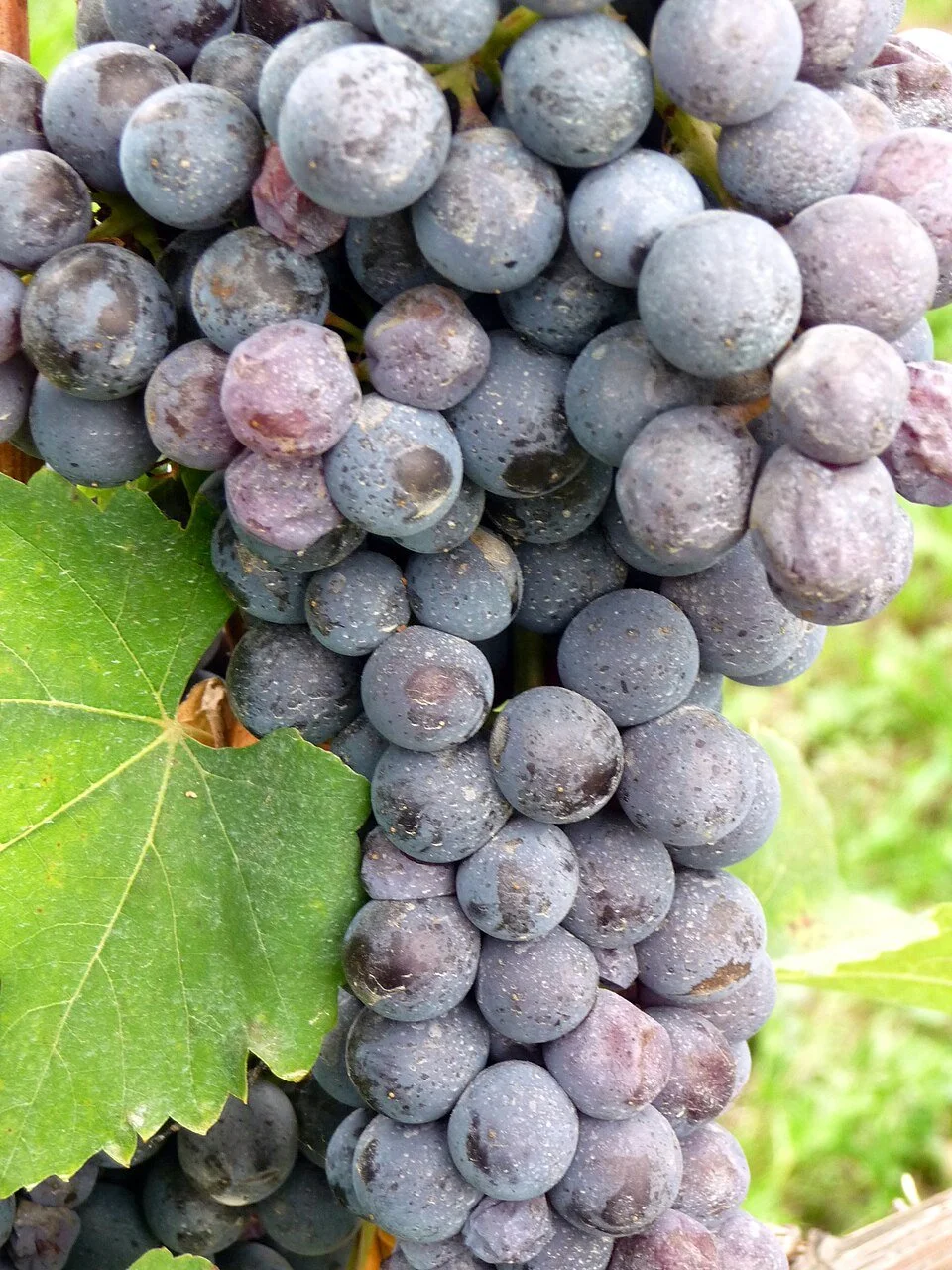
The name Nebbiolo comes from "nebbia," the Italian word for fog. This may come from the late October harvest, when it is typical for a thick fog to roll through the valleys and blanket the Piedmont hillsides. Or, just as likely, it refers to the fact that the grapes develop a milky, fog-like white powder (called bloom) over their dark skins as they mature.

While Nebbiolo is the grape, you’ll also see wines produced from this grape labeled as “Barolo” and “Barbaresco.” These are specific Italian regions that are legally required to use 100% Nebbiolo grapes.

In the glass, wines made from Nebbiolo look incredibly pale. It has a translucent, brick-orange or ruby tint that might make you think it will taste light and soft, like a Pinot Noir. But the moment you take a sip, you’ll experience its massive, mouth-drying tannins and sharp acidity.

Nebbiolo is famously described as having aromas of "tar and roses." It is a bit of a paradox, mixing scents of cherry, cranberry, and raspberry along with rose petals, licorice, and anise.

Flavors include sour cherry, cranberry, raspberry, and red currant. As it ages, it can develop notes of blood orange, black licorice, and black pepper, along with some tobacco leaf.

Nebbiolo is considered to be one of the greatest aging grapes in the world because of its high tannins and acidity. While young, its flavors are bright and intensely fruit-forward. But with age (10 to 20+ years), the wine develops savory, earthy, and complex notes (the classic “tar and roses” profile). Age also causes it to lose its color quickly; a 10-year-old bottle often takes on a orange, brick-like, or amber hue.

Nebbiolo should be served in a large, wide-bowled glass to capture its aromas. The ideal serving temperature is 60°F to 64°F, after decanting for 1 to 2 hours.

Because it is highly acidic and has strong, mouth-drying tannins, it pairs best with rich, fatty foods such as meats and cheeses.

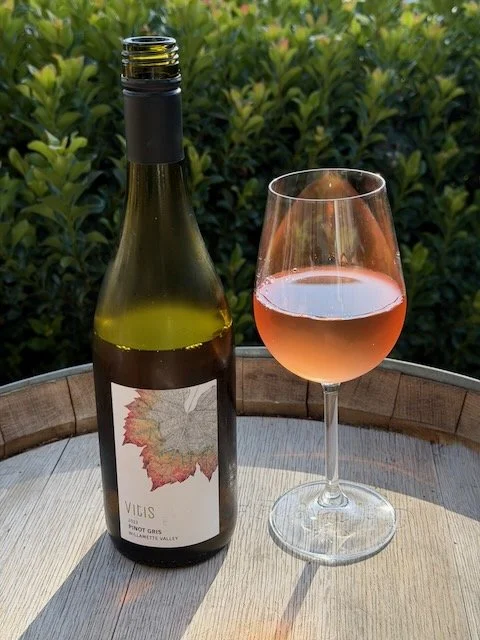
Behind the Cork™ - Vitis Ridge Pinot Gris

2023 Vitis Ridge Pinot Gris ($16)

The Vitis Ridge winery was originally founded and operates as an equal four-way partnership between two couples: Chris and Sharon Deckelmann, and Bruce and Sally Eich..  What started as a hobby in the garage over 20 years ago has evolved into one of the North Willamette Valley's most popular wineries.

Established in 2005, Vitis Ridge is producing about 3,000 cases annually. They focus on unique wines and specialty blends and are currently offering 30 varietals.

Their Estate vineyards are comprised of nearly 150 acres and include Pinot Noir, Maréchal Foch, Gewurztraminer, Pinot Gris, Riesling, Chardonnay, and Muscat.  They also bring in grapes from vineyards throughout the Northwest to provide a broader range of offerings and interesting terrior differences.

This Vitis Ridge Pinot Gris is sourced from their estate vineyards located in Silverton, Oregon. It was processed entirely in stainless steel tanks. It is a beautiful medium salmon color that comes from an extended period of skin contact (4 to 24 hours) with the grape skins that are actually a dusty purple in color (hence the name Pinot Gris which means means ‘gray pinecone’).

This wine has subtle aromas of green apple and pear. On the palate it has flavors of mango, peach and pear without the sharp “bright” acidity normally associated with Pinot Gris. This is apparently due to their approach of making this a “semi-dry” wine, meaning that it has a bit higher residual sugar.

Vitis Ridge keeps their prices affordable so you can open the bottle you want to drink anytime...not just for the special event. That makes this Vitis Pinot Gris a perfect fit as this week’s Behind the Cork™ Wine of the Week! Next time you are in the Willamette Valley in Oregon, stop in at Vitis Ridge and meet their Tasting Room Manager, Brian Everest, to check out all their great wines. Cheers!