
Lambrusco - The Sparkling Red Wine of Italy

Lambrusco is both a brightly colored grape variety and a sparkling red wine produced in Italy.

In the past, Lambrusco has been known as a cheap, bright and fizzy wine often served with ice cubes (remember the old ‘Riunite on ice’ commercials?) But, today there are top Lambruscos that barely resemble those sweet versions that flooded U.S. shelves in the 1970s and 1980s.

Lambrusco comes from Emilia-Romagna which is a large region that cuts across north-central Italy. Major production areas include Modena, Reggiano and Parma.

Historically, Lambrusco wines were widely produced in the methode traditionelle, a process requiring more care and attention because the second fermentation, that creates the bubbles, was done in the bottle. But, today, most Lambrusco wines are produced using the Charmant (or tank) method where it goes through its secondary fermentation in large steel tanks and is then bottled.

While Lambrusco is a grape variety, there is actually an extended family of varieties of grapes that can be used to produce Lambrusco that are all grouped under the “Lambrusco” category.

The styles of Lambrusco can still vary widely. They can be produced as either frizzante (gentle bubbles), or spumante (forceful bubbles) and be labeled Secco (dry), Amabile (slightly sweet) or Dolce (sweet).

Today, the best Lambruscos are dry (not sweet), have delicate aromas of violet and crisp red-berry flavors. They’re silky smooth sparkling wines that offer bright acidity. Most are also extremely well priced. So, give this Italian sparkling red wine a try. It pairs well with a lot of big, bold Italian hearty cuisines. Cheers!
Ever Wonder What a Super Tuscan Wine is?

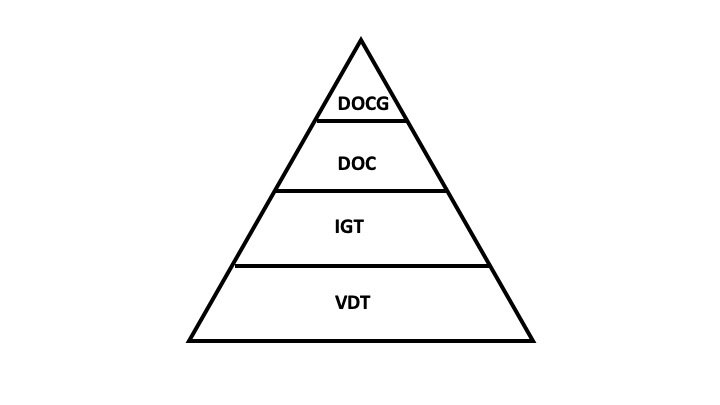
Much like France, Italy has a long tradition of wine. In the 1960s, Italy formalized their wine appellation system modeled after the French system. Under this system, each wine region in Italy was required to operate under strict rules for the types of grapes they were allowed to grow and how their wines were to be produced.

Under this system, native Italian grapes were required to be used in Italian wines. These native grapes included Sangiovese, Barbera, Nebbiolo, and Montepulciano. But these regulations were quickly criticized as being overly restrictive and led small groups to push-back against them. By the end of the ’60s, these groups were producing wine blends with non-native grapes such as Cabernet Sauvignon, Merlot and Syrah.

But, these producers of wines using non-native Italian grapes were forced to bottle their wines using the generic title of Vino da Tavola (Table Wine) that is associated with Italy’s lowest-quality wines. Instead of settling for this, they chose to unofficially call their wines “Super Tuscans” so as to distinguish them from inexpensive table wines.

Finally, in 1992, the Italian government created a new wine classification called “Toscana IGT” for these Super Tuscan wine blends.

The Toscana IGT continues to be used to distinguish Super Tuscans. So, look for Toscana IGT on the label of these unique Italian wines. Cheers!

Ever Wonder About Sangiovese Wine?

Sangiovese (san-jo-VEH-zay) is a famous grape from Italy. Some believe that this indigenous Italian grape dates back to the second century BC, where it was first known to be cultivated by the Etruscan winemakers of Tuscany.

Literally translated from Latin, Sangiovese means the “blood of Jove” in reference to the ancient Roman king of the gods, Jupiter. Sangiovese is Italy’s most planted grape and likely best known as the primary grape used to produce Chianti.

Chianti is region in Tuscany that specializes in Sangiovese. But, there are several other regional names for wines that are made from Sangiovese including Vino Nobile di Montepulciano, Rosso di Montepulciano, Sangiovese Grosso, and Brunello di Montalcino. The Tuscan region of Montalcino produces a very age-worthy Sangiovese that that improve over 10 to 20 years.

Sangiovese is more subtle than other red wine varieties landing about mid-way between a Cabernet Sauvignon and Pinot Noir. Wines produced from the Sangiovese grape are medium to full bodied, dry, and highly acidic, with fruity and savory flavors. Common flavors and aromas include Cherry, Plum and herbs. Additionally, oak aging can add licorice, leather, tobacco and smoke.

Sangiovese has seen renewed interest in the United States after the success of Super Tuscan wines (subject of our next blog) in the 1980s. Sangiovese producing areas include the California regions of Napa Valley and Sonoma County, as well as Washington state.

If you are just getting started with Sangiovese, pick up a bottle of Chianti or Chianti Reserva and enjoy! Cheers!

Ever Wonder About Cooking Wine?

When a recipe calls for wine, one option is to use ‘Cooking Wine.’ But, have you ever wondered if ‘Cooking Wine” is the same thing as drinking wine?

Well, there is such a thing as Cooking Wine. You’ll generally find it in the grocery store near the salad dressings, the cooking oil and vinegar. But like so many products, Cooking Wine can be many things. It can range anywhere from what you might call an inexpensive table wine to a product that is called “Cooking Wine” that includes salt, sugar and other artificial flavors.

Depending on the dish you are preparing, the salt, sugar and other flavors might work. But, in general, when a recipe calls for wine, I’d suggest using something from the wine aisle, not the cooking products aisle.

A common recommendation is that you shouldn’t cook with a wine you wouldn’t drink. This doesn’t mean you need to spend big bucks on a wine for cooking. There are plenty of wines, generally on the bottom shelf, that sell for $5 to $10 and are plenty adequate for cooking.

My guess is that the recommendation to cook with a wine you’d like to drink has more to do with the quantity of wine used in most recipes. If your recipe calls for a half-cup (4 oz) of wine, that would mean that you’d still have approximately 21 oz of wine left in the bottle. And, since you can’t put the opened bottle back on the shelf or keep it for more than a few days in the refrigerator, you’ll have the rest of the bottle to enjoy with the meal!

So, next time a recipe calls for wine, skip the “Cooking Wine” and choose something from the wine aisle. Chardonnay or Sauvignon Blanc work great for recipes that call for white wine while a Cabernet Sauvignon or a Merlot will give nice flavor to a recipe calling for red wine.

Cheers!