
• Home
  • Blog
    • Wine 101 — Overview
    • Choosing a Wine
    • Flavors, Aromas and Texture in Wine
    • Grapes Used In Winemaking
    • Serving Wine
    • Types of Wine
    • Listing of Wines
    • Visiting Wineries & Wine Tasting
    • Wine Making
    • Wine Regions of the World
    • Wine Fun Facts
    • Behind the Cork™ Reviews
    • 2026 Behind the Cork™ Wine #1
    • 2025 Behind the Cork™ Wines #2
    • 2025 Behind the Cork™ Wines #1
    • 2024 Behind the Cork™ Wines #1
    • 2024 Behind the Cork™ Wines #2
    • 2023 Behind the Cork™ Wines #1
    • 2023 Behind the Cork™ Wines #2
    • 2022 Behind the Cork™ Wines #1
    • 2022 Behind the Cork™ Wines #2
    • 2021 Behind the Cork™ Wines #1
    • 2021 Behind the Cork™ Wines #2
    • 2020 Behind the Cork™ Wines #1
    • 2020 Behind the Cork™ Wines #2
    • 2020 Behind the Cork™ Exceptional Wines
    • 2019 Behind the Cork™ Wines
  • Glossary
  • About
Menu

EverWonderWine?

  • Home
  • Blog
  • Wine 101
    • Wine 101 — Overview
    • Choosing a Wine
    • Flavors, Aromas and Texture in Wine
    • Grapes Used In Winemaking
    • Serving Wine
    • Types of Wine
    • Listing of Wines
    • Visiting Wineries & Wine Tasting
    • Wine Making
    • Wine Regions of the World
    • Wine Fun Facts
  • Reviews
    • Behind the Cork™ Reviews
    • 2026 Behind the Cork™ Wine #1
    • 2025 Behind the Cork™ Wines #2
    • 2025 Behind the Cork™ Wines #1
    • 2024 Behind the Cork™ Wines #1
    • 2024 Behind the Cork™ Wines #2
    • 2023 Behind the Cork™ Wines #1
    • 2023 Behind the Cork™ Wines #2
    • 2022 Behind the Cork™ Wines #1
    • 2022 Behind the Cork™ Wines #2
    • 2021 Behind the Cork™ Wines #1
    • 2021 Behind the Cork™ Wines #2
    • 2020 Behind the Cork™ Wines #1
    • 2020 Behind the Cork™ Wines #2
    • 2020 Behind the Cork™ Exceptional Wines
    • 2019 Behind the Cork™ Wines
  • Glossary
  • About

Home > Blog

Wine Blog

New articles every week. Whether you're looking to understand a specific wine term, discover a grape variety you've never heard of, or find an affordable bottle worth trying, the EverWonderWine blog has been tackling those questions one article at a time for over a decade.

You'll find two types of posts here. The educational articles cover everything from the basics — acidity, tannin, sweetness, body — to deeper dives into specific grapes, regions, and winemaking techniques, including the ongoing Tour of Wine Grapes series. The Behind the Cork™ posts are honest, no-nonsense reviews of affordable, everyday wines: what they taste like, where they come from, and whether they're worth your money. There's always something new to explore.

Blog Archive

  • Listing by Year

No results found

The Various Tiers of Italian Wines

April 17, 2021

Italian wines, like French and Spanish wines, have certain restrictions and laws regarding their production. These Italian regulations result in their wines being classified into four official tiers.

While you’ll find the producer’s name, appellation, vintage and alcoholic content on the label of an Italian wine, you’re also likely to find its official classification there too. These classifications are a guide to their quality.

In the 1960s, Italy began its wine classifications with heavy influence from the appellation system used by their northern wine neighbors in France.

Italy began with the DOC and DOCG categories and then created the IGT category in the early 1990s.

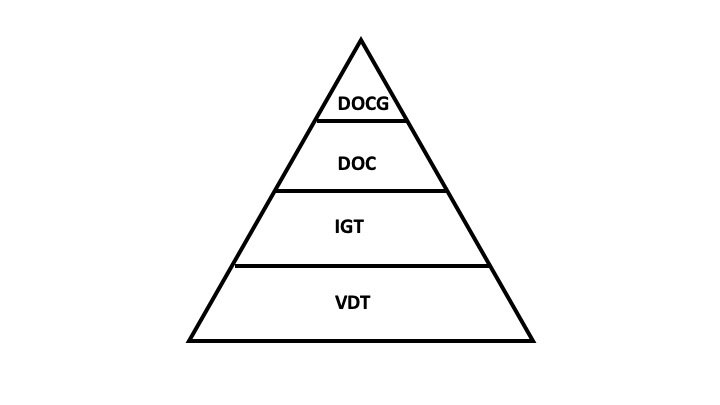
Italy’s four official tiers of wine classifications are as follows:

  • DOCG (Denominazione di Origine Controllata e Garantita) — This is the highest classification for Italian wines. There are more than 7 DOCG wines in Italy, most of them from the regions of Piemonte, Tuscany, and Veneto. The controls (controllata) for these wines include the methods used in wine production and provides a guarantee (garantita) of the wine’s quality. The strict rules imposed on a DOCG wine include the allowable grape varieties, limits its production (yield), defines the necessary grape ripeness for harvest, specifies the winemaking procedures and finally, defines aging requirements on barrels and bottle before a wine is released to the market. These wines are also subject to official tasting procedures. As an added guarantee, and to prevent counterfeiting, you’ll find that these bottles have a numbered government paper seal on the neck.

  • DOC (Denominazione di Origine Controllata) — This is the primary tier of Italian wines and covers nearly all traditional Italian wine style. There are more than 300 DOC titles in Italy, each having its own unique set of laws governing their wines. These laws include the viticultural zone, the grape varieties and the wine’s style. These wine also have an official paper seal on the neck of the bottle.

  • IGT (Indicazione Geografica Tipica) — This classification was introduced in 1992 allowing certain freedoms to Italian winemakers. This classification focuses on the region of origin, much like the AVA system in the U.S., rather than grape varieties or wine styles. It has significantly helped Italian wine makes who produced wine from grape varieties, or blends of grapes, not allowed under the DOCG and DOC classifications.

  • VDT (Vino da Tavola) — This is the most basic category of Italian wines. Meaning 'table wine' this category is the lowest tier. Table wines can be made from grapes grown anywhere in Italy and are rarely of high enough quality to be exported.

Within each of the tiers you may also see the words “Classico,” “Superiore” and “Riserva” which also have regulated meanings:

  • Classico: These wines are made in the original historic center of a wine-producing region. Examples include Chianti Classico and Valpolicella Classico.

  • Superiore: These wines wines are of higher quality often because of higher alcohol (typically at least 0.5% higher) than the minimum required and/or it has been aged longer than required.

  • Riserva: These are aged longer than typical. Generally, for at least two years.

In Wine Types Tags Italian Wine, Classifications
Comment


Sign Up!


Don't Miss A Blog! Subscribe!

Subscribe to receive each new blog entry via email. The mail list is used exclusively for my blog. Your email address will not be used for any other purpose or shared in any way. 

Once you click on the "Submit" button, you will receive an email asking to confirm your subscription.


Recent Blog Entries:

Blog
Behind the Cork™ - Bouvet Rose Excellence Brut Sparkling Wine
about 2 days ago
A Tour of Wine Grapes: Merlot
about 6 days ago
Behind the Cork™ - Chateau dAqueria Tavel Rose
about a week ago
A Tour of Wine Grapes: Marsanne
about a week ago
Behind the Cork™ - Chateau La Nerthe Les Cassagnes Rose
about 2 weeks ago

Questions or Comments?

Please send me a message!


Submit Samples for Review


Copyright © EverWonderWine? 2026