
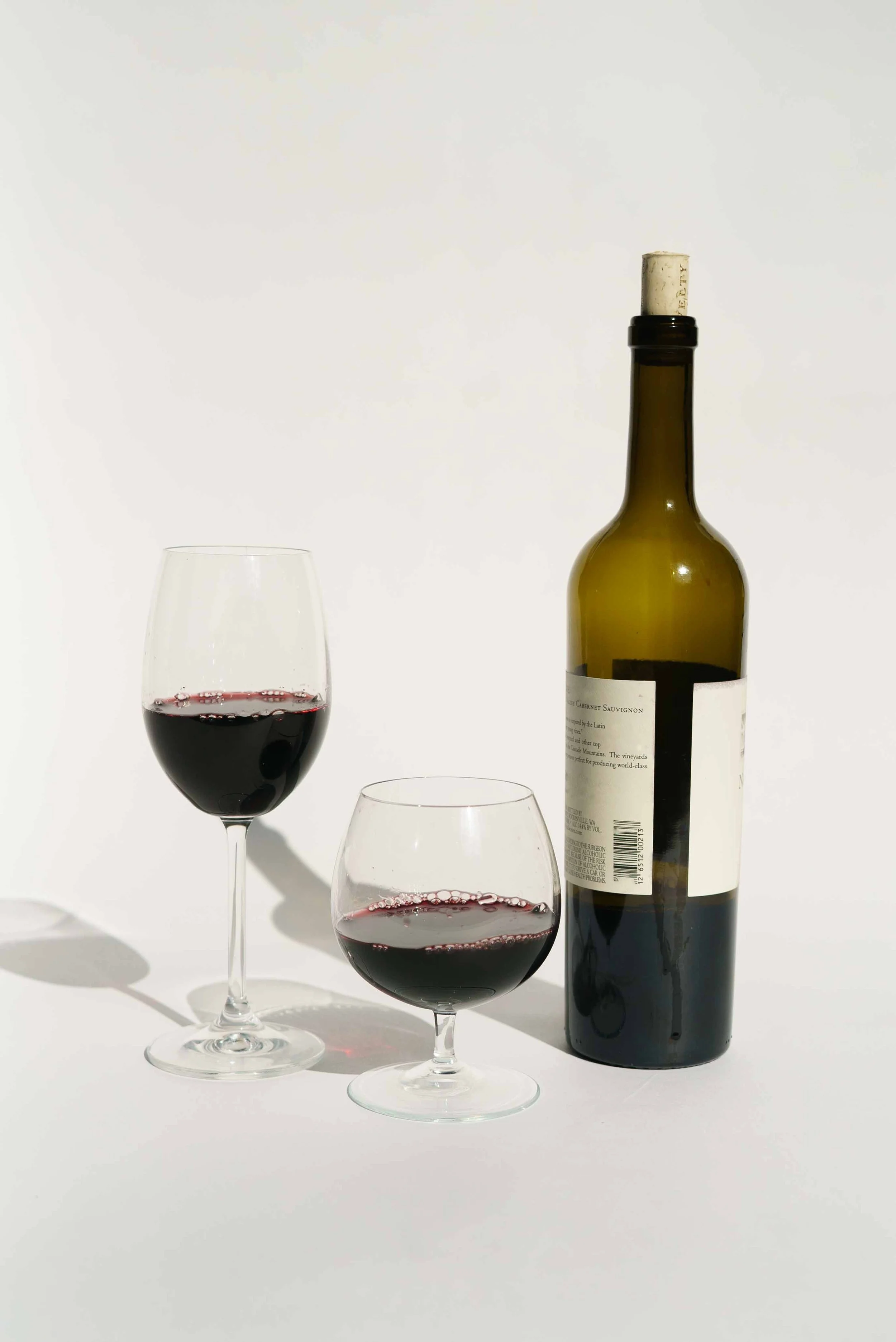
Ever Wonder How to Store an Opened Bottle of Wine?

It happens. You open and bottle of wine but don't finish it. Now what?  Well, you a have a couple of options.

First, it's best if you can limit wine's exposure to air.  Exposure to air will tend to take the life out of it. So, it's best to use a device that can remove the air from the bottle and seal it.  There are several such inexpensive devices that will do this.  They consist of bottle stoppers and a vacuum pump.  After placing the rubber stopper in the bottle, you simply hand-pump the bottle to remove the air.  First issue resolved!

The second thing you should do is to keep the wine cool. Any kind of heat of 65 degrees F or higher will also ruin a wine. If it's a white wine, simply put it in the refrigerator.  It will keep nicely for 1-3 days. When you're ready to finish the bottle, just take it out of the refrigerator about 30 minutes before you intend to drink it.  That way it'll be at the right temperature.  If it's a red wine, you can also put it in the refrigerator or simply store it in a nice cool spot that gets little or no sun exposure.  In the refrigerator, a red is probably only going to hold up well overnight. So, be sure to enjoy the rest of the wine the next day.

Of course, the easiest way to avoid the problem all together is to finish the bottle!  But when that's not an option, simply try to limit the open bottle's exposure to air and keep it cool.  Then finish the bottle soon. Cheers! 

What's the Intrigue of an Old Bottle of Wine?

Like an old coin, an old painting, an old stamp, an old car or any other antique, old items hold certain appeal and intrigue. Maybe it's the notion of what was happening at the time when the item was made. Or, it could just be the look and feel of an old item that evokes an emotional experience when thinking back to the time when the item was produced.

In some ways, an old bottle of wine is like an antique. But, unlike any other type of antique, while it is indeed old, it has changed since it was originally produced. That, I believe, provides the real intrigue.

After wine goes into the bottle it continues to evolve. Even though it looks like it's still, the wine goes through further chemical reactions that can alter the way it looks, smells, tastes and feels in your mouth. Sometime for the better and sometimes for the worse. But, nonetheless, older wines from the better wine regions of the world and from the better wineries do become more sought after when they have aged.

Pulling the cork on an old bottle can be a big thrill. Hopefully, it's still drinkable. And if it is, it may be unlike any wine you've ever tasted.

But, generally speaking, drink your wines young (with in 10 years of the vintage date) as they are in their prime. If you do choose to lay a few bottles down, ensure they are stored in a cool, dark environment.  Cheers!

Are Older Wines Better?

It's commonly believed that older wine is better. And that can be true. But often, it's not.

If you've read some of my past blogs, you know that one of my favorite lines is that a wine cellar is not a wine hospital -- it doesn't make a bad wine better.

Today, most wine is meant to be enjoyed right away. When it's bottled, it's ready for consumption. Ageing doesn't make it better.

What you will find is that older wines do indeed change. On the positive side, tannins in red wines will mellow making the wine feel smoother in your mouth. But, on the down side, the big fruit flavors and aromas also fade. You'll begin to get different smells and tastes in older wines that you may not expect from a young wine. Especially if the wine is oxidized, you'll detect a distinct nutty flavor. Also, as red wines age, the red color changes from deep red to a much paler red and can even begin to take on orange colors.

A good rule of thumb is that most wines will begin to fade to the down side in as few as five years and after 10 years they'll generally have lost most of their character, if not out-right spoiled. And, remember, this aging must be done properly in a cool, dark place.

So, older wines can be better. But, you don't need to age wines to be able to drink great wines.

Next time we'll look at old wines and their appeal. Cheers!


Why Do Some Wines Age Better Than Others?

Last time we addressed some general guidelines on how long wines can age, noting that rosé should be consumed immediately after bottling while still bright, fruity and fresh, most white wines are typically best within a couple of years of bottling, and red wines can be aged for several years.

So, the common thought is that red wines age best. And, that is correct.  But why is that? Why can red wine be aged longer than whites?  After all, they are both made from the juice of grapes! The answer has a lot to do with tannins, but acidity also plays a role too.

Tannins are chemical compounds that act as natural preservatives in wine. They come from the skins, seeds and stems of grapes. Tannins also come from the wood barrels where the wines are aged. 

But, as previously noted, the key difference between red wines and white wines is that red wines are fermented along with the grape skins, seeds and some or all of the stems while the juice for white wines is separated from the skins, seeds and stems before fermentation. Thus, red wines have much higher tannin levels than white wines even before they go into barrels for aging. It's the chemical compounds in these tannins that have the power to preserve a wine.

But the levels of tannins in red wines vary by the variety of grapes used. High tannin red wine grapes include Cabernet Sauvignon, Cabernet Franc, Nebbiolo, Sangiovese, Tempranillo, Bordeaux blends, Merlot and Petite Sirah, just to name a few.  Medium tannin wines include Malbec, Syrah and Zinfandel, while low tannin wines include Gamay, Barbera, Pinot Noir and Valpolicella blends.  So it's the high tannin wines that typically age best.

Acidity also plays a role in how well a wine may age. The natural acid levels in a wine acts to preserve the wine. That's why only certain white wines can withstand aging. Wines such as French Chablis, German Riesling and Loire Valley Chenin Blanc all have naturally high acid levels and are capable of extended aging.

So forget the myth that all wines improve with age. It's the rare few that actually do age well. And, there is actually a peak after which any wine will go into decline. So choose wisely if you are looking to age wines, ensure they are properly stored and, if you have the luxury of owning multiple bottles of a particular wine that you are aging, open one periodically so as to catch it in its peak.

Next time I'll share a bit more about acidity in wines and how you perceive it.  Cheers!


Behind the Cork™ Wine of the Week - Layer Cake Cabernet Sauvignon ($13)

Don't let the chocolate cake on the label fool you. This is a serious wine, from a serious wine maker.  Jason Woodbridge is the owner of Hundred Acre. His 2012 Hundred Acre Cabernet Sauvignon received Wine Spectator's 94 point rating and is a $450 bottle of wine!  He is also the owner of Layer Cake stating that he "Likes the idea of a young man putting 20 bucks on the counter and getting some change back on a good wine."  This California Cabernet Sauvignon is a great value and well worth trying. Enjoy!

How Long Should You Age a Wine?

Last time I mentioned buying a rosé that turned out to be more than three years old, that may not have been properly stored, had turned a brown-orange color and had nutty flavors that a fresh, fruity rosé should not have.  And, several years ago I discovered a bottle of Chardonnay that had gotten stuck away at home and was re-discovered after a couple of years. It too had become a golden-brown color and lost all it original flavor.

The general rule of thumb on rosés is to drink them right away while they are fresh. And with white wines, they can tolerate some aging but most should be consumed within a couple of years after their vintage date. And, with red wines, the assumption is that they just keep getting better with age. But, this is not generally true.

Most wines today are meant to be consumed immediately.  Wineries bottle their wines when they are ready to drink. You should feel confident in opening a bottle of red wine immediately after you purchase it.  If you do choose to put away some wine to let it age, you have to be a bit careful. The line I love is that "A cellar is not a wine hospital, it doesn't make a bad wine better."  So before you put some wine away for aging, ensure that it's starting out as a good wine.

You also really need to be careful of how and where you age your wines. You need a cool (50-55 F), dark place with something around 75% humidity. If your basement fits these criteria, you are good to go. Otherwise, you really need a wine refrigerator. Not a standard refrigerator. They are too cold and have little to no humidity.

Then, the question becomes "How long should you age a wine?"  Well, you may be surprised by Wine Enthusiast's recent 2015 Vintage Chart (February 2016 issue).  Interestingly, their recommendation for Napa Cabernet's (considered a top U.S. wine) is that anything older than 2001 is either past its peak, in decline or may be undrinkable!  And that's with all the proper storage techniques. Reviewing all the rest of the U.S. made wines shows that they are past their peak if they were vinted in 2003 or earlier. And something like a Syrah, produced in the South Coast of California, is questionable if it's older than 2009.  So aging has its limits.

If you do choose to put some wine away, first ensure that it's a good wine to start with, store it under the proper controlled conditions, and don't let it go too long.  A common practice, among those who have wine cellars, is to purchase a case of a single wine and open a bottle each year to see how it's aging. You'd hate to put a case of good wine away for a dozen years, then pull out a bottle and find that they have all gone well past their peak.

There are many factors that affect a wine's ability to age, and we'll touch on those next time.  For now, I'm going to pull the cork on a nice 2010 Sonoma Zinfandel that should be at its peak maturity now. Cheers!


Behind the Cork™ Wine of the Week - Sextant Wheelhouse Zinfandel ($15)

This is a nice Zinfandel with flavors of blackberries, dark cherries and some toasted flavors that finishes well. It is a bold, somewhat jammy wine that works well just sipping by the glass or enjoying with a meal.