Behind the Cork™ - Alberto Motta Ansonica

2019 Alberto Motta Ansonica ($23)

Ansonica (an-so-NIC-ah) may not be a grape variety that you are familiar with. I was not. And, the wine region of Maremma Toscana in Italy may not be a region you are familiar with. But, both are quite interesting.

When researching the Ansonica grape, I learned that it is also known as Inzolia. Again, probably not a grape you are familiar with. As I learned, Ansonica is a white-wine grape that most likely originated in Sicily that likely found its way there from Greece. And, while it is mainly grown in Sicily, it now also appears in some Tuscan whites. But, it is most famous as one of the grape varieties used in the production of Marsala fortified wines.

This Alberto Motta Ansonica is deep gold in color with an extremely delicate aroma. On the palate, it has a richness to it as well as a faint nutty flavor along with light citrus notes and good acidity on the finish. Maybe the best way to describe this wine is somewhat like an un-oaked Chardonnay. But, of course, different.

This was an interesting little journey into an unfamiliar grape. And, an unfamiliar region. So, check out the Maremma Toscana region of Italy (a sub-region of Tuscany) and stay tuned for a couple more Behind the Cork™ blogs on red wines from this up and coming region. Cheers!


Disclosure of Wine Sample Submission: I received this sample at no cost for review. The opinions expressed are entirely my own.

Sample Provided by Francesco Mazzei, President of the ‘Consortium for the protection of Maremma Toscana Wines’ (via ZEDCOMM)
Behind the Cork™ - Wines of Alentejo Portugal (Part 2)

Alentejo (ah-len-TAY-zhoo) is one of seven wine regions in Portugal and a real up-and-comer in today’s global wine world.

With its distinct and diverse growing areas, hundreds of unusual grape varieties and ancient wine traditions, Portugal’s Alentejo region is a wine explorer’s paradise.

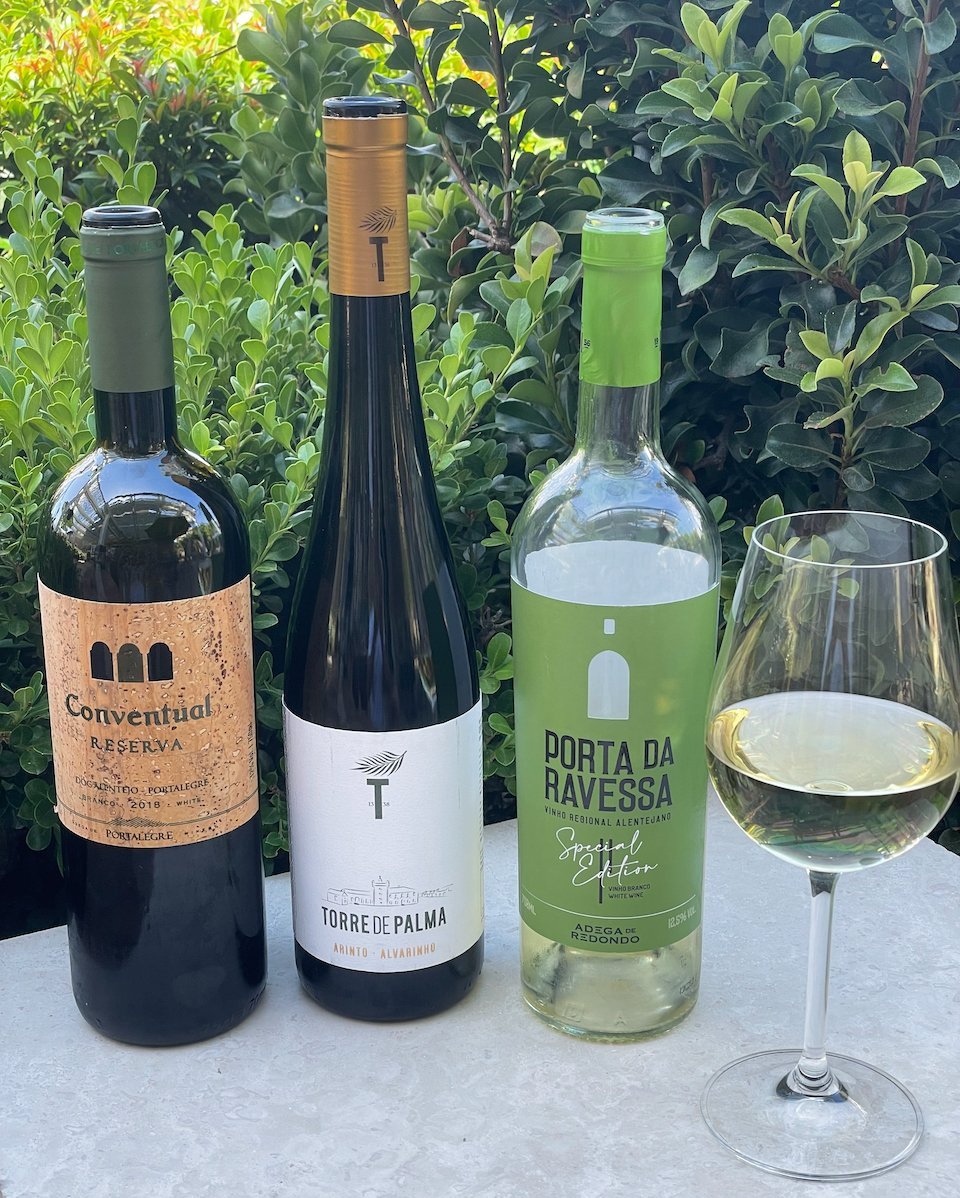
2018 Aldela de Portalegre Conventual Reserva ($25)

Founded in 1954, the Adega de Portalegre Winery has been distinguished by the quality and originality of their wines. The vineyards are located at an altitude around 2000 feet with the average age of the vineyards being 70 years old.

This wine is produced from 40% Arinto, 20% Fernão Pires, 20% Siria and 20% Bical. It was fermented in stainless steel vats and aged in French and American oak barrels. It is pale gold in color with aromas of citrus fruits, spices and beeswax. On the palate it has bold flavors of lemon and lime, minerality, moderate acidity and a bit of tartness. It is a “Reserva” which is the designation of superior quality for wines that must be certified by the certification body.

2021 Torre de Palma Arinto & Alvarinho ($40)

This wine is produced from 50% Arinto and 50% Alvarinho. It is fermented and aged for six months in used French oak barrels from Burgundy with bâttonage and sur lie. It is pale gold in color with delicate aromas of pear and honey. On the palate it has bold citrus flavors and excellent acidity and salinity with bit of tart pepper on the finish.

2020 Adega de Redondo Porta da Revessa Special Edition White ($15)

Porta da Revessa is inspired by the iconic door of the secular Castelo de Redondo, where the marks of the Vara (a long spiked lance used by a picador) and the Côvado (a unit of measure) are still visible today. This wine is produced from 40% Verdelho, 30% Arinto and 30% Antão Vaz. It is fermented in stainless steel tanks and followed by stirring on lees during the aging process. It is pale yellow in color with aromas of melon, pear, minerals and herbs. On the palate, the aging on lees contributes to a softer mouthfeel with good acidity on the finish.

If you are not familiar with Portugal’s native grapes and the flavors of their white wines, just think of Sauvignon Blanc or Pinot Grigio and you’ll begin to understand their flavors. They are bright and fruity with refreshing acidity that goes great with a wide variety of foods. And, again, perfect to be the Behind the Cork™ Wines of the Week. Cheers!


Disclosure of Wine Sample Submission: I received these samples at no cost for review. The opinions expressed are entirely my own.

Samples Provided by the Wines of Alentejo Sustainability Program and the Noted Wineries of Alentejo via Creative Palate Communications

Behind the Cork™ - Wines of Alentejo Portugal (Part 1)

Alentejo (ah-len-TAY-zhoo) is one of seven wine regions in Portugal and a real up-and-comer in today’s global wine world.

With its distinct and diverse growing areas, hundreds of unusual grape varieties and ancient wine traditions, Portugal’s Alentejo region is a wine explorer’s paradise.

2020 Rocim Mariana White ($16)

This wine is from the Vidigueira sub-region of Alentejo which is the southernmost sub-region where the climatic conditions are the most temperate of Alentejo and provide an excellent micro-climate for the production of quality wines.

It is produced with 60% Antão Vaz, 30% Arinto and 10% Alvarinho grapes that were fermented in stainless steel tanks to preserve the bright fruit flavors. It was then aged for five months in stainless steel and two months in the bottle before release. This wine in pale straw in color with delicate tropical fruit aromas. On the palate it has bright citrus flavors of lemon and lime, good acidity and subtle notes of honey.

2021 Herdade do Esporão Colheita Branco ($18)

This wine is produced solely from grapes grown at Herdade do Esporão under organic farming methods. It is produced with Antão Vaz, Viosinho, Alvarinho, Vermentino and other grapes. It was partially fermented in concrete tanks and left on the fine lees for four months. It is pale gold in color with aromas of tropical fruit, pear and honey. This wine has good acidity but having been on lees for four months produces as softer mouthfeel of tropical fruit and melon flavors.

2020 Marques de Borba Colheita ($13)

This wine is produced from 70% Arinto, 15% Antão Vaz and 15% Viognier grape varieties. It is medium gold in color with delicate aromas that include subtle herbal notes. It has bright fruit flavors and refreshing acidity with slightly tart finish.

If you are not familiar with Portugal’s native grapes and the flavors of their white wines, just think of Sauvignon Blanc or Pinot Grigio and you’ll begin to understand their flavors. They are bright and fruity with refreshing acidity that goes great with a wide variety of foods. And perfect to be the Behind the Cork™ Wines of the Week. Cheers!


Disclosure of Wine Sample Submission: I received these samples at no cost for review. The opinions expressed are entirely my own.

Samples Provided by the Wines of Alentejo Sustainability Program and the Noted Wineries of Alentejo via Creative Palate Communications

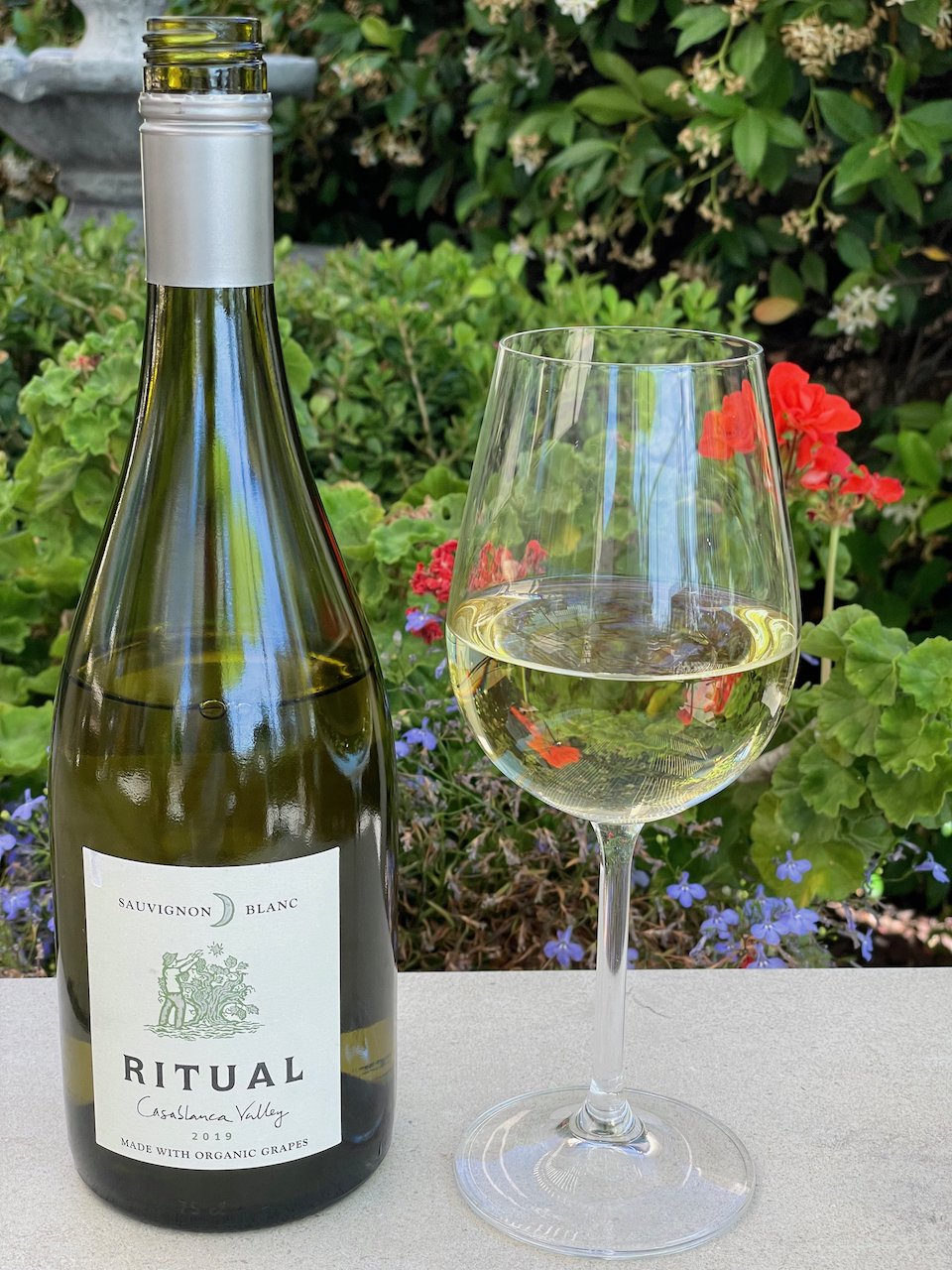
Behind the Cork™ - Ritual Sauvignon Blanc

2019 Ritual Sauvignon Blanc ($20.99)

This organic Sauvignon Blanc is from the Casablanca Valley in Chile. This cool climate area is located on the northwestern side of Chile’s coastal range that is less than 30 km from the Pacific Ocean.

This wine is produced from 100% Sauvignon blanc grapes that are whole-cluster pressed and allowed to sit for 36 hours. It is then divided and fermented in 30% concrete eggs, 30% neutral oak and 40% stainless steel. By doing this, the winemaker is able to create different components each with varying aromatics, flavor and textures. The wine is then aged for eight to ten months with the lees being stirred every other week, based on the fruit days of the bio-dynamic calendar.

This 2019 Ritual Sauvignon Blanc is medium gold in color and has aromas of citrus, tropical fruit and melon. On the palate it has bright fruit flavors of grapefruit and lemon, nice acidity and a smooth mouth-feel due to being aged on lees. The finish is long and refreshing.

This wine from Ritual is not your typical Sauvignon Blanc. The concrete and oak fermentation, along with the time on lees, definitely adds some wonderful texture and smoothness to this wine. Cheers!


Disclosure of Wine Sample Submission: I received this sample at no cost for review. The opinions expressed are entirely my own.

Sample Provided by González Byass (via Donna White Communications)

Behind the Cork™ - White Wines from Spain

2021 Pazo de Lusco Albariño ($24.99)

This Albariño is from Adega Pazos de Lusco, one of the most renowned wineries of the Rías Baixas wine growing region along the northwestern coast of Spain. The winery boasts a historic 16th century complex that was in used until 2009 featuring a chapel, barn and stables typical of rural life in the Galician history. The winery is now located in new modern facilities that are just steps away from its origin.

This wine is produced from 100% Albariño grapes with native yeasts and aged on lees.

The Pazo del Lusco Albariño is pale gold in color with aromas of lemon, grapefruit and honeydew melon. On the palate it shows bright fruit flavors, some peach, refreshing acidity and finishes with just a hint of saline.

2020 La Miranda Secastilla Garnacha Blanca (14.99)

This La Miranda Garnacha Blanc is from the Secastilla Valley in Spain. The vineyards are located in the north-eastern corner of Spain and have a “Mediterranean microclimate” suitable for growing olives, grape vines and almond trees. The vineyards are set on stony slopes 2300 feet above sea level. There, La Miranda has recovered very old vineyards of Garnacha Tinta and Garnacha Blanca, the traditional varieties of the Secastilla Valley.

This wine is produced from 100% Granacha Blanca (a white grape that is a relative of the red Grenache Noir grape). After fermentation, it was transferred to oak barrels where it remained for four months with frequent batonnage.

The La Miranda Garnacha Blanca is pale gold in color with delicate fruit aromas, along with some earthiness and straw. This one is softer on the palate, with flavors of green apple and herbs, a bit of pepper and good acidity.

Both of these Spanish white wines are from the Gonzalez Byass family of wines and great fits as Behind the Cork™ Wines of the Week. Cheers!


Samples Imported and Provided by Gonzalez Byass (via Donna White Communications)