
The Art of Wine Making: Choosing the Duration for Fermentation

Winemakers control the duration of fermentation by managing several key factors that influence how long the yeast remains active in converting the sugar in the grape juice to alcohol.

Here’s are some ways a wine maker can control the length of fermentation:

— Controlling Fermentation Temperature:

  • Cooler temperatures (e.g., 10–15°C or 50–59°F) slow down fermentation thus extending the process

  • Warmer temperatures (e.g., 20–30°C or 68–86°F) speed up the fermentation rate

— Selecting the Yeast Strain:

  • Different strains of yeast have different fermentation rates and tolerances

  • Some yeasts ferment quickly and efficiently, while others work more slowly or produce more complex flavors

— Adjusting the Sugar Content (Brix Level):

  • Winemakers can adjust this by harvesting grapes at different ripeness levels or by adding sugar (a.k.a., chaptalization) which is rarely done

  • More sugar means a longer fermentation, since the yeast has more to consume

— Adding Nutrients:

  • Adding nutrients, such as nitrogen, can keep yeast healthy and extend or support the fermentation process

  • A lack of nutrients can cause fermentation to end early

— Limiting Oxygen Exposure:

  • Yeast needs a small amount of oxygen early on in order to multiply. Limiting the fermenting grapes oxygen exposure later in the process can help finish fermentation more efficiently

— Intentionally Stopping Fermentation:

  • Winemakers can stop fermentation early to retain sweetness by:

    • Lowering the temperature rapidly

    • Adding sulfur dioxide (SO₂) or alcohol to kill or inhibit yeast

    • Filtration to physically remove the yeast

While typical wine fermentation durations vary depending on the type of wine, fermentation temperature, and winemaking goals, here are general guidelines:

  • Red Wines: Primary fermentation: 5 to 10 days

  • White Wines: Primary fermentation: 10 to 21 days

  • Rosé Wines: Typically similar to white wine fermentation in duration and temperature: 10 to 14 days

  • Sparkling Wines (Traditional Method):

    • Primary fermentation: like white wines, 10 to 21 days

    • Secondary fermentation: 1 to 3 months, followed by aging on lees for months or years
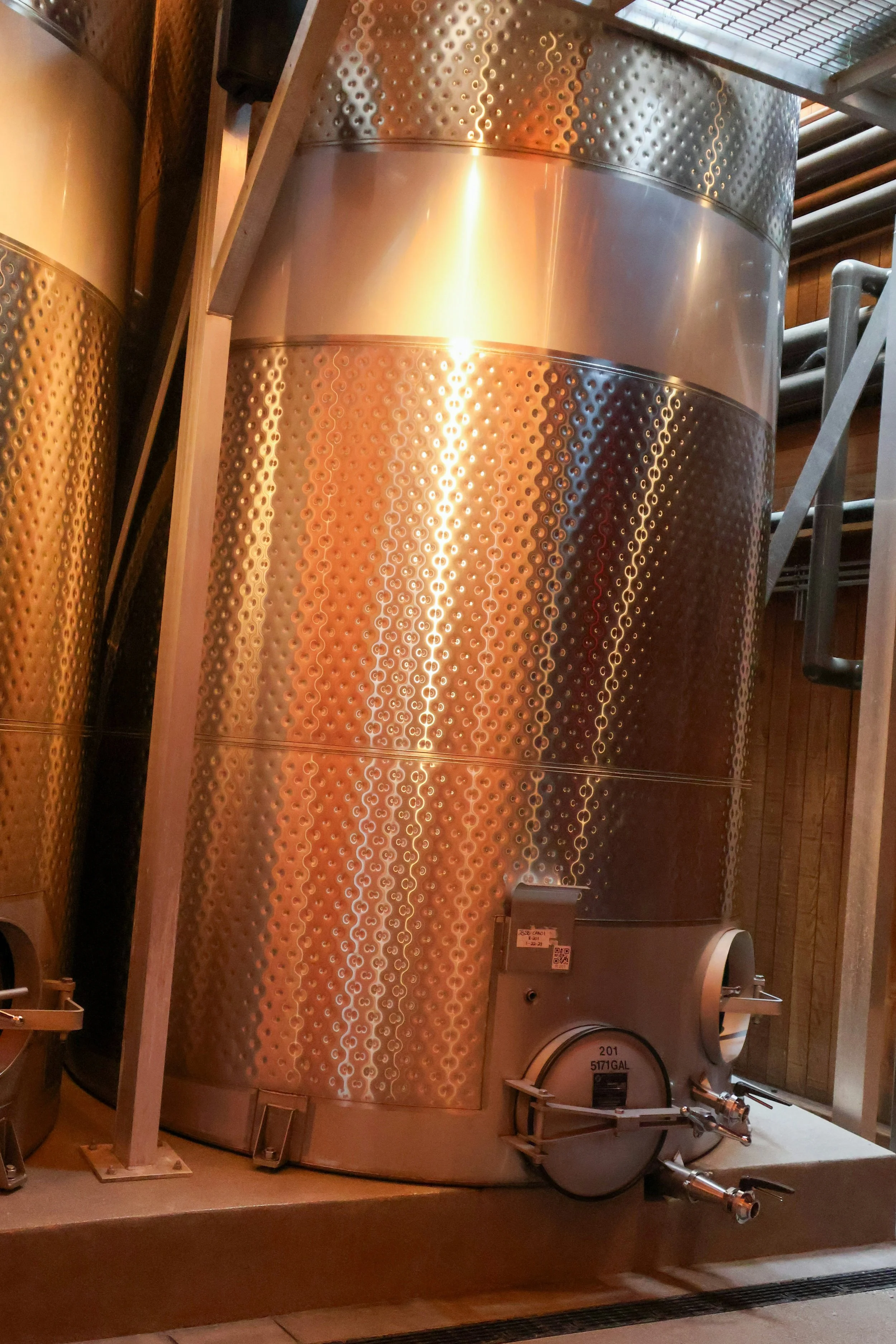
The Art of Wine Making: Choosing the Right Vessel for Wine Fermentation

A large stainless steel tank used for fermentation

Photo by Meg von Haartman on Unsplash

Another aspect of the art of wine making involves choosing the type of vessel used for fermentation. Fermentation vessels are available in several materials with each one allowing the wine maker to influence their wine's flavor, texture, and overall style.

Here's an quick overview of the main types for fermentation vessels and their pros and cons:

1. Stainless Steel Tanks

Stainless steel tanks are widely used in winemaking

  • Pros:

    • They are made of an inert material — it doesn't impart any flavor to the wine

    • These tanks are easy to clean and sanitize

    • It allows wine makers to conduct fermentation at highly controlled temperatures

  • Cons:

    • While being a “pro,” the fact that it does not impart flavor can also be a negative

    • Doesn’t allow for oxygen to interact with the fermenting wine, resulting in wines that can be sharper with harsher tannin

    • Very costly

  • Uses: Crisp whites like Sauvignon Blanc, rosés, and some lighter-bodied reds

2. Oak Barrels or Vats

Used for traditional or premium red wines and some white wines

  • Pros:

    • New oak can add significant flavors (vanilla, spice, toast)

    • The porous nature of oak allows “micro-oxygenation” that can soften tannin softening and add to a wine’s complexity

  • Cons:

    • Harder to clean

    • Oak barrels are expensive, especially new barrels

  • Used for: Chardonnay and Fumé Blanc as well as for most red wines

3. Concrete Tanks or “Eggs”

Often used for artisan and natural winemaking

  • Pros:

    • Provides good temperature control during fermentation

    • Allows for micro-oxygenation without imparting significant flavor

    • Egg-shaped vessels promote convection currents — helps keep the lees in suspension

    • Can enhance a wine’s texture and minerality

  • Used for: Both reds and whites

4. Clay Amphorae (or Terracotta Jars)

This type of vessel has been used in wine making for thousands of years

  • Pros:

    • Allows for light oxygen exchange

    • Can retain the grape’s flavors and/or impart subtle earthy characteristics

  • Cons:

    • These vessels are fragile and porous (some are lined with beeswax)

  • Used for: Natural wines, often whites and light reds

So, the choice of fermentation vessel is indeed a factor in a wine maker’s artistic expression of their final product. Cheers!

Ever Wonder? How is Wine Made? Part 2

Last time we began looking at the wine making process, starting with the grapes. While the grapes certainly are the most important ingredient in wine making, there is another very important ingredient - yeast. So, let’s take a look at the fermentation process.

Once the grapes are harvested and prepared for the wine making process, it time to turn the grape juice to wine. Large tanks are used in this process and here is where yeast is added.  It's the natural sugar in the juice of the grape that gets consumed by the live yeast. The bi-product of the yeast's consumption of sugar is alcohol and carbon dioxide (CO2).  Remember that red wines have the juice and skins together in the fermentation tank and the production of CO2 causes all the skins to float to the top of the tank.  So winemaker's have to periodically 'punch down' the skins to intermix them with the juice or 'pump over' the juice as another means of keeping the skins mixed in with the juice. But regardless of the grape type, the fermentation process is relative quick, lasting typically from ten days to two weeks. And, another factor limiting the fermentation time is the life of the yeast. Depending on the strain of yeast, the fermentation process will stop once the alcohol level reaches levels of 16-18% when the yeast dies or after all the sugar is consumed.

Once fermentation is complete, white wines will be transferred to stainless steel tanks or oak barrels for aging. Red wine will then be separated from the skins and moved to vessels for aging. And, that’s where we’ll pick up next time - aging of wine. Cheers!

Ever Wonder? How is Wine Made?

Wine making, on the surface, might seem pretty simple. You take grape juice, add yeast and presto, you have wine. And, indeed, a wine maker did tell me that it’s that easy. But, he went on to add, making good wine is not easy!

Wine does begin with grapes. But, knowing when to pick the grapes is very important. That’s because grapes, unlike many other fruits, don’t continue to ripen after being picked. So, you have to get it “right.” And “right” to one wine maker isn’t quite “right” to another wine maker. That’s because some wine makers want slightly under-ripe grapes in order to produce more highly acidic wines such as many white wines and sparkling wine. Other wine makers will choose over-ripe grapes either to produce a sweeter flavored wine or a late-harvest dessert wine. But the vast majority of wine makers are looking for the “Goldielocks” grapes that are just right! These are the grapes that have just the right amount of sugar to ensure proper fermentation.

Once the grapes are picked they are swiftly moved from the vineyard to the winery to ensure they are at peak freshness. White wine grapes will immediately be pressed to extract their juice. Red wine grapes will often go through a sorting process to remove leafs and any other foreign materials and then be de-stemmed. Other wine makers will leave the grapes attached to the stems for added tannin and character.

Next, fermentation begins in tanks made of stainless steel, wood or concrete depending on the style of wine that the wine maker is seeking to achieve. The juice from the pressed white wine grapes goes into the fermentation tanks while the whole grapes or bunches of red wine grape to into the fermentation tanks.

Then comes the yeast. And, we’ll pick up there next time. Until then, Cheers!

Fermentation Vessels Can Affect the Flavors of a Wine

In a recent blog, I listed some of the many factors that can affect a wine’s flavors. One of the factors is the type of vessel chosen by the winemaker to ferment the wine. So, let’s take a closer look.

The three most common fermentation vessels are made of either oak, stainless steel or concrete. Each of these can affect the flavor of the wine due to the degree to which the wine is exposed to oxygen.

Fermentation in Oak 
Oak fermentation barrels allow for the gradual influx of oxygen which helps to softened tannins and acid while developing a ‘rounder’ more balanced wine. Oak itself also imparts flavors. French oak is known to yield more subtle flavors like clove and spice to a wine while creating a silkier, smoother mouthfeel, while American oak typically imparts aromas of vanilla and coconut. And, the degree to which these flavors are imparted varies by the level of ‘toast’ created on the barrel during its production. So, for instance, a barrel with a ‘medium’ toast will impart less flavors than a barrel with a heavy toast. Finally, once an oak barrel has been used three to four times, the majority of the flavors have been extracted and it becomes a ‘neutral’ barrel that imparts little to no flavors.

Fermentation in Stainless Steel

Unlike oak, stainless steel fermentation vessels can be tightly sealed so as to allow little to no oxygen exposure of the wine during the fermentation process. And, a winemaker may fill the top of the tank (the headspace) with inert gas to drive out all of the oxygen. This makes for brighter, fresher fruit-forward wines. The stainless steel imparts no flavor characteristics to the wine. Stainless steel tanks are also used because they offer optimal refrigeration capabilities when a winemaker wants to cold-ferment the wine.

Fermentation in Concrete

Concrete-type vessels have been used to ferment wine for as long as wine has been made. Concrete tanks can be open for oxygen exposure, or sealed like stainless steel to avoid oxygen. The concrete itself is quite neutral so it doesn’t impart significant flavors like oak, but it can add mineral-like flavors to the wine.