
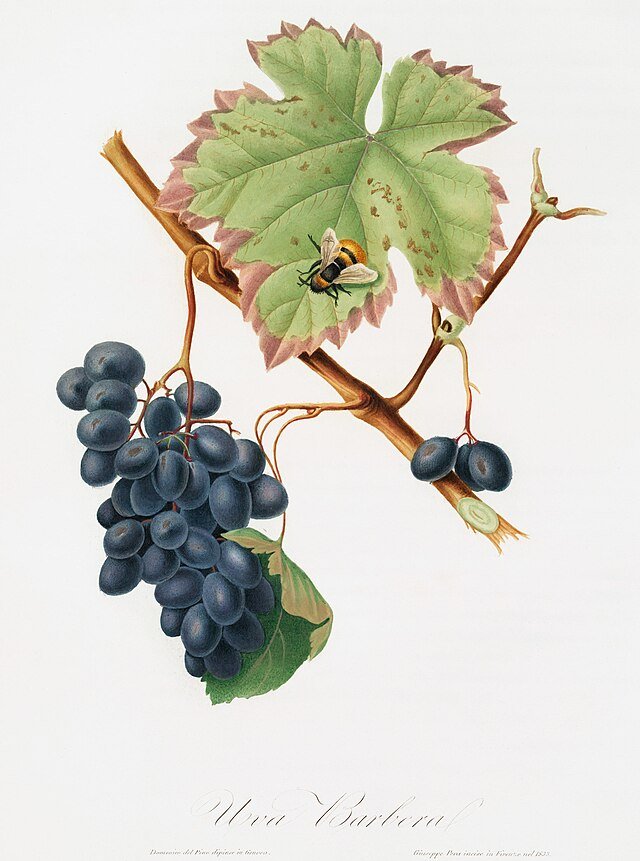
A Tour of Wine Grapes: Barbera

Barbera 🍷

Image by Giorgio Gallesiol on Wikimedia Commons (Public Domain)

Barbera (Bar-BEAR-ah) is thought to have originated in the hills of central Piemonte (“peh-ah-MON-tey”) Italy, where it has been known from the 13th century. That’s significantly earlier than Cabernet Sauvignon that has only been around since the 17th century.

It is Italy’s third most grown grape behind Sangiovese (most notably known as the grape in Chianti) and Nebbiolo. In Italy, it’s known to produce inexpensive table wine that is enjoyed regularly with meals.

In California, the Barbera grape has also been used predominately in the past for production of mass-produced jug wines. So, it's no surprise that Barbera has gotten a bad reputation.

But, that's changed. Regions throughout California are now producing some very nice Barbera wines, especially the Sierra Foothills, Amador County, Shenandoah Valley and El Dorado Counties in northern California.

And, starting in the 1980s the quality of Barbera began to significantly improve in Italy. It started being planted in better sites, yields were limited for quality as opposed to quantity and more attention was given to aging in better barrels. This took Barbera from a common light-bodied wine to something more special with greater flavor and character.

Barbera is typically a medium-bodied wine with lighter tannins and higher acidity. Barbera wines are best known for flavors of sour cherry, blackberry, herbs and black pepper.

It is usually enjoyed young (two to four years after harvest) and should be served in a red wine glass at 60-68 °F.

The lightest versions of Barbera are generally not recommended for cellaring.
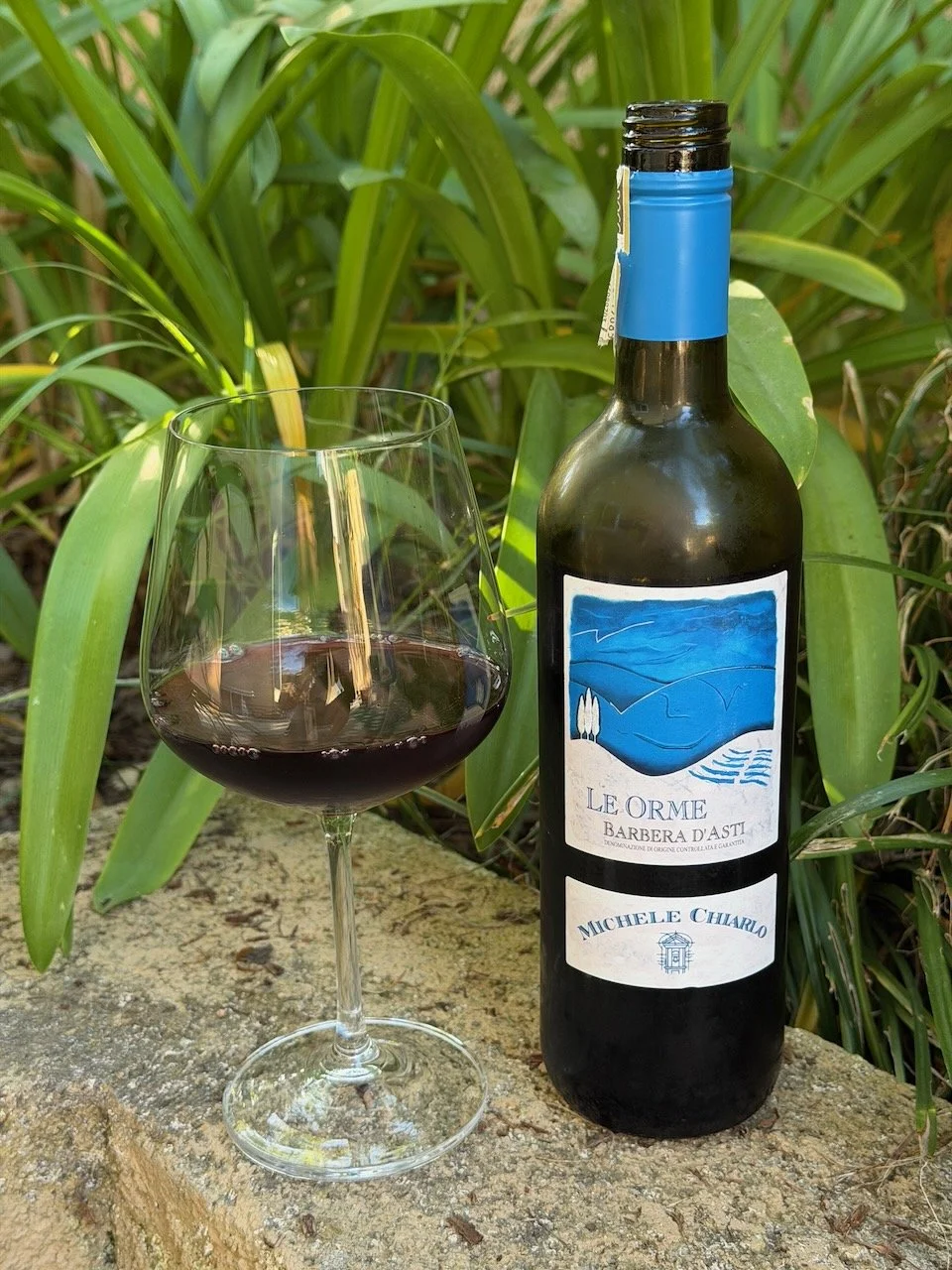
Behind the Cork™ - Le Orme Barbera D' Asti

2020 Michele Chiarlo Le Orme Barbera D’Asti ($12)

Since 1956, Michele Chiarlo has been vinifying the essence of Piedmont, loving and developing the most incredible wine region in the world. They cultivate 110 hectares of vineyards between the Langhe, Monferrato, and Gavi areas, within them the finest crus while fully respecting the ecological criteria, terroir, and their expression.

This 100% Barbera is from several vineyards south of the Asti Hills in Piedmont, Italy. It was fermented in steel tanks with 10 days of maceration with skins while undergoing pumpovers. Malolactic conversion also occurred in steel. It was then aged for a minimum of one year with three months in French oak casks.

This Le Orme (the footsteps or the legacy) Barbera D’Asti DOCG is medium ruby in color with a nice aroma of red fruit. On the palate, this medium-bodied wine has flavors of red cherry and blackberry with herbal and peppery notes. Barbera is typically higher in acidity and this one is medium-high with medium tannin. It finishes bright and spicy with good fruit flavor.

If you haven’t tried a Barbera, you’re missing out. And this Barbera D’Asti is a good one at a great price. That makes it a great fit as the Behind the Cork™ Wine of the Week. Cheers!

Barbera Wine in Italy

Last time we began looking at Barbera, a wine that in Italy has traditionally been produced as an inexpensive table wine to be enjoyed regularly with meals. It’s not been hailed as a great wine - there are other Italian wines that get that spotlight.

Barbera is thought to have originated in the hills of central Piemonte (“peh-ah-MON-tey”) Italy, where it has been known from the 13th century. That’s significantly earlier than Cabernet Sauvignon that has only been around since the 17th century.

Barbera is an early-ripening grape that, in Italy, is commonly grown on the cooler lower slopes below the more highly prized Nebbiolo grapes, and in other secondary locations. The best known Barbera is from the DOCG (the highest classification for Italian wines) of Barbera d'Asti. You’ll also find ‘Barbera d'Alba’ DOC (the main tier of Italian wine classification) and Barbera del Monferrato DOC, which tends to be somewhat sparkling (frizzante) and is rarely exported.

It wasn’t until the 1980s that the quality of Barbera began to significantly improve in Italy. It started being planted in better sites, yields were limited for quality as opposed to quantity and more attention was given to aging in better barrels. This took Barbera from a common light-bodied wine to something more special with greater flavor and character.

Barbera wines are best known for flavors of sour cherry, blackberry, herbs and black pepper with light tannins and high acidity.

The lightest versions of Barbera are generally not recommended for cellaring. I’ve learned this the hard way having previously opened three ‘prized’ bottles of Barbera on one special night and finding that all three, which had been stored properly in my wine fridge for approximately five years, had gone bad.

So, there’s a quick review of Barbera from Italy. Next time we’ll take a look at how Barbera came to California and its history here. Until then, Cheers!

Barbera - A Wine Originally from Italy

IMG_0397.jpg

Last time we took a look at Barbera, a wine that hasn't gotten the respect it deserves. And, I mentioned that my first exposure to Barbera was a real eye-opening experience.

Unfortunately, in California, the Barbera grape has predominately been used in the production of mass-produced jug wines in the past. So, it's no surprise that Barbera has gotten a bad reputation.

But, that's changing. Regions throughout California are now producing some very nice Barbera wines, especially the Sierra Foothills, Amador County, Shenandoah Valley and El Dorado Counties in northern California.

But, Barbera has its origins in another famous wine region of the world - Italy.  Barbera is actually one of the most widely planted grapes in Italy. It is a common table wine in the Piedmont region, where it is often referred to as the "wine of the people" because it is plentiful and, yes, cheap.

Even in the famous Piedmont wine region of Italy, Barbera is overshadowed by the Nebbiolo and Dolcetto wines. But, Italian Barbera has a lot of very positive traits. So much so that it's even been referred to as the "poor man's Pinot Noir." That's because Barbera from Italy has traditionally been lighter in body with bright fruity flavors of cherry, strawberry and raspberry. Sound familiar? It should, because if you know Pinot Noir, you know that it too has those same red-fruit flavor profiles.

So, look for Barbera from Italy. You're likely to see it from various regions labelled as Barbera d' Asti, Barbera d' Alba and Barbera del Monferrato. But don't confuse these great Italian Barbera wines with Barbaresco. It may sound similar, but that's a wine made from the Nebbiolo grape.

Whether it's from Italy or California, or any other region of the world, give a Barbera a try. It's well worth it. Cheers!