

Barbera 🍷
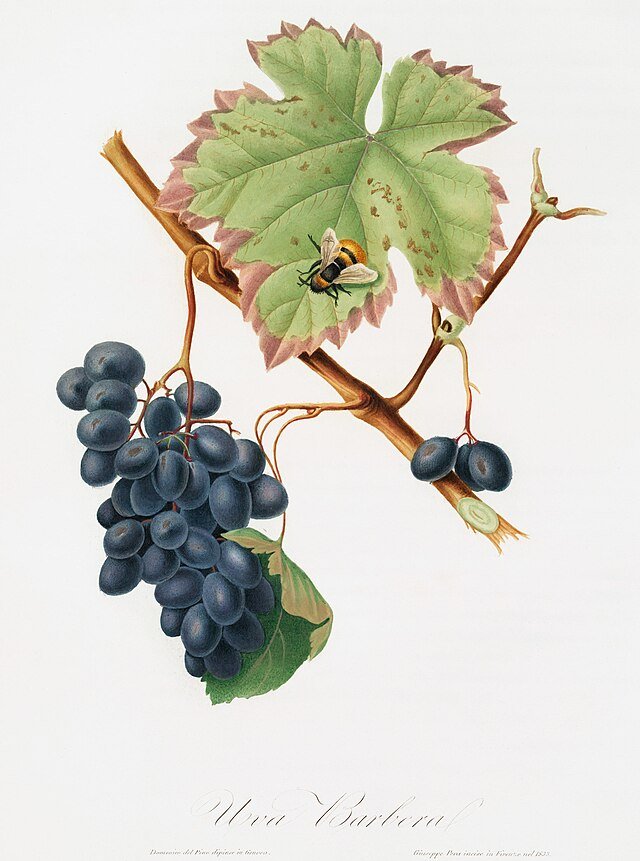
Image by Giorgio Gallesiol on Wikimedia Commons (Public Domain)
Barbera (Bar-BEAR-ah) is thought to have originated in the hills of central Piemonte (“peh-ah-MON-tey”) Italy, where it has been known from the 13th century. That’s significantly earlier than Cabernet Sauvignon that has only been around since the 17th century.
It is Italy’s third most grown grape behind Sangiovese (most notably known as the grape in Chianti) and Nebbiolo. In Italy, it’s known to produce inexpensive table wine that is enjoyed regularly with meals.
In California, the Barbera grape has also been used predominately in the past for production of mass-produced jug wines. So, it's no surprise that Barbera has gotten a bad reputation.
But, that's changed. Regions throughout California are now producing some very nice Barbera wines, especially the Sierra Foothills, Amador County, Shenandoah Valley and El Dorado Counties in northern California.
And, starting in the 1980s the quality of Barbera began to significantly improve in Italy. It started being planted in better sites, yields were limited for quality as opposed to quantity and more attention was given to aging in better barrels. This took Barbera from a common light-bodied wine to something more special with greater flavor and character.
Barbera is typically a medium-bodied wine with lighter tannins and higher acidity. Barbera wines are best known for flavors of sour cherry, blackberry, herbs and black pepper.
It is usually enjoyed young (two to four years after harvest) and should be served in a red wine glass at 60-68 °F.
The lightest versions of Barbera are generally not recommended for cellaring.