A Tour of Wine Grapes: Colombard

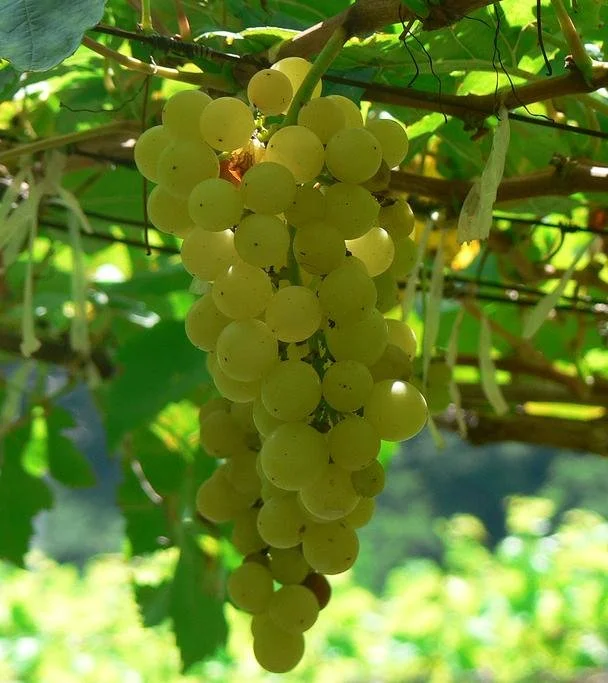
Colombard (or Colombar)
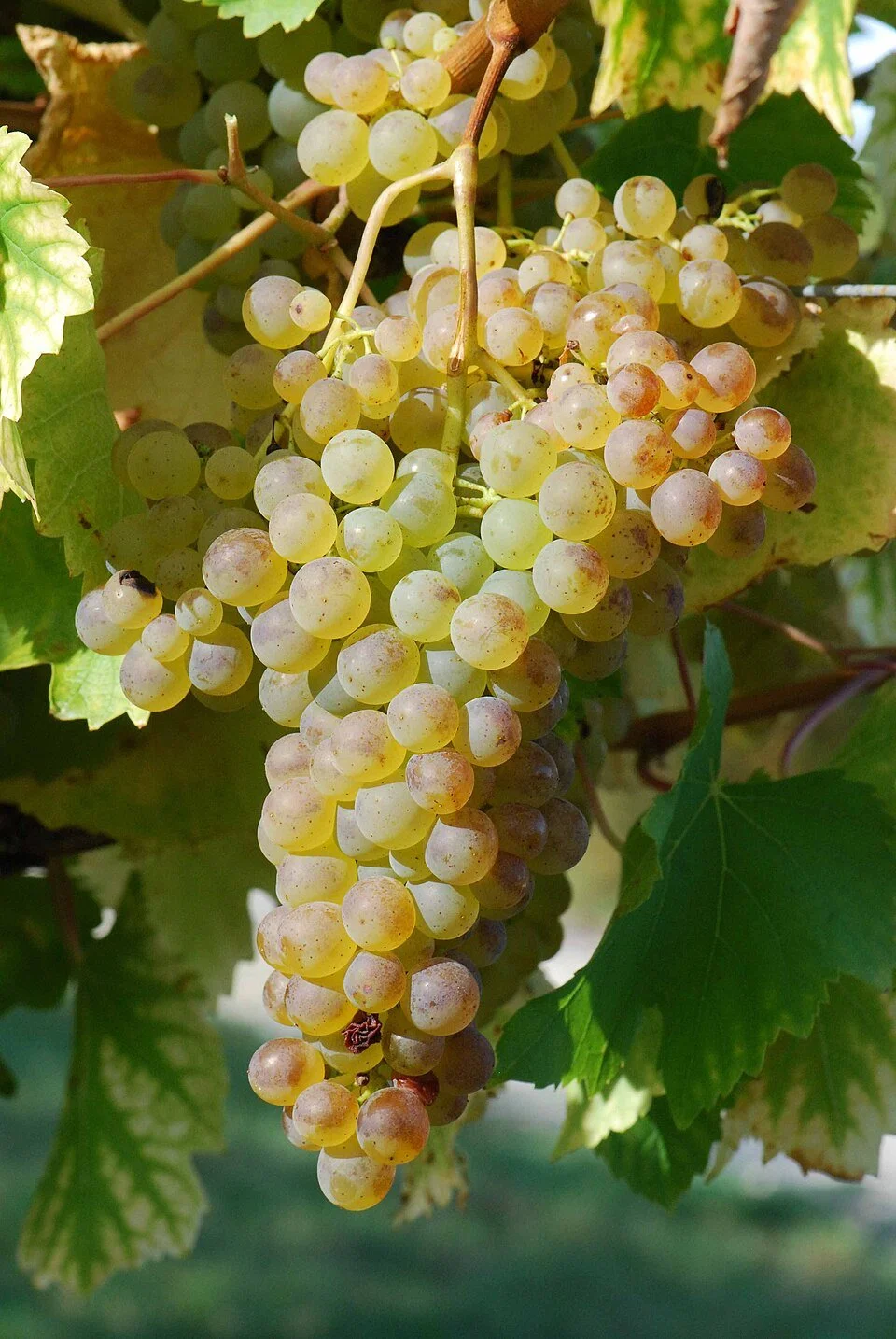
Photo from Pancrat on Wikimedia Commons

The name Colombard likely comes from the French word for dove, "colombe". Legend has it that the grape was so named because its white, dusty berries match the color of a dove's plumage.

It is a natural cross between Chenin Blanc and Gouais Blanc. This makes it a sibling to Chardonnay and Riesling.

Colombard was among the most-planted white grape varieties in France but is also found in California’s Central Valley, Texas as well as South Africa, Australia, Thailand and Israel.

Before Chardonnay took over in the 1990s, Colombard (often called "French Colombard" in the U.S.) was the most planted white grape in California.

Historically a "workhorse" grape in blending, it has played a major role in both distilled spirits (Brandy) and mass-market "jug wines.” For decades, it was the grape used in nearly every generic "Chablis" or "Hearty White" jug wine sold in the U.S.

But, in the recent past, French wine producers have began using Colombard to make white wine.

Typically light-bodied and crisp (acidic), it often features notes of green apple, lime, grapefruit, and white peach

Because of its neutral flavor and high acidity, it is frequently blended with more aromatic grapes like Sauvignon Blanc, Chardonnay, or Chenin Blanc.

Colombard should be enjoyed young and fresh but because of its high acidity, it can be aged 3 to 5 years with some premium versions being easily aged for 10 or more years.

Serve Colombard wines well chilled (45°F and 50°F) in a white wine glass with a U-shaped bowl.

No decanting necessary.
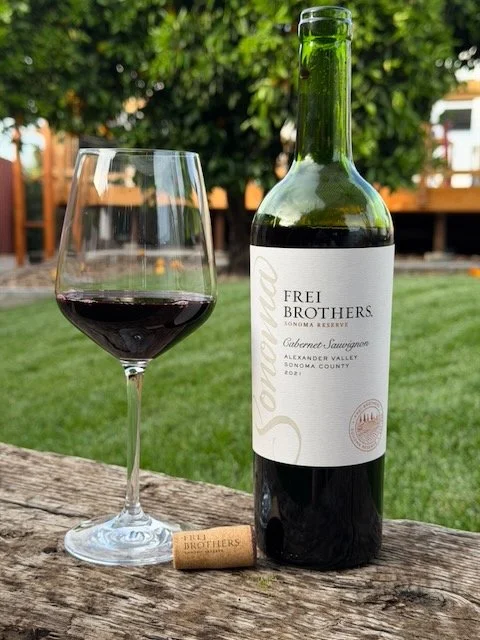
Behind the Cork™ - Frei Brothers Sonoma Reserve Cabernet Sauvignon

2021 Frei Brother Sonoma Reserve Cabernet Sauvignon ($16)

Frei Brothers has been a part of Sonoma County for over a century. After coming to California from his native Switzerland, founder Andrew Frei first established vineyards in the Dry Creek Valley in 1890. His two sons, Walter and Louis, eventually took over and adopted the name Frei Brothers. They successfully ran the winery for over 70 years.

Frei Brothers vineyards caught the eye of Julio Gallo soon after the repeal of Prohibition. He began using the site as a vineyard source for the rapidly growing E. & J. Gallo Winery. Once Walter and Louis had both retired in the late 1970s, the Gallo family purchased Frei Ranch.

This Frei Brothers Sonoma Reserve Cabernet Sauvignon is from the Alexander Valley in Sonoma. It is primarily Cabernet Sauvignon although some technical listings suggest it is may include small amounts of Merlot and Petite Sirah. It is deep purple in color with subtle aromas of dark fruit. On the palate, this full-bodied wine has medium-high tannin (give it some time in a decanter before serving), and medium-high acidity. There are notes of blackberry and plum. It finishes lean.

The 2021 Frei Brothers Sonoma Reserve Cabernet Sauvignon is widely available and very well priced for a Cabernet from Alexander Valley. That makes it a nice fit as this week’s Behind the Cork™ Wine of the Week. Cheers!


The opinions expressed are entirely my own.

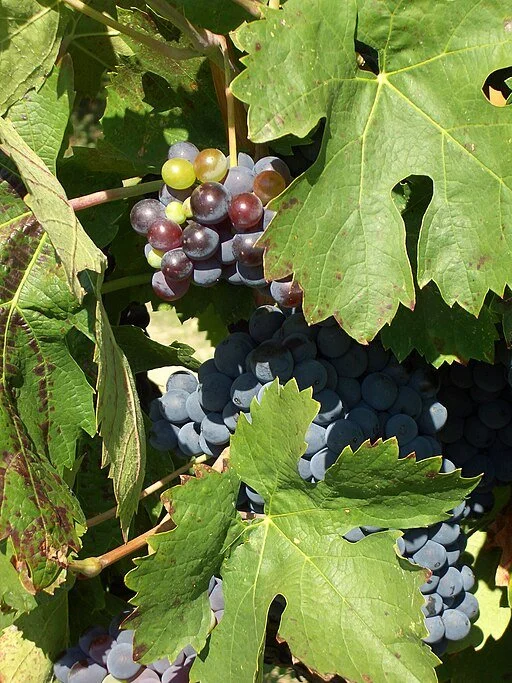
A Tour of Wine Grapes: Cinsault

Cinsault 🍷

Image by Allie Caulfield on Wikimedia Commons

Cinsault (sin-so) is also known as “Cinsaut.”

Cinsault vines have been grown for centuries in southern France, making it one of the oldest grape varieties found in the region. It has traditionally been used in Southern Rhône blends along with Grenache, Syrah and Mourvèdre.

It is one of the permitted minor grape varieties in the Châteauneuf-du-Pape blend and widely used for the production of rosé wine in Provence.

As a varietal, it is brick-red in color with floral aromas and strawberry. On the palate, it is a light-bodied wine that is low in tannins and low in acidity.

When wines are produced from older vines ( >20 years) they can have more sweet spice flavors.

In blended wine, it imparts floral and strawberry-like aromas.

As a rosé, it provides aromas of raspberry, white peach, tea leaf and rose petals with flavors of tropical fruits of lychee, guava and papaya.

Cinsault can be aged a bit (5-7 years).

It should be served at 60 to 68 °F in a large bowl red wine glass.

Decanting is not usually necessary but can be done for up to 30 minutes.

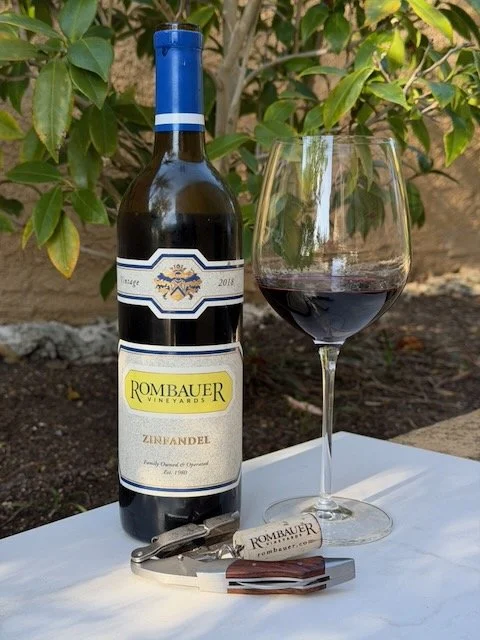
Behind the Cork™ - Rombauer Zinfandel

2018 Rombauer Zinfandel ($42)

Koerner and Joan Rombauer established Rombauer Vineyards in 1980, and in 1984 they released their first California-style Chardonnay and Cabernet Sauvignon wines. One interesting note about the Rombauer family is that Koerner’s great aunt Irma Rombauer wrote the internationally renowned cookbook, The Joy of Cooking.

This Zinfandel is a blend of 93% Zinfandel and 7% Petite Sirah. The grapes were sourced from El Dorado (42%), Amador County (32%), Lake County (17%), Napa (6%), and Lodi (3%). They were hand-picked and sorted. The wine making process included a cold soak for color extraction followed by fermentation in tanks and finishing for 16 months in a combination of French and American oak (10% new American oak).

This 2018 Rombauer Zinfandel is deep ruby in color with aromas of black fruit and spices. On the palate, this full-bodied wine has rich, jammy dark fruit flavors of blackberry and boysenberry with notes of vanilla from the oak aging. It finishes smooth with just a hint of sweet flavors.

The 2018 Rombauer Zinfandel is a really nice wine that is widely available and affordable. A great fit as this week’s Behind the Cork™ Wine of the Week. Cheers!


The opinions expressed are entirely my own.

A Tour of Wine Grapes: Chenin Blanc

Chenin Blanc

Chenin Blanc is a white wine grape variety that has been cultivated in France for nearly 1300 years. It is most commonly associated with France's Loire Valley.

French documents first mention Chenin Blanc as early as the year 845, and the variety has appeared in various parts of the Loire Valley under a multitude of synonyms since.

Today, just over half of the world’s production of the Chenin Blanc grape is from South Africa with approximately a third being grown in France.

Its high acidity levels mean it can be produced in a number of different styles: As (1) a sweet, botrytis-affected dessert wines, (2) light, honeyed sparkling wines and (3) as full-bodied, still white wines.

(1) The sweet, botrytis dessert wines are most famously from Sauternes, France. (2) Light honeyed sparkling wines are often from France including Vouvray Pétillant and Crémant de Loire. (3) Full-bodied still wines are produced around the world including South Africa, France, the United States, Argentina, Australia, and New Zealand.

The grape fell out of fashion somewhat in the early 20th Century, but renewed interest in the 1980s reinvigorated Chenin Blanc's position as a classic and noble grape variety.

Wines produced from Chenin Blanc grapes exhibit aromas of quince and yellow apple. They can also have a waxy or oily scent along with lemon zest and in warm climates, aromas of guava, pineapple and pear.

Flavors of Chenin Blanc include green apple, quince, pear and lemon. Warm climate wines (e.g., South Africa) have tropical flavors of pineapple, guava, mango and peach. If aged in oak, Chenin Blanc can take on flavors of vanilla, caramel, butterscotch and nutmeg.

Because of Chenin Blanc’s high acidity, it is very age-worthy. Dry Chenin Blanc wines can be aged 10-20 years.

Chenin Blanc should be served in the range of 45 - 55 °F with un-oaked wines being served cooler than oaked wines. Use a standard tapered rim glass.

Young wines can be decanted for 30 minutes to help soften the “steely” acidity.