Behind the Cork™ - Ritual Pinot Noir

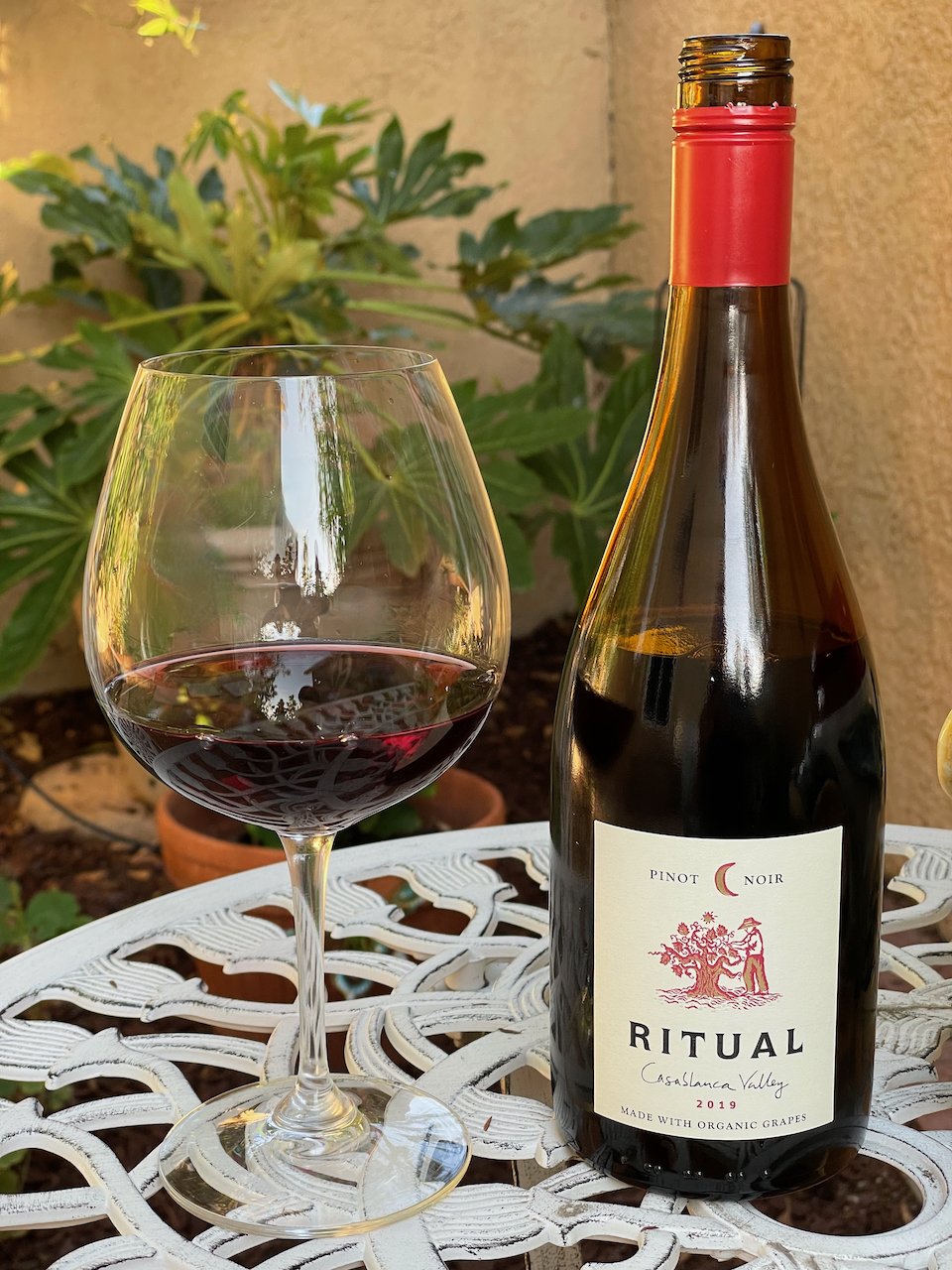
2019 Ritual Pinot Noir ($21)

The Ritual estate is situated in the extreme eastern end of Chile’s Casablanca Valley that is heavily influenced by the cooling effects of the Pacific Ocean — ideal growing conditions for Pinot Noir. Following organic practices, the winemaking team uses compost to feed the soils to promote a balanced and self-regulated ecosystem, cover cropping and seeding for revitalizing the soils and sheep to help mow the grass and act as a natural fertilizers.

The vineyards are surrounded by 6000 acres of native forest, creating a balanced, bio-diverse landscape for healthy vines to thrive alongside natural wildlife corridors and native vegetation.

The Ritual Pinot Noir is produced from 100% Pinot Noir grapes that are hand-picked in small batches and carefully double-sorted. A portion of the fruit is whole-cluster fermented to promote structure and complexity. It is fermented with wild yeasts and aged 11 months in 20% new French oak barrels.

This Ritual Pinot Noir is pale ruby in color with the distinctive red fruit aromas and some earthiness. On the palate, it is delicate with the classic cherry and cranberry flavors, balanced acidity and a light finish.

This Ritual Pinot Noir, from the Casablanca Valley in Chile, stands up to those being produced in California and Oregon and, at the price, makes this wine a nice fit as the Behind the Cork™ Wine of the Week. Cheers!


Disclosure of Wine Sample Submission: I received this sample at no cost for review. The opinions expressed are entirely my own.

Sample Provided by González Byass via Donna White Communications

Get to Know the Pinots

Grapes are grown worldwide typically for eating or for winemaking.

There are 17 genera (the plural of genus) that belong to the Vitaceae family of flowering plants. But just the one genus, Vitis, is important in the world of winemaking. And, of the nearly 80 species in this genus, just one, Vitis vinifera is generally grown for wine.

It is estimated that there are more than 10,000 grape varieties in cultivation. But, with today’s ability to do DNA analysis, it is thought that this number is actually around 5,000.

Now, if you were to do a search on “Pinot” wine grapes you could come up with a list that includes at least 26 different ones. But, many of these are simply synonyms for other grapes.

So, when it comes to the “Pinot” grapes, there are six primary clonal variations:

  • Pinot Noir/Pinot Nero

  • Pinot Gris/Pinot Grigio

  • Pinot Blanc/Pinot Bianco

  • Pinot Meunier

  • Pinot Teinturier

  • Pinot Noir Précoce

In future blogs we’ll take a further look at these 6 as well as provide a full listing of the 26 “Pinot” grapes. Until then, cheers!

Behind the Cork™ - Amrita Seiza White Blend

2021 Amrita Seiza White Blend ($35)

Amrita Cellars, founded in 2017, prides itself on finding vineyards off the beaten path and sourcing their grapes from family-owned wine growers that use the best practices in renewable and sustainable farming.

Sunny, their winemaker is a first-generation East India gentleman born and raised in the United States. He named Amrita Cellars to honor his culture and family. Amrita in Sanskrit (ancient Indic language of India) means immortality and is often referred to as the elixir.

This Amrita Seiza is made from a 50/50 blend of Viognier and Grenache Blanc. Each is fermented separately and then blended post-fermentation and aged in stainless steel.

This wine is pale gold in color with bright floral aromas and hints of lemon peel and tangerine. On the palate it is medium-light bodied with a smooth mouthfeel, flavors of citrus and pear with moderate acidity. It is available directly from the Amrita Cellars website.

Also, check out Amrita Cellars Pinot Noir wines that won two Bronze Medals at the Orange County Fair Commercial Wine Competition in June 2022. Cheers!


Disclosure of Wine Sample Submission: I received this sample at no cost for review. The opinions expressed are entirely my own.

Sample Provided by Amrita Cellars

Behind the Cork™ - Corvezzo Prosecco

Corvezzo Prosecco

Corvezzo (kor-VETZ-zoh) is the leading name in organically grown, vegan wines from northeast Italy’s Veneto region.

Founded in 1960, the winery is in the village of Cessalto near Treviso, a sweet spot in the Veneto between the cool Dolomite Mountains and the sunny Adriatic Sea.

Family-owned and run, Corvezzo has the largest acreage in Italy of certified organic Glera and Pinot Grigio grapes. According to owner/winemaker Giovanni Corvezzo, his wines have not only adapted to organic farming - they have thrived, becoming stronger, with better balance and producing higher quality fruit. The signature wine style for him is fresh and bright.

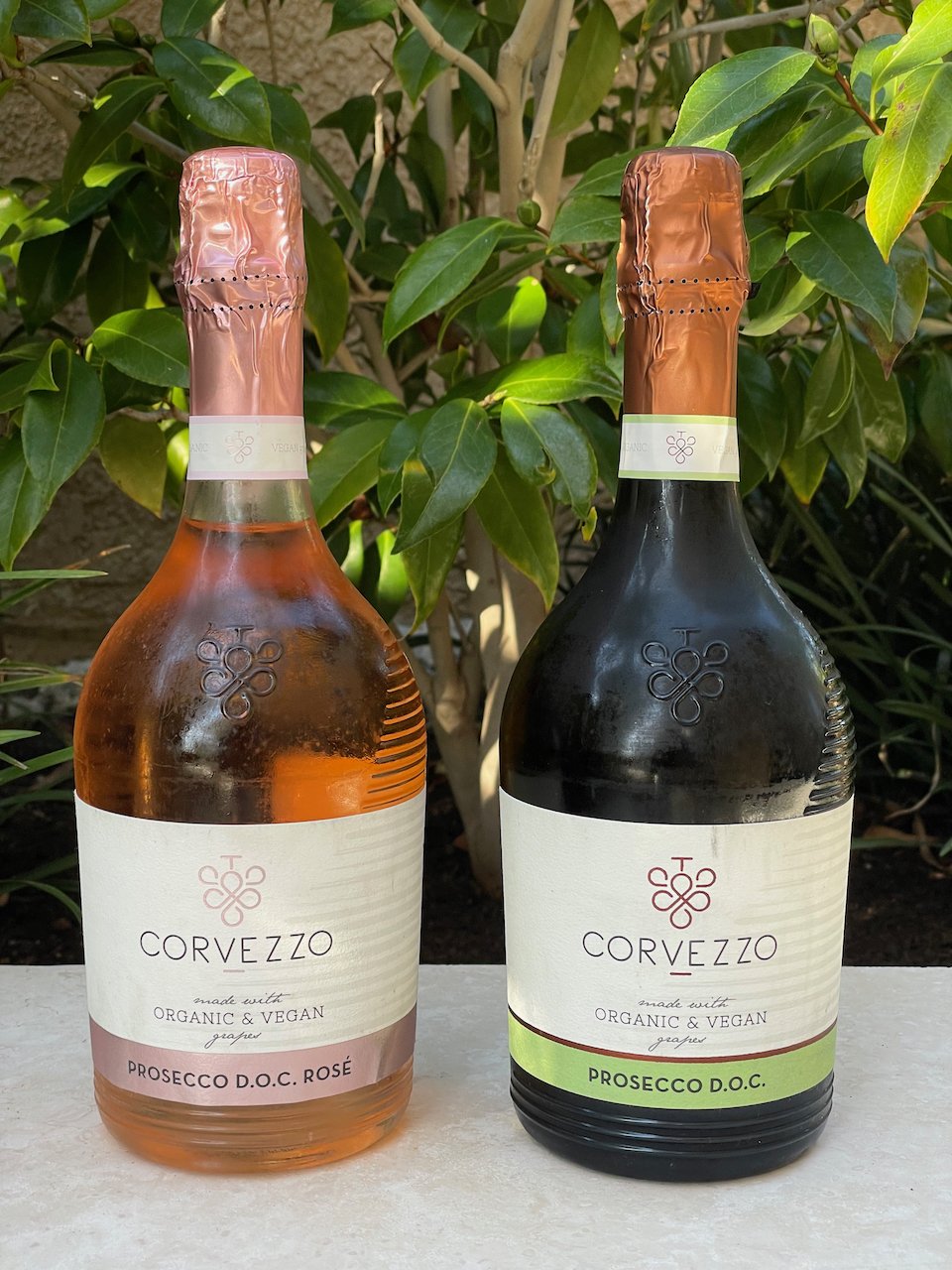
2020 Corvezzo Extra Dry Prosecco Rosé ($13) This prosecco is made with organic and vegan Glera and Pinot Nero grapes that were cold crushed and pressed for the primary fermentation. The secondary fermentation took place at 60 days using the Charmat method. It is pale pink in color with delicate aromas. On the palate it has light bubbles with light flavors of strawberry and citrus. It is 11.5% ABV with 12 g/L of residual sugar.

2020 Corvezzo Extra Dry Prosecco ($13) This prosecco is also made with organic and vegan grapes (85% Glera and 15% other DOC permitted grapes) that were cold crushed and pressed for the primary fermentation. The secondary fermentation took place at 60 days using the Charmat method. It is pale straw in color with delicate aromas of pear and apple. On the palate it too has light bubbles, delicate flavor and good acidity. It is 11.5% ABV with 12 g/L of residual sugar.

Both of these refreshing sparkling wines from Corvezzo are very affordable and make a nice fit as Behind the Cork™ Wines of the Week. Cheers!


The New Grapes to be Included in Bordeaux Wine Blends

There are many different types of grapes grown in Bordeaux and used in their famous wines.

In the past, there were just six varietals allowed for making red wine in Bordeaux: Cabernet Sauvignon, Merlot, Cabernet Franc, Petit Verdot, Malbec, and Carménre. White wines were limited to the use of Sauvignon Blanc, Sémillon, Muscadelle, Sauvignon Gris, Colombard, Ugni Blanc, Merlot Blanc, Mauzac, and Ondenc.

But in January of 2021, the governing body in Bordeaux allowed four new red varieties, including Touriga Nacional, Marselan, Castets, and Arinarnoa, as well as two white varieties, Alvarinho and Liliorila. This was done to give more viticultural options to grape growers to address climate change and combat less hospitable conditions. The new grapes will be listed officially as "new varieties of interest for adapting to climate change". This puts them third in the hierarchy behind "major" and "additional" grapes in official documents. This status will again be reviewed in 2031.

Under current restrictions, usage of the new varieties is limited. They may only account for five percent of the planted vineyard area, and a maximum of ten percent of a wine blend. Because of France's wine labeling regulations, these new varieties will not appear on Bordeaux labels. So, these changes to battle climate change will go relatively unnoticed for now.

Although you may not notice any real change in Bordeaux wine blends, they are changing as the world’s climate is changing. Cheers!